
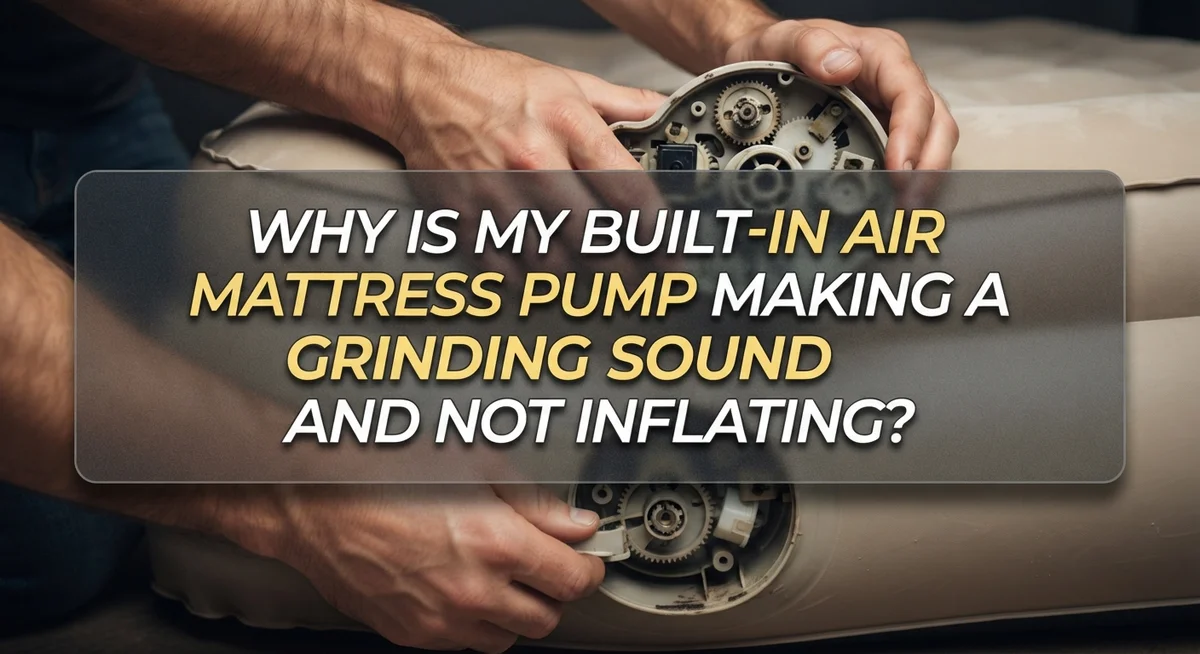
Why Is My Built-In Air Mattress Pump Making A Grinding Sound And Not Inflating?
You climb into bed, ready for a good night’s sleep. You flip the switch on your air mattress pump. Instead of smooth inflation, you hear a strange grinding noise.
The mattress stays flat. Nothing happens.
This problem frustrates many air mattress owners. Your pump makes noise, but air never fills the bed. This usually points to a specific issue inside the pump or mattress.
The good news? You can often figure out what’s wrong. A grinding sound without inflation typically means one of two things. Either your pump has a mechanical problem, or your mattress has a leak.
In a Nutshell
- Grinding noise usually means a mechanical issue. The piston rod may get stuck in the down position. Air can leak from the motor assembly too.
- No inflation often points to electrical trouble. A faulty relay can stop your pump from starting properly. Internal wiring defects also cause this issue.
- Check the switch position first. Many people accidentally leave it set to “deflate” instead of “inflate.” This simple mistake causes big confusion.
- Look for mattress holes. Punctures cause pressure loss even when your pump works fine. This makes inflation seem impossible.
- Motor strain increases grinding pitch. Friction between bed materials also plays a role. Temperature changes can affect pump performance too.
- Test your fuse and circuit breaker. Electrical failures often get overlooked during troubleshooting. This step saves you time and guesswork.
- Diagnose systematically before giving up. Grinding plus no inflation means either mechanical failure or a mattress leak. Work through each possibility carefully.
How the Built-In Pump System Works
Your built-in air mattress pump contains several key parts working together. The motor powers the entire system by converting electrical energy into mechanical motion. When you press the inflate button, electricity flows to the motor, which then activates.
The piston rod moves back and forth inside the pump chamber. This movement creates pressure that pushes air into your mattress. The rod must move smoothly without resistance for proper inflation to occur.
A relay acts like an electrical gatekeeper. It receives your button press and decides whether to send power to the motor. If the relay fails, power never reaches the motor, even though you flip the switch.
The air valve controls which direction air flows. When set to inflate, it allows air to move from the pump into your mattress. When set to deflate, it reverses this flow.
Seals and gaskets create airtight connections between pump parts. These rubber components prevent air from leaking out during the inflation process. Over time, they can wear down or crack.
The electrical circuit includes your power cord, switch, fuse, and internal wiring. All these components must work together perfectly. One broken wire or blown fuse stops the entire system.
Your pump also has an intake valve that draws in outside air. This fresh air gets compressed and pushed into your mattress. A clogged or damaged intake valve reduces airflow significantly.
Understanding these parts helps you identify problems faster. When your pump grinds but doesn’t inflate, one of these components has failed. The grinding sound usually means the motor is trying to work but something blocks the piston rod from moving freely.
What a Grinding Sound Usually Means
A grinding sound from your air mattress pump signals something mechanical is working too hard or failing inside the motor assembly. This noise means friction exists where it shouldn’t.
The most common cause is a stuck piston rod. This rod moves back and forth to push air into your mattress. When it gets stuck in the down position, the motor keeps trying to move it. The strain creates that grinding noise you hear.
Another reason is motor friction. Internal parts rub against each other when seals wear out or debris gets inside. The motor spins faster and harder, producing grinding sounds that get louder over time.
A faulty relay can also cause grinding. The relay acts as an electrical switch inside your pump. When it fails, it sends confused signals to the motor. The motor may try to run in multiple directions at once, causing grinding.
Air pressure problems create grinding too. If pressure builds up inside the pump chamber faster than air can escape, the piston rod gets forced upward. It then crashes down repeatedly, grinding against its housing.
Temperature changes affect pump performance. Cold weather thickens oils inside the motor. Hot weather reduces air pressure. Both situations force your motor to work harder, increasing grinding sounds.
The key point: grinding means your pump is struggling. The motor may be trying to inflate but something blocks it. Pressure may be building up inside. Mechanical parts may be rubbing together.
Don’t ignore this sound. Continued grinding damages internal components further. Your pump needs attention now to prevent complete failure. The next step is checking whether your mattress actually has a leak, since no inflation often means air escapes through punctures instead of filling the bed.
Step-by-Step Troubleshooting Process
Start by checking your power source. Look at your fuse or circuit breaker to see if it has tripped. A blown fuse stops the pump from running completely. Reset any tripped breakers and try inflating again.
Next, examine your pump’s switch position. Make sure it points to “inflate” and not “deflate.” Many people accidentally leave it set wrong. This simple mistake prevents inflation even when the pump works perfectly.
Listen carefully to your pump. Turn it on and pay attention to what you hear. A working motor makes a steady humming sound. If you hear nothing at all, your electrical system has failed. If you hear grinding but no air flows, your piston rod may be stuck.
Inspect your mattress surface carefully. Look for small holes, tears, or punctures. Run your hand across the entire bed to feel for damage. Even tiny holes cause air to escape faster than your pump can fill the mattress.
Check the piston rod position inside your pump. If it stays stuck in the down position, the pump cannot create air pressure. You may see this by looking through the pump opening or feeling resistance when you try to move it manually.
Test your motor by watching for indicator lights. Most pumps have a light that turns on during operation. No light means electrical power is not reaching your motor.
Finally, feel around the motor seals and gaskets. Look for air leaks or cracks. Damaged seals allow air to escape from inside the pump rather than pushing it into your mattress.
Work through these steps in order. Each one narrows down whether your problem is electrical, mechanical, or related to the mattress itself.
Checking Electrical Components: Fuses, Switches, and Relays
Your pump’s electrical system has three main components that can fail and cause grinding sounds without inflation: the fuse, the switch, and the relay.
Start by locating your fuse or circuit breaker. This device protects your pump from electrical overload. A blown fuse looks darkened or broken inside. If you find one, replace it with an identical amperage rating. Your circuit breaker works similarly but resets instead of breaking. Flip it off and back on to test. If it trips again immediately, stop using the pump and investigate further.
Next, verify your switch is set correctly. Many grinding sounds happen because the switch sits between “inflate” and “deflate” positions. Push it firmly to “inflate.” Some pumps have a dial or button instead of a toggle. Make sure it points to the inflation setting clearly.
The relay acts as an electrical gatekeeper inside your pump. When it fails, power doesn’t reach your motor properly. You’ll hear grinding but see no inflation happening. Test for relay failure by listening for a clicking sound when you turn on the pump. No click means the relay likely failed.
Check for loose wiring connections near your power cord and switch. Corrosion or loose wires prevent electricity from flowing smoothly. Tighten any connections you find, but don’t force them.
If your fuse is good, switch is set right, and you hear no clicking, your relay or internal wiring has failed. These electrical components rarely repair themselves. At this point, professional service becomes necessary.
Inspecting the Piston Rod and Motor Seal
The piston rod and motor seal work together to create the pumping action in your air mattress pump. When either component fails, you get grinding sounds without proper inflation.
Your piston rod moves back and forth inside the pump chamber to compress air. If this rod gets stuck in the down position, the motor keeps trying to push it. This creates that grinding noise you hear. A stuck piston rod usually means debris or mineral buildup is blocking movement inside the chamber.
The motor seal sits around the piston rod where it enters the motor assembly. This seal keeps air pressure inside the pump chamber. When the seal cracks or wears out, air leaks backward into the motor. Your pump then loses pressure and stops inflating your mattress properly.
To inspect these parts, first unplug your pump from the wall outlet. Look at where the piston rod connects to the motor. Feel around the motor seal area with your finger. You might notice air leaking out or feel moisture around the seal. These signs point to seal failure.
Next, try moving the piston rod gently by hand. It should move smoothly without resistance. If it feels stuck or gritty, debris is inside the pump chamber. Listen for any unusual sounds when you manually move it.
Check for visible cracks or damage on the motor seal itself. Sometimes you can see discoloration or hardening of the rubber seal material. This indicates age and wear.
If the piston rod is stuck and the seal appears damaged, your pump likely needs internal cleaning or seal replacement. Both issues prevent normal inflation and cause the grinding sound you’re experiencing.
Detecting Mattress Leaks and Punctures
Finding leaks in your air mattress is simpler than you might think. Start by filling your mattress completely and listen for hissing sounds. A hissing noise tells you air is escaping somewhere.
Next, mix water with dish soap in a spray bottle. Spray this solution all over your mattress surface, seams, and the bottom. Bubbles will form wherever air leaks out. This method works because escaping air pushes the soap mixture and creates visible bubbles.
Pay special attention to the seams and corners. These areas experience the most stress during inflation and use. The valve area also deserves careful inspection since it handles constant pressure changes.
Mark any holes you find with a permanent marker. This helps you locate them again if bubbles disappear. Small punctures may be hard to spot the first time.
For tiny leaks, listen closely with your ear near the mattress surface. Sometimes you can hear a faint whisper of air escaping. Move your ear systematically across the entire mattress.
Check the underside too. Your mattress sits on floors and rough surfaces that can create punctures you never see. Flip your mattress and repeat the soap spray test on the bottom.
Pay attention to valve connections as well. Leaks sometimes occur where the valve screws into the mattress rather than from holes in the material itself. Tighten any loose valves carefully.
If you find no bubbles after thorough checking, your leak might be inside the mattress material itself. Internal leaks are rare but possible. In this case, your grinding pump sound likely points to an electrical or mechanical pump failure instead of a mattress problem.
Common Mistakes That Delay a Fix
Many people make simple mistakes that stop them from fixing a grinding pump quickly. The most common error is leaving your switch in the wrong position. Your pump has an inflate mode and a deflate mode. If you set it to deflate by accident, the pump will grind but never fill your mattress with air. Always double check which direction your switch points before you start inflating.
Another frequent mistake is ignoring small holes in your mattress. People hear grinding and assume the pump is broken. They don’t check the mattress itself for punctures. Your pump can work perfectly, but if your mattress has even a tiny leak, air escapes faster than the pump can push it in. The motor strains harder and makes that grinding noise. Always inspect your mattress thoroughly before you blame the pump.
People also overlook their electrical connections too quickly. A loose wire near your power cord or switch can cause grinding sounds. You might assume your motor failed when really the connection just needs tightening. Take time to look at these connections carefully.
Temperature changes create another problem people miss. Cold air makes your pump work harder. Hot air reduces pressure. These conditions can make grinding sounds worse, but they don’t mean your pump is broken.
Finally, many people skip the systematic approach. They panic and replace parts without testing first. This wastes money and time. Instead, work through each possibility step by step. Check your switch position, inspect your mattress, test your electrical parts, and examine your piston rod. This organized method saves you from expensive mistakes and helps you find the real problem fast.
When to Call a Professional or Consider Repair
A grinding sound combined with no inflation tells you something serious is wrong. This is your signal to stop using the pump and assess whether repair or replacement makes sense.
First, determine if the problem is electrical or mechanical. If you’ve already checked the fuse, switch position, and found no clicking sounds, your relay or internal wiring has likely failed. These electrical components cannot be easily repaired at home. A professional technician can diagnose whether rewiring or relay replacement is possible.
Next, inspect whether your piston rod is stuck. An immobilized piston rod means your motor cannot compress air properly, no matter how hard it works. This grinding noise is the motor straining against mechanical resistance. If the piston rod won’t move by hand and the motor seal shows cracks or damage, internal repair becomes necessary.
Consider the mattress itself too. A slow leak or puncture means your pump works harder to maintain pressure, causing unusual grinding sounds. If you’ve found holes through your soap water test, the mattress may need patching or replacement depending on damage severity.
At this point, weigh your options honestly. Repair costs vary based on what failed inside. Some pumps cost more to fix than to replace. Check your mattress warranty and pump warranty to see what coverage applies.
Call a professional if you cannot safely access internal components yourself. They have proper tools and knowledge to identify exactly what failed. If repair costs exceed half the price of a new pump, replacement often makes more financial sense. Either way, stop operating a grinding pump immediately to prevent further damage.
Final Thoughts
A grinding pump with no inflation points to a clear problem. It is either mechanical or related to a mattress leak. Understanding this helps you fix the issue faster.
Start with the simple checks first. Look at your power source and switch settings before assuming the worst. These small steps save you time and effort.
Motor problems often show through unusual sounds. A grinding noise means parts are struggling against each other. This friction signals wear or damage inside the pump.
Mattress leaks add extra strain to your pump. The motor works harder to reach proper pressure. This extra work can cause grinding sounds too.
Testing both the pump and mattress gives you a full picture. You cannot fix what you have not properly diagnosed. Take time to check each part carefully.
Your fix depends on what you find during testing. A stuck piston rod needs different attention than a punctured mattress. Match your solution to the actual problem.
Electrical issues require extra caution on your part. Never attempt repairs on live components. Safety comes before any quick fix.
Some problems are simple enough to handle yourself. Others need a trained professional’s help. Know your own skill level before starting repairs.
A well maintained pump lasts longer overall. Regular checks catch small issues early. This prevents bigger problems down the road.
Patience helps you solve this puzzle correctly. Rushing through diagnosis often leads to wrong fixes. Take your time with each step.
Your air mattress pump can work well again. Follow these steps and stay methodical. Most grinding and inflation problems have a clear solution waiting to be found.
Frequently Asked Questions
Why is my pump grinding but not inflating the mattress?
A grinding sound combined with no inflation usually means either the motor is failing or air is leaking somewhere. The pump motor works harder when it cannot build pressure, creating that grinding noise. This happens because the piston rod may be stuck, the internal relay could be faulty, or your mattress has a leak that prevents pressure from building up.
Start by checking if the switch is set to “inflate” and not “deflate.” Next, listen carefully to see if the motor is running at all. If you hear nothing, the problem is electrical.
How do I know if the problem is electrical or mechanical?
Turn on the pump and watch for signs of power. Do you see lights? Do you hear the motor trying to run? If nothing happens, check your fuse or circuit breaker first. A blown fuse stops everything immediately.
If the motor runs but grinds loudly, the problem is mechanical. This could be the piston rod stuck in position or internal motor damage. Mechanical failures require more careful diagnosis because you need to inspect internal parts safely.
Could my mattress be leaking air instead of the pump failing?
Yes, absolutely. A slow leak forces your pump to work constantly to maintain pressure. This extra strain causes the grinding sound. Mix water with dish soap and spray it on your mattress, especially around seams and the valve. Bubbles show you exactly where air escapes.
Even tiny holes create big problems for your pump. Mark any holes with a permanent marker so you can find them again easily.
What should I do if I find a leak?
Small punctures can sometimes be repaired with patch kits. Check the mattress carefully for holes before assuming your pump is broken. Many people discover their pump works fine once they seal the leak.
If you find no leaks and the motor won’t start, electrical failure is likely. If the motor runs but grinds without inflating, internal mechanical damage has probably occurred.

Hi, I’m Ava Day, the founder and lead writer at Cozy Bed Vault. I’m passionate about sleep wellness and dedicated to helping people find their perfect mattress. Through honest reviews, detailed comparisons, and expert buying guides, I simplify the mattress shopping experience so you can sleep soundly every night.