Jacia House Short Queen RV Mattress Review 2026: Worth It?
Your camper bed should not feel like a folded yoga mat. Yet most factory RV mattresses do exactly that. They are thin, flat, and tired after one season.
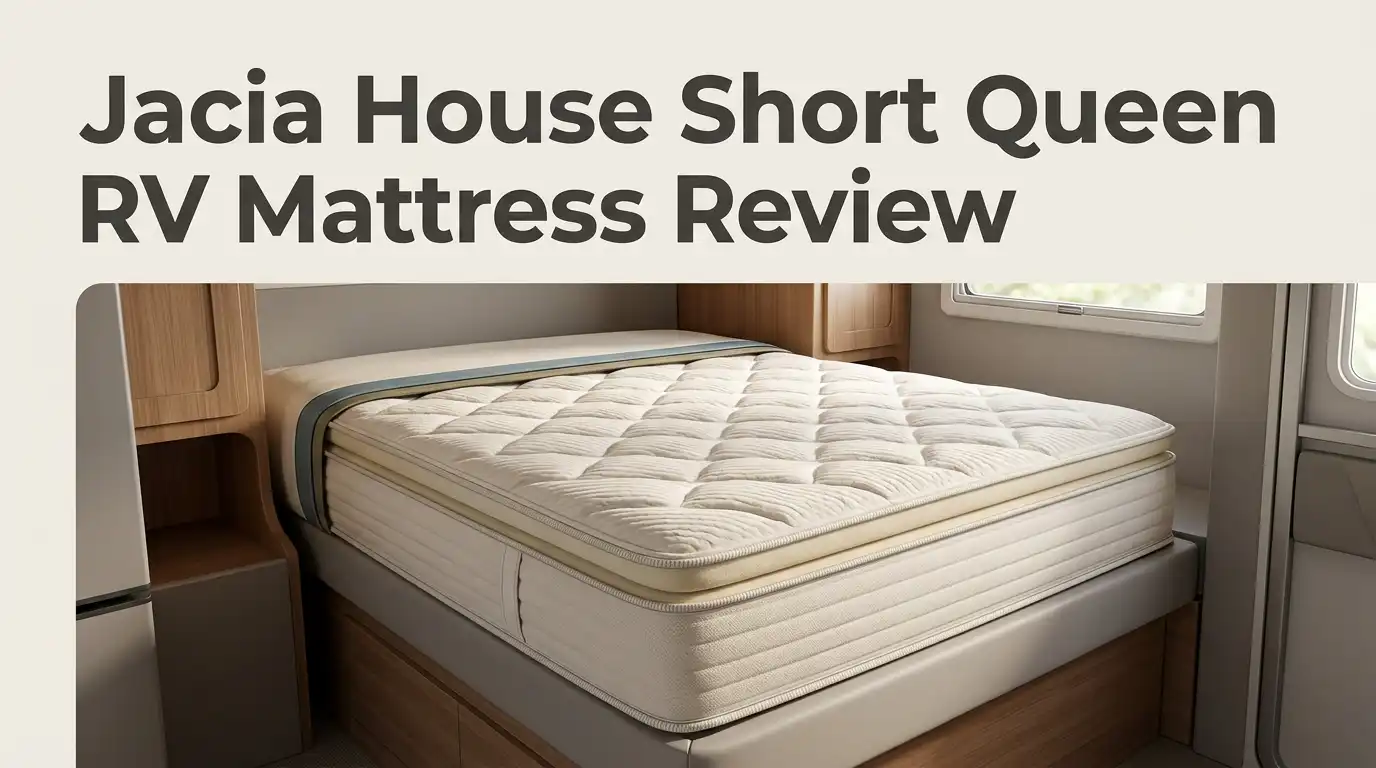
The Jacia House Short Queen RV Mattress promises something closer to a real bedroom bed, with pocket springs, memory foam, and a pillow top, all squeezed into a 74 inch long frame.
This review covers how it sleeps, how it arrives, where it falls short, and who should pass on it. No fluff, no marketing spin, just the details you need before you spend the money.
In A Nutshell:
- Size and fit: The mattress measures 60 inches wide, 74 inches long, and 11.4 inches tall. That is a true short queen footprint. It drops into most travel trailers, fifth wheels, and motorhome bedrooms without trimming.
- Build: Three layers do the work. A 1 inch pillow top sits above 2.6 inches of memory foam plus high density foam, and 7.8 inches of individually wrapped coils carry the load underneath. The coil count sits at 78 pockets.
- Feel: Most owners describe it as medium firm with a plush surface. Side sleepers get contour at the shoulder. Back sleepers get flat support. Strict stomach sleepers may find the pillow top slightly soft.
- Weight warning: It ships at 58.4 pounds. Moving it up an RV step and through a narrow door needs two people. Plan for that before delivery day.
- Expansion time: Allow 48 to 72 hours for full loft. Cold weather slows it down, sometimes up to a week. Do not judge the mattress on night one.
- Value: The biggest draw is price. RV specific sizes often cost 800 dollars or more. This one undercuts that badly while still using real springs.
Why RV Owners Replace The Factory Mattress First

Last update on 2026-10-19 / Affiliate links / Images from Amazon Product Advertising API
Ask any full timer what they changed first in their rig. The answer is almost always the bed. Factory RV mattresses are built to a weight target and a price target, not a comfort target.
Many are 5 inches of low density foam with a vinyl shell. They flatten within months. Your hip sinks, your shoulder aches, and you wake up at 3 AM wondering why camping feels like punishment.
The Jacia House model answers that complaint directly. It brings pocket springs into a space usually filled with cheap foam. Springs push back, foam alone compresses.
That difference matters most for couples and for anyone over 200 pounds. The upgrade changes the whole mood of a camper bedroom. Owners repeatedly say the rig finally feels like a home instead of a shelter.
Jacia House Short Queen RV Mattress
This is the hybrid version, model US D002, sold under the Jacia House name and produced by YI XIN. The short queen option runs 60 inches by 74 inches by 11.4 inches tall and carries a stated weight limit of 500 pounds. The cover uses a knitted fabric face with cotton felt beneath it.
Jacia House lists the mattress as meeting Federal Flammability Standard 16 CFR 1633, and the foam is described as low VOC, with no PBDEs, no Tris flame retardants, no mercury, no formaldehyde, and no lead.
Firmness is listed as firm, though real sleepers call it medium firm once the pillow top settles. Motion transfer stays low thanks to the encased coils. It is a simple formula executed at a fair price, and that honesty is why it keeps selling. Over 1,200 reviews back it up.
The Unboxing Experience: What Actually Shows Up
The mattress arrives compressed, rolled, and sealed inside a blue Oxford cloth bag rather than a flimsy cardboard box. The bag has handles, which helps, but 58 pounds of rolled spring and foam is still awkward. Two adults make this easy. One adult makes this a story you tell your chiropractor.
Carry the bag inside first, then unroll on the bed platform. Cutting the plastic is the fun part. Several owners report the mattress puffing up within seconds of the first cut. It does not reach full height instantly though. Expect 48 to 72 hours for the layers to relax.
Smell is mild. Most buyers report a faint new product scent rather than harsh chemicals, and it clears in a day or two with a window cracked. Pull the ends and clap the sides to help air enter the foam faster.
Inside The Layers: How It Is Built
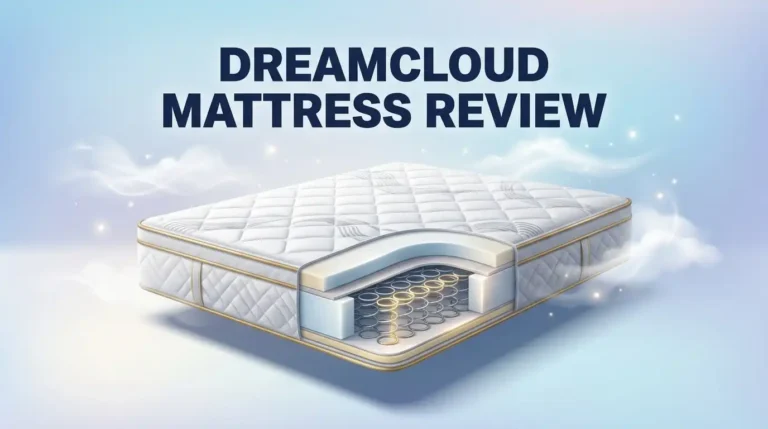
The top layer is a 1 inch pillow top quilted into the cover. Below that sits 2.6 inches of memory foam paired with high density support foam. The base holds 7.8 inches of individually wrapped coils. That stack gives you the cradle of foam with the lift of springs, which is why it reads as plush on top and solid underneath.
Individually wrapped coils move alone instead of as one connected grid. Each spring answers only the weight directly above it. That design spreads load, relieves pressure at the hip and shoulder, and keeps your partner’s movement from traveling across the bed.
The cover is hand wash only, so a waterproof protector is a smart day one purchase. There is no zipper for removal, which is a real limitation for a bed that lives in a dusty camper.
Top 3 Alternative for Jacia House Short Queen RV Mattress


Last update on 2026-10-19 / Affiliate links / Images from Amazon Product Advertising API
Zinus 10 Inch Short Queen Ultima RV Memory Foam Mattress

Last update on 2026-10-19 / Affiliate links / Images from Amazon Product Advertising API
Celestial Sleep 10 Inch RV Short Queen Mattress

Last update on 2026-10-19 / Affiliate links / Images from Amazon Product Advertising API
12 Inch RV Mattress Short Queen Cooling Gel Memory Foam Mattress
How It Feels: Firmness And Real Support
Firmness ratings are personal, so here is the honest range. Lighter sleepers under 150 pounds feel the pillow top first and call it plush. Heavier sleepers press through to the coils and call it firm. Couples who weigh more often land on medium firm with plenty of plushness, which matches the most common owner description.
Back sleepers do well here. The coils hold the lumbar area level while the foam fills the small of the back. Side sleepers also report relief, since the top layers let the shoulder drop in. Pressure point relief was mentioned repeatedly by sleepers recovering from sciatica flare ups and back surgery.
Strict stomach sleepers are the weak match. The pillow top allows a little hip dip. A stomach sleeper who wants plywood firmness should look at a tighter all foam model instead.
Does It Sleep Hot Or Cool?
This mattress does not advertise gel infusion or phase change cooling. What it has instead is airflow through the coil layer, which matters more than most marketing copy admits. Air moves between the wrapped springs, carrying body heat away from the surface. Solid foam blocks have no such channel.
That said, memory foam sits directly under the sleeping surface, and memory foam holds warmth. Hot sleepers in Arizona during July will still want a cooling sheet set or a thin topper. The mattress is neutral, not actively cold.
Compare that against a 12 inch gel memory foam RV mattress if night sweats are your main problem. The Jacia House design prioritizes support and bounce over temperature technology, so set expectations accordingly. For most campers in spring, autumn, and air conditioned rigs, heat never becomes a complaint.
Motion Isolation And Edge Support
Pocket springs shine for couples. When your partner climbs out of bed at 5 AM for a bathroom run, the springs under your side barely react. Owners confirm this in practice. Motion isolation is one of this mattress’s strongest traits, and it beats cheap connected coil units easily.
Edge support is a different story. The perimeter is reinforced with foam, not a steel border rod. Sitting on the edge to pull on hiking boots produces noticeable compression. The mattress holds, but it dips.
In an RV, edge support matters more than in a house, since many camper beds sit against a wall and you enter from one corner. If you regularly sit on the side of your bed to dress, expect the edge to soften over a year or two of use.
Fit Inside Real RV Bedrooms
Short queen platforms are rarely perfect rectangles. Corners get cut for wheel wells, wardrobes, and slide walls. Measure your platform twice before ordering. The good news is that this mattress hits its listed dimensions accurately, and owners report a perfect fit in campers, travel trailers, and motorhomes.
Height deserves attention. At 11.4 inches, this is a tall mattress for an RV. Check three things before you buy. First, bedroom slide clearance when the slide retracts. Second, under bed storage access, since taller mattresses make lifting the platform harder. Third, headroom in a loft or above cab bunk.
An 11.4 inch mattress inside a 7 foot ceiling bedroom still works fine, but a slide out bunk with 14 inches of clearance will not.
Pros Of The Jacia House Short Queen RV Mattress
- True RV sizing done right. The 60 by 74 inch footprint fits standard short queen platforms accurately, with no trimming or gaps at the foot.
- Real pocket springs at a budget price. You get 78 individually wrapped coils instead of a plain foam slab, which is rare under this price bracket.
- Excellent motion isolation. Partners and restless sleepers move without waking each other, a genuine upgrade over factory coil units.
- Plush pillow top surface. The quilted 1 inch top adds immediate comfort, and multiple owners compare it to a home bed rather than a camper bed.
- Low odor and certified foams. The mattress meets 16 CFR 1633 flammability rules and uses low VOC foam without Tris retardants, formaldehyde, or heavy metals.
- Strong weight capacity. A 500 pound limit handles couples comfortably without the sagging common to thin RV foam.
- Fast arrival and easy setup. Many buyers received it ahead of schedule and had it expanding the same day.
Cons Of The Jacia House Short Queen RV Mattress
- Very heavy to move. At 58.4 pounds, hauling the bag through an RV door or up stairs alone risks injury. Two people are needed.
- Pillow top loft can underdeliver. One long term owner reported the top layer never reached the advertised thickness even after days of expansion.
- Firmness softens over time. Around the three year mark, firmness lovers may notice the surface going soft, especially with nightly use.
- Hard to rotate. The one sided pillow top means you cannot flip it, which limits how evenly you can wear the surface.
- Average edge support. Foam reinforcement compresses when you sit on the side to dress.
- No active cooling technology. No gel infusion and no phase change cover, so hot sleepers need help from bedding.
- Hand wash only cover. There is no removable zip panel, which is awkward in a dusty camping environment.
What This Mattress Does Not Do Well
Honesty matters more than hype, so here is the blunt list. It is not a long haul luxury mattress. Expect solid performance for roughly three to four years of heavy use, then a gradual softening. Several buyers planned a replacement around year three.
It is not a cooling mattress. Nothing in the build targets heat beyond coil airflow.
It is not easy to handle. The weight and bulk make solo installation genuinely risky, and that is the single most common complaint.
It is not ideal for strict stomach sleepers or for anyone who demands plywood level firmness. The pillow top prevents that feel entirely.
Finally, it is not maintenance friendly. No flipping, no zip off cover, and hand wash care only. Buy a protector immediately.
Who Should Buy It
Buy this mattress if your factory RV bed has gone flat and your budget sits under the 500 dollar mark. It suits weekend campers, seasonal travelers, and couples who share a short queen platform. Heavier sleepers benefit most, since the coil base resists the hip sink that plagues foam only RV mattresses.
It also suits anyone who wants a familiar home bed feel in a camper. The pillow top plus spring combination reads as traditional rather than foamy. If you dislike the quicksand sensation of pure memory foam, this is a safer pick.
Guest rooms and spare bedrooms are a bonus use case. Several owners bought the short queen for their rig and then bought another size for the house after sleeping on it.
Who Should Skip It
Skip this one if you are a hot sleeper who wakes up damp. Choose a gel memory foam RV mattress instead.
Skip it if you cannot lift 58 pounds with help. The setup process alone will frustrate you.
Skip it if your bedroom slide or bunk clearance cannot accept an 11.4 inch mattress. Measure first, order second.
Skip it if you want ten years of service from one purchase. Premium RV brands offer longer warranties and denser foams, and they charge for it.
Finally, skip it if you are a strict stomach sleeper who needs a hard flat plane. The plush surface will work against your spine alignment. A firm all foam short queen serves that sleeping style better and costs less to ship.
Care, Cleaning, And Longevity Tips
Start with a waterproof, breathable mattress protector. Campers collect dust, humidity, and spilled coffee, and the cover cannot be removed for washing. A protector solves that problem for 30 dollars.
Rotate the mattress head to foot every three to four months. You cannot flip it, so rotation is your only wear management tool.
Let the rig breathe. RV bedrooms trap moisture under platforms. Lift the bed base occasionally and let air move underneath to prevent condensation on the mattress bottom.
Avoid folding or bending the mattress after expansion. Pocket springs do not tolerate creasing the way foam does.
Store the rig with bedding removed and a window vented when possible. Small habits add a year or more to a budget mattress, and this one rewards that attention with steady comfort.
Price And Value In 2026
Value is the real headline. RV specific sizes historically carry a tax, because few makers bother with 74 inch lengths. Owners cite quotes over 1,000 dollars for similar hybrids from RV focused brands. One reviewer summed up the frustration plainly, calling those prices a rip off for a camper bed.
This model lands well below that mark and still delivers wrapped coils, a pillow top, and certified foams. That combination is uncommon in the budget tier. You are trading long term durability and cooling technology for immediate comfort and a low price.
For a weekend rig that sees 40 nights a year, this trade makes sense. For a full time rig that sees 365 nights a year, the math shifts, and a premium hybrid with a longer warranty may cost less per night across a decade.
Final Verdict
The Jacia House Short Queen RV Mattress earns a recommendation with clear limits. It fixes the worst problem in most campers, which is a flat and gutless factory bed. It brings genuine pocket springs, a plush pillow top, and strong motion isolation to a price point that rarely includes any of those features.
It is heavy, it cannot be flipped, it does not cool actively, and it will soften around year three or four. Those are honest flaws, not deal breakers for most campers.
Buy it if you want home bed comfort in an RV without home bed pricing. Look elsewhere if you sleep hot, camp full time, or need plywood firmness. For the majority of weekend travelers, this mattress ends the bad sleep problem immediately.
Frequently Asked Questions
Does the Jacia House mattress really fit a short queen RV bed?
Yes. The listed dimensions are 60 inches wide by 74 inches long by 11.4 inches tall, which matches standard short queen platforms. Owners of travel trailers and motorhomes confirm an accurate fit. Measure your platform first, especially around wheel wells and wardrobe cutouts.
How long does it take to expand fully?
Plan on 48 to 72 hours. The mattress puffs up quickly after you cut the plastic, but the foam needs time to relax completely. Cold weather slows the process, and in low temperatures full expansion can take up to a week.
Is it firm or soft?
Owners describe it as medium firm with a plush pillow top. Lighter sleepers feel it as soft, heavier sleepers feel the coil support and call it firm. It is listed by the brand as firm.
Does it smell when you open it?
The odor is mild. Most buyers report a faint scent rather than a strong chemical smell, and it clears within a day or two of airing out.
Can one person set it up?
Not comfortably. The mattress weighs 58.4 pounds compressed. Two people should carry it into the rig and position it on the platform.
Is there fiberglass in the cover?
Jacia House lists the mattress as meeting 16 CFR 1633 flammability standards using fireproof cotton felt, and states the foam is free of Tris flame retardants, PBDEs, formaldehyde, and heavy metals. For a specifically fiberglass free certified option, check the alternatives listed above.
How long will it last?
Expect roughly three to four years of comfort under regular use before noticeable softening. Weekend campers will see considerably longer service than full time travelers.

Hi, I’m Ava Day, the founder and lead writer at Cozy Bed Vault. I’m passionate about sleep wellness and dedicated to helping people find their perfect mattress. Through honest reviews, detailed comparisons, and expert buying guides, I simplify the mattress shopping experience so you can sleep soundly every night.