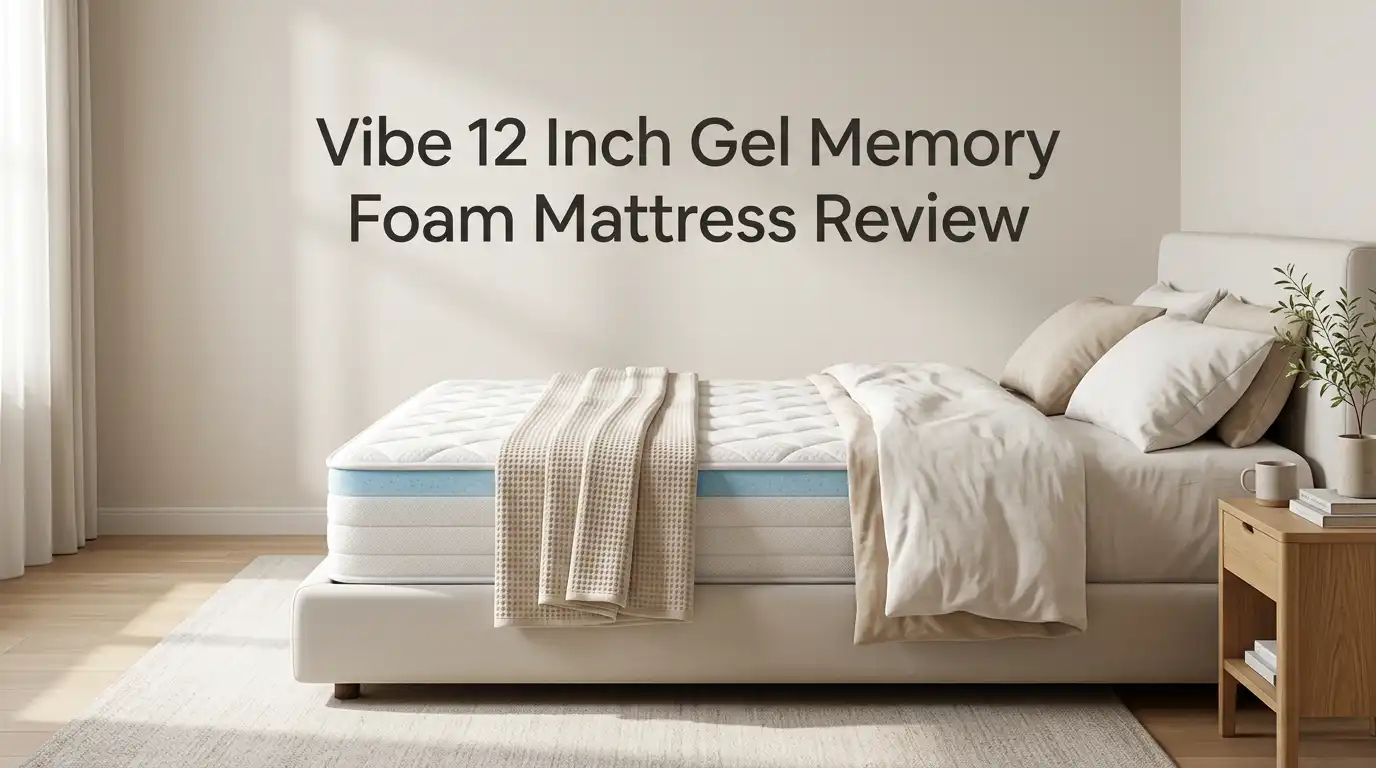
Vibe 12 Inch Gel Memory Foam Mattress Review 2026
Buying a mattress under $400 feels like a gamble. You see the glowing star ratings, the “cooling gel” promises, and the free shipping badge, and you wonder what the catch is.
The Vibe 12 Inch Gel Memory Foam Mattress has sat near the top of Amazon’s bestseller charts for years, and thousands of sleepers swear by it. Others say it flattened out in a year.
So which story is true? I dug into lab test data, owner feedback, and the actual law tag specs to give you a straight answer. This review covers the unboxing, the feel, the cooling performance, the edge support, and the parts the brand would rather you skip.
In a Nutshell:
- Price is the headline feature. The Vibe queen usually lands between $300 and $400, roughly 65% below the average memory foam mattress price. That is the single strongest reason to buy it.
- Firmness sits around 7 out of 10, which reads as slightly firm for most adults. Back sleepers and stomach sleepers adapt faster than side sleepers do.
- The comfort layer is thin. You get 2 inches of gel memory foam over 9 inches of support foam. Independent testing measured the total height at 11 inches, not the advertised 12.
- Cooling is average at best. The gel infusion helps a little, but surface temperatures in lab testing hit 90.2°F, slightly warmer than the category average.
- Response time is genuinely good. The foam rebounds in about 0.2 seconds, so you will not feel trapped in a sinkhole when you roll over.
- Expect tradeoffs. Edge support while lying down is weak, bounce is very low, and pressure relief ranks below average for heavier bodies. The 100 night trial and 10 year warranty soften the risk.
Vibe 12 Inch Gel Memory Foam Mattress Overview


Last update on 2026-10-16 / Affiliate links / Images from Amazon Product Advertising API
The Vibe is an all foam, bed in a box mattress sold in Twin, Twin XL, Full, Queen, King, and California King. It arrives compressed in a cardboard tube and expands on your bed frame. The brand markets it as a CertiPUR US certified, fiberglass free mattress with open cell gel memory foam on top.
Ownership has shifted over the years. Classic Brands originally sold Vibe, and after that company wound down in 2023, Kimberly LLC took the brand. Sinomax USA now manufactures the mattresses in Tennessee and Arizona. The design has barely changed since the 2020 launch, which is actually reassuring for consistency.
What you are buying is a straightforward memory foam sandwich with no coils, no zoned support, and no reinforced edge rail. Simple construction keeps the cost down. That simplicity is both the appeal and the limitation, and the rest of this review explains exactly where each side shows up.
The Unboxing Experience
The box shows up heavy. A queen weighs roughly 57 to 60 pounds, and a king pushes past 70. There are no carry handles on the box or the mattress, so recruit a second person before you start dragging it up a staircase.
Inside, the mattress is rolled, vacuum sealed in thick plastic, and wrapped again in a protective sleeve. Cut the outer plastic carefully with scissors, never a long blade, because the inner bag sits tight against the foam. Once you nick the vacuum seal, the roll inflates with a soft hiss and a quick expansion in the first minute.
Most of the shape returns within an hour. Full expansion takes 24 to 48 hours, and cold rooms slow it down. One tip from owners: unroll it directly on the frame, because moving a half expanded queen across a bedroom is awkward and heavy.
First Night Feel and Firmness
Lie down and you get a classic memory foam response. The surface contours around your hips and shoulders with a noticeable hug, then the firmer poly foam underneath stops the sink. Testing measured 2.31 inches of pressure point sinkage, slightly deeper than the category average of 2.14 inches.
The firmness rates about 7 out of 10. That means slightly firm, not plush, despite the “medium plush” label some retailers use. Lighter sleepers under 130 pounds often describe it as firm. Heavier sleepers describe it as medium.
Give yourself two weeks. Memory foam breaks in, and your body adjusts. Several owners who disliked night one reported a real improvement by week three. If the firmness still fights you after 30 nights, use the trial window rather than waiting it out longer.
Top 3 Alternative for Vibe 12 Inch Gel Memory Foam Mattress

Last update on 2026-10-17 / Affiliate links / Images from Amazon Product Advertising API
Zinus Memory Foam 12 Inch Green Tea Mattress

Last update on 2026-10-16 / Affiliate links / Images from Amazon Product Advertising API
LUCID 12 Inch Gel Memory Foam Mattress, Medium Firm

Last update on 2026-10-17 / Affiliate links / Images from Amazon Product Advertising API
Linenspa 12 Inch Hybrid Mattress, Medium Plush
Inside the Four Foam Layers
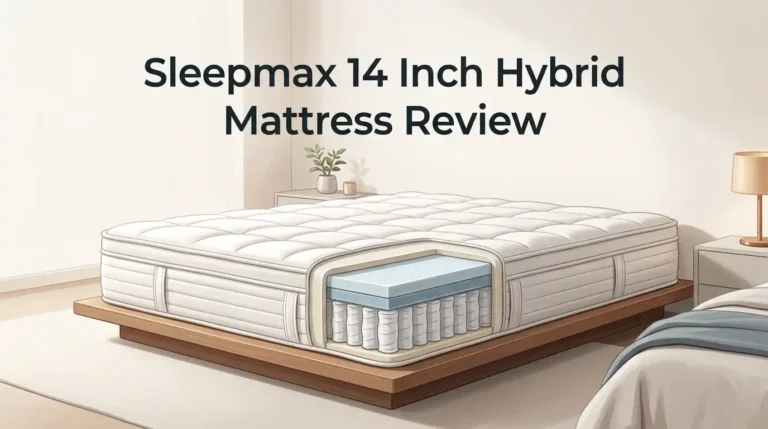
The Vibe stacks four foam layers. On top sits 2 inches of gel infused memory foam, followed by 2.75 inches of transition poly foam. Below that are two convoluted support foams, roughly 3.25 inches and 3 inches thick.
The law tag lists 83% polyurethane foam and 17% viscoelastic polyurethane foam, with a 100% polyester cover. The gel comes from gel beads embedded in the foam pad, not a separate cooling panel.
Here is the honest part. Independent lab measurement found the mattress at 11 inches, not the advertised 12, and the support layers came in thinner than the manufacturer’s listed 3.5 inches each. The comfort layer at 2 inches is less than half the 4.1 inch average across tested memory foam beds. A thin comfort layer is the root cause of most complaints you will read about this mattress.
Does the Cooling Gel Actually Work?
Gel memory foam marketing promises a cool surface. Reality is more modest. In controlled testing, the Vibe climbed from a 72.7°F baseline to a maximum surface temperature of 90.2°F, about half a degree warmer than the average mattress tested. After five minutes with no body on it, it dropped back to 79.7°F.
So the gel does something, but it does not transform an all foam bed into a cool sleeping surface. Dense polyurethane foam traps body heat, and a thin polyester cover does not wick much away.
Hot sleepers should plan accordingly. A breathable cotton or bamboo sheet set, a lightweight quilt instead of a thick comforter, and a slatted or metal frame with airflow underneath all help. If night sweats already wake you up, a hybrid with coils will serve you better than this mattress.
Motion Isolation for Couples
All foam mattresses usually crush motion transfer, and the Vibe does reasonably well, though not as well as expected. Testing recorded an acceleration range of 10.58 m/s, which is about 20% more motion than the tested average of 8.79 m/s.
The useful number is duration. Motion peaks in the first 0.14 seconds, then collapses to almost nothing, and energy reaches near zero by 0.71 seconds. In plain terms, you may feel a brief nudge when your partner flops over, but the ripple dies instantly instead of rocking the bed.
For most couples, this is a non issue. Light sleepers who wake at the smallest jolt may notice the initial spike. Owners with restless dogs on the bed generally report sleeping through the movement. Motion isolation is one of the quieter wins here, especially since the foam makes no squeaks at all.
Edge Support Report
Edge support splits into two very different scores. Sitting on the perimeter, the Vibe holds up decently with 4.25 inches of compression, close to the 4.02 inch average. You can put on socks at the edge of the bed without sliding off.
Lying on the edge is a different story. The memory foam contours dramatically right at the perimeter, which weakens support exactly where you need it. There is no reinforced edge foam or coil rail in this build. Testers described lying edge support as mediocre.
Practical effect: if you share a queen and one of you sleeps near the rail, you will feel a roll off sensation. Couples who need the full sleeping surface should size up to a king or pick a hybrid with encased coils. Solo sleepers who stay toward the middle will never notice this problem.
Pressure Relief and Sleeping Positions
This is the Vibe’s weakest area. With only 2 inches of comfort foam, pressure points build up faster than they should. Testing flagged significant pressure relief issues, particularly for heavier bodies and for anyone who holds one position for hours.
Side sleepers feel it most. Shoulders and hips need a deeper cradle than 2 inches of memory foam over firm poly foam can deliver. If you sleep strictly on your side and weigh over 180 pounds, look elsewhere.
Back sleepers do better. The firmer feel keeps the spine reasonably neutral, and the lumbar region gets steady contact. Stomach sleepers also do fine, since they want a firmer surface anyway.
A 2 to 3 inch memory foam topper fixes much of this for under $100, which still keeps your total spend well below a midrange mattress.
Off Gassing and Safety Certifications
Expect a smell. The Vibe releases a strong chemical odor right out of the plastic, and testing found it lingering for about seven days. That matches the average for compressed foam mattresses, so it is normal rather than alarming.
Air it out in a room with an open window for 24 to 72 hours before you sleep on it. A fan speeds things up considerably. The odor comes from volatile organic compounds released by fresh polyurethane foam, and it fades on its own.
On safety, the foams carry CertiPUR US certification, meaning they are made without ozone depleters, certain flame retardants, mercury, lead, and formaldehyde. The current Amazon listing states the mattress is fiberglass free. Older consumer reports suggested earlier units may have contained fiberglass, so check the law tag on your specific unit if that concerns you.
Durability and Long Term Value
Foam density drives durability, and Vibe does not publish density figures. Testers who cut the mattress open described the foams as basic, with visible concern about how they will hold up after a few years of nightly use.
Owner feedback splits predictably. People using it in guest rooms, dorms, RVs, and vacation rentals report years of trouble free service. Nightly sleepers over 200 pounds more often report body impressions and softening within 12 to 24 months.
The 10 year warranty covers sagging deeper than about 1 inch, so keep your receipt and photograph any dip against a straight edge. Use a solid platform, bunkie board, or slats spaced under 3 inches apart. Wide slats void warranties and accelerate sagging. For the price, treating this as a three to five year mattress rather than a decade long investment sets realistic expectations.
What This Mattress Does Not Do Well
Authentic reviews name the flaws, so here they are without softening. The Vibe is not a cooling mattress, despite the gel branding. Surface heat measured slightly above average.
It is also not a good fit for side sleepers. The 2 inch comfort layer simply cannot cushion a shoulder properly, and pressure relief scored well below average.
Bounce is very low at 5.67 inches total, compared to a 9.60 inch average. Intimacy on this mattress takes more effort, because the foam absorbs energy instead of returning it.
Lying edge support is weak, there are no handles, the cover is thin and not removable for washing on standard models, and the advertised 12 inch height measured closer to 11. None of these are deal breakers at $350. They would all be serious complaints at $1,000.
Pros of the Vibe 12 Inch Mattress
- Outstanding price. A queen typically costs $300 to $400, roughly 65% less than the average memory foam mattress, which makes it one of the cheapest full size foam beds you can buy new.
- Fast foam response. The surface rebounds in about 0.2 seconds, so you never get that stuck in quicksand feeling older memory foam is known for.
- Quiet and motion absorbing. No coils means no squeaks, and movement energy fades to near zero in under a second.
- Solid sitting edge support. The firmer feel keeps the perimeter usable for sitting, dressing, and getting in and out of bed.
- CertiPUR US certified and fiberglass free, which addresses the two biggest safety questions buyers ask about cheap foam.
- Low risk purchase. Free shipping, free returns, a 100 night trial, and a 10 year warranty mean you can test it without losing money.
Cons of the Vibe 12 Inch Mattress
- Thin 2 inch comfort layer. Less than half the category average, which directly causes the pressure point complaints owners describe.
- Below average cooling. Surface temperature peaked at 90.2°F in testing, slightly warmer than average, so hot sleepers will still overheat.
- Weak lying edge support. No reinforced perimeter, so sleeping near the rail feels unstable.
- Poor fit for side sleepers. Shoulder and hip pressure builds quickly, especially above 180 pounds.
- Very low bounce at 5.67 inches, which limits ease of movement and makes intimacy less comfortable.
- Height and layer specs fall short. Measured at 11 inches rather than the advertised 12, with support foams thinner than listed.
- Strong seven day off gassing odor and no carry handles for setup.
Who Should Buy It and Who Should Skip It
Buy it if you need a functional mattress fast and cheap. Guest rooms, college apartments, kids moving to a full size bed, short term rentals, and basement spare rooms are perfect use cases. Back and stomach sleepers under 200 pounds get the best experience.
Skip it if you are a dedicated side sleeper, a hot sleeper, or anyone over 250 pounds planning to sleep on it every night for years. Couples who both sleep near the edges of a queen will also feel cramped.
Think about it this way. The Vibe competes with other sub $400 mattresses, not with $1,200 beds. Within that bracket, it performs acceptably. Judged against midrange hybrids, it loses on cooling, pressure relief, and durability. Match your expectations to your budget and you will be satisfied.
Final Verdict on the Vibe 12 Inch Gel Memory Foam Mattress
Last update on 2026-10-16 / Affiliate links / Images from Amazon Product Advertising API
The Vibe earns a qualified recommendation. It delivers a clean, quiet, slightly firm foam sleeping surface for a price that undercuts almost everything else sold new. The fast response time is a genuine strength, motion isolation works well enough, and the certifications remove the usual cheap foam worries.
What you give up is real. Cooling, pressure relief, edge support when lying down, and long term durability all fall below average. The thin comfort layer is the core limitation, and no amount of gel marketing changes that.
Rating: 3.5 out of 5 for value, 3 out of 5 for performance. If your budget is firm at $400 and you sleep on your back or stomach, buy it with confidence and keep the trial dates on your calendar. If you can stretch to $600 or more, a hybrid will serve you far better over five years.
Frequently Asked Questions
Is the Vibe mattress fiberglass free?
The current Amazon listing states the Vibe Gel Memory Foam Mattress is fiberglass free, and lab inspection confirmed no fiberglass in recent units. Older consumer reports suggested earlier production may have included it, so check the law tag sewn to your mattress if you want certainty. Never remove the cover on any foam mattress regardless of brand.
How long does the Vibe mattress take to expand?
Most of the shape returns within one hour. Full expansion takes 24 to 48 hours, and cooler rooms slow the process. Sleeping on it after a few hours is fine, though the feel changes slightly once it fully decompresses.
How firm is the Vibe 12 inch mattress?
It rates about 7 out of 10, which reads as slightly firm. Lighter sleepers often call it firm, while heavier sleepers call it medium. Retailers sometimes label it medium plush, which overstates the softness.
Does the Vibe mattress need a box spring?
No. It works on any solid, flat surface, including platform frames, bunkie boards, slatted frames, and the floor. Keep slat gaps under 3 inches to avoid sagging and to protect your warranty coverage.
What is the warranty and trial period?
Vibe offers a 100 night sleep trial and a 10 year limited warranty, with free shipping and free returns. The trial is shorter than the 173 night average across tested brands, so mark your calendar on delivery day.
Will the Vibe mattress sag over time?
Some softening is likely. Owners over 200 pounds sleeping nightly report body impressions within one to two years more often than lighter sleepers. The warranty covers sagging beyond roughly 1 inch, so photograph any dip with a straight edge and a tape measure before filing a claim.

Hi, I’m Ava Day, the founder and lead writer at Cozy Bed Vault. I’m passionate about sleep wellness and dedicated to helping people find their perfect mattress. Through honest reviews, detailed comparisons, and expert buying guides, I simplify the mattress shopping experience so you can sleep soundly every night.