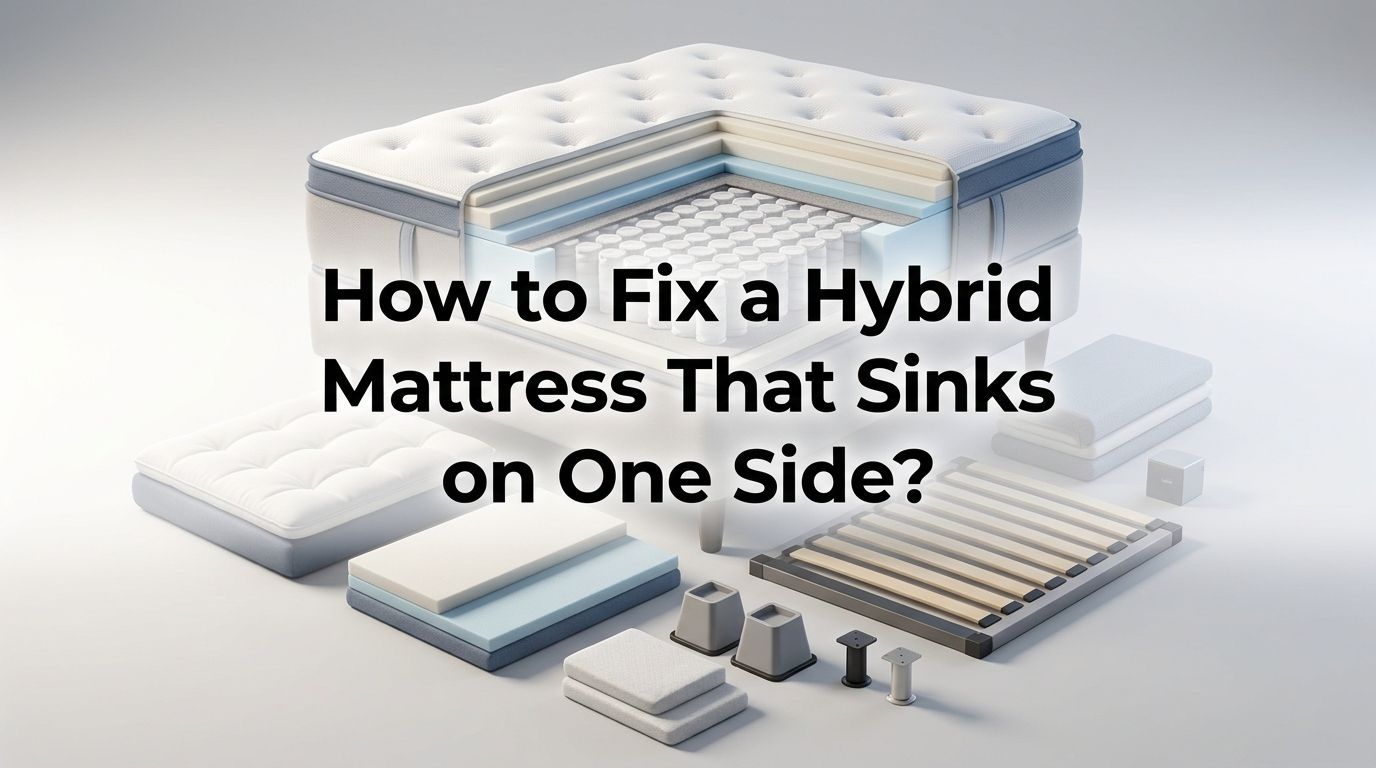
How to Fix a Hybrid Mattress That Sinks on One Side?
You wake up feeling stiff, sore, and slightly tilted. Your hybrid mattress, once perfectly even, now dips noticeably on one side.
You roll toward the center or the edge without meaning to. Sleep becomes frustrating instead of restful. This is a common problem, and it does not mean your mattress is ruined forever.
A hybrid mattress combines foam layers with an innerspring coil system. This design delivers both comfort and support. But over time, one side can begin to sink lower than the other. The result is uneven sleep, back pain, and a mattress that feels older than it actually is.
In a Nutshell
- Sleeping in the same spot every night is the number one cause. Your body weight compresses the foam and coils in one area faster than the rest of the mattress. This creates an uneven surface over weeks and months.
- A weak or broken bed frame can make the problem worse. If your foundation does not provide even support across the entire mattress, one side will naturally sink deeper. Check your frame before blaming the mattress.
- Rotating your mattress every 60 to 90 days is the easiest prevention method. This simple habit spreads wear evenly and can add years to your mattress life. Most people skip this step entirely.
- A mattress topper can mask minor sinking but will not fix the root cause. Toppers work best for shallow dips of less than one inch. For deeper sagging, you need a more direct solution like reinforcing the support underneath.
- Your mattress warranty may cover significant sagging. Many hybrid mattress warranties cover indentations of 1 to 1.5 inches or deeper. Check your warranty terms before spending money on fixes.
- Replacing your mattress is sometimes the only real answer. If your hybrid mattress sinks more than two inches on one side and no fix restores it, the internal coils or foam core may be permanently damaged. Most hybrid mattresses last six to eight years with proper care.
How to Tell If Your Hybrid Mattress Is Sinking on One Side
The first step is confirming the problem. Place a long, straight object like a broomstick or yardstick across the surface of your mattress. Lay it from one side to the other. Look for any visible gap between the stick and the mattress surface.
A gap of half an inch or less is considered normal body impression. A gap of one inch or more signals real sagging. If the gap appears only on one side, you have uneven sinking.
You can also check by sitting on each side of the mattress and comparing how far you sink. Pay attention to how your body feels when lying flat. If you roll toward one side without trying, the mattress is no longer level. These simple tests take less than two minutes and give you a clear picture of the problem.
How to Understand Why One Side Sinks More Than the Other
Several factors cause one side of a hybrid mattress to sink faster. The most common reason is uneven weight distribution. If one person sleeps on the same side every night, that area absorbs more pressure. The foam compresses and the coils weaken faster on that side.
Body weight plays a role too. A heavier sleeper will create deeper impressions than a lighter one. This is especially true in hybrid mattresses where the comfort foam layers sit above the coil system.
Sitting on the edge of the bed regularly also accelerates sinking. Many people sit on the same side to put on shoes, read, or watch TV. This repeated pressure breaks down the edge support. A weak bed frame or foundation with missing slats can also cause uneven support and make one side dip faster than the other.
How to Rotate Your Mattress to Even Out the Wear
Rotating your mattress 180 degrees is the simplest fix. This means the head of the mattress moves to the foot and vice versa. You do not flip it over. Most hybrid mattresses have a specific top and bottom, so flipping can damage the comfort layers.
Do this every 60 to 90 days. Mark your calendar or set a phone reminder. Rotation moves the compressed area to a different position and lets the foam recover under less pressure.
Pros: This method costs nothing, takes five minutes, and prevents further uneven wear. It works well for mild sinking and is the single best preventive habit.
Cons: Rotation will not reverse deep sagging. If the foam or coils are permanently damaged, moving the mattress around only shifts the problem to a new sleeping position. It works best as an early intervention and ongoing maintenance strategy.
How to Check and Fix Your Bed Frame or Foundation
Your bed frame matters more than most people realize. A weak, broken, or uneven foundation can cause one side of your mattress to sink. Check every slat, crossbar, and support leg under your mattress.
Look for cracked or bowed slats. Make sure all legs touch the floor evenly. If you use a box spring, press on different areas to see if any section gives more than others. Slats should be spaced no more than three inches apart for proper hybrid mattress support.
Replace any broken slats immediately. You can buy individual wood slats at most hardware stores. If your frame lacks a center support bar, add one. A sagging foundation creates a domino effect that pulls the mattress down unevenly.
Pros: Fixing the frame solves the root cause in many cases and extends mattress life significantly.
Cons: If the frame is severely damaged, you may need to replace it entirely, which adds cost.
How to Use Plywood to Add Support Under Your Mattress
Placing a sheet of plywood between the mattress and the foundation is a popular budget fix. Use a piece of plywood that is at least half an inch thick and cut to match your mattress size. This creates a firm, flat surface that prevents the mattress from dipping into weak spots in the frame.
Lay the plywood directly on top of your slats or box spring. Then place the mattress on top. The solid surface distributes your weight more evenly and reduces sagging on the weak side.
Pros: This method costs very little, usually under $30. It provides immediate, noticeable improvement. It works especially well when the foundation is the main problem.
Cons: Plywood blocks airflow under the mattress. This can trap heat and moisture, which may lead to mold or mildew over time. Drill small holes in the plywood to improve ventilation if you choose this method.
How to Use a Mattress Topper to Correct Minor Sinking
A mattress topper is a thick layer of foam or latex that sits on top of your mattress. For one sided sinking, a firm topper of three to four inches can help level the sleep surface. The topper fills in the dip and creates a more even feel.
Memory foam toppers conform to your body and mask minor impressions. Latex toppers offer more bounce and better airflow. Choose based on your sleeping preference and comfort needs.
Pros: Toppers are affordable compared to a new mattress. They improve comfort quickly and are easy to install. A good quality topper can extend your mattress life by one to two years.
Cons: A topper does not fix the underlying structural problem. It will eventually conform to the same dip over time. If the sag is deeper than 1.5 inches, a topper alone will not solve the problem. You will feel the dip through the topper within a few months.
How to Reinforce the Sinking Side With Targeted Support
You can place extra support directly under the sinking side for a more targeted fix. Roll up a towel or thin blanket and place it under the mattress cover, directly beneath the dip. This fills the low spot and brings the surface closer to level.
Another option is to place a foam wedge or folded pillow under the fitted sheet on the sinking side. This raises the compressed area without affecting the rest of the mattress.
Experiment with different thicknesses until the surface feels even. You want the correction to feel natural, not lumpy. Check the placement each time you change your sheets.
Pros: This method costs almost nothing and gives you precise control over where you add support. It works well for small, localized dips.
Cons: The added material can shift during sleep. It may create an uneven texture under your sheet. This is a temporary fix and works best while you plan a more permanent solution.
How to Adjust Your Sleeping Habits to Prevent Further Sinking
Your daily habits directly affect how your mattress wears. Switch sides with your sleep partner every few weeks. This distributes body weight across both sides of the mattress and slows uneven compression.
If you sleep alone, try alternating which side of the bed you use. This may feel strange at first, but your body will adjust within a few nights. Avoid sitting on the same edge of the bed every day. Repeated sitting pressure breaks down edge support foam faster than sleeping does.
Changing your sleep position also helps. If you always sleep on your side, try spending some nights on your back. Back sleeping distributes your weight across a larger area and reduces pressure on the hip and shoulder zones that cause deep impressions.
How to Check Your Warranty for Mattress Sagging Coverage
Most hybrid mattress manufacturers include a warranty that covers sagging. Many warranties activate at a sag depth of 1 to 1.5 inches. Measure your sag carefully using a straight edge and a ruler. Document the measurement with photos.
Contact the manufacturer directly with your proof. Include your purchase receipt, photos of the sag measurement, and photos of your bed frame. Some companies require you to use an approved foundation for the warranty to remain valid.
If approved, the manufacturer may offer a replacement, repair, or partial credit toward a new mattress. Read the fine print carefully. Some warranties are prorated, meaning the coverage decreases as the mattress ages. Others offer full replacement within a specific time frame.
How to Know If It Is Time to Replace Your Hybrid Mattress
Sometimes no fix can restore a mattress that has lost its support. If your hybrid mattress sinks more than two inches on one side, the internal coil system or foam core is likely damaged beyond repair. No amount of rotation, toppers, or plywood will bring it back.
Other signs include waking up with consistent back, hip, or shoulder pain. If you sleep better on a couch, hotel bed, or guest bed, your mattress is the problem. Most hybrid mattresses last six to eight years with proper care. Some premium models last up to ten years.
A mattress that is older than seven years and shows significant sagging has reached the end of its useful life. Investing in a new mattress at this point is better for your health, sleep quality, and long term comfort than continuing to patch an old one.
How to Prevent Your New Hybrid Mattress From Sinking
Prevention is always easier than repair. Start rotating your mattress from day one. Set a reminder every 60 to 90 days and stick to the schedule. This single habit does more than any other to prevent uneven sinking.
Use a sturdy bed frame with closely spaced slats and a center support bar. Make sure every leg is stable and the frame sits level on the floor. Avoid letting children jump on the bed as repeated impact stress damages both foam and coils.
Use a mattress protector to keep moisture away from the foam layers. Moisture breaks down foam faster and can weaken the adhesive between layers. Keep pets off the bed if possible, as claws can damage the surface and repeated jumping adds stress to the coil system. These simple habits will keep your hybrid mattress even and supportive for years.
How to Choose a Better Hybrid Mattress With Strong Edge Support
If you decide to replace your mattress, look for specific features that resist one sided sinking. Choose a hybrid mattress with reinforced edge support. This means the outer rows of coils are firmer or the foam border is denser than the center.
Look for individually pocketed coils rather than connected coil systems. Pocketed coils respond independently to pressure and resist uneven compression better than traditional interconnected springs.
Check the foam density in the comfort layers. Higher density foam, around 1.8 pounds per cubic foot or above, lasts longer and resists body impressions. A zoned coil system with firmer coils in the center and softer coils at the head and foot also helps maintain even support across the entire mattress surface.
Frequently Asked Questions
How long does a hybrid mattress last before it starts sinking?
Most hybrid mattresses begin showing some body impressions after two to three years of regular use. Significant sinking usually appears between four and six years. The lifespan depends on foam density, coil quality, body weight, and how well you maintain the mattress. Regular rotation and a strong foundation can extend the life by one to three years.
Can a mattress topper permanently fix a sinking hybrid mattress?
No. A mattress topper provides temporary comfort improvement but does not repair the damaged foam or coils inside the mattress. It works well for minor dips of less than one inch. For deeper sagging, the topper will eventually conform to the same dip and you will feel the unevenness again within a few months.
Is it normal for a new hybrid mattress to sink a little?
Yes. A small amount of settling is normal during the first 30 to 60 days. This is called the break in period. The foam layers soften slightly to conform to your body. An impression of up to half an inch is considered normal. Anything beyond one inch within the first few months may indicate a defect.
Does sleeping on the same side of the bed cause uneven sinking?
Absolutely. Sleeping on the same side every night puts consistent pressure on one area. The foam compresses and the coils weaken faster on that side. Alternating sides or rotating the mattress regularly helps distribute wear evenly and slows the sinking process.
Should I put plywood under my hybrid mattress to stop sagging?
Plywood can help if the problem is a weak foundation. It creates a flat, firm surface that supports the mattress evenly. However, plywood blocks airflow and can trap moisture. Drill ventilation holes in the plywood and check for mold regularly if you use this method long term.
How much sagging does a mattress warranty usually cover?
Most hybrid mattress warranties cover sagging of 1 to 1.5 inches or more. You will need to measure the sag with a straight edge and provide photo evidence. Keep your purchase receipt and follow the manufacturer’s foundation requirements to ensure your warranty stays valid.

Hi, I’m Ava Day, the founder and lead writer at Cozy Bed Vault. I’m passionate about sleep wellness and dedicated to helping people find their perfect mattress. Through honest reviews, detailed comparisons, and expert buying guides, I simplify the mattress shopping experience so you can sleep soundly every night.