How to Keep Bedding Tucked in on a Moving Adjustable Bed Base?
Adjustable beds feel like a small luxury. You raise your head to read, lift your legs to relax, and lower everything flat for sleep.
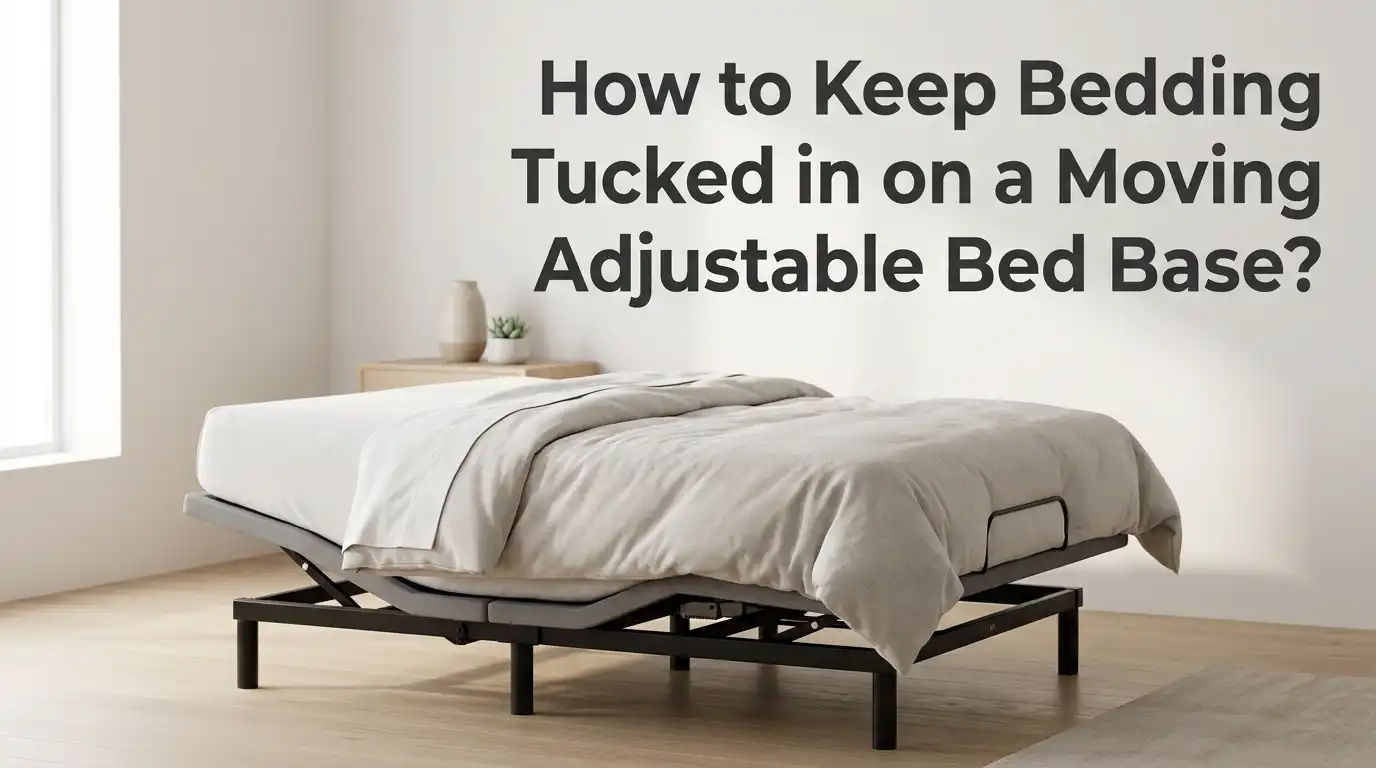
But there is one frustrating side effect that almost every owner faces. Your fitted sheet pops off the corners. Your top sheet bunches up at your feet. Your blanket slides toward the floor every time the base moves.
This problem is common, and it has nothing to do with how careful you are when making the bed. The bending motion of an adjustable base pulls fabric in directions a regular mattress never does.
Key Takeaways
- Deep pocket fitted sheets with pockets of 15 inches or more hug the mattress tighter and resist slipping when the base bends.
- Sheet straps, suspenders, and clips anchor each corner so the fitted sheet cannot lift off during head or foot adjustments.
- Oversized flat sheets and blankets give you extra fabric to tuck deep under the mattress, which prevents bunching at the foot of the bed.
- Fabric choice matters a lot. Cotton percale, jersey, and bamboo grip the mattress better than slippery sateen or polyester.
- Adjusting the bed before tucking lets you secure the sheets at full bend, which leaves slack to absorb movement instead of fighting it.
- Mattress straps, non slip pads, and retainer bars stop the mattress itself from shifting, which keeps the whole bedding system stable.
Why Sheets Slip Off Adjustable Beds in the First Place
Most fitted sheets are built for flat, still mattresses. An adjustable base bends, lifts, and tilts, which stretches the fabric in ways it was never designed to handle. When you raise the head section, the mattress shortens slightly along the top surface and lengthens along the sides.
This constant pulling loosens shallow pockets and weak elastic. Standard sheets often have only an inch of elastic stitched around the edge. That is not enough grip for a moving base. Add a thick mattress topper, and the pocket depth becomes even more of a problem.
Understanding this helps you choose smarter fixes. You are not doing anything wrong. The bed is simply moving, and the bedding needs help to keep up with it.
Choose Deep Pocket Fitted Sheets With Strong Elastic
The first fix is also the easiest. Swap your regular fitted sheet for one with deep pockets and full elastic all the way around. Look for sheets that advertise pocket depths of 15 to 22 inches. Measure your mattress first, including any topper, so you buy the right size.
Strong elastic that wraps the entire edge, not just the corners, keeps the sheet hugging the mattress even during motion. Cheap sheets often skimp here, which is why they slide off so quickly.
Pros: Simple swap, no extra gadgets, looks neat, works for most users.
Cons: Quality deep pocket sheets cost more, and very thin mattresses may need to size down to avoid loose fabric.
Use Sheet Suspenders to Anchor the Corners
Sheet suspenders are elastic straps with metal clips on both ends. You attach one end to each corner of the fitted sheet, run the strap under the mattress, and clip the other end to the opposite corner. This creates tension that holds the sheet down no matter how the base bends.
Most sets come in packs of four. They take less than two minutes to install. You can leave them on permanently and wash the sheet with them still attached if the clips are plastic.
Pros: Cheap, reusable, works with any sheet you already own, very effective.
Cons: Clips can leave small marks on delicate fabric, and metal clips may scratch your mattress label if not placed carefully.
Try Sheet Fasteners or Clips for Quick Fixes
Sheet fasteners are smaller cousins of suspenders. They use spring loaded clips to grab the sheet fabric at the corner without going under the mattress. Some versions have a single clip that pulls two corners together with one strap.
These are great for spot fixing a sheet that lifts on one side. They are also handy when you have a heavy mattress that is hard to lift for installing full suspenders.
Pros: Very fast to install, no need to move the mattress, low cost.
Cons: Less holding power than full suspenders, can pop off if the clip is weak, may pinch fingers during setup.
Switch to Sheets Made From Grippy Fabrics
Fabric matters more than most people think. Sateen weaves feel silky, but they also slide easily. Percale cotton, jersey knit, flannel, and bamboo have more surface texture, which grips the mattress instead of gliding across it.
Jersey sheets, made from the same fabric as t shirts, stretch with the bend of the bed and stay snug. Flannel grips well in winter but can feel too warm in summer. Bamboo offers a smooth feel with a slight grip, which is a nice middle ground.
Pros: No extra hardware needed, comfortable, available in many price ranges.
Cons: Some grippy fabrics like flannel are season specific, and stretchy jersey can pill over time.
Pick Oversized Flat Sheets and Blankets
A flat sheet that barely covers the mattress will always slip out. The fix is to size up. If you have a queen mattress, buy a king flat sheet. The extra fabric gives you deep tuck room on both sides and at the foot.
The same trick works for blankets and comforters. An oversized blanket can be folded under the mattress at the foot, which acts like a built in anchor. When the bed bends, the tucked fabric stays put while the top still drapes naturally over your body.
Pros: Solves bunching at the foot of the bed, no gadgets required, easy to do tonight.
Cons: Oversized bedding looks bulkier when stored, and you may need to trim or hem if too long.
Make the Bed in a Bent Position First
This is a clever trick most people miss. Raise the head and foot of your adjustable base to a typical use angle before you tuck in the sheets. Then make the bed with the base already bent.
When you flatten the base afterward, the sheets will have slight slack instead of being stretched tight. That slack absorbs the bending motion every night, which stops corners from popping off.
Pros: Free, takes only one extra minute, works with any sheet you own.
Cons: Bed looks a little loose when flat until you smooth it out, requires you to remake the bed once after buying new sheets.
Use a Bed Scrunchie or Sheet Tightener
A bed scrunchie is a single elastic cord with adjustable buckles that runs around the entire perimeter of your fitted sheet, just under the mattress edge. It pulls all four sides tight at once, like a drawstring on a hood.
These are popular because they work on any mattress thickness, including super tall pillow tops with toppers. They also let you adjust tension without removing the sheet.
Pros: Works on all bed sizes, easy to tighten without unmaking the bed, very secure.
Cons: Initial setup takes about ten minutes, the cord can wear out after long use, slightly more expensive than basic clips.
Add Elastic Corner Bands to Loose Sheets
If you have older sheets you love but the elastic has stretched out, elastic corner bands can save them. These are stretchy loops that slip over each corner of the fitted sheet from underneath the mattress.
They restore tension without forcing you to throw out the sheet. Many come in packs of four for under the cost of a single new sheet set. They are also nearly invisible once the bed is made.
Pros: Extends the life of older sheets, very affordable, simple to install.
Cons: Not as strong as full suspenders, may slip on very thick mattresses, single use loops can snap if overstretched.
Secure the Mattress Itself to the Base
Sometimes the problem is not the sheets. It is the mattress sliding on the base. When the mattress drifts, it pulls the bedding with it. Most adjustable bases come with a retainer bar at the foot. Make sure yours is installed and raised.
If your base does not have one, you can add non slip mattress pads or rubberized grip mats between the mattress and the base. Some users also use mattress straps that loop around the whole mattress and base to lock them together.
Pros: Fixes the root cause for many users, improves overall bed stability.
Cons: Requires lifting the mattress to install, grip pads can shift over time, retainer bars limit how flat the foot section can lay.
Tuck Bedding Hospital Corner Style
The hospital corner fold is a classic for a reason. It creates a tight, angled tuck that stays in place far better than a simple flat tuck. Lay the flat sheet over the bed, then tuck the foot end fully under the mattress.
Next, lift the side hanging fabric, fold it up at a 45 degree angle, and tuck the rest under. Repeat on the other side and at the head if needed. The folded fabric locks itself in place and resists pulling out even during bed movement.
Pros: Free, professional looking, very secure, works on any bed.
Cons: Takes practice to master, some sleepers find tightly tucked sheets restrictive at the feet.
Switch to a Duvet or Comforter Without a Top Sheet
If you keep losing the battle with top sheets, consider going European style. Many people in Europe sleep with just a fitted sheet and a duvet, no flat sheet at all. The duvet is heavier than a sheet, so it stays in place by its own weight.
You wash the duvet cover weekly, just like a sheet. This setup removes one piece of bedding from the tucking problem entirely. It also looks tidy with very little effort.
Pros: Fewer pieces to manage, easier daily bed making, duvet weight prevents sliding.
Cons: Duvet covers can be tricky to change, may feel too warm for hot sleepers, less traditional look for some households.
Combine Multiple Methods for the Best Results
No single fix solves every problem for every sleeper. The most reliable setup layers several solutions together. For example, start with deep pocket sheets in a grippy fabric like percale. Add sheet suspenders at all four corners. Finish with an oversized flat sheet tucked hospital corner style.
This combo gives you three layers of holding power. Even if one method loosens slightly, the others keep everything in place. Most users find that two or three small fixes work better than one expensive product.
Pros: Highly reliable, customizable to your bed and budget, addresses both fitted and flat bedding.
Cons: Slightly more setup time, small upfront cost for multiple tools.
Maintain Your Bedding for Long Term Hold
Even the best sheets and clips lose grip if they are not cared for. Wash fitted sheets in warm water, not hot, since heat breaks down elastic faster. Tumble dry on low or hang dry to extend the elastic life.
Check your suspenders and clips every few weeks. Replace any that have stretched out or cracked. Rotate between two sheet sets to share the wear. Small habits like these keep your tucked in setup working for years.
Pros: Saves money long term, keeps bedding looking new, prevents sudden failures at night.
Cons: Requires consistent attention, low heat drying takes longer than high heat.
Frequently Asked Questions
Do adjustable beds need special sheets?
Not always, but special sheets help a lot. Standard sheets often slip off when the base moves. Sheets labeled for adjustable beds usually have deeper pockets, stronger elastic, or built in corner straps. If you do not want to buy new sheets, you can add suspenders or clips to your current ones.
What pocket depth is best for adjustable bed sheets?
Aim for at least 15 inches, and go up to 22 inches if you have a thick mattress with a topper. Measure your mattress from top to bottom while it is on the base. Add an inch or two for safety. A pocket that is too shallow will always pop off.
Can I use a regular fitted sheet on an adjustable base?
Yes, but expect some slipping. To make a regular sheet work, add sheet suspenders, elastic corner bands, or a bed scrunchie for extra hold. Tucking the sheet while the base is slightly bent also helps reduce stress on the corners.
Why does my mattress slide on the adjustable base?
Most adjustable bases have a smooth surface that lets mattresses drift, especially during foot or head adjustments. Use the retainer bar at the foot if your base has one. Add non slip pads between the mattress and base to stop sliding.
Are sheet suspenders safe for my mattress?
Yes, when used correctly. Most suspenders have plastic or padded metal clips that grip fabric without piercing it. Avoid sharp metal clips on delicate sheets. Place clips at the corner seam rather than the middle of the fabric to prevent stretching or tearing.
How often should I replace bed straps and clips?
Check them every three to six months. Replace any clip that has lost spring tension or any strap that no longer stretches back to its original length. Quality suspenders can last one to two years with regular use and proper care.
Will a mattress topper make sheet slipping worse?
Yes, a topper adds height and changes the shape of the mattress, which makes shallow pocket sheets pop off faster. If you use a topper, buy sheets with pockets deep enough to cover both the mattress and topper. You can also strap the topper to the mattress to keep everything tight.

Hi, I’m Ava Day, the founder and lead writer at Cozy Bed Vault. I’m passionate about sleep wellness and dedicated to helping people find their perfect mattress. Through honest reviews, detailed comparisons, and expert buying guides, I simplify the mattress shopping experience so you can sleep soundly every night.