How to Stop a Mattress From Sliding Off a Metal Platform Bed?
A sliding mattress is one of those small annoyances that can ruin your entire night. You fall asleep in the center of your bed, and by 3 a.m., your mattress has drifted off the metal platform like a slow escape artist. You wake up uncomfortable, groggy, and frustrated.
Metal platform beds are popular for good reason. They look sleek, they are affordable, and they offer solid support without a box spring.
But there is one major downside: many metal platform beds lack the friction and side barriers needed to keep a mattress in place. The smooth metal slats or flat surface can turn your mattress into a slip and slide every time you toss or turn.
Key Takeaways
- Friction is your best friend. Most mattresses slide on metal platform beds because the smooth surfaces create very little grip. Adding any material that increases friction between the mattress bottom and the bed frame will solve the problem almost instantly.
- Size mismatch is a hidden cause. A mattress that is too small for your bed frame will have room to shift around. Always confirm that your mattress and platform bed share the same size dimensions before trying other fixes.
- Non slip pads and rubber mats are the easiest solutions. These affordable items take seconds to place and provide immediate results. They work on almost every type of metal platform bed without any tools or installation.
- Velcro strips and carpet tape offer stronger holds. If lightweight pads are not enough, adhesive solutions create a firmer bond between your mattress and the platform. They are still easy to apply and remove.
- Mattress retainer bars and gaskets are the most permanent fixes. These hardware solutions screw directly into your bed frame and physically block the mattress from moving. They require a small investment and basic tools but offer the most reliable long term results.
- Regular cleaning matters more than you think. Dust, sweat, and oils build up on both your mattress bottom and bed frame over time. This buildup reduces friction and makes sliding worse. A quick vacuum or wipe down every few weeks can prevent the problem from returning.
Why Does a Mattress Slide on a Metal Platform Bed
Understanding the root cause helps you choose the right fix. Metal platform beds have flat, smooth surfaces made from steel slats or a solid metal sheet. These surfaces produce very little friction compared to wooden slats or fabric covered foundations.
Your body weight shifts every time you move during sleep. Each movement transfers force to the mattress, and without enough grip, the mattress slowly creeps across the platform. Memory foam and latex mattresses are especially prone to this because their smooth bottom covers glide easily on metal.
Another factor is the absence of side rails, headboards, or footboards on many modern metal platform designs. Without physical barriers, nothing stops the mattress from drifting in any direction. Gravity also plays a role if your bed frame is even slightly uneven or tilted.
Sweat and body oils seep through your sheets and mattress over time. These substances coat the mattress bottom and the metal frame, creating a slick layer that worsens the sliding problem with each passing month.
Check Your Mattress and Frame Size Compatibility
Before spending money on accessories, confirm that your mattress and platform bed are the same size. A queen mattress on a king platform will slide because there is extra space on all sides. Even a one inch difference can cause noticeable movement.
Grab a tape measure and check the length and width of both your mattress and your bed frame. Standard sizes should match, but manufacturing variations exist. Some brands run slightly smaller or larger than the expected dimensions.
If your mattress is too small for the frame, a non slip pad alone may not solve the problem. You might need gap fillers or mattress extenders along the edges to create a snug fit. These foam wedges fill the empty space and prevent the mattress from shifting sideways.
Pros: Checking size compatibility costs nothing and takes five minutes. It eliminates the most common cause of sliding.
Cons: If you discover a size mismatch, you may need to replace either the mattress or the frame, which can be expensive.
Use Non Slip Mattress Pads
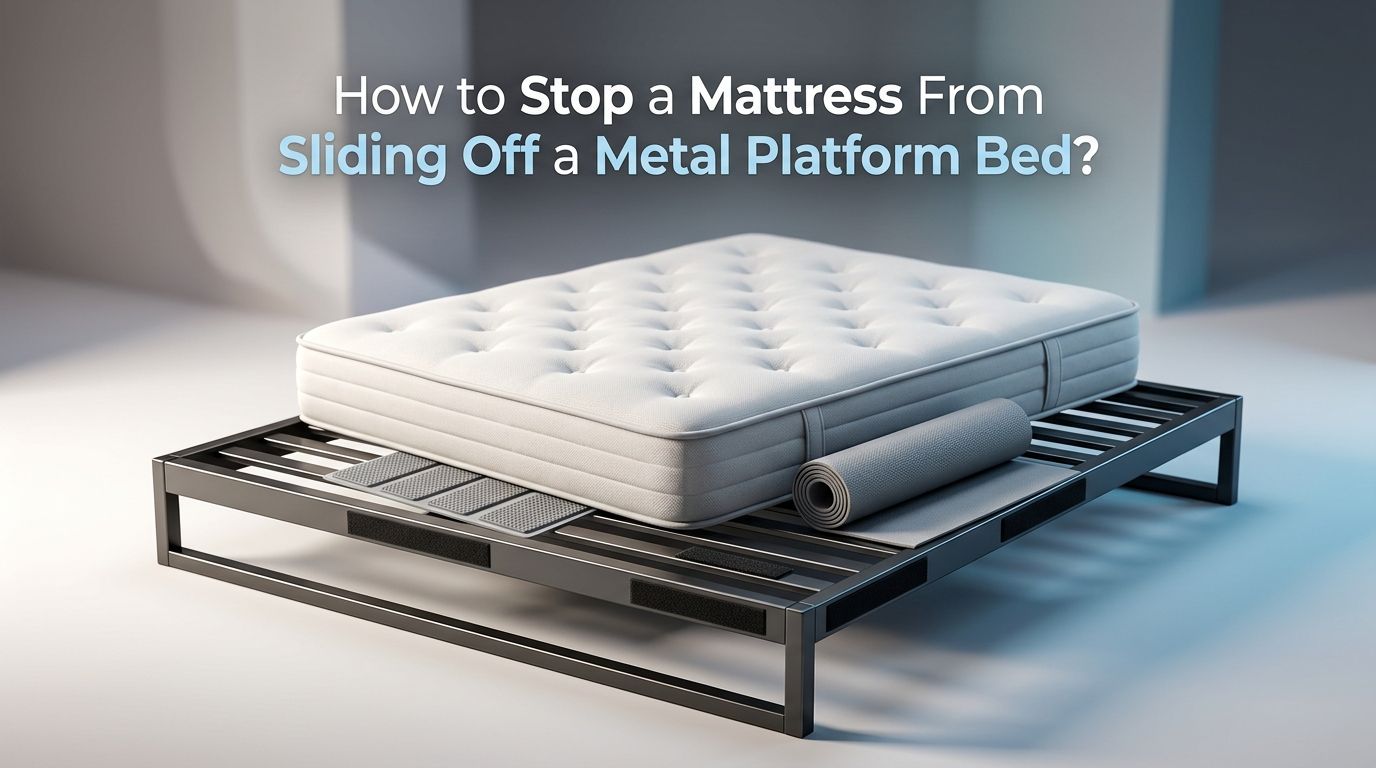
Non slip mattress pads are the most popular solution for a reason. They are cheap, easy to use, and effective. You simply place the pad between your mattress and the metal platform, and the textured surface grips both surfaces to prevent movement.
These pads are usually made from rubber, silicone, or a rubberized fabric. They come in standard mattress sizes, so finding one that fits your bed takes minimal effort. Most pads are thin enough that you will not feel any difference in mattress height or comfort.
For the best results, cover at least 80% of the platform surface with the pad. Small pads placed only at the corners may shift over time and lose their effectiveness. A full size pad provides consistent grip across the entire mattress bottom.
Pros: Affordable, no tools required, and works immediately. Does not damage the mattress or frame. Easy to remove and reposition.
Cons: Lower quality pads can wear out within a few months. Some pads trap heat between the mattress and frame, which may affect airflow. Needs occasional cleaning to maintain grip.
Apply Rubber Shelf Liner or Rubber Mats
Rubber shelf liner is a budget friendly alternative to specialty non slip mattress pads. You can find rolls of rubber liner at most home improvement or dollar stores. The textured rubber surface creates strong friction against both the mattress and metal frame.
Cut the liner to match the dimensions of your platform bed. Place it directly on the metal slats or flat surface before setting your mattress on top. The rubber grips the metal firmly and holds the mattress in place even during active sleep.
This method works especially well on smooth metal surfaces where the mattress has zero traction. You can also layer two sheets of liner for extra grip if one layer is not enough. The liner is easy to remove for cleaning or replacement.
Pros: Very inexpensive. Available at most stores. Easy to cut to any size. Does not leave residue on the mattress or frame.
Cons: Rubber can develop an odor, especially in warm environments. May need replacement every six to twelve months as the rubber loses its grip. Thicker mats can slightly raise the mattress height.
Attach Velcro Strips to the Mattress and Frame
Velcro provides a strong and adjustable bond between your mattress and the platform. You attach the hook side of the Velcro to the bed frame and the loop side to the bottom of the mattress. When pressed together, the two sides lock firmly.
Cut the Velcro strips into pieces about six to eight inches long. Place strips along the head, foot, and both sides of the bed. Press the adhesive backing firmly onto each surface and allow it to set for at least 24 hours before use.
Velcro lets you lift and reposition your mattress whenever you need to clean or rotate it. The connection is secure enough to prevent nightly sliding but easy enough to separate intentionally.
Pros: Strong hold that resists movement from tossing and turning. Easy to apply and remove. Reusable and adjustable.
Cons: The adhesive can weaken over time, especially on dusty or oily surfaces. Velcro can make a ripping sound when you lift the mattress, which some people find annoying. May leave adhesive residue on the mattress fabric when removed permanently.
Use Double Sided Carpet Tape
Double sided carpet tape is a quick temporary fix for a sliding mattress. This tape sticks to both the bed frame and the mattress bottom, creating a bond that holds the mattress in place. You can apply it in minutes without any special tools.
Clean both surfaces thoroughly before applying the tape. Dust and oils will weaken the adhesive. Apply strips of tape along the perimeter of the bed frame, focusing on the head and foot areas where sliding is most common.
Carpet tape works best as a short term solution. Over weeks or months, the adhesive collects dust and debris, which reduces its stickiness. You will need to replace the tape periodically to maintain its holding power.
Pros: Very affordable and widely available. Takes only minutes to apply. Provides immediate grip.
Cons: Adhesive residue can be difficult to remove from the mattress or frame. Loses effectiveness over time. Not ideal for people who rotate or flip their mattress frequently.
Install Mattress Retainer Bars
Mattress retainer bars are metal rods that physically block the mattress from moving. These L shaped or U shaped bars attach to the foot or sides of your bed frame with screws or clamps. They create a raised edge that holds the mattress within the frame boundaries.
Most retainer bars are adjustable, so they fit a range of bed sizes. Installation requires basic tools like a screwdriver or Allen wrench. You slide the bar under the mattress edge and secure it to the frame. The bar sits flush against the mattress and prevents any forward or sideways drift.
This is one of the most reliable long term solutions available. Once installed, retainer bars require zero maintenance and hold the mattress firmly through years of use.
Pros: Permanent solution that requires no replacement. Strong hold that resists even heavy movement. Low profile design stays hidden under sheets and blankets.
Cons: Requires tools and some assembly. May not fit all bed frame designs. Can be harder to remove the mattress for cleaning or rotation.
Add Mattress Gaskets to Your Metal Frame
Mattress gaskets are small brackets or clamps that screw directly into the metal frame. They grip the edge of the mattress and hold it in place. Think of them as small arms that wrap around the mattress border and lock it down.
These gaskets are specifically made for metal bed frames. They are sold in packs of two, four, or six and are placed at even intervals around the frame. Installation takes about 15 minutes with a basic screwdriver.
Gaskets work especially well on metal platform beds because the frames already have pre drilled holes or smooth surfaces where screws can attach easily. The clamps are adjustable to fit mattresses of various thicknesses.
Pros: Secure and permanent solution. Affordable and easy to install. Designed specifically for metal bed frames.
Cons: Screwing into the frame may void some warranties. Not suitable for all frame styles. Removing the mattress requires loosening the gaskets first.
Add a Headboard or Footboard
If your metal platform bed has no headboard or footboard, adding one provides a physical barrier that stops the mattress from sliding off the edges. A headboard prevents the mattress from drifting upward, and a footboard keeps it from sliding down.
Many metal platform beds have mounting holes for attaching headboards and footboards. You can purchase standalone headboards that bolt directly onto the frame. Even a simple wall mounted headboard provides a solid stop for the mattress.
A footboard is especially helpful if your bed sits on a slight incline or if you tend to push against the mattress with your feet while sleeping. The combination of a headboard and footboard creates a contained space that holds the mattress securely on all sides.
Pros: Adds both function and style to your bedroom. Provides a solid physical barrier. Lasts the lifetime of the bed.
Cons: Can be expensive depending on the style. Requires installation and may need additional hardware. Changes the look of a minimal platform bed design.
Keep Your Bed Frame Level and Tightened
A wobbly or unlevel bed frame can cause your mattress to slide in one direction. Check that all four legs of your platform bed sit flat on the floor. Use a small level tool on the frame surface to confirm it is even.
Tighten every bolt, screw, and connection point on your bed frame. Metal platform beds use many small fasteners that can loosen over time. A loose frame wobbles with each movement, and that wobble transfers energy to the mattress and pushes it off center.
Place furniture pads or rubber caps under the bed legs if the floor is uneven. These small adjustments can eliminate the tilt that causes the mattress to drift. Check the frame every few months and retighten any loose hardware.
Pros: Free and easy to do. Fixes the root cause of sliding in many cases. Extends the life of your bed frame.
Cons: May not fully solve the problem if the floor itself is very uneven. Requires periodic maintenance. Does not add extra friction to the mattress surface.
Clean the Mattress Bottom and Frame Regularly
Dust, dead skin cells, sweat residue, and body oils accumulate on the underside of your mattress and on the metal frame. This buildup creates a slippery film that reduces friction and makes sliding worse over time.
Use your vacuum cleaner with an upholstery attachment to clean the bottom of your mattress every one to two months. Wipe down the metal slats or platform surface with a damp cloth and mild cleaner. Allow everything to dry completely before putting the mattress back.
This simple maintenance step can restore the natural friction between your mattress and the platform. Many people overlook cleaning as a solution, but it makes a noticeable difference, especially if your mattress has been on the same frame for a long time.
Pros: Costs nothing. Improves hygiene and air quality. Restores natural grip between surfaces.
Cons: Requires lifting the mattress, which can be heavy. Needs to be repeated regularly. Will not solve the problem alone if the root cause is a size mismatch or lack of barriers.
Consider a Fitted Mattress Encasement With Grip Bottom
A fitted mattress encasement wraps around your entire mattress like a zippered cover. Some encasements feature a non slip bottom layer made from rubberized or textured fabric. This bottom layer grips the metal platform and prevents the mattress from sliding.
These encasements also protect your mattress from dust mites, spills, and allergens. They act as a two in one solution that improves both mattress stability and hygiene. Look for encasements that specifically mention a non slip or grip bottom feature.
Choose an encasement that fits your mattress thickness snugly. A loose fitting cover will bunch up and lose its grip. Measure your mattress depth before purchasing to ensure a proper fit.
Pros: Combines mattress protection with anti slide functionality. Machine washable for easy cleaning. Does not require any installation or tools.
Cons: Quality encasements can be moderately expensive. The non slip feature may wear down after many wash cycles. Some encasements can feel warm or change the feel of the mattress surface.
Combine Multiple Methods for the Best Results
Sometimes a single solution does not fully solve the problem. Combining two or three methods gives you the strongest defense against a sliding mattress. For example, you can place a rubber mat on the platform, add Velcro strips at the corners, and install a footboard at the end of the bed.
Start with the easiest and most affordable method first. If the mattress still moves, add a second layer of protection. Most people find that a non slip pad combined with a retainer bar eliminates all movement, even for active sleepers or couples sharing the bed.
Think of each method as a layer in your anti slide strategy. Friction pads handle the surface grip. Retainer bars and gaskets handle the physical containment. And regular cleaning maintains everything over time.
Pros: Provides maximum mattress stability. Lets you customize the solution to your specific bed and sleep habits. Uses affordable items that are easy to find.
Cons: Using too many methods at once can make removing the mattress for cleaning or rotation more difficult. Costs add up if you purchase multiple products. Overdoing it may feel unnecessary for light sleepers who do not move much.
Frequently Asked Questions
Why does my mattress keep sliding off my metal platform bed?
The most common reason is a lack of friction between the smooth mattress bottom and the smooth metal surface. Metal platform beds often lack the texture or barriers that wooden frames and box springs provide. Body movement during sleep gradually pushes the mattress across the slick surface. Size mismatches, missing headboards or footboards, and dust buildup also contribute to the problem.
What is the cheapest way to stop a mattress from sliding?
Rubber shelf liner is one of the most affordable options available. You can buy a roll for a few dollars at most stores. Cut it to fit your bed frame, place it on the platform, and set your mattress on top. It provides immediate grip and lasts several months before needing replacement. Cleaning the mattress bottom and frame is another free method that restores natural friction.
Do non slip pads damage the mattress or bed frame?
No, most non slip pads are made from soft rubber or silicone that does not scratch metal or stain fabric. They sit passively between the mattress and frame without adhesive, so they leave no residue. Simply lift the mattress and remove the pad whenever you need to clean or reposition it.
Can I use Velcro strips on a memory foam mattress?
Yes, Velcro strips work well on memory foam mattresses. Attach the adhesive backed strips to the bottom fabric cover of the mattress, not the foam itself. The bond between the Velcro sides holds firmly during sleep and separates easily when you need to lift the mattress. Clean the surfaces before applying the strips for the best adhesion.
How often should I clean under my mattress to prevent sliding?
Aim to vacuum the mattress bottom and wipe down the metal frame every four to eight weeks. This removes the dust and oil buildup that creates a slippery layer between the two surfaces. Regular cleaning extends the effectiveness of any anti slide products you use and keeps your sleeping environment fresh and hygienic.
Will a mattress topper help prevent sliding?
A mattress topper sits on top of the mattress, so it does not directly prevent the mattress from sliding off the frame. However, a topper can add weight to the mattress, which slightly increases friction against the platform. For the best results, pair a topper with a non slip pad or rubber mat placed underneath the mattress.

Hi, I’m Ava Day, the founder and lead writer at Cozy Bed Vault. I’m passionate about sleep wellness and dedicated to helping people find their perfect mattress. Through honest reviews, detailed comparisons, and expert buying guides, I simplify the mattress shopping experience so you can sleep soundly every night.