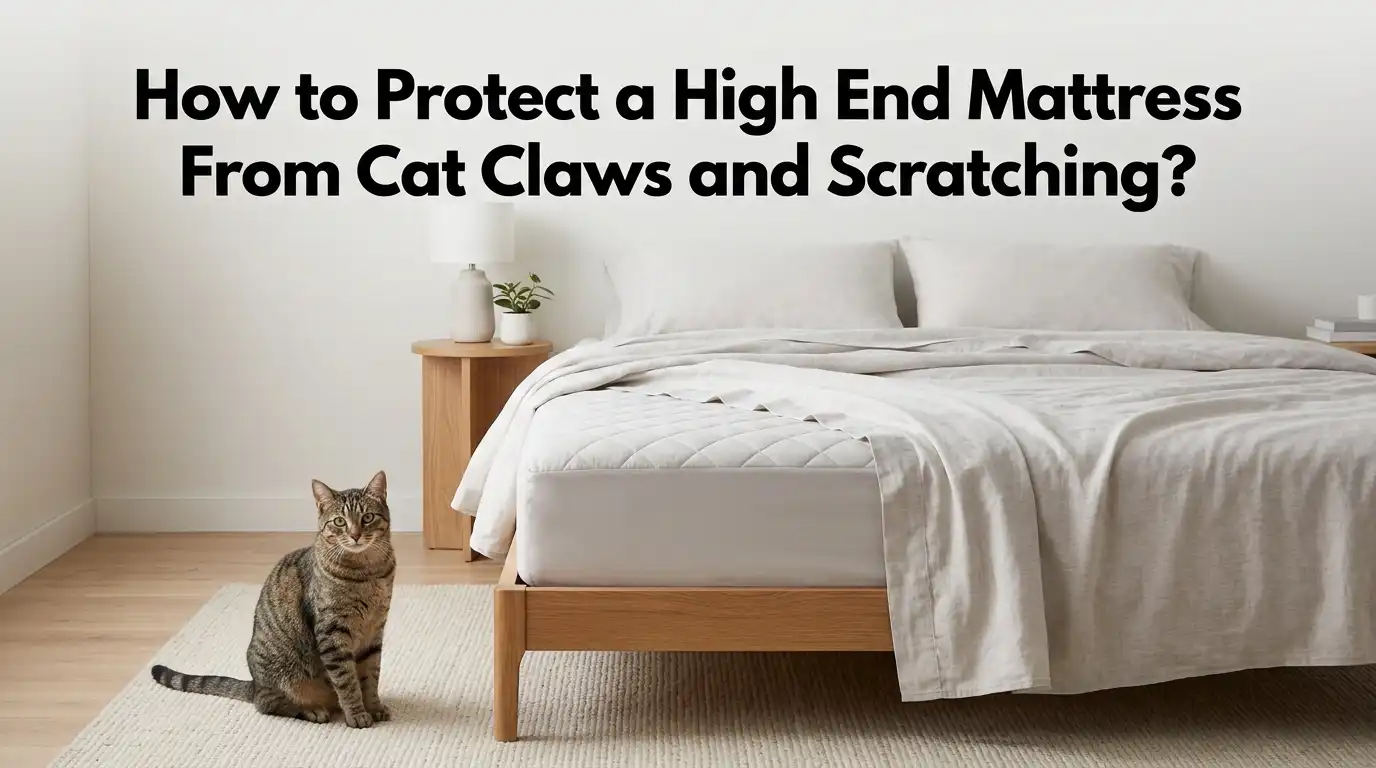
How to Protect a High End Mattress From Cat Claws and Scratching?
You just invested in a premium mattress. It feels like sleeping on a cloud. Then your cat decides it is the perfect scratching surface. Those sharp little claws can shred fabric, tear foam, and damage the cover in seconds. The frustration is real, especially when you paid top dollar for quality sleep.
Here is the good news. You do not have to choose between your beloved cat and your expensive mattress.
Millions of cat owners face this exact problem, and there are practical, tested solutions that protect your investment without stressing out your pet. Scratching is a natural feline behavior driven by instinct.
In a Nutshell
- Use a heavy duty mattress protector or encasement as your first line of defense. These covers wrap around the entire mattress and create a durable barrier between cat claws and your expensive fabric. Look for materials like thick polyester, vinyl, or reinforced microfiber that resist punctures and tears.
- Trim your cat’s nails every two to three weeks to reduce the sharpness of their claws. Blunt nails cause significantly less damage to fabric and foam. This single habit can cut mattress damage by more than half.
- Provide multiple scratching alternatives such as sisal posts, cardboard pads, and carpet scratchers placed near your bed. Cats often scratch the mattress because no better option is within reach. Giving them a preferred surface close by solves the root cause of the problem.
- Consider soft nail caps as a temporary protective measure. These small plastic covers glue onto your cat’s claws and last four to six weeks before falling off naturally. They prevent damage without affecting your cat’s ability to retract their nails.
- Apply cat safe deterrent sprays with citrus or peppermint scents to the mattress edges and sides. Cats dislike these smells and will avoid scratching treated surfaces. Reapply every few days for best results.
- Train your cat with positive reinforcement to use approved scratching surfaces. Reward them with treats, praise, or play every time they choose the scratching post over the mattress. Consistency is the key to long term success.
Why Cats Scratch Your Mattress in the First Place
Cats do not scratch your mattress out of spite. This behavior is hardwired into their biology. Scratching helps cats shed the outer dead layer of their claws, keeping them sharp and healthy. It also stretches the muscles in their paws, legs, and shoulders.
Your mattress sits at a perfect height and angle for this full body stretch. The fabric offers a satisfying texture under their paws. Cats also deposit scent from glands in their paw pads when they scratch, marking the mattress as their territory.
According to research, about 83 percent of cat owners report their pets scratching inappropriate items around the home. Furniture, carpeting, and bedding top the list. Understanding this instinct is the first step. You are not dealing with a bad cat. You are dealing with a normal cat that needs better options.
Choose a Scratch Resistant Mattress Protector
A quality mattress protector is the simplest and most effective physical barrier you can place between claws and your mattress. Look for encasement style protectors that zip around the entire mattress rather than just covering the top. This protects the sides and bottom where cats often scratch.
Heavy duty vinyl or reinforced polyester protectors resist punctures far better than thin cotton covers. Some protectors designed for bed bug prevention are also excellent against cat claws because they use thick, tightly woven materials.
Pros: Full coverage protection, waterproof options available, easy to wash, does not change the feel of your bed much, affordable.
Cons: Some vinyl protectors can feel crinkly or warm, cheaper versions may tear over time, needs occasional replacement.
Trim Your Cat’s Claws Regularly
Regular nail trimming is one of the most impactful things you can do to minimize mattress damage. A cat with trimmed claws simply cannot dig into fabric the way a cat with sharp, long nails can.
Aim to trim your cat’s nails every two to three weeks. Use cat specific nail clippers and cut about two millimeters above the pink area called the quick. If you cut into the quick, it will bleed and cause pain. Hold your cat’s paw gently, press the pad to extend the nail, and clip at a slight angle.
Pros: Reduces damage significantly, inexpensive, improves safety for everyone in the household, takes only a few minutes.
Cons: Some cats resist handling, risk of cutting the quick, requires consistent effort, does not eliminate scratching behavior itself.
If your cat will not tolerate nail trimming at home, a groomer or veterinarian can do it quickly and safely for a small fee.
Use Soft Nail Caps on Your Cat’s Claws
Nail caps are small plastic or acrylic covers that fit over each of your cat’s claws. They attach with a safe adhesive and last about four to six weeks before falling off naturally as the nails grow.
These caps do not stop your cat from retracting their claws. They also do not affect normal nail growth. They simply blunt the claw tips so scratching causes no damage to fabric, furniture, or skin.
Pros: Effective protection, affordable at around ten to twenty dollars for hundreds of caps, available in multiple sizes and colors, considered a humane alternative to declawing.
Cons: Require reapplication every four to six weeks, some cats chew at them creating a potential choking hazard, can prevent cats from shedding dead nail sheaths naturally, not suitable for outdoor cats, may cause stress in sensitive cats.
Always consult your veterinarian before using nail caps, especially if your cat has never worn them.
Invest in Scratching Posts and Pads Near Your Bed
The most effective long term solution is giving your cat something better to scratch. Place a sturdy scratching post or pad right next to your bed. If the cat has a satisfying alternative within reach, they are far less likely to target the mattress.
Offer a variety of textures. Sisal rope, corrugated cardboard, and carpet covered posts all appeal to different cats. Some cats prefer vertical surfaces while others like horizontal or angled pads. Experiment to see what your cat chooses most often.
Sprinkle catnip on the new scratching surface to spark interest. Once your cat starts using the post, do not throw it away when it looks worn. Cats prefer scratched up posts because they are easier to grip and already carry familiar scent.
Pros: Addresses the root cause of the behavior, long lasting solution, many affordable options available, enriches your cat’s environment.
Cons: Takes time for the cat to adopt the new surface, requires some trial and error, scratching posts take up floor space.
Apply Cat Safe Deterrent Sprays
Cats have a strong sense of smell, and certain scents repel them effectively. Citrus, peppermint, and citronella are among the most disliked scents for cats. Spraying a cat safe deterrent on the sides and edges of your mattress can discourage scratching.
Many commercial cat repellent sprays use plant based ingredients that are safe for pets and fabrics. You can also make a simple homemade version by mixing water with a few drops of orange or lemon essential oil in a spray bottle.
Spray the mattress edges every two to three days. Focus on the specific areas where your cat scratches most. Over time, your cat will associate the mattress with an unpleasant smell and avoid it.
Pros: Easy to apply, inexpensive, safe for pets when using proper formulas, does not alter the mattress surface.
Cons: Needs frequent reapplication, some cats may ignore the scent, strong smells may bother light sleepers, effectiveness varies between cats.
Try Double Sided Tape on Mattress Edges
Cats dislike the sensation of sticky surfaces on their paws. Double sided tape applied to the mattress sides creates an unpleasant texture that discourages scratching. Special cat scratch tape products are available that are transparent and designed for furniture use.
Apply strips of tape along the mattress edges and corners where your cat typically scratches. The sticky feeling will make your cat pull away and seek a different surface.
Pros: Inexpensive, easy to apply and remove, transparent options look invisible, effective for most cats.
Cons: Can leave adhesive residue on some fabrics, loses stickiness over time and needs replacement, may not work on all mattress materials, some cats learn to avoid the tape and scratch elsewhere.
Use Physical Barriers and Furniture Shields
Clear plastic furniture protectors are another practical option for mattress defense. These sheets attach to the mattress surface using twist pins or adhesive strips. They create a smooth, hard barrier that claws cannot grip or penetrate.
You can also place a fitted sheet over the box spring if your cat likes to crawl underneath and scratch from below. A tightly fitted sheet eliminates the loose fabric that attracts scratching.
For the mattress sides, consider placing a bed skirt made from tightly woven, scratch resistant fabric. This adds a protective layer while keeping your bedroom looking clean.
Pros: Provides solid physical protection, clear protectors are nearly invisible, twist pins leave no residue, protects specific problem areas.
Cons: May look odd on a luxury bed, requires installation, pins could come loose, limited coverage depending on protector size.
Train Your Cat With Positive Reinforcement
Behavioral training takes patience, but it produces lasting results that no product alone can achieve. Every time your cat scratches the approved post or pad, reward them immediately with a treat, gentle praise, or a play session.
Never punish your cat for scratching the mattress. Yelling or spraying water creates fear and can damage your bond. Instead, calmly redirect your cat to the scratching post. Pick them up gently and place them near the post. If they scratch it, reward them right away.
Consistency matters more than anything. Every member of your household should follow the same approach. Over time, your cat will learn that the scratching post brings rewards while the mattress brings no payoff.
Pros: Builds a lasting positive habit, strengthens your relationship with your cat, no ongoing product costs, addresses the behavior at its source.
Cons: Requires patience and consistency over weeks or months, may not work for all cats, needs participation from everyone in the home.
Keep Your Cat Mentally and Physically Stimulated
A bored cat is a destructive cat. Cats with excess energy often take out their frustration on furniture, bedding, and mattresses. Providing enough mental and physical stimulation reduces destructive scratching significantly.
Play with your cat for at least 15 to 20 minutes twice a day using interactive toys like feather wands, laser pointers, or puzzle feeders. Rotate toys regularly to keep things interesting. A cat tree near a window gives your cat climbing opportunities and visual stimulation from watching birds.
When your cat’s energy is spent through play, they are far less likely to scratch your mattress out of boredom or restlessness.
Consider Your Bedroom Setup and Access
Sometimes the easiest fix is adjusting your cat’s access to the bedroom. Closing the bedroom door while you are away prevents unsupervised scratching. If you prefer to keep the door open, consider placing the mattress on a platform frame without exposed box springs.
Elevating the bed or choosing a frame with solid side panels removes the exposed mattress edges that cats find most appealing. A low profile bed frame with a flush headboard and footboard leaves fewer surfaces for claws to grip.
You can also rearrange bedroom furniture to block your cat’s favorite scratching spots. A nightstand pushed against the mattress side your cat targets can act as a simple physical deterrent.
Create a Cat Friendly Sleep Zone
Instead of fighting your cat’s presence in the bedroom, create a designated space that satisfies their needs. Place a cozy cat bed near yours so your cat has their own spot. Add a small scratching pad right beside it.
Cats often scratch the mattress in the morning to wake their owners or express excitement. Having a scratching pad next to their sleeping spot gives them an instant outlet. Reward your cat every time they use their pad instead of your mattress.
You can also place a fleece blanket over the area of the mattress your cat prefers. This gives them a soft surface to knead without their claws reaching the actual mattress fabric.
Combine Multiple Methods for Best Results
No single solution works perfectly on its own. The most successful approach combines several methods working together. Use a heavy duty mattress protector as your foundation. Trim your cat’s nails every few weeks. Place a scratching post beside the bed. Apply deterrent spray on the mattress edges.
Layer these strategies and adjust based on what your cat responds to best. Some cats stop scratching the mattress after getting a great scratching post. Others need nail caps plus a protector plus behavioral training before the habit breaks.
Monitor your progress and be patient. Most cats can be redirected within a few weeks if you stay consistent with multiple approaches.
FAQs
How often should I trim my cat’s nails to protect my mattress?
Trim your cat’s nails every two to three weeks. This keeps the claws blunt enough to minimize fabric damage. If your cat’s nails grow quickly, you may need to trim them more frequently. A veterinarian or groomer can handle this task if your cat resists at home trimming.
Are nail caps safe for cats to wear long term?
Nail caps are generally safe for indoor cats when applied correctly. They do not prevent claw retraction or natural nail growth. However, they require replacement every four to six weeks and should be monitored for signs of discomfort. Cats that chew at them excessively may not be good candidates. Always consult a veterinarian before using them.
What type of mattress protector resists cat claws best?
Full encasement protectors made from heavy duty vinyl, thick polyester, or reinforced microfiber offer the best resistance against cat claws. Look for protectors originally designed for bed bug protection because they use tightly woven, puncture resistant materials. Avoid thin cotton or jersey covers as they tear easily.
Can I train an older cat to stop scratching the mattress?
Yes. Older cats can learn new habits through positive reinforcement. Place a scratching post near the bed and reward your cat every time they use it. Redirect them calmly away from the mattress and offer treats for good behavior. Training older cats may take longer than kittens, but consistency produces results at any age.
Will citrus spray damage my mattress fabric?
Most diluted citrus sprays will not damage mattress fabric, but you should always test a small hidden area first. Use a light mist rather than soaking the surface. Commercial cat deterrent sprays are formulated to be safe on fabrics and furniture. Reapply every two to three days to maintain the scent barrier.
Should I keep my cat out of the bedroom entirely?
Keeping your cat out of the bedroom is a valid option, especially if other methods have not worked. However, many cat owners prefer sharing their sleep space with their pet. If you choose to allow bedroom access, combine a quality mattress protector with regular nail trimming and scratching alternatives to minimize the risk of damage.

Hi, I’m Ava Day, the founder and lead writer at Cozy Bed Vault. I’m passionate about sleep wellness and dedicated to helping people find their perfect mattress. Through honest reviews, detailed comparisons, and expert buying guides, I simplify the mattress shopping experience so you can sleep soundly every night.