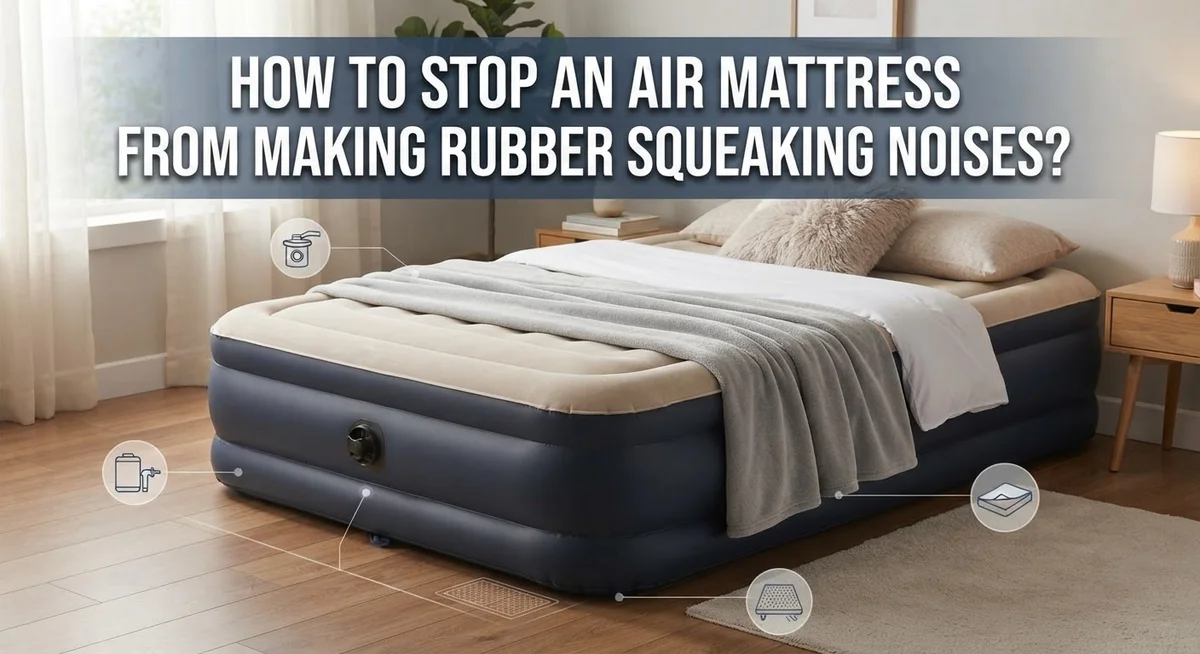
How To Stop An Air Mattress From Making Rubber Squeaking Noises?
Does your air mattress squeak every time you move? That annoying rubber noise can ruin a good night’s sleep.
You are not alone. Many people face this same problem every night.
The good news is that this issue has simple fixes. You do not need to buy a new mattress right away.
Rubber squeaking happens because of material friction and air movement inside the mattress. Sometimes the noise comes from the mattress rubbing against your bed frame or wall.
Other times, quick deflation causes that annoying sound. Loose components can also add to the noise problem.
In a Nutshell
- Add a mattress topper. This simple fix softens the sound and adds comfort. It works well for most rubber squeaking issues.
- Keep the mattress properly inflated. Too much or too little air causes friction inside. Check the pressure often to avoid noise.
- Place your mattress on a soft surface. Hard floors bounce sound back and make squeaking worse. A carpet or rug helps absorb it.
- Move the mattress away from walls and furniture. Contact with these objects creates extra vibration and noise. Give your bed some space to breathe.
- Tighten any loose frame or pocket parts. Loose components rub together and squeak loudly. A quick check can solve this problem.
- Deflate slowly and carefully. Rapid air release often causes sharp noises. Take your time when letting air out.
Why Air Mattresses Make Squeaking Noises
Air mattresses make squeaking noises for specific reasons. Understanding these causes helps you fix the problem effectively.
Rubber friction is the main culprit. The material inside your mattress rubs against itself when you move. This friction creates that annoying squeak sound. The rubber layers move slightly against each other, especially when you shift your weight or change positions during sleep.
Air movement inside the mattress adds to the noise. As you lie down, air shifts from one section to another. This movement causes the rubber walls to vibrate and squeak. The sound gets worse when the mattress is not inflated to the right level. Too much air creates pressure that increases friction. Too little air allows the sides to collapse and rub together more.
Rapid deflation produces sharp squeaking sounds. When you let air out quickly, the rubber contracts fast. This sudden movement creates noise as the material compresses. Some air mattresses have deflation systems that release air quickly, which makes this problem worse.
Loose internal components contribute to noise. Many air mattresses have frame pieces, air chambers, or pocket sections inside. When these parts are not secured properly, they vibrate and rub against each other. This creates additional squeaking on top of the rubber friction noise.
Contact with hard surfaces amplifies the sound. When your mattress sits on a hard floor, the squeaking noise bounces back up. Hard surfaces act like speakers that make the sound louder. Similarly, touching walls or furniture transfers vibration to these objects, which then vibrate and create more noise.
Age and wear increase squeaking over time. Older mattresses develop small cracks and weak spots in the rubber. These damaged areas squeak more easily. The material becomes less flexible and more prone to friction noise as it ages.
Checking Inflation Levels for Quieter Performance
Proper inflation levels play a crucial role in reducing squeaking noises from your air mattress. When your mattress has the right amount of air, the rubber material stays stable and experiences less internal friction.
Underinflation causes problems. When your mattress doesn’t have enough air, the rubber material shifts and moves excessively. This constant movement creates friction between different parts of the mattress. The more the material flexes, the more squeaking you hear. You should check the manufacturer’s recommended PSI (pounds per square inch) for your specific mattress model.
Overinflation also creates noise. Too much air puts pressure on the rubber walls and seams. This tension causes the material to vibrate and squeak when you move or shift your weight. The rubber becomes tight and stressed, which amplifies sound rather than absorbs it.
Find the sweet spot. The ideal inflation level keeps the rubber material taut but not overstressed. Your mattress should feel firm enough to support your body without feeling rock hard. You should be able to press down slightly with your hand and feel gentle resistance.
Check inflation regularly. Air mattresses naturally lose a small amount of air over time. Check your mattress inflation level every few days, especially during the first week of use. A simple pressure gauge helps you maintain consistent levels without guessing.
Adjust based on temperature. Air expands in warm conditions and contracts in cold conditions. If your bedroom temperature changes significantly, your mattress may need slight adjustments. Check your mattress after temperature shifts to ensure it stays at the proper level.
Monitor during use. Pay attention to how your mattress feels when you lie on it. If squeaking increases, your inflation level may have changed. Quick adjustments prevent the noise from becoming a nightly problem.
Step-by-Step Guide to Silencing Your Air Mattress
Add a mattress topper to your air bed. This simple solution works by creating a soft barrier between you and the rubber surface. The topper absorbs vibrations and reduces friction noise significantly.
Choose a topper made from memory foam or cotton materials. These fabrics dampen sound waves before they travel through the mattress. Thicker toppers generally work better than thin ones for noise reduction.
Place vibration absorbing material underneath your mattress. Rubber mats, foam sheets, or specialized underlayment products reduce sound transmission to the floor. This prevents squeaking from bouncing back up into your room.
Ensure your mattress sits on a soft surface. Carpeted floors work better than tile or wood. If you only have hard flooring, use a rug or blanket underneath your bed frame.
Tighten all visible frame components and pockets. Use your hands to feel around the mattress edges and seams. Push in any loose fabric or plastic pieces you find. Loose parts vibrate against each other and create annoying squeaks.
Rotate your air mattress every few weeks. This distributes wear evenly across the rubber material. Even weight distribution reduces friction points that cause noise.
Position your bed away from walls and furniture. When your mattress touches other objects, vibrations transfer and amplify squeaking sounds. Leave at least six inches of space on all sides.
Consider using a bunkie board beneath your mattress. This thin, solid platform sits between your air bed and the floor. It provides stable support and absorbs noise effectively.
Combine multiple solutions for best results. Using a topper plus underlayment plus proper positioning works better than any single method alone. Most people find that two or three of these techniques eliminate squeaking completely.
Choosing the Right Surface and Placement
The surface underneath your air mattress matters more than you might think. Hard floors like tile, wood, or concrete amplify squeaking sounds. When your mattress sits directly on these surfaces, vibrations travel through the floor and bounce back up, making noise louder.
Soft surfaces absorb sound instead of reflecting it. Carpet, rugs, or padded flooring naturally dampens vibrations. If your bedroom has hard floors, placing a soft layer between the mattress and floor reduces noise significantly. This simple step stops sound waves from bouncing around your room.
Placement location affects noise levels too. Position your air mattress away from walls and furniture. When your mattress touches walls or other items, vibrations transfer to those surfaces. This creates additional squeaking that seems to come from your bed. Leave at least a few inches of space on all sides for best results.
Corner placement is particularly problematic. Corners trap sound and amplify it. Center your mattress in the room when possible, or at least away from tight spaces.
Temperature also influences your surface choice. In cold rooms, place your mattress on insulating material. This prevents cold air from making the rubber material more rigid and prone to squeaking. In warm rooms, ensure adequate air circulation underneath your mattress to prevent moisture buildup.
Consider the type of base material carefully. Wooden frames, concrete slabs, and tile all conduct sound differently. Experiment with placement to find the quietest location in your bedroom.
Combining surface improvements with other solutions works best. A soft surface alone might reduce noise by half, but adding additional fixes creates even better results. Most people find that proper placement plus one or two other methods eliminates squeaking almost entirely.
Using Toppers and Padding to Reduce Friction
A mattress topper acts as a sound barrier between you and the squeaking rubber surface. The topper absorbs vibrations that would otherwise travel through the air mattress material. This simple addition can dramatically reduce the noise you hear when moving or shifting your weight.
Memory foam toppers work especially well for this purpose. The dense foam compresses when you move, which dampens the friction sounds from the rubber underneath. Cotton toppers also help by creating a soft layer that interrupts direct contact with the squeaking surface.
Thickness matters when selecting your topper. A topper between two and four inches provides good sound absorption without adding too much bulk. Thinner toppers may not block enough noise, while extremely thick ones can make the bed feel unstable.
Padding underneath your mattress serves a similar function. Place soft materials like foam pads, blankets, or specialized vibration absorbing sheets directly under the air mattress. These materials catch the sound before it bounces off your floor or bed frame.
The combination approach works best for stubborn squeaking. Use both a topper on top and padding below for maximum noise reduction. This creates a sound dampening sandwich that isolates the squeaking rubber from your ears and your surroundings.
Proper positioning of your topper matters too. Make sure it covers the entire surface of your air mattress evenly. Bunched or wrinkled toppers create new friction points that can actually increase noise rather than reduce it.
Check your topper regularly for wear and tear. Over time, toppers compress and lose their sound absorbing abilities. Rotating or flipping your topper every few weeks helps it maintain its effectiveness.
These solutions work together with proper inflation and surface placement. Combining multiple approaches gives you the quietest possible air mattress experience.
Common Mistakes That Make Squeaking Worse
When you’re trying to silence your air mattress, certain habits actually make the squeaking worse. Understanding these mistakes helps you avoid them and keeps your bed quieter.
Rapid deflation is a major problem. When you let air rush out quickly, the rubber material vibrates intensely. This creates loud squeaking sounds that echo through your room. Instead, open the valve slowly and let air escape gradually. This simple change reduces noise significantly.
Placing your mattress against walls or furniture amplifies squeaking. Sound bounces off hard surfaces and gets louder. When your bed touches a wall, every movement transfers vibrations to the wall. The wall then acts like a speaker, making noise more noticeable. Keep at least a few inches of space between your mattress and any obstacle.
Leaving frame components loose worsens the problem. Air mattresses have pockets, seams, and frame parts that hold everything together. When these aren’t tight, they rattle and creak with every movement. Check all visible connections regularly. Tighten anything that feels loose or wobbly.
Using a low quality air mattress guarantees more noise. Cheaper models use thinner rubber that squeaks easily. They also have poor sealing systems that leak air. The deflation process on budget mattresses tends to be louder too. Quality matters when it comes to sound levels.
Ignoring temperature changes causes problems. Air expands in warm rooms and contracts in cold ones. If you don’t adjust your inflation level, the mattress becomes either too tight or too loose. Both situations increase squeaking and friction. Check your mattress regularly and adjust as needed.
Placing your bed on hard floors directly transfers sound. Concrete, tile, and hardwood all conduct vibrations instead of absorbing them. This makes squeaking travel through your floor. Soft surfaces underneath your mattress prevent this issue entirely.
Troubleshooting Persistent Squeaking Issues
When squeaking persists despite your efforts, you need a systematic approach to find the real culprit. Start by identifying exactly when the noise happens. Does it occur when you move? When you lie still? During temperature changes? This tells you whether the problem stems from friction, air movement, or structural issues.
Check your inflation level first. Air mattresses squeaking loudly often have incorrect pressure inside. Too much air creates tension in the rubber material. Too little air means the mattress sags and rubs against the frame. Find your mattress’s recommended PSI and use a pump with a pressure gauge to verify the current level.
Next, inspect the entire mattress surface for small leaks or damage. Run your hand across the rubber slowly. Feel for any soft spots, cracks, or areas where air might escape. Even tiny holes force air out in bursts, creating squeaking sounds. Mark any problem areas with tape so you can address them.
Examine the seams and valve area carefully. These spots experience the most stress and often develop issues first. Seams can separate slightly over time, causing air to leak and squeak. The valve itself might have loose components that vibrate.
Test whether the noise comes from beneath the mattress or from the mattress itself. Place your hand under different sections while someone moves on top. This helps pinpoint whether you’re dealing with a surface placement issue or an actual mattress defect.
If the squeaking continues after checking inflation and inspecting for damage, the problem likely involves friction between the rubber and your topper or base. Try rotating your mattress 180 degrees to see if the noise changes location. Sometimes repositioning reveals that certain areas contact your frame or surface differently.
Document which solutions reduce the noise most. This information helps you combine the most effective methods for your specific situation.
Final Thoughts
Squeaky air mattresses can feel like a nightmare, but you now have real solutions. Small changes often bring big results.
Start with the basics. Check your inflation level. Keep your mattress away from walls and furniture.
These simple steps stop a lot of squeaking before it starts. They cost nothing and take just a few minutes.
If basic fixes don’t fully solve the problem, add a topper. A good topper acts as a barrier between you and the noisy rubber surface.
Memory foam works especially well here. It absorbs movement and cuts down on friction noise.
Don’t forget the surface underneath your mattress too. Soft surfaces like carpet or rugs absorb sound much better than hard floors.
If you’re on tile or wood, add padding underneath your mattress. This simple trick makes a real difference.
Remember to check for loose components regularly. Tighten any parts that feel wobbly or shift when you move.
Deflate your mattress slowly when it’s time to pack it away. Quick air release causes the rubber to vibrate and squeak loudly.
Quality matters too. Cheaper mattresses tend to squeak more because they use thinner materials.
If you’re shopping for a new one, look for designs built with quieter deflation systems.
Most importantly, don’t rely on just one fix. Combining several solutions gives you the best results.
Use a topper, fix your surface, check your inflation, and keep your mattress away from obstacles. Together, these steps create a much quieter sleep setup.
Squeaking doesn’t have to ruin your rest. With the right approach, you can enjoy a peaceful night without that annoying rubber noise.
Test these methods one by one. Find what works best for your specific mattress and situation.
Your quiet, comfortable sleep is worth the small effort it takes to fix this common problem.
Frequently Asked Questions
Why does my air mattress squeak when I move?
Movement causes rubber friction. Your body weight shifts the material, and this creates squeaking sounds. The noise happens because the rubber layers rub against each other. Air inside also moves around, which adds to the sound. This is completely normal for air mattresses.
Can a topper really stop the squeaking?
Yes. A topper creates a soft barrier between you and the rubber surface. This reduces direct friction and dampens vibrations. Memory foam works especially well for this purpose. The topper absorbs movement and prevents squeaks from traveling through your room.
Does inflation level affect the noise?
Absolutely. An underinflated mattress squeaks more because the rubber material moves around excessively. An overinflated mattress also creates problems by putting too much tension on the seams. Keep your mattress at the recommended firmness level for best results. Check the pressure regularly throughout the night.
What surface should I place my mattress on?
Soft surfaces reduce squeaking significantly. Carpet, rugs, or padded floors absorb sound better than tile or wood. Hard flooring amplifies noise because sound bounces off it. If you only have hard floors, add a bunkie board or padding underneath. This creates a buffer zone that minimizes noise transmission.
Is a high quality air mattress quieter?
Better quality mattresses use thicker rubber and stronger seams. These materials produce less squeaking overall. Cheaper models have thin rubber that vibrates easily. Investing in quality reduces noise from the start. Look for mattresses with quiet deflation designs when shopping for replacements.

Hi, I’m Ava Day, the founder and lead writer at Cozy Bed Vault. I’m passionate about sleep wellness and dedicated to helping people find their perfect mattress. Through honest reviews, detailed comparisons, and expert buying guides, I simplify the mattress shopping experience so you can sleep soundly every night.