
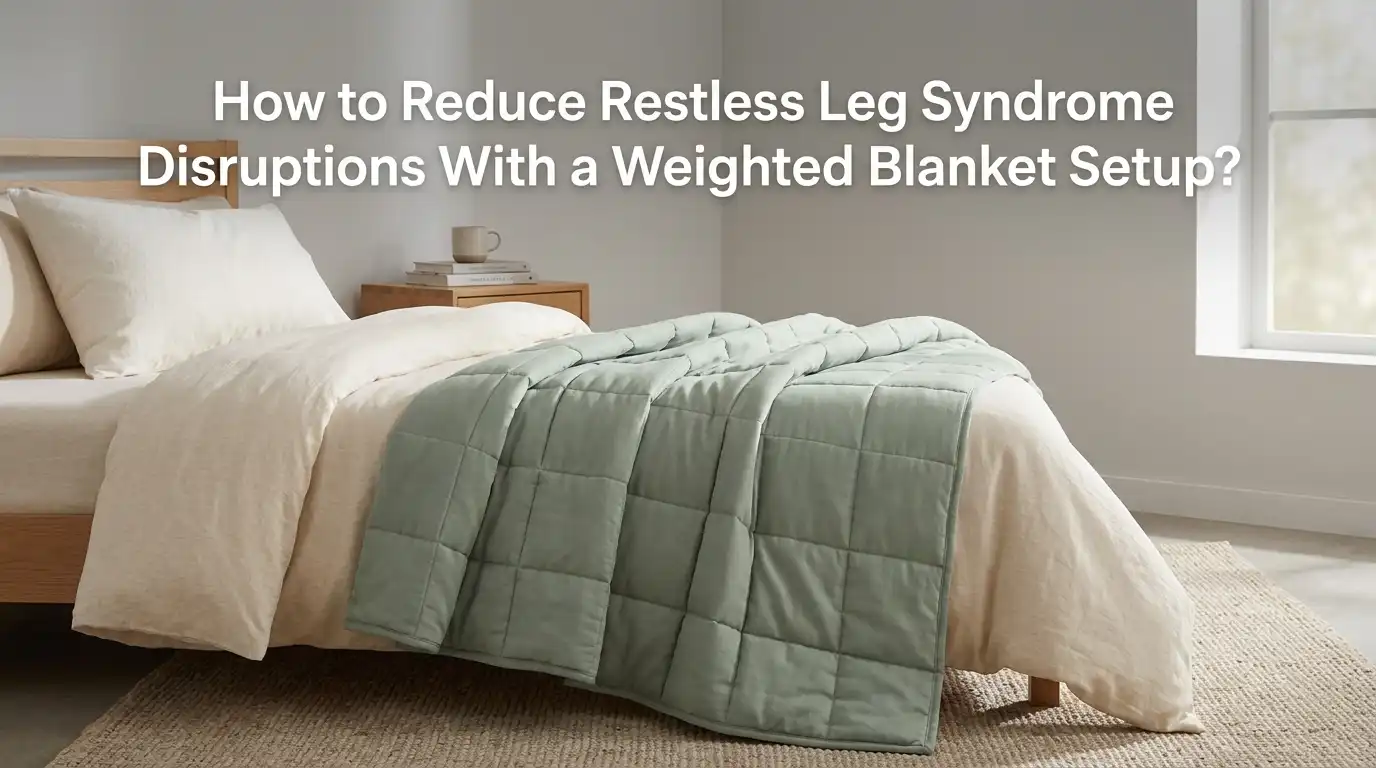
How to Reduce Restless Leg Syndrome Disruptions With a Weighted Blanket Setup?
If your legs start twitching, crawling, or burning the moment you lie down, you already know how cruel restless leg syndrome can feel. You finally settle into bed, and your legs decide it is time for a marathon.
Sleep slips away, mood drops, and the next day suffers. A weighted blanket can quietly change that pattern.
The steady, gentle pressure works like a calm hand on your body, telling your nervous system to slow down. This guide walks you through every step of building a weighted blanket setup that actually reduces RLS flare ups at night.
Key Takeaways
- Weighted blankets use deep pressure stimulation to calm the nervous system. This pressure triggers serotonin and melatonin release, which can soften RLS sensations and help you fall asleep faster.
- Pick a blanket that weighs about 10 percent of your body weight. Too light and you lose the calming effect. Too heavy and you may feel trapped or overheat, which can worsen leg restlessness.
- Fabric and fill matter more than people think. Cotton, bamboo, and Tencel stay cooler, while glass bead fills feel less bulky than plastic pellets and spread weight evenly across your legs.
- Setup is half the success. Position the blanket only from the waist down if needed, layer it with breathable sheets, and keep your room cool to prevent the heat that often triggers RLS.
- Pair the blanket with smart habits like stretching, magnesium rich snacks, low caffeine evenings, and steady iron intake. The blanket works best as part of a wider routine, not as a single fix.
- Be patient for 2 to 4 weeks. Your body needs time to adjust to the new sensation before symptom relief feels steady and reliable.
What Restless Leg Syndrome Actually Does to Your Sleep
Restless leg syndrome, often shortened to RLS, creates an urge to move your legs that feels almost impossible to ignore. The sensations include tingling, crawling, pulling, or burning deep inside the calves or thighs. These feelings usually grow stronger at night, exactly when you want to relax.
The result is fragmented sleep. You toss, kick, walk around, or rub your legs for relief. Studies link RLS to dopamine imbalance and low brain iron, which is why the condition feels so neurological rather than muscular.
Over time, this nightly battle steals deep sleep and REM sleep. You wake up tired, foggy, and irritable. Understanding this cycle is the first step toward breaking it with smart tools like weighted blankets.
How Weighted Blankets Calm Restless Legs
Weighted blankets work through a method called deep pressure stimulation, sometimes called DPS or deep touch pressure. The even weight feels like a steady, gentle hug across your body.
This pressure activates the parasympathetic nervous system, which is the rest and digest side of your body.
Research suggests this kind of pressure boosts serotonin, melatonin, and oxytocin while lowering cortisol. Serotonin helps regulate mood and sleep cycles. Melatonin signals sleep.
Oxytocin reduces stress. Together, they soothe the restless, twitchy feeling many RLS sufferers report. The blanket also adds light resistance against involuntary leg movements, which can reduce the frequency and intensity of those movements while you drift off.
Choosing the Right Weight for RLS Relief
Weight is the single most important factor in your setup. The common rule from sleep experts is to pick a blanket that weighs around 10 percent of your body weight. So if you weigh 160 pounds, a 15 to 17 pound blanket fits well. Going too heavy can feel suffocating, raise your body temperature, and trigger more restlessness, not less.
Pros of staying near 10 percent: balanced pressure, easier movement, less overheating, better long term comfort.
Cons of going heavier: stronger initial calm but possible heat buildup, trapped feeling, harder to wash, and more strain on hips or knees.
If you share a bed, avoid one giant blanket for two people. The weight distributes unevenly when one partner moves. Get two separate blankets sized to each body.
Picking the Best Fabric to Avoid Overheating
Heat is a known trigger for RLS flare ups. A heavy blanket made of the wrong fabric can turn your bed into an oven by 2 a.m. The fabric layer touching your skin matters as much as the weight itself.
Cotton is breathable, soft, and affordable. Bamboo viscose wicks moisture and feels cool against the skin. Tencel, made from eucalyptus fibers, is one of the coolest natural options on the market. Knitted chunky blankets allow air to flow between the loops, which keeps body heat from getting trapped.
Avoid thick fleece or minky outer covers if you run warm at night. These feel cozy in winter but often worsen RLS by raising skin temperature. Many people keep two covers, a cool one for summer and a soft one for cold months.
Glass Beads vs Plastic Pellets: Which Fill Suits RLS?
Inside every weighted blanket sits a layer of small weights. The two most common options are micro glass beads and plastic poly pellets. Each has clear strengths and drawbacks for restless legs.
Glass beads pros: smaller and denser, so the blanket feels thinner and drapes closer to your legs. They stay cooler and feel quieter when you move. Better weight distribution means less bunching around your knees.
Glass beads cons: may shift over time, can leak if seams tear, and slightly higher in price.
Plastic pellet pros: cheaper, larger, and softer to the touch. They hold shape well.
Plastic pellet cons: bulkier, warmer, noisier, and less smooth across the body.
For most RLS sufferers, glass beads win because they hug the legs evenly without trapping heat.
Setting Up Your Bed for a Weighted Blanket
A weighted blanket is only as effective as the bed beneath it. Start with a firm to medium firm mattress that supports your hips and lower back. A sagging mattress will make the added weight feel uncomfortable on pressure points.
Use cotton or bamboo sheets, since polyester traps heat. Skip the heavy duvet on top of your weighted blanket. Layering too much fabric raises temperature and reduces the pressure effect. Keep your pillow height aligned with your spine so you do not unconsciously tense your legs to compensate.
Place the weighted blanket as the only top cover, or pair it with one light sheet. This keeps the pressure direct, even, and breathable. A simple setup performs far better than a complicated one.
Positioning the Blanket for Maximum Leg Relief
Where you place the blanket on your body changes how well it works for RLS. Many people drape the blanket up to their chin, but for restless legs, the calves and thighs need the most contact.
Method 1: Full body coverage. Pull the blanket up to your shoulders. This calms the whole nervous system and works well if you also feel anxious at night.
Method 2: Lower body only. Fold the blanket so it sits from your waist down. This focuses pressure on the legs without overheating the upper body.
Method 3: Side rolled wrap. Tuck the blanket gently around your legs like a soft burrito. This adds extra leg containment, which some RLS sufferers find very soothing.
Try each method for several nights to see which one your body prefers.
How Long It Takes to Feel Results
Many people expect instant magic, then feel disappointed on night one. Your nervous system needs time to learn the new sensation. Most users notice meaningful changes within 2 to 4 weeks of consistent nightly use.
In the first week, the blanket may feel strange or even slightly heavy. By week two, your body usually relaxes faster under the pressure. By week three or four, the calming response becomes almost automatic. Falling asleep faster is often the first improvement people report. Reduced leg kicks and fewer wake ups follow.
Keep a short sleep journal during this period. Track when you went to bed, how often you woke, and how your legs felt. Patterns become clear quickly and help you fine tune the setup.
Daily Habits That Boost Weighted Blanket Results
A weighted blanket works best as part of a wider routine. RLS often responds to a handful of supportive habits that prepare your body for calmer nights.
Cut caffeine after lunch. Coffee, tea, chocolate, and soda can make legs more reactive at night.
Eat iron rich foods. Low iron is strongly linked to RLS. Spinach, lentils, lean red meat, and pumpkin seeds support healthy iron levels. Ask your doctor before starting supplements.
Add magnesium friendly foods. Almonds, bananas, and dark leafy greens may ease muscle tension.
Stretch your calves before bed. A 5 minute routine of gentle stretches reduces leg twitches.
Skip alcohol close to bedtime. It worsens RLS for many people.
These small changes multiply the calming power of the blanket.
Combining the Blanket With Light Exercise and Stretching
Movement during the day reduces restless leg episodes at night. The trick is balance. Too little movement allows tension to build, while intense late workouts often trigger flare ups.
Aim for 30 minutes of moderate activity most days, such as walking, swimming, cycling, or yoga. Avoid heavy leg workouts within three hours of bedtime. Right before sleep, add a short stretching session. Focus on calves, hamstrings, and hips.
Try this 5 minute pre bed routine: standing calf stretch for 30 seconds each side, seated forward fold for one minute, figure four stretch on the bed for one minute each leg, and gentle ankle circles for one minute. Slip under your weighted blanket right after. The combination prepares your body to settle quickly and stay still.
When a Weighted Blanket May Not Be the Right Choice
Weighted blankets help many people, but they are not safe for everyone. Skip or delay using one if you have sleep apnea, severe asthma, claustrophobia, low blood pressure, or circulation problems. Children under 2 should never use weighted blankets. Older children need professional guidance on safe weight.
Pros of trying a weighted blanket for RLS: drug free, low risk, reusable, supports overall sleep quality, and may calm anxiety too.
Cons or cautions: can feel hot, may worsen claustrophobia, not safe for certain health conditions, and not a cure for the underlying cause of RLS.
Always check with a doctor if you have a chronic condition or take medications that affect sleep or circulation. A blanket is a helpful tool, not a medical treatment.
Caring for Your Weighted Blanket Long Term
A weighted blanket is an investment, so treat it well. Most blankets come with a removable duvet style cover. Wash the cover weekly with mild detergent in cold water. The inner weighted layer needs less frequent washing, usually every few months.
Check the care label first. Lighter blankets under 15 pounds often fit a home washer. Heavier ones may need a commercial machine or spot cleaning. Avoid bleach and fabric softeners. Air dry whenever possible, since high heat can damage glass beads and shrink natural fibers.
Store the blanket flat or loosely folded in a breathable cotton bag. Never stuff it into a tight plastic container, since trapped moisture can cause mildew. With basic care, a quality blanket lasts five years or more.
Building a Calm Bedtime Routine Around the Blanket
The blanket gives you the physical calm. A routine gives your brain the cue to use it. A simple wind down sequence trains your body to expect sleep, which reduces RLS flare ups before they start.
One hour before bed: dim the lights, switch off bright screens, and lower the room temperature to around 65 to 68 degrees Fahrenheit.
Thirty minutes before bed: take a warm shower, do your leg stretches, and drink a small glass of water.
Fifteen minutes before bed: climb into bed, slide under the weighted blanket, and try slow breathing for 5 minutes. Inhale for four counts, hold for four, exhale for six.
This pattern repeated nightly creates a powerful sleep signal your nervous system learns to trust.
Frequently Asked Questions
Can a weighted blanket cure restless leg syndrome?
No, a weighted blanket does not cure RLS. It is a comfort tool that can reduce symptom severity at night by calming the nervous system. The underlying causes, such as low iron or dopamine imbalance, still need medical attention. Think of the blanket as supportive care, not a treatment.
How heavy should a weighted blanket be for someone with RLS?
Most experts recommend a blanket that is about 10 percent of your body weight. For example, a 150 pound person fits well with a 15 pound blanket. If you sleep hot or move a lot, choose slightly lighter. Test for two weeks before deciding if you need to size up or down.
Will a weighted blanket make me too hot at night?
It depends on the fabric and fill. Cotton, bamboo, and Tencel covers paired with glass bead fill stay much cooler than fleece with plastic pellets. Keep your room around 65 to 68 degrees Fahrenheit and skip extra duvets on top. Most hot sleepers do fine with a breathable cooling weighted blanket.
Can I use a weighted blanket if I share a bed with a partner?
Yes, but use two separate blankets sized to each person. A single shared blanket distributes weight unevenly and slips off when one partner turns. Two individual blankets let each sleeper enjoy the right pressure without disturbing the other during the night.
How long until I see results with a weighted blanket for RLS?
Most people notice changes within 2 to 4 weeks of nightly use. The first improvements are usually faster sleep onset and less anxiety at bedtime. Reduced leg kicks and fewer night wakings often follow. Stay consistent and track your sleep to confirm progress over time.
Are weighted blankets safe for everyone?
No. Avoid them if you have sleep apnea, serious breathing problems, low blood pressure, claustrophobia, or circulation issues. Never use weighted blankets on children under 2 years old. Always check with your doctor first if you have a chronic medical condition or take prescription medications that affect sleep or breathing.

Hi, I’m Ava Day, the founder and lead writer at Cozy Bed Vault. I’m passionate about sleep wellness and dedicated to helping people find their perfect mattress. Through honest reviews, detailed comparisons, and expert buying guides, I simplify the mattress shopping experience so you can sleep soundly every night.