Why Is My Air Bed Stretching And Bubbling In The Middle?
Have you ever climbed into your air bed and noticed a weird bump growing in the middle? You are not alone.
Many air bed owners face this strange problem. The mattress looks fine at first. Then a bubble appears and it just will not go away.
This bubbling issue usually points to a bigger problem inside your bed. It often means the seams have started to fail. Sometimes it means an internal anchor has come loose.
Over-inflation is the most common trigger for this damage. Pumping too much air into your bed puts stress on its seams. Skipping regular stretching can also make things worse over time.
In a Nutshell
- Bubbling usually means seam damage. Air pushes through a weak spot and creates a bump you cannot flatten.
- Over-inflation is the top cause. Too much air puts stress on seams and internal anchors.
- Internal anchors hold your bed’s shape. When these heat sealed points detach, a large bump forms between seams.
- Slow leaks without holes are a warning sign. This often points to seam failure, not a puncture.
- Some damage cannot be fixed at home. A detached anchor or a torn seam usually needs professional help or a new bed.
- Regular stretching helps prevent this issue. It keeps the material flexible and reduces pressure buildup.
- Prevention beats repair every time. Avoid over-inflating your bed and check it often for early bumps or soft spots.
What Causes Bubbling And Stretching In An Air Bed
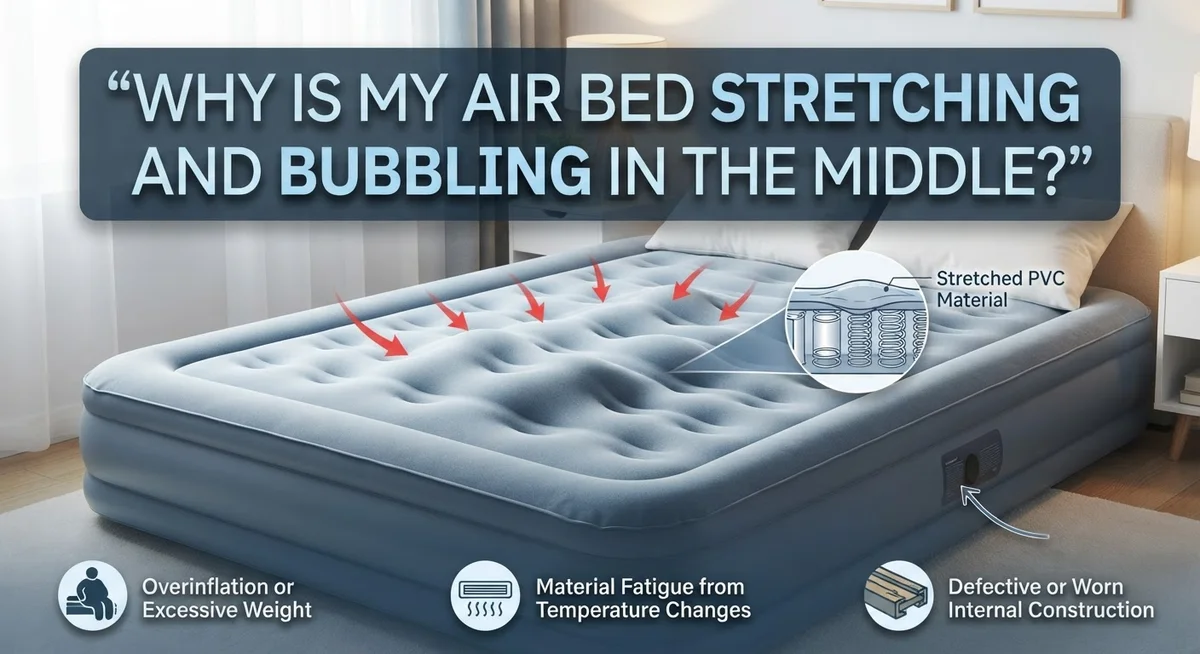
Bubbling and stretching in the middle of your air bed happens when internal components fail under pressure. The most common cause is seam rupture from over-inflation. When you pump too much air into your mattress, the seams weaken and eventually tear. Air then leaks through these damaged seams and creates a bubble you cannot push down.
Another major culprit is internal anchor detachment. Your air bed has heat sealed anchor points inside that hold the structure together. These anchors keep the mattress stable and prevent sagging. When they detach from constant pressure or movement, a large bump forms between the seams. This bump feels firm and stubborn because it is caused by structural failure, not just air pressure.
You might notice gradual deflation without visible holes. This is a red flag for seam damage. If your bed loses air slowly but you cannot find a puncture, a seam has likely failed. The leak is happening inside where you cannot see it.
Material fatigue also plays a role. Every time you use your air bed, the vinyl stretches slightly. Over time, this repeated stretching weakens the material. Combined with over-inflation, the seams give way faster.
Heat exposure speeds up this process too. Leaving your air bed in direct sunlight or near heat sources makes the vinyl brittle. The material becomes less flexible and more prone to tearing.
Understanding these causes helps you prevent problems. The key is avoiding over-inflation and maintaining your mattress properly. Catching early warning signs means you can take action before major damage occurs.
Understanding Seam Ruptures And Internal Anchor Failure
When your air bed bubbles in the middle, seam ruptures and internal anchor failure are the two main culprits. Understanding how these failures happen helps you know whether your bed can be saved or needs replacement.
Seam ruptures occur when air pressure becomes too high. Your air bed has sealed seams that hold everything together. When you over-inflate the mattress, stress builds up along these seams. Eventually, the seal breaks. Air leaks from inside the layers, but not through the outer surface. This trapped air creates those stubborn bubbles you cannot flatten by hand.
Internal anchors are small heat-sealed points inside your bed. They attach the top and bottom layers together. These anchors keep your mattress from shifting and maintain its shape. When heat exposure or constant pressure weakens these seals, they detach from the material. A large bump forms between the seams where the anchor failed. This bump feels different from a regular bubble because it is much firmer and larger.
The key difference between these two failures matters. A ruptured seam sometimes responds to hand pressure and careful re-inflation. An internal anchor detachment never flattens. It stays there permanently because the layers have separated inside.
Gradual deflation without visible holes is your warning sign. You wake up and your bed is softer, but you cannot find any puncture. This points directly to seam failure or anchor detachment. The air escapes slowly through the damaged internal seal.
Both problems get worse over time. Pressure continues building at the weak spot. The damage spreads. Professional repair is rarely possible for internal anchor failure. Most people need to replace their mattress when this happens.
Signs Your Air Bed Has A Serious Problem
A serious air bed problem shows specific warning signs you should not ignore. These indicators tell you whether your mattress needs repair or replacement.
Stubborn bubbles that won’t flatten are your first red flag. When you press down on a bubble in the middle, it should disappear. If it returns immediately or stays firm, internal damage is likely present. This means air is trapped between layers and cannot escape properly.
Large bumps between seams signal internal anchor failure. These bumps feel different from regular soft spots. They stay in one fixed location and grow over time. The heat-sealed anchors that hold your bed’s shape have separated from the material.
Gradual deflation without visible holes is another serious warning. You wake up and notice your bed feels softer, but you cannot find any punctures or tears. This points to seam failure where air slowly leaks through weak sealed areas.
Loss of firmness in specific zones matters too. If your bed stays firm everywhere except the middle, structural failure is happening. The center takes the most pressure, so damage shows up there first.
Visible material stretching or sagging indicates the fabric is losing its integrity. The material may look thin or worn in certain spots. This happens when internal stress builds up over time.
Pay attention to these signs early. Catching problems quickly gives you more repair options. Ignoring them leads to complete bed failure and forces replacement. Monitor your air bed regularly during the first few weeks of use. This helps you spot problems before they become unfixable.
How To Attempt Fixing A Bubble Or Bump
When you spot a bubble or bump in your air bed, your first instinct is to fix it yourself. The good news is that some simple techniques might help, though results depend on what caused the problem.
Start by applying steady hand pressure directly to the bubble. Push down gently but firmly for several seconds. This works best if the bubble is small and the seam is still mostly intact. You’re essentially trying to redistribute the air and encourage the material to settle back into place.
Next, try stretching the mattress regularly during normal use. Pull gently on the edges and corners while the bed is inflated. This keeps the material flexible and can prevent bubbles from forming or worsening. Stretching also reduces internal pressure buildup that causes further damage.
Another approach is to deflate the bed completely and let it sit in a warm room for a few hours. Heat can sometimes help the material relax and return to its original shape. Then reinflate slowly to the proper firmness level. Avoid over-inflating, which is the primary reason bubbles appear in the first place.
However, be realistic about limitations. If the bubble returns quickly or grows larger, you likely have a seam rupture or internal anchor failure. These problems rarely fix themselves with hand pressure alone.
Monitor the situation closely over the next few days. If the bubble persists, spreads, or causes deflation, professional repair or replacement becomes necessary. Attempting aggressive fixes can make internal damage worse, so know when to stop trying and accept that a new bed might be your best option.
Mistakes That Lead To Bubbling And Deflation
Mistakes that lead to bubbling and deflation are often preventable. Understanding what causes these problems helps you protect your investment.
Over-inflation is the primary mistake most people make. You push too much air into your mattress thinking it will feel firmer and more comfortable. Instead, excessive pressure forces the seams to work harder than they should. The heat-sealed seams eventually rupture under this strain. Once a seam fails, air escapes into the mattress layers themselves, creating those stubborn bubbles you see in the middle.
Neglecting regular stretching is another common error. Your air bed needs maintenance during use. When you skip this step, the internal materials start to deteriorate faster. The fabric loses its flexibility and strength. This accelerated breakdown leads to both bubbling and gradual deflation over time.
Not monitoring your mattress early enough compounds these mistakes. You ignore small warning signs like slight softness or minor bumps. By the time you notice the real problem, significant damage has already occurred inside the mattress.
Placing your air bed in direct sunlight or near heat sources is also problematic. Heat speeds up material fatigue and weakens the seams faster. This environmental stress combines with other mistakes to create faster failure.
Overloading your mattress beyond weight limits puts additional stress on seams and internal anchors. You use it beyond its intended capacity, and the structure gives way.
Finally, improper storage mistakes matter too. Storing your deflated mattress in damp or extremely hot conditions damages the materials during off-season months. These mistakes compound when you pull the mattress out later.
Avoiding these errors prevents most bubbling and deflation problems before they start.
Preventing Future Stretching And Bubbling Issues
Your air bed will stay in better condition when you follow prevention strategies from the start. Avoid over-inflation at all costs since this is the main cause of seam rupture and bubbling. Fill your mattress to a firm level, but stop before it feels rock hard.
Stretch your mattress regularly during use. This simple action keeps the internal structure loose and prevents anchor points from becoming stressed. Spend a few minutes each week gently pulling the sides and corners while the bed is inflated. This maintains flexibility in the material.
Monitor your air bed frequently for early warning signs. Check the surface weekly for small bumps or soft spots. Catch problems early before they become major failures. Small issues are easier to manage than large ones.
Keep your mattress away from direct sunlight and heat sources. UV rays and warm temperatures weaken the material over time. Store your bed in a cool, dry place when not in use. Extreme temperatures cause the seams to become brittle.
Respect weight limits on your specific mattress model. Excessive weight puts constant pressure on seams and internal anchors. Distribute weight evenly across the surface. Avoid sitting or standing on the same spot repeatedly.
Use a protective cover or foundation under your mattress. This reduces friction against rough surfaces that can damage the bottom material. Protect your investment from unnecessary wear and tear.
Check the valve regularly to ensure it closes completely. A leaky valve causes slow deflation that stresses the entire structure. Tighten or replace the valve if you notice air escaping.
These prevention steps work together to extend your mattress lifespan significantly. Consistent care prevents most bubbling and stretching problems from developing in the first place.
Troubleshooting Persistent Deflation And Bumps
When your air bed shows persistent bubbling and deflation, you’re likely dealing with seam failure or internal anchor detachment. These issues require different approaches than simple surface problems.
Seam ruptures happen when the sealed edges separate under pressure. You won’t see a visible hole, but the mattress loses air gradually. The bubble appears because internal pressure pushes against weakened fabric. This type of damage is often unfixable without professional repair services.
Internal anchor detachment creates larger bumps between seams. These anchors hold the mattress structure together. When they pull away from the heat seal, the bed develops stubborn lumps that won’t flatten. Unfortunately, detached anchors cannot be repaired. Your mattress will need replacement.
To identify which problem you have, deflate the bed completely and inspect the seams carefully. Look for any separation or visible damage along the edges. Check the middle section where most stress occurs. If you find no visible damage but bubbles return after inflation, seam failure is likely.
Apply hand pressure to test the bubble. If it returns immediately after you release pressure, the damage is significant. This tells you repair attempts probably won’t work long term.
The harsh reality is that persistent deflation combined with bubbling usually means your mattress has reached the end of its useful life. Attempting repairs on ruptured seams or detached anchors provides only temporary relief. The problem will worsen over time.
Before replacing your mattress, contact the manufacturer. Some offer warranty coverage for these defects. Document the issue with photos and note when problems started. This information helps with warranty claims and prevents similar issues with your next purchase.
Knowing When Replacement Is The Only Option
When your air bed shows signs of internal anchor failure or extensive seam damage, replacement becomes your only realistic option. These issues cannot be fixed with patches or repair kits because the damage occurs inside the mattress structure.
Internal anchor detachment happens when the heat sealed connections holding the mattress together come loose. This creates large bumps between the seams that won’t flatten no matter how much pressure you apply. You cannot access these anchors from the outside, so repair is impossible without professional intervention that costs nearly as much as a new mattress.
Ruptured seams present a different but equally serious problem. When the sealed edges separate under pressure, air escapes continuously. You won’t see a hole, but the mattress deflates stubbornly despite having no visible puncture. Patching the outside won’t help because the rupture runs along the internal seam line.
Here’s how to know replacement is necessary. First, deflate your mattress completely and inspect all seams carefully. Look for separation or gaps along the edges. Second, if you see large bumps that won’t disappear with hand pressure, internal anchors have likely failed. Third, if the mattress loses air consistently without any visible holes, seam failure is probable.
The practical reality is that modern air beds are not designed for field repair of internal damage. Attempting fixes wastes time and money. Once these structural failures develop, your mattress has reached the end of its useful life.
Contact the manufacturer before discarding your mattress. Some companies offer warranty replacements or discounted upgrades if your bed fails prematurely. This step takes minimal effort and could save you money on your next purchase.
Final Thoughts
Air bed stretching and bubbling usually points to one of two problems. Either your seams have ruptured from too much air pressure, or the internal anchors have pulled apart.
Both issues share similar symptoms. You will notice stubborn bubbles, gradual deflation, and bumps forming between seams. No punctures are needed for this damage to happen.
The good news is that prevention works well for most air beds. Avoiding over-inflation protects your seams from unnecessary stress. Regular stretching keeps the internal structure flexible and reduces anchor strain.
Early detection makes a real difference. Check your mattress often for small bubbles or soft spots. Catching these signs early can help you adjust your care routine before bigger damage occurs.
Once seams rupture or anchors detach, repair options become limited. These are structural failures inside the mattress. They sit beyond what home fixes can solve.
Your best move at that point is replacement. Trying to patch a ruptured seam or reattach an anchor rarely gives lasting results. The mattress will likely fail again soon after.
Before you replace anything, reach out to the manufacturer. Many brands offer warranty support or replacement programs for structural defects like these.
Air beds work hard every night to hold your weight and shape. With sensible care, they last much longer than expected.
Watch your inflation levels, stretch the mattress regularly, and inspect it often. These habits protect your investment and keep your sleep surface reliable.
When bubbling and stretching return despite good care, trust the signs. Your mattress is telling you it’s time for a new one.
Frequently Asked Questions
Can I fix bubbles in my air bed myself?
Hand pressure can flatten some bubbles temporarily. Press firmly on the bubble top while the mattress is inflated. However, if the bubble returns quickly, you likely have a seam rupture or internal anchor issue. These problems need professional repair or replacement. Simple fixes won’t solve underlying seam damage.
Why does my air bed bubble only in the middle?
The middle area takes the most weight and pressure. This spot experiences constant stress from your body throughout the night. Over-inflation makes this problem worse because the seams stretch beyond their limits. Heat sealed seams can separate under this pressure, creating bubbles between the layers.
What’s the difference between a bubble and a bump?
A bubble appears as a small, stubborn raised area that won’t flatten. A bump is larger and sits between the seams. Bumps usually indicate internal anchor detachment, where the mattress layers have come loose inside. Bubbles suggest seam rupture at the edges. Both mean your mattress is failing internally.
Should I keep inflating my air bed if it keeps deflating?
No. Repeated deflation combined with bubbling signals serious internal damage. Keep inflating it will worsen the problem faster. Contact the manufacturer to discuss your options before the damage spreads. Continuing to use a failing mattress wastes energy and money.
How do I prevent stretching and bubbling?
Avoid over-inflation. Fill your mattress until it feels firm but not rock hard. Stretch the mattress regularly by applying gentle pressure across the surface. Check your bed weekly for early warning signs. Monitor inflation levels to catch problems before they become severe.

Hi, I’m Ava Day, the founder and lead writer at Cozy Bed Vault. I’m passionate about sleep wellness and dedicated to helping people find their perfect mattress. Through honest reviews, detailed comparisons, and expert buying guides, I simplify the mattress shopping experience so you can sleep soundly every night.