How to Adjust a Zero Gravity Bed for Acid Reflux Relief?
Do you wake up at 2 a.m. with a burning sensation creeping up your chest? You are not alone. Millions of people deal with acid reflux every single night.
The frustrating part is that lying flat can make symptoms much worse. Stomach acid flows back into the esophagus more easily when your body is level with the ground. This is where a zero gravity bed can become a real game changer.
A zero gravity bed raises your head and knees above your heart. This position uses gravity to keep stomach acid right where it belongs. But here is the catch.
Key Takeaways
- The zero gravity position elevates your head about 6 to 8 inches above your lower body. This angle helps prevent stomach acid from flowing back into your esophagus during sleep. Most adjustable beds come with a preset zero gravity button that gets you close to the ideal position.
- Combining left side sleeping with the zero gravity position creates the best defense against nighttime acid reflux. Research from Amsterdam UMC shows that sleeping on the left side allows stomach acid to drain back to the stomach more quickly.
- The ideal torso incline for acid reflux relief falls between 10 and 30 degrees. Going beyond 30 degrees can cause you to slide down the mattress during the night. This creates pressure on your lower body and may interrupt sleep quality.
- You should eat your last meal at least 2 to 3 hours before lying down in any position. Even the best bed adjustment cannot fully overcome a stomach full of trigger foods like spicy dishes, citrus, chocolate, or alcohol consumed right before bed.
- Fine tuning takes time, and your first night will likely require small adjustments. Start with a gentle incline and increase it gradually over several nights. Your body needs time to adapt to sleeping at an angle instead of flat.
- A zero gravity bed helps more than just acid reflux. This position also reduces lower back pressure, improves blood circulation, decreases swelling in legs, and can lower snoring. These added benefits make the adjustment worthwhile even beyond reflux relief.
What Is the Zero Gravity Bed Position?
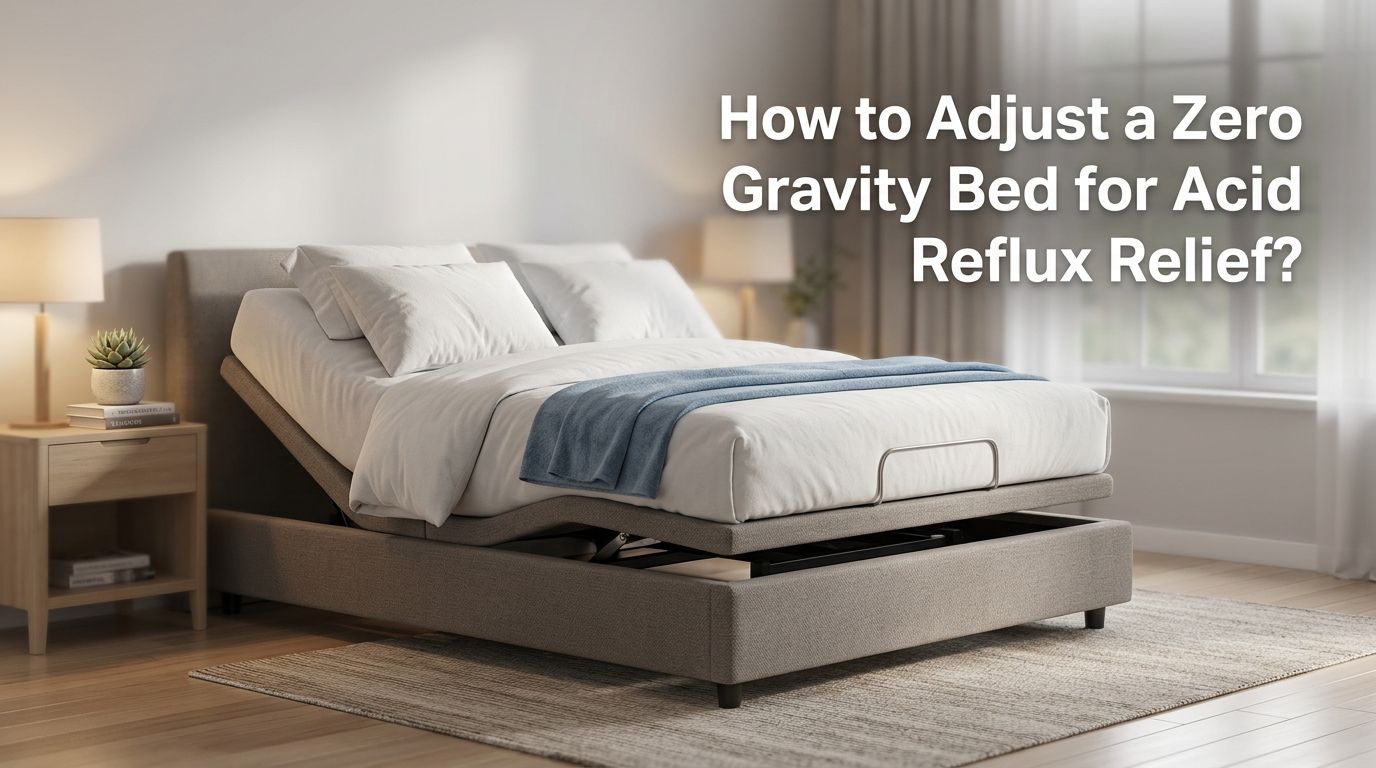
The zero gravity position mimics the posture astronauts use during launch. NASA developed this concept to distribute gravitational force evenly across the body. In bed terms, it means your head and knees are both slightly elevated above your heart level.
The typical zero gravity angle creates about a 128 degree bend between your torso and thighs. Your knees bend at roughly 133 degrees from the hamstrings. This creates a gentle cradle shape that reduces pressure on your spine and internal organs.
For acid reflux, the key part is the upper body elevation. When your head sits above your stomach, gravity works in your favor. Stomach acid has a much harder time traveling upward against gravity. Most adjustable bed frames include a one touch zero gravity preset that positions you close to this angle automatically.
Pros: Reduces spinal pressure, improves circulation, eases breathing, and provides a natural barrier against acid reflux.
Cons: Takes time to get used to, may feel odd for stomach sleepers, and side sleepers may need additional pillow support.
Why Does Acid Reflux Get Worse When You Lie Flat?
Your lower esophageal sphincter (LES) is a ring of muscle that sits between your esophagus and stomach. Its job is to stay closed after food enters the stomach. In people with acid reflux, the LES relaxes too often or does not close tightly enough.
When you lie completely flat, your esophagus and stomach sit at the same level. This makes it very easy for acid to slip past a weakened LES and flow upward. Gravity is no longer helping you keep acid down. The result is that familiar burning sensation, coughing, and disrupted sleep.
Studies show that elevating the head of the bed by just 6 to 8 inches significantly reduces the number of reflux episodes during sleep. The zero gravity position goes a step further by also elevating your knees. This reduces abdominal pressure on the stomach, which means less force pushing acid upward in the first place. It is a two part solution that addresses reflux from both ends.
How to Find the Right Head Elevation Angle
Getting the right head angle is the most important step. Experts recommend raising your upper body between 6 and 8 inches, which translates to roughly a 15 to 20 degree incline. This is the sweet spot where acid reflux symptoms drop without making sleep uncomfortable.
Start by using your bed’s remote control. If your adjustable base has a zero gravity preset, press it first. Then look at where your head rests compared to your stomach. Your chest and head should be visibly higher. If reflux symptoms still bother you, increase the incline by one or two notches.
Avoid going above 30 degrees for the head section. At steeper angles, you may slide down the mattress overnight. This sliding creates bunching at the midsection, which can actually increase abdominal pressure and worsen reflux. The goal is a gentle slope, not a seated position.
Pros: Directly reduces acid contact with the esophagus, customizable to your comfort level, easy to adjust using a remote.
Cons: Too steep an angle causes sliding, may require a mattress retainer bar, and some mattresses bunch at extreme angles.
How to Set the Knee Elevation for Maximum Comfort
The knee section of a zero gravity bed matters more than most people realize. Elevating your knees slightly above your heart level reduces pressure on the lower back and abdomen. Less abdominal pressure means your stomach contents stay put more easily.
Set your knee elevation to about 10 to 20 degrees. This angle creates a natural bend that prevents your body from sliding down the mattress. Think of your body forming a soft V shape with the lowest point at your hips. Your knees act as a gentle anchor.
If you set the knee section too high, you may feel tightness behind your knees or reduced blood flow to your lower legs. If it is too low, you lose the anti slide benefit and some of the abdominal pressure relief. Spend a few minutes adjusting up and down in small increments until you feel supported but relaxed.
Pros: Prevents sliding, reduces abdominal and lower back pressure, and improves overall comfort.
Cons: Can restrict movement for side sleepers, may cause knee stiffness if set too high, and takes trial and error to find the ideal level.
Step by Step Guide to Adjusting Your Zero Gravity Bed
Follow these steps to get your zero gravity bed dialed in for acid reflux relief. Each step builds on the previous one, so go through them in order.
Step 1: Start with the bed completely flat. Lie down in your normal sleeping position and note where you feel pressure or discomfort.
Step 2: Press the zero gravity preset on your remote if your bed has one. This gives you a starting baseline to work from.
Step 3: Adjust the head section first. Raise it until your chest feels noticeably elevated. Aim for that 6 to 8 inch rise above your lower body.
Step 4: Next, adjust the foot or knee section. Raise it slowly until your knees are slightly bent and above heart level. Stop before you feel any tightness.
Step 5: Lie in this position for 5 to 10 minutes. Pay attention to any sliding, bunching of the mattress, or discomfort in your neck and back.
Step 6: Make small adjustments. Move the head up or down by one notch at a time. Do the same with the knees. Save this position to your remote’s memory function if available.
Best Sleeping Positions to Pair with Zero Gravity for Acid Reflux
The zero gravity position works well on its own, but combining it with the right sleeping posture can multiply the benefits. Research published in peer reviewed journals confirms that sleep position has a direct impact on reflux frequency.
Left side sleeping is the gold standard for acid reflux relief. When you sleep on your left side, your stomach sits below your esophagus due to anatomy. Acid drains away from the esophageal opening more quickly. A study highlighted by Amsterdam UMC found that left side sleeping reduced both the frequency and severity of reflux episodes.
Back sleeping also works well in the zero gravity position. Your head stays centered on the incline, and gravity acts evenly on your torso. Avoid sleeping on your right side, as this positions the stomach above the esophagus and can increase reflux. Stomach sleeping is not practical in the zero gravity position and generally worsens acid reflux symptoms regardless of bed angle.
Pros of left side sleeping: Fastest acid clearance, natural anatomical advantage, pairs perfectly with head elevation.
Cons of left side sleeping: May cause shoulder pressure, harder to maintain all night, may need a body pillow for support.
Common Mistakes People Make with Zero Gravity Beds and Reflux
Even with the right equipment, small errors can reduce the effectiveness of your setup. The most common mistake is setting the head too high. People assume a steeper angle means better protection, but anything above 30 degrees causes sliding, neck strain, and mattress bunching.
Another frequent mistake is ignoring the knee section entirely. Raising only the head creates a slope that encourages your body to slide down. The knee elevation acts as a stopper and also relieves abdominal pressure.
Some people eat a heavy meal and lie down immediately, expecting the bed to solve everything. No bed position can overcome a full stomach of trigger foods. Timing your meals matters just as much as your sleep angle. Others use extra pillows on top of the incline, which bends the neck at an unnatural angle and can cause new problems like neck pain or airway restriction.
Lastly, many users never revisit their settings after the first night. Your body changes over time, and symptoms can shift. Check and adjust your position every few weeks to make sure it still works for you.
How to Adjust If You Share the Bed with a Partner
Sharing a bed complicates zero gravity adjustments. If your partner does not need head elevation, a split adjustable base is the most practical solution. A split base lets each side of the bed move independently so both sleepers can find their ideal position.
If you share a single adjustable base, communication and compromise are essential. A mild incline of 10 to 15 degrees for the head may work for both of you. This angle still provides reflux relief while keeping the other person comfortable enough to sleep.
Another option is using a wedge pillow on your side of the bed while keeping the base flat. This is not as effective as the full zero gravity position, but it still provides meaningful head elevation. Talk with your partner about trying the zero gravity preset for a few nights together. Many people find it comfortable even without reflux issues because of the reduced back pressure and improved circulation.
Lifestyle Changes That Boost Zero Gravity Bed Benefits
Your bed adjustment is only one piece of the puzzle. Pairing it with the right habits creates a much stronger defense against nighttime reflux. These changes are simple, practical, and backed by medical guidance.
Stop eating at least 2 to 3 hours before bedtime. This gives your stomach time to empty and reduces the amount of acid available to reflux. According to Johns Hopkins Medicine, fatty, fried, and spicy foods are the top triggers you should avoid at dinner.
Stay away from citrus fruits, tomato based sauces, chocolate, mint, coffee, and alcohol close to bedtime. These items either relax the LES or increase stomach acid production. Carbonated drinks are also a common trigger because they expand the stomach.
Wear loose fitting pajamas. Tight clothing around the waist puts extra pressure on your abdomen. Maintain a healthy weight, as excess belly fat pushes against the stomach and worsens reflux. If you smoke, quitting will improve LES function and reduce reflux episodes significantly.
How Long Does It Take to See Results?
Most people notice some improvement in acid reflux symptoms within the first few nights of using the zero gravity position correctly. The immediate effect of head elevation means less acid reaches your esophagus from night one.
However, full adaptation to sleeping at an angle can take one to two weeks. Your body needs time to adjust to the new posture. You may feel slightly unusual during the first few nights, especially if you have always slept flat. Stick with it and make small adjustments each night.
For long term results, consistency is key. Use the zero gravity position every night, not just on bad reflux nights. Over time, your sleep quality improves as your body gets used to the position. Many users report fewer nighttime awakenings, less morning hoarseness, and a general reduction in heartburn intensity after a few weeks of consistent use.
If you still experience significant symptoms after two to three weeks of correct bed adjustment and lifestyle changes, consult a healthcare provider. Persistent reflux may need medical treatment beyond positional changes.
Zero Gravity Bed vs. Wedge Pillow for Acid Reflux
Both options aim to elevate your upper body, but they work very differently. A zero gravity bed raises your entire torso along a smooth incline. This keeps your spine in a natural alignment and avoids bending at the waist.
A wedge pillow sits on top of a flat mattress and lifts just your head and upper shoulders. This creates a bend at the midsection that can actually increase abdominal pressure. Some people find wedge pillows slide around during the night, and they often lose their elevation by morning.
Pros of zero gravity bed: Full body support, consistent angle all night, added knee elevation, no sliding.
Cons of zero gravity bed: Higher initial investment, requires a compatible mattress, heavier bed frame.
Pros of wedge pillow: Low cost, portable, easy to try, works on any bed.
Cons of wedge pillow: Creates waist bend, slides out of position, only elevates head and shoulders, does not reduce abdominal pressure.
For people with frequent or moderate to severe acid reflux, the zero gravity bed provides a more complete and consistent solution. Wedge pillows work as a temporary or budget friendly option for occasional symptoms.
When to Talk to a Doctor About Your Acid Reflux
A zero gravity bed is an effective tool, but it is not a medical treatment. You should see a doctor if your reflux symptoms happen more than twice a week, do not improve with positional changes, or include difficulty swallowing, unintended weight loss, or chest pain.
Chronic acid reflux can lead to a condition called Barrett’s esophagus, which involves changes to the lining of the esophagus. Early detection and treatment are important. Your doctor may recommend medications like proton pump inhibitors or H2 blockers alongside your sleep adjustments.
Bring your sleep setup details to your appointment. Let your doctor know you are using the zero gravity position and describe your angles, sleeping side, and meal timing. This information helps them give you more targeted advice. A zero gravity bed works best as part of a comprehensive plan that includes diet, lifestyle, and medical guidance when needed.
Frequently Asked Questions
What angle should a zero gravity bed be set at for acid reflux?
The ideal head elevation for acid reflux is 6 to 8 inches, which is about 15 to 20 degrees. The knee section should sit at 10 to 20 degrees. Together, these angles create the zero gravity position that reduces acid flow and abdominal pressure. Start with the preset zero gravity button and adjust from there based on your comfort level. Avoid going above 30 degrees for the head section.
Can I sleep on my side in a zero gravity bed for acid reflux?
Yes, and sleeping on your left side is actually the best pairing with the zero gravity position. Left side sleeping keeps the stomach below the esophageal junction, which helps acid drain away faster. You may want to use a supportive body pillow to maintain the left side position throughout the night. Avoid the right side, as it can increase reflux episodes.
Is a zero gravity bed better than a wedge pillow for acid reflux?
A zero gravity bed provides more consistent and effective relief for most people. It raises the entire torso along a smooth incline without creating a bend at the waist. A wedge pillow only elevates the head and shoulders, which can increase midsection pressure. Wedge pillows also tend to shift during the night. For frequent acid reflux, the adjustable bed is the better long term option.
How soon will I notice acid reflux relief from the zero gravity position?
Many people feel a difference on the very first night. The head elevation immediately reduces the amount of acid reaching the esophagus. Full comfort with the new position usually takes one to two weeks. Give your body time to adjust and make small changes to the angle each night until you find the sweet spot.
Can the zero gravity position completely cure acid reflux?
No. The zero gravity position is a management tool, not a cure. It reduces symptoms by using gravity and pressure reduction. You still need to follow good eating habits, avoid trigger foods before bed, and consult a doctor if symptoms persist. Combining the position with lifestyle changes gives you the best chance at consistent relief.

Hi, I’m Ava Day, the founder and lead writer at Cozy Bed Vault. I’m passionate about sleep wellness and dedicated to helping people find their perfect mattress. Through honest reviews, detailed comparisons, and expert buying guides, I simplify the mattress shopping experience so you can sleep soundly every night.