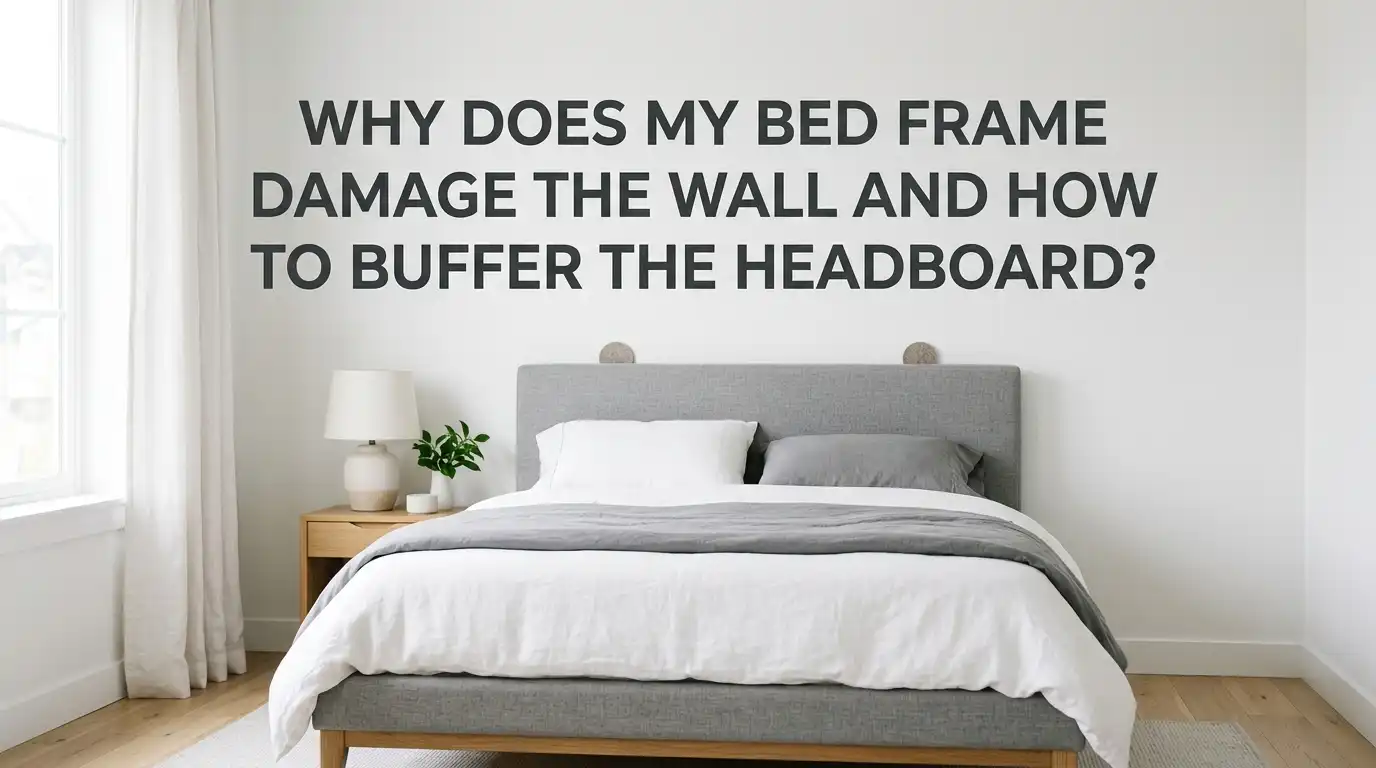
Why Does My Bed Frame Damage the Wall and How to Buffer the Headboard?
Your wall has scuff marks. Your headboard keeps banging at night. The paint behind your bed looks chipped, scratched, or dented. You are not alone in this struggle.
Many people notice their bed frame slowly ruins the wall behind it, leaving ugly marks and even cracks in the drywall. The good news is that you can fix this problem with simple tools, smart hacks, and a few low cost materials.
This guide walks you through every cause and every solution in plain language. You will learn why your bed frame damages the wall, how to stop the movement, and how to buffer the headboard so your room stays quiet and your paint stays perfect.
Key Takeaways
- Bed frames damage walls because of movement, friction, vibration, and pressure from heavy mattresses. Even small nightly shifts add up over weeks and months.
- Headboards bang against walls when they are not anchored, when the floor is slick, or when the frame has loose joints. Wood floors and tile make this much worse than carpet.
- Soft buffers like felt pads, EVA foam strips, and weather stripping offer the fastest fix. They cushion the contact point and absorb noise without any drilling.
- Anchoring the headboard to wall studs with brackets, French cleats, or D-rings gives the strongest long term result. This works best for heavy wood or upholstered headboards.
- Renter friendly options include floor wedges, command strips, fabric panels, and removable wall bumpers. You can apply these without damaging paint or losing your deposit.
- Regular checks on screws, bolts, and joints keep the frame tight and prevent future damage. A loose bed frame causes more wall wear than any other single factor.
What Causes a Bed Frame to Damage the Wall?
A bed frame damages the wall because of repeated contact, pressure, and small movements. Every time you sit down, roll over, or get out of bed, the frame shifts a tiny bit. That shift pushes the headboard into the drywall. Over time, the paint chips and the surface dents.
The main triggers include slick floors, loose frame joints, missing wall anchors, and lightweight frames that slide easily. Pets jumping on the bed and partners moving during sleep add even more force.
Heavy mattresses also increase pressure on the frame, which transfers straight to the wall. If your bed sits on hardwood or tile, the problem grows faster because there is no carpet to hold the legs in place.
Why Does My Headboard Keep Hitting the Wall at Night?
Your headboard hits the wall because the bed frame slides backward with each movement. This happens most often during sleep when you shift positions. The frame has nothing to push against, so it drifts toward the easiest direction, which is the wall.
Loose bolts on the headboard create a second issue. The board wobbles even when the frame stays still. Metal frames are the worst offenders because they are light and slick on the bottom.
Wood frames can also drift if the legs lack rubber pads. Slanted or curved headboards make contact at one small point, which dents the wall faster than flat backs. Pets, children, and restless sleepers all add pressure that pushes the frame closer to the wall every night.
Common Types of Wall Damage Caused by Bed Frames
Wall damage shows up in many forms. The most common is scuff marks, which look like dark streaks where the headboard rubs the paint. You may also see paint chips, especially on textured walls. Dents and small holes form when a hard edge presses into the drywall over time.
Wood headboards often leave deep gouges because of their sharp corners. Metal frames create scratches that look like fine lines. In bad cases, the drywall paper tears, exposing the gypsum underneath.
Cracks near outlets or trim can also appear when the bed pushes hard enough to stress the wall. Knowing the damage type helps you pick the right fix and the right buffer for the future.
Quick Fixes to Stop Headboard Damage Right Now
You can stop further damage tonight with items you already own. Grab a thick towel, a folded blanket, or an old pillow. Wedge it tightly between the headboard and the wall. This gives you instant cushion and stops the banging.
Move the bed about one inch away from the wall so the headboard no longer touches it at all. Place a heavy item like a storage box behind the legs to block backward sliding. You can also push a rolled rug under the back legs to act as a stopper. These quick fixes are not permanent, but they buy you time while you plan a proper solution.
Pros: Free, fast, uses items you already have, no tools needed.
Cons: Looks messy, may shift again, not a long term fix.
How to Use Felt Pads and Foam Buffers on Your Headboard
Felt pads and EVA foam buffers are the simplest long term fix. You can buy a pack at any hardware store for a few dollars. Peel the backing and stick them to the back of the headboard at the points that touch the wall.
Place at least two pads on each side, one near the top and one near the middle. For thick headboards, use larger square foam pieces.
EVA foam absorbs shock better than felt and works well for heavy frames. Felt pads suit lighter wood headboards and protect smooth painted walls. Both options stay hidden behind the bed, so they do not change your room look at all.
Pros: Cheap, easy to install, invisible from the front, reduces noise.
Cons: May need replacement every year, weak adhesive can fail on textured walls.
Using Weather Stripping as a Headboard Buffer
Weather stripping is a clever hack many people overlook. It is a soft foam strip with sticky backing, sold in any home store. You stick one or two long lines across the back of your headboard at the contact points.
The foam compresses when the headboard moves, which absorbs both impact and sound. Half inch thick weather stripping works best because it gives enough cushion without pushing the bed too far forward.
This method works on flat, curved, and slanted headboards. It also covers a wider area than small felt dots, so it spreads the pressure across the wall and prevents single point dents.
Pros: Strong cushioning, easy to cut to size, silent and smooth.
Cons: Visible if the bed is pulled away, may leave residue when removed.
Anchoring the Headboard to the Wall for a Permanent Fix
Anchoring is the gold standard for fixing this problem. You attach the headboard directly to the wall using brackets, lag bolts, or D-rings. This stops all movement and keeps the wood from ever touching the paint.
Find the wall studs first with a stud finder. Lag bolts into studs hold heavy wood headboards firmly. For lighter boards, use D-rings and heavy duty wall anchors.
A French cleat works great for wide upholstered headboards because it spreads the weight across the wall. Once anchored, the headboard floats just above the floor and never shifts again. The bed frame can still move, but the headboard stays still.
Pros: Permanent fix, removes all banging, frees up bed frame design.
Cons: Drills holes in the wall, hard to undo, not renter friendly.
Renter Friendly Ways to Protect the Wall
If you rent your home, you cannot drill into walls without permission. The good news is you have many no damage options. Command strips with Velcro backing hold light headboards in place against the wall. You can also build a soft fabric panel and lean it behind the bed.
Floor wedges are the most popular renter trick. Cut a small wood block and place it on the floor behind each leg of the bed. The block stops the frame from sliding backward. Use a thick rug under the bed to add extra grip. Hang a tapestry, quilted wall hanging, or padded board behind the headboard for both style and protection.
Pros: No drilling, deposit safe, easy to remove, often decorative.
Cons: Less stable than anchors, may need adjustment, limited weight support.
How to Stop the Bed Frame from Sliding Across the Floor
A sliding bed frame is the root cause of most wall damage. Stop the slide and you stop the damage. Start by adding rubber grip pads under each leg of the frame. These pads grab the floor and prevent any drift.
A non slip rug pad placed under the entire bed works even better on hardwood and tile. Furniture stoppers, also called bed risers with grippy bases, hold the legs in place and add height at the same time. For metal frames, wrap the bottom of each leg with a rubber sleeve. These small upgrades stop the slide before it ever reaches your wall.
Pros: Solves the root cause, protects floor and wall, low cost.
Cons: May require lifting the bed to install, some pads wear out over time.
DIY Wall Bumper Ideas for Headboard Protection
You can build your own wall bumper with simple supplies. Cut a piece of plywood the width of your headboard. Wrap it in batting and fabric to create a soft padded board. Lean it against the wall behind your bed.
This bumper acts as a sacrificial layer that takes all the impact instead of your paint. You can also use pool noodles cut in half and stuck behind the headboard as a soft cushion.
Old yoga mats, cork sheets, or thick craft foam work well too. These ideas cost almost nothing and let you match the look of your bedroom. You can paint or cover the bumper to blend with your decor.
Pros: Customizable, cheap, fun project, easy to replace.
Cons: Takes time to build, may look bulky if not done well.
How to Fix Existing Wall Damage Behind Your Bed
If your wall already has damage, fix it before adding buffers. Start with light cleaning using a soft sponge and mild soap to remove scuff marks. Many marks come off with a melamine foam eraser.
For chips and small dents, use lightweight spackle and a putty knife. Smooth the spackle into the dent, let it dry, then sand it lightly. Touch up with paint that matches your wall.
For larger holes, use a drywall patch kit. Once the wall looks fresh, add your chosen buffer right away so the new paint stays safe. Repairing first and protecting second gives you the cleanest result and prevents repeat damage in the same spot.
Pros: Restores your wall, gives a clean start, increases home value.
Cons: Takes time and effort, may need paint matching, dust from sanding.
Tips to Keep Your Bed Frame Tight and Stable
A loose bed frame causes most of the banging you hear at night. Check every bolt and screw on your frame once a month. Tighten any that have loosened with normal use. Use a wrench or screwdriver to make sure each joint stays firm.
Add a center support leg if your frame sags in the middle. This stops the bed from rocking with every movement. Replace bent or worn slats right away.
If your headboard bolts wobble, add a washer for a tighter fit. A tight frame stays in place, makes less noise, and puts much less stress on the wall behind it. This simple monthly habit can prevent years of damage.
Best Materials for Buffering a Headboard Against the Wall
Different materials work better for different headboards. EVA foam pads suit heavy wood and metal headboards because of their thick cushion. Felt pads work best for light frames and smooth painted walls. Weather stripping fits curved or slanted boards.
For upholstered headboards, rubber bumpers or silicone caps give the best grip without damaging fabric. Cork sheets offer a natural look and absorb sound well.
Foam tape provides a clean, low cost option for small contact points. Pick your material based on the headboard weight, the wall surface, and how often the bed moves. Mixing two materials, like felt on top and foam on the bottom, often gives the best protection.
Frequently Asked Questions
How do I stop my headboard from leaving marks on the wall?
Add felt pads or EVA foam buffers to the back of the headboard. You can also move the bed one inch away from the wall or anchor the headboard with brackets to stop all contact.
Will felt pads damage my paint?
Felt pads do not damage paint when applied correctly. The soft surface protects the wall from rubbing. Remove them slowly to avoid pulling paint, and clean any residue with mild soap and warm water.
Can I attach a headboard to the wall without drilling?
Yes. Use heavy duty Command strips, Velcro mounts, or a leaning padded panel. These options work for light to medium headboards and leave no holes in the wall.
Why does my bed slide away from the wall?
Slick floors, light frames, and missing leg pads cause sliding. Add rubber grippers under each leg or place a non slip rug pad under the bed to keep it in place.
What is the cheapest way to buffer a headboard?
Folded towels, old blankets, or pool noodles wedged behind the headboard cost nothing. Felt pads are the cheapest store bought option and last a long time with proper use.
Do wall bumpers really reduce noise?
Yes. Soft bumpers absorb the impact between headboard and wall, which cuts down on banging and creaking sounds. Thicker foam reduces noise better than thin felt.
How often should I replace headboard buffers?
Check buffers every six to twelve months. Replace them when they flatten, lose stickiness, or show wear. Fresh buffers protect the wall and keep your bed quiet.

Hi, I’m Ava Day, the founder and lead writer at Cozy Bed Vault. I’m passionate about sleep wellness and dedicated to helping people find their perfect mattress. Through honest reviews, detailed comparisons, and expert buying guides, I simplify the mattress shopping experience so you can sleep soundly every night.