How to Muffle the Sound of a Smart Bed Motor in a Quiet Bedroom?
A smart bed should help you sleep better, not keep you awake. Yet the soft whirring, humming, or clicking from the motor can feel ten times louder once the lights go out. In a quiet bedroom, even a gentle buzz can pull you out of deep rest or wake your partner during a late position change.
The good news is that most motor noise has a simple cause. Loose bolts, hard floors, dry gears, or thin walls often turn a small hum into a loud nuisance.
With a few low cost tools and a little patience, you can soften that sound and reclaim your peaceful bedroom. This guide walks you through every practical fix, step by step, so you know exactly what to try first and what to do if the noise sticks around.
Key Takeaways
- Find the source first. Listen carefully to decide if the noise comes from the motor itself, the frame joints, or the floor underneath. Each cause needs a different fix.
- Tighten everything before you buy anything. Loose bolts and screws are the number one reason adjustable beds get loud. A simple wrench check often solves the problem in five minutes.
- Use rubber and felt to absorb vibration. Anti vibration pads, felt sliders, and rubber mats stop sound from traveling through the floor and walls.
- Lubricate moving parts the right way. A dry silicone spray or white lithium grease on hinges and joints can quiet squeaks fast, but never spray oil directly into the motor.
- Soften the room itself. Rugs, curtains, and soft furniture absorb sound waves so the motor hum fades faster.
- Know when to call support. If the motor grinds, clicks loudly, or stalls, the issue is likely internal and needs a professional or warranty repair.
Why Smart Bed Motors Make Noise in the First Place
A smart bed motor moves your mattress up, down, and sometimes side to side. It uses gears, a drive shaft, and small electric components to do this work. Some level of humming is normal during operation, just like a refrigerator or washing machine.
The noise becomes a problem when the bed is placed on hard floors, when bolts loosen over time, or when the motor mount loses its rubber dampers. Vibration travels through wood, metal, and tile very easily. That is why a quiet motor in the showroom can sound much louder in your bedroom at home.
Understanding the root cause helps you pick the right fix. A grinding sound points to gear wear. A humming sound points to vibration. A clicking sound often means a loose part or a failing capacitor inside the motor housing.
Step One: Identify Where the Sound Is Coming From
Before you change anything, take two minutes to listen. Run the bed through a full cycle while you stand at different spots in the room. Place your hand gently on the frame, the headboard, and the floor near each leg.
If the frame buzzes when you touch it, the vibration is traveling through the bed itself. If the floor shakes, the issue is contact between the bed and a hard surface. If the motor housing is hot or rattling, the problem is internal.
Pros of doing this first: You save money by skipping fixes you do not need. You also avoid making the noise worse with the wrong product. Cons: It takes a little patience and a quiet room to hear clearly. Still, this single step often points you to the correct solution within minutes.
Step Two: Tighten Every Bolt and Screw on the Frame
Loose hardware is the most common reason a smart bed gets noisy after a few months of use. The motor shakes the frame slightly each time it runs, and that movement slowly works bolts loose.
Grab a basic socket wrench and an Allen key set. Check every bolt where the frame meets the legs, where the head section meets the foot section, and where the motor mounts to the base. Turn each bolt clockwise until it is firm, but do not over tighten. Stripped threads will only make things worse.
Pros: This fix costs nothing and takes about fifteen minutes. It often removes squeaks and rattles completely. Cons: You may need to lift the mattress to reach some bolts, which can be heavy work for one person. Ask someone to help if your mattress is king sized or hybrid.
Step Three: Add Anti Vibration Pads Under the Bed Legs
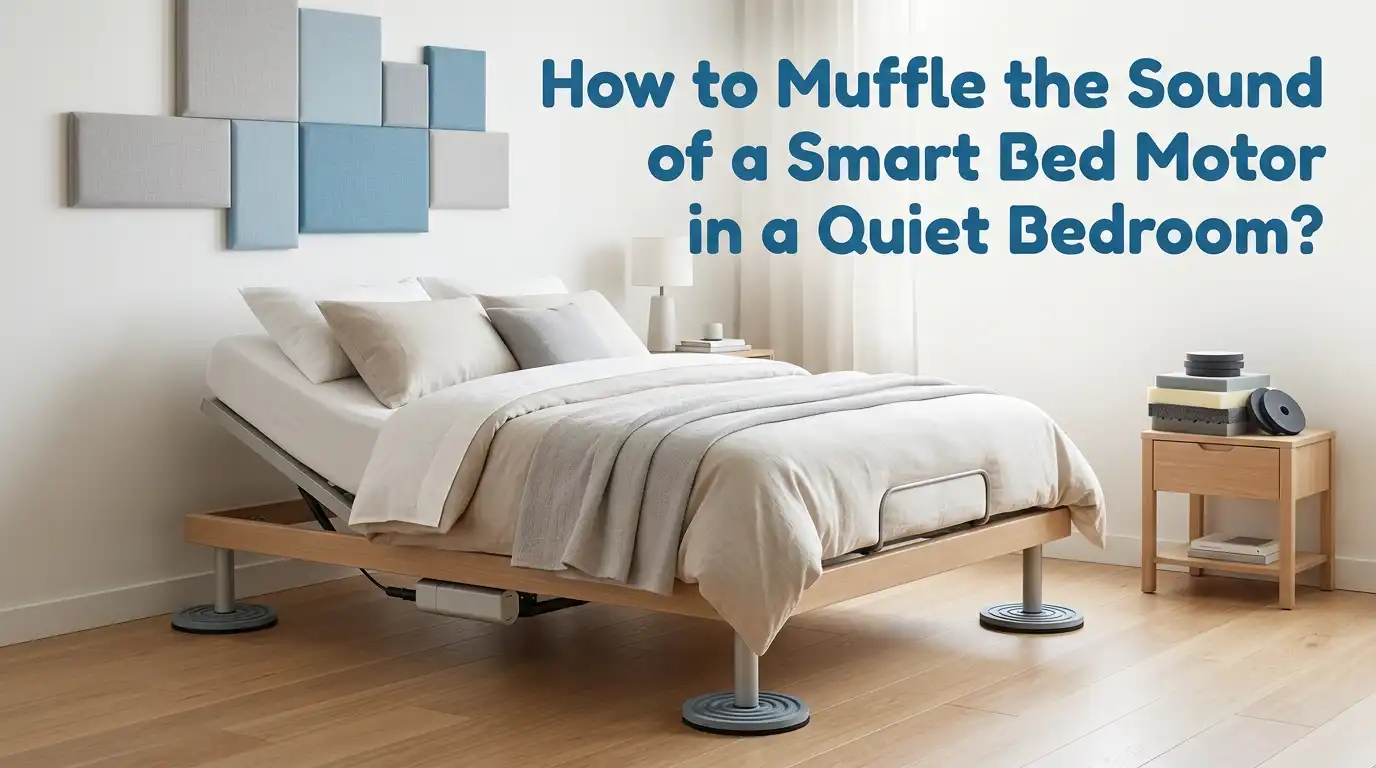
Hard floors act like giant speakers. They turn small motor vibrations into loud hums that fill the room. Anti vibration pads break this contact and absorb the energy before it spreads.
You can use rubber pads, cork pads, or composite foam pads sold for washing machines and air conditioners. Lift each leg one at a time and slide a pad underneath. Make sure all four legs sit evenly on the pads so the bed does not wobble.
Pros: These pads are cheap, easy to install, and work very well on tile, hardwood, and laminate. They also protect the floor from scratches. Cons: They can shift slightly over time and may need to be repositioned. On very thick carpet, they are less effective because the carpet already absorbs some vibration.
Step Four: Lubricate the Joints and Moving Parts
Smart beds have many pivot points, and these joints can dry out over time. A dry joint creates squeaking, grinding, and even louder motor strain because the motor has to work harder.
Use a silicone spray or white lithium grease on the metal hinges, pivot pins, and any visible joints. Wipe away any drips with a clean cloth. Never spray oil directly into the motor housing or onto electrical parts. That can damage the unit and void your warranty.
Pros: Lubrication is fast, cheap, and often produces an immediate drop in noise. A single can lasts for years. Cons: You need to reapply every six to twelve months. Using the wrong product, like WD 40 on plastic gears, can dry out parts and make noise worse later.
Step Five: Place a Thick Rug Under the Bed
A rug works like a giant absorber for both vibration and airborne sound. It softens the floor under the bed and stops the motor hum from bouncing around the room.
Choose a rug with a thick pile and a dense rubber backing. The rug should extend at least two feet beyond each side of the bed. Layer a felt rug pad underneath for even more sound dampening.
Pros: A rug improves the look of your bedroom and reduces noise from many sources, not just the bed. It also keeps your feet warm in the morning. Cons: Good rugs cost more than simple pads, and they can be hard to clean if something spills. They also do little to fix internal motor problems.
Step Six: Check and Replace the Motor Mount Dampers
Most smart bed motors are bolted to the frame using small rubber or foam dampers. These dampers absorb vibration so the motor noise does not travel into the bed. Over time, they can crack, compress, or fall out completely.
Look under the bed with a flashlight and inspect each motor mount. If the rubber looks flat, torn, or missing, contact the manufacturer for replacement parts. Some users also wrap the mounts in extra adhesive backed foam tape for added dampening.
Pros: Fresh dampers can cut motor noise in half almost instantly. They are usually inexpensive and easy to swap. Cons: You may need to remove the motor temporarily, which can feel intimidating if you have never done it. Always unplug the bed before working underneath it.
Step Seven: Level the Bed Frame Carefully
An uneven bed makes the motor work harder and creates rattles when one leg lifts off the floor. Even a small tilt can cause loud knocking sounds during position changes.
Use a small bubble level on the frame rails. Adjust the leg heights or slide thin shims under the short legs until the level reads true in both directions. Felt or rubber shims work better than plastic ones because they also absorb vibration.
Pros: Leveling solves rocking, knocking, and uneven motor strain all at once. It also extends the life of the motor by reducing stress. Cons: Some smart beds have fixed legs that cannot be adjusted, so you must rely on shims. Floors that slope significantly may need professional leveling instead.
Step Eight: Soften the Room With Sound Absorbing Materials
Bare walls and hard floors bounce sound around. Soft surfaces soak it up. If your bedroom feels echoey when you clap your hands, the motor noise will sound louder than it really is.
Add thick curtains, fabric headboards, upholstered chairs, or wall tapestries. Even a full bookshelf against one wall can cut echo by a noticeable amount. Acoustic foam panels are an option for severe cases, but most bedrooms do not need them.
Pros: Room treatment improves sleep quality across the board. It reduces traffic noise, neighbor noise, and your own footsteps too. Cons: It can change the look of your bedroom and costs more than a single pad or spray. The change is gradual rather than instant.
Step Nine: Slow Down the Motor Speed if Possible
Some smart beds let you adjust how fast the motor moves through the remote app or control panel. A slower speed almost always means a quieter motor because the gears and shafts spin with less force.
Check your owner manual or app settings for a speed or sensitivity option. Reduce it by one or two levels and test the noise during a normal cycle. You can also avoid running the massage feature late at night, since massage motors are usually louder than position motors.
Pros: This costs nothing and takes seconds to try. It also reduces wear on the motor over the long term. Cons: Not every smart bed offers speed control. Slower movement means you wait longer for the bed to reach your favorite position.
Step Ten: Build a Simple Sound Barrier Around the Motor
If the motor is exposed under the bed, you can build a small enclosure to trap the sound. Use a dense material like mass loaded vinyl, acoustic foam, or even a heavy wool blanket folded into a frame.
Leave space for airflow so the motor does not overheat. Never wrap the motor tightly or block its vents. A loose three sided enclosure works best, with the open side facing away from your pillow.
Pros: A barrier can reduce airborne motor noise by several decibels and is a great option for older beds with no replaceable dampers. Cons: It takes some DIY skill and care to avoid blocking ventilation. Done wrong, it can cause heat buildup and shorten motor life. Always test the motor temperature after installing any enclosure.
Step Eleven: Schedule Position Changes for Quieter Times
Sometimes the easiest fix is behavioral. If you only adjust your bed once before sleep and once when you wake up, the motor noise becomes a small daily moment instead of a constant problem.
Set a personal rule to make all position changes before you turn off the lights. Avoid using the remote in the middle of the night unless you truly need to. Many smart beds also have a memory preset feature, so you can return to your favorite position with one button press.
Pros: This costs nothing and respects your partner’s sleep too. It also reduces total motor wear. Cons: It requires a bit of habit change. People with medical needs, like acid reflux or sleep apnea, may need to adjust position at night and cannot avoid it.
Step Twelve: Know When to Contact the Manufacturer
If you have tried tightening, lubricating, padding, and dampening, and the bed is still loud, the motor itself may be failing. Loud clicking, grinding, burning smells, or stalling are all signs of an internal problem.
Most smart beds come with a warranty that covers the motor for several years. Contact customer support before opening the motor housing yourself, because DIY repairs often void coverage. Have your model number, purchase date, and a short video of the noise ready.
Pros: A warranty repair or replacement is usually free and solves the problem completely. Cons: You may be without the bed for a few days during the repair. Out of warranty repairs can be expensive, sometimes costing more than a new base.
Frequently Asked Questions
Is some motor noise from a smart bed normal?
Yes, a soft hum or whirring sound is completely normal during operation. Smart bed motors use gears and electric components that always make a small amount of sound. The noise should be steady and gentle, not grinding, clicking, or rattling.
Can I use WD 40 to quiet my smart bed?
It is better to avoid WD 40 on smart beds. It is a solvent and can dry out plastic gears or remove existing factory grease. Use silicone spray or white lithium grease instead, and keep all lubricants away from electrical parts.
How often should I tighten the bolts on my adjustable bed?
A quick check every six months is a good habit. If you use the bed daily and adjust positions often, check it every three months. Tightening takes only a few minutes and prevents most squeaks and rattles before they start.
Will a thicker mattress make my smart bed quieter?
A heavier or denser mattress can dampen some vibration, but it can also strain the motor if it exceeds the weight limit. Always check your bed manual for the maximum mattress weight. Adding mass is not a substitute for proper dampening.
What if my partner sleeps lighter than me?
Place anti vibration pads under all four legs, add a thick rug, and reduce the motor speed if possible. You can also keep the remote on your side and handle all position changes before bed. These small steps add up to a much quieter night for both of you.

Hi, I’m Ava Day, the founder and lead writer at Cozy Bed Vault. I’m passionate about sleep wellness and dedicated to helping people find their perfect mattress. Through honest reviews, detailed comparisons, and expert buying guides, I simplify the mattress shopping experience so you can sleep soundly every night.