
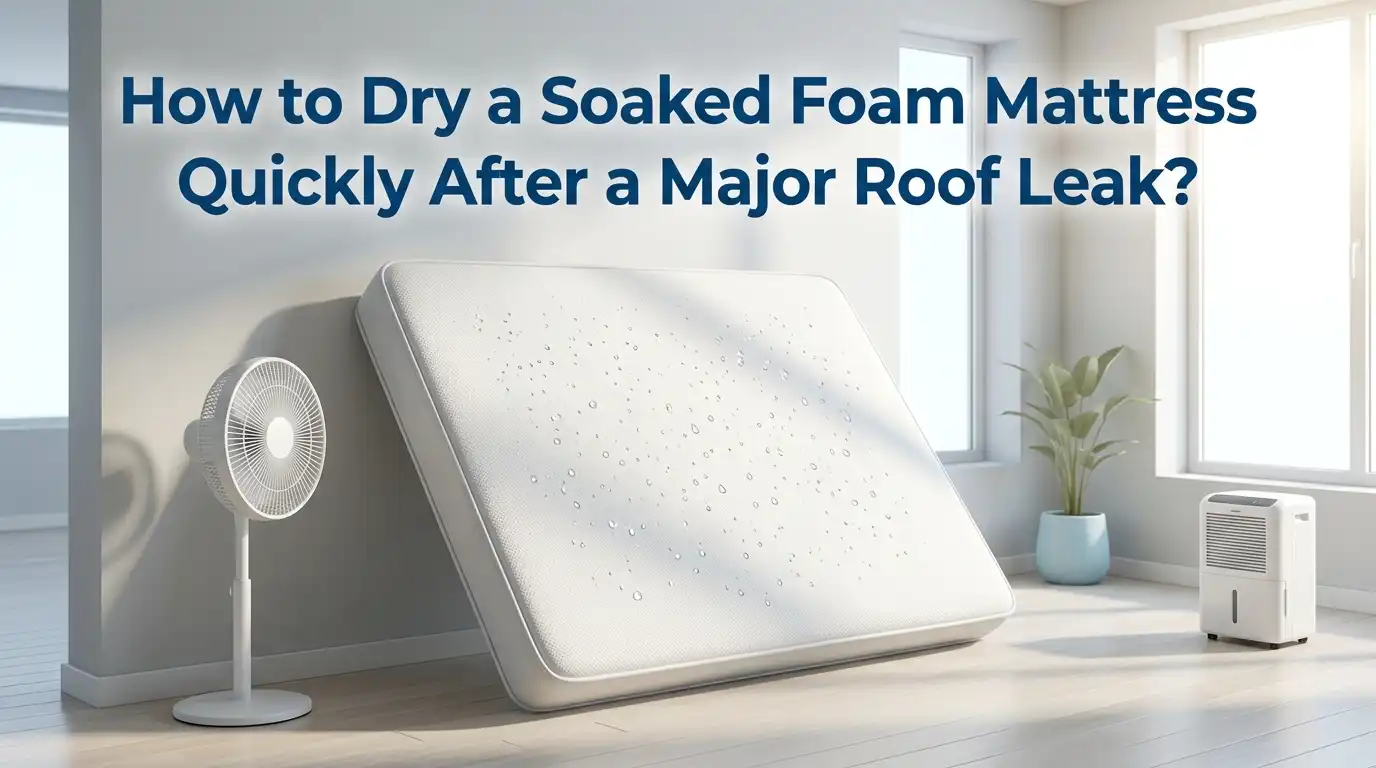
How to Dry a Soaked Foam Mattress Quickly After a Major Roof Leak?
A major roof leak can soak your foam mattress in minutes. The damage feels heartbreaking, but you can still save the bed if you act fast. Water sinks deep into foam cells and traps moisture inside the core.
That trapped moisture invites mold, mildew, and a musty smell within just 24 to 48 hours. The good news is that quick action and the right tools can pull most of the water back out.
This guide walks you through every step. You will learn how to extract water, speed up drying, and stop mold before it grows. Every minute matters, so grab your towels and let us start the rescue.
Key Takeaways
- Act within the first hour of the leak. Mold spores begin to grow on damp foam within 24 to 48 hours, so speed is your best friend during this rescue mission.
- Never use direct high heat like a hair dryer set on hot, a steam cleaner, or a clothes iron. Heat melts the foam cells, breaks down the structure, and ruins the bounce and support of your mattress forever.
- A wet/dry shop vacuum is the single most useful tool you can own for this job. It pulls deep water out of the foam core faster than any towel or air dryer can manage by itself.
- Baking soda, fans, and sunlight work as a team. Baking soda soaks up hidden moisture, fans push damp air away, and gentle sunlight finishes the drying job without harming the foam.
- Inspect for mold daily for two weeks after the leak. A musty smell, dark spots, or a damp feeling deep inside the foam means mold has started growing and the mattress may need to be replaced.
- Document the damage with photos before you start cleaning. Your homeowner insurance company may cover the cost of a new mattress, but only if you have clear proof of the roof leak damage.
Why a Soaked Foam Mattress Needs Fast Action
Foam mattresses act like giant sponges. The open cell structure inside memory foam and polyfoam pulls water deep into the core. Once water reaches the middle layer, normal air drying takes days or even weeks. That long wait gives mold and bacteria a perfect home to grow.
A wet foam bed also gets heavy fast. A queen size mattress can soak up over 20 gallons of water during a major roof leak. That weight strains the bed frame and can damage your bedroom floor.
The longer the water sits, the more the foam breaks down. You will start to see sagging spots, lumps, and a sour smell within two days. Fast action keeps the foam firm and the bed safe to sleep on again.
Step One: Stop the Water Source and Move the Mattress
Your first job is to stop more water from hitting the mattress. Place a tarp or large bucket under the roof leak to catch the drips. Call a roofer right away if the leak is still active or if you see ceiling damage. Do not start drying the mattress while water is still falling on it.
Next, move the mattress to a dry room. Get help because a soaked foam mattress can weigh more than 200 pounds. Stand it up on its side against a wall in a room with good airflow.
A garage, sunroom, or covered porch works well. Place old towels or a plastic sheet under the mattress to catch the water that drains out. Open the windows to let fresh air move through the space.
Pros of moving the mattress right away: Stops further soaking, helps gravity pull water out, and protects your floor from damage.
Cons: Heavy lifting can hurt your back, and the wet foam can drip on carpets or wood floors during the move.
Step Two: Blot the Surface With Dry Towels
Grab every clean, dry towel you own. Press them firmly onto the wet surface of the mattress. Do not rub or scrub the foam because that pushes water deeper into the core. Just press, lift, and replace with a fresh towel.
Use your body weight for extra pressure. Kneel on the towel for 10 to 15 seconds at a time to push water up and out of the foam. Move across the entire wet area in a grid pattern.
Switch to dry towels as soon as the current one feels heavy or damp. You may go through 15 or 20 towels during this step. Old beach towels and bath sheets work better than thin kitchen towels because they hold more water at once.
Pros of towel blotting: Cheap, simple, and safe for all foam types.
Cons: Time consuming, only pulls out surface water, and uses a lot of laundry.
Step Three: Use a Wet/Dry Shop Vacuum for Deep Extraction
A wet/dry shop vacuum is the fastest way to pull water out of a foam mattress. You can rent one from a hardware store for around 30 to 50 dollars a day. Set the vacuum to the wet setting and remove any paper filters before you start.
Press the nozzle flat against the wet area. Move it slowly across the surface in straight, overlapping lines. Hold each spot for 5 to 10 seconds to let the suction pull water from deep inside.
Empty the vacuum tank often because foam holds gallons of hidden water. Repeat this process at least three or four times on heavily soaked spots. You will be shocked at how much more water comes out each pass.
Pros of a wet vac: Removes deep water, works fast, and reaches into the foam core.
Cons: Costs money to rent or buy, makes a lot of noise, and can pull foam fibers loose if the suction is too strong.
Step Four: Apply Baking Soda to Absorb Hidden Moisture
Baking soda is a natural moisture magnet. It pulls dampness out of foam and also fights bad smells at the same time. Sprinkle a thick, even layer over the entire damp surface of the mattress. Use a whole box for a twin size bed and two or three boxes for a queen or king.
Leave the baking soda on for at least 8 to 12 hours. Overnight is best. The white powder will turn slightly yellow or gray as it soaks up water and odors.
Vacuum it all off with a regular household vacuum once the time is up. Repeat the process on the other side of the mattress. You can also mix baking soda with a few drops of tea tree oil to add a mold fighting boost.
Pros of baking soda: Cheap, safe, odor killing, and easy to use.
Cons: Slow process, messy to clean up, and only pulls shallow moisture.
Step Five: Boost Airflow With Fans and Open Windows
Air movement is the key to fast drying. Set up at least two or three fans around the mattress. Point one fan at each side of the foam. A box fan or a high velocity floor fan works best. Stand oscillating fans on chairs so the air hits the top and middle of the mattress, not just the bottom.
Open every window in the room. Cross breezes pull damp air out and bring dry air in. Keep the fans running for 48 to 72 hours straight. Do not turn them off at night. The constant airflow stops mold from settling on the damp foam. If you live in a humid area, close the windows during rain and use the fans alone instead.
Pros of fans: Cheap to run, safe for foam, and works on every type of mattress.
Cons: Slow on its own, uses electricity for days, and may not work well in humid climates.
Step Six: Run a Dehumidifier in the Room
A dehumidifier speeds up the drying process by pulling water right out of the air. Place a portable dehumidifier in the same room as the wet mattress. Set it to the lowest humidity level, around 30 to 40 percent.
Empty the water tank every few hours. A strong dehumidifier can pull 2 to 4 gallons of water from the air per day when the room is very damp. Keep the door closed so the machine only works on one room at a time.
Combine the dehumidifier with your fans for the fastest results. This combo can cut drying time in half compared to fans alone. Check the mattress every six hours to feel for damp spots.
Pros of a dehumidifier: Fast, controls humidity, and stops mold growth.
Cons: Costs 150 to 300 dollars to buy, uses more power than a fan, and needs frequent tank emptying.
Step Seven: Use Sunlight and Fresh Air Outside
Sunlight is a free natural drying tool. UV rays kill mold spores and bacteria while the warm air pulls moisture from the foam. Carry the mattress outside on a sunny, low humidity day. Lean it against a wall, fence, or sawhorse so both sides can dry.
Do not leave foam in direct, hot sunlight for more than 4 to 6 hours. Too much sun can yellow the cover and dry out the foam cells. Flip the mattress every two hours to dry each side evenly.
Bring it back inside before the evening dew settles. A breezy 70 to 80 degree day with low humidity gives the best results. Skip this step if rain is in the forecast.
Pros of sun drying: Free, kills germs, and adds a fresh smell.
Cons: Depends on weather, can fade or yellow the cover, and is hard to do with heavy mattresses.
Step Eight: Check for Mold and Mildew Daily
Mold is the biggest threat after a roof leak. Spores can grow on damp foam in as little as 24 hours. Inspect your mattress every day for two weeks after the soaking. Look for dark spots, green or black patches, and white fuzzy growth.
Smell the mattress too. A musty, sour, or earthy odor means mold is hiding inside. Press your hand deep into the foam and check if it feels cool, damp, or sticky.
If you find any mold, spray the spot with a mix of one part white vinegar and one part water. Let it sit for an hour, then blot dry. Severe mold growth means the mattress is no longer safe and must be thrown out.
Pros of daily checks: Catches mold early, protects your health, and saves the mattress.
Cons: Takes time, and mold inside the foam core may stay hidden.
Step Nine: Treat Stains and Smells With Vinegar
Roof leak water often carries dirt, dust, and roof material. This dirty water leaves yellow or brown stains on light colored foam. White vinegar is the safest cleaner for foam. Mix equal parts white vinegar and cool water in a spray bottle.
Lightly mist the stained area. Do not soak the foam again. Blot the spot with a clean white cloth in a dabbing motion. Repeat two or three times until the stain fades. Let the spot air dry with a fan pointed at it.
Vinegar also neutralizes musty smells and kills mold spores. Skip harsh cleaners like bleach because they break down the foam cells and turn the material brittle. Enzyme cleaners also work well for tough stains.
Pros of vinegar: Cheap, natural, kills mold, and safe for foam.
Cons: Strong smell at first, may not remove deep stains, and works slowly.
Step Ten: Test if the Mattress Is Fully Dry Before Use
Foam can feel dry on the outside but stay wet in the middle. Sleeping on a damp foam mattress is unsafe because mold grows inside the core. You need to test the mattress before you put sheets back on.
Press your hand firmly into the center of the mattress for 30 seconds. Pull it out and check your palm for moisture. A moisture meter from a hardware store gives a more exact reading. Foam is fully dry when the meter reads below 15 percent moisture content.
You can also place a sheet of dry paper on the foam overnight. If the paper feels damp in the morning, the mattress needs more drying time. Wait until you get three dry tests in a row before sleeping on it.
Pros of testing: Confirms safety, prevents mold, and protects your health.
Cons: Adds time to the process, and a moisture meter costs extra money.
Step Eleven: Know When to Replace the Mattress
Sometimes a foam mattress is too damaged to save. A flood from a major roof leak can soak the foam beyond repair. You should replace the mattress if you see deep mold, smell a strong sour odor, or feel lumps and sags after drying.
Mattresses older than 7 years are often not worth saving after a major water event. The foam loses support over time, and water damage speeds up the breakdown. Contact your homeowner insurance company before you toss the mattress.
Most policies cover sudden water damage from roof leaks. Take clear photos of the damage, save your repair receipts, and get a written estimate for a new bed. Recycling centers often accept old foam mattresses for free.
Pros of replacing: Guarantees a safe, mold free bed.
Cons: Costs money, creates waste, and may not be covered by insurance.
Frequently Asked Questions
How long does it take to dry a soaked foam mattress?
A foam mattress soaked by a roof leak takes 2 to 5 days to dry fully with fans, a dehumidifier, and a wet vac. Without these tools, drying can take a week or longer. Speed matters because mold grows within 24 to 48 hours.
Can I use a hair dryer to speed up drying?
No. A hair dryer on the hot setting will melt or damage the foam cells. You can use a hair dryer on the cool setting for small damp spots, but fans and a dehumidifier work much better for the whole mattress.
Will a soaked foam mattress always grow mold?
Not always. Fast action stops mold from growing in most cases. If you start drying within the first hour and keep airflow strong for several days, you can prevent mold. Slow drying or hidden moisture is what causes mold problems.
Is it safe to sleep on a foam mattress that was once soaked?
Yes, but only after you confirm it is fully dry and free of mold. Use a moisture meter and check for musty smells before you sleep on it. If you have allergies or asthma, consider replacing the mattress to be safe.
Does homeowner insurance cover a mattress damaged by a roof leak?
Most policies cover sudden water damage from roof leaks. Slow leaks or lack of home maintenance may not be covered. Take photos, save receipts, and call your insurance agent right away to start a claim.

Hi, I’m Ava Day, the founder and lead writer at Cozy Bed Vault. I’m passionate about sleep wellness and dedicated to helping people find their perfect mattress. Through honest reviews, detailed comparisons, and expert buying guides, I simplify the mattress shopping experience so you can sleep soundly every night.