How to Verify Authentic Organic Certifications on a GOTS Certified Mattress?
Shopping for an organic mattress feels exciting until you spot the word “organic” stamped on every other product. Some claims hold weight. Others are pure marketing.
The Global Organic Textile Standard, known as GOTS, is the gold standard for organic textiles, including mattresses. But here is the catch. Many brands print the GOTS logo without actually holding a valid certificate.
This guide walks you through every practical step to confirm whether a mattress carries a real GOTS certification. You will learn how to read labels, search public databases, contact certifiers, and avoid greenwashing traps.
Key Takeaways
- Always look for a license number on the GOTS label. A real certificate carries a unique number issued by an approved certifier. No number means no proof.
- Search the GOTS public database at global-standard.org. Type the brand name or license number. If the brand does not appear, the claim is likely false.
- Check the label grade carefully. “Organic” means at least 95% certified organic fibers. “Made with Organic Materials” means between 70% and 94%.
- Confirm the certifier is approved by GOTS. Names like Control Union, Ecocert, OneCert, and CU Inspections appear on the official approved list.
- Ask the brand for a Scope Certificate. This document proves the company can legally process and sell GOTS goods under its name.
- Beware of vague green claims like “eco friendly cotton” or “natural fibers.” These phrases carry no audit, no standard, and no proof.
Understand What GOTS Certification Actually Covers
GOTS is a global standard that audits the entire textile supply chain. It covers raw fiber harvesting, spinning, weaving, dyeing, sewing, packaging, and shipping. For a mattress to carry the GOTS label, every step must meet strict environmental and social rules.
The standard checks two main areas. First, it confirms the fibers come from certified organic farms. Second, it bans toxic chemicals like formaldehyde, heavy metals, and chlorine bleach during processing. GOTS also requires fair labor practices across every factory involved.
So when a mattress claims GOTS certification, it means the cotton, wool, or other natural fibers inside have been tracked from farm to finished product. That is a powerful promise, but only if the claim is real.
Know the Two GOTS Label Grades
Not every GOTS label means the same thing. There are two official grades, and understanding the difference protects you from confusion at checkout.
The first grade is “Organic.” This grade applies when at least 95% of the fibers in the product are certified organic. The remaining 5% may be non organic but must follow strict GOTS rules.
The second grade is “Made with Organic Materials.” This applies when between 70% and 94% of the fibers are certified organic. It is still a valid GOTS label, but the product contains fewer organic fibers.
Pros of the Organic grade include higher purity and stronger environmental impact. Cons include a higher price point. The Made with Organic grade offers a more affordable entry but trades off a lower percentage of organic content.
Find the License Number on the Mattress Label or Hangtag
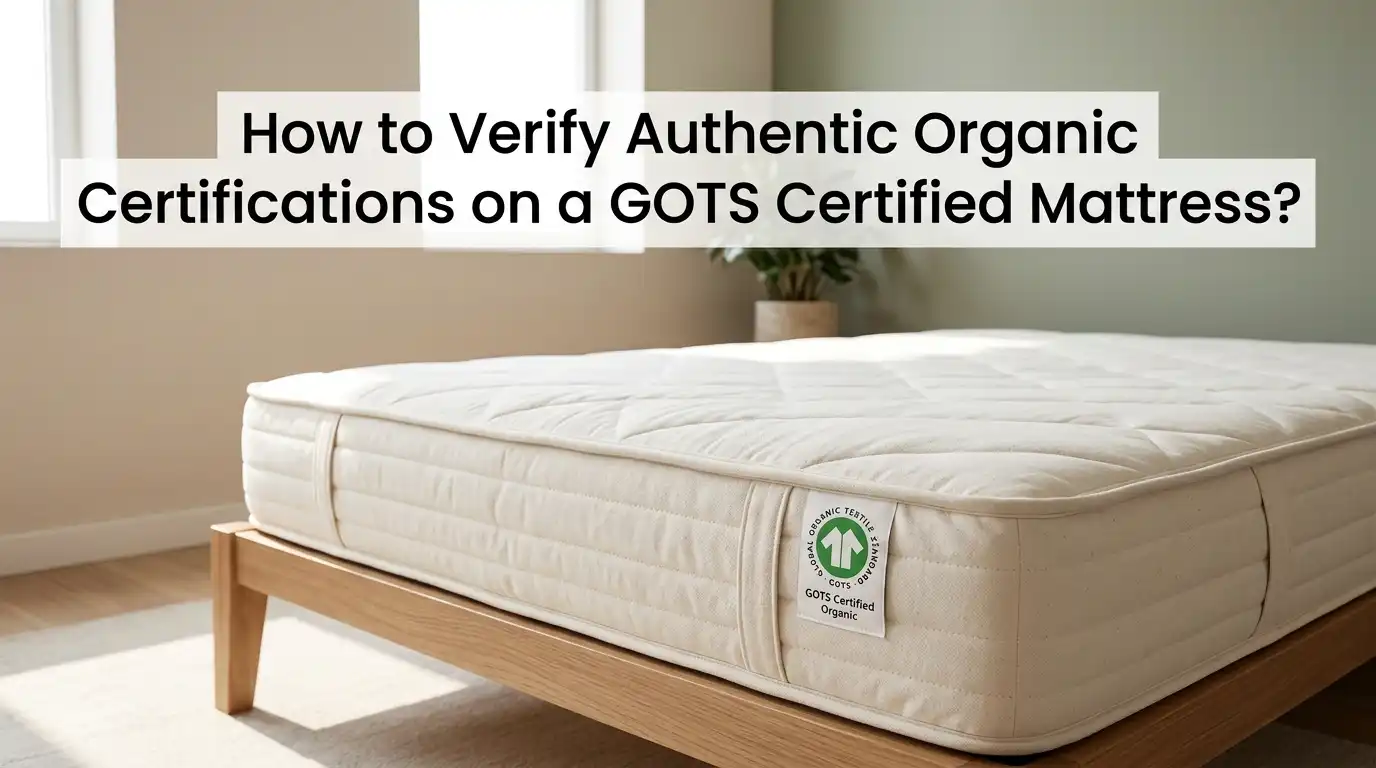
Every authentic GOTS product comes with a label that lists three key items. These are the GOTS logo, the label grade, the certifier’s name, and a unique license number. Without a license number, the certification cannot be verified.
Look at the mattress tag, the hangtag, the packaging, or the brand’s website product page. The license number usually starts with letters from the certifier followed by digits. For example, you might see something like CU 1234567 or GOTS 56789.
Pros of label checking are speed and ease. You can verify in seconds. Cons include the fact that some brands hide labels online or use vague digital images. If you cannot find a license number anywhere, treat that as a red flag right away.
Use the GOTS Public Database to Confirm the Brand
This is the most important step. Visit global-standard.org and go to the public database page. You will see a search tool that lets you enter either the brand name, the supplier name, or the license number.
Type the brand or license number and hit search. If the brand is genuinely certified, its profile will appear. The profile shows the company name, the certifier, the certified product categories, and the expiry date.
If nothing shows up, the brand is not GOTS certified. It really is that simple. Some brands may appear under a parent company name, so try both. Pros of this method include free public access and instant results. Cons include occasional delays when certificates are renewing.
Check the Approved Certification Body
GOTS only recognises a short list of approved certifiers. These are independent third party auditors trained and licensed to inspect supply chains. Always confirm the name printed on the label matches one of the approved bodies.
Common approved certifiers include Control Union Certifications, Ecocert Greenlife, OneCert International, ETKO, CU Inspections India, and Letis. The full list is published on the GOTS website under “Approved Certification Bodies.”
If you see a certifier name you do not recognise, run it through the official list. Pros of this check include guarding against shell certifications. Cons are that the list updates regularly, so always pull the current version rather than relying on an older copy.
Ask the Brand for a Scope Certificate
A Scope Certificate is the official document a certifier issues to a company. It lists the certified product categories, the materials covered, the processing steps, and the certificate validity dates. Reputable brands will share this document on request.
Send a polite email asking for a copy of the current Scope Certificate. A genuine company replies within a day or two with a PDF. The PDF should match the license number on the product label.
Pros of asking for the Scope Certificate include direct proof and a clear paper trail. Cons include the wait time and the fact that some smaller sellers may not respond quickly. If a brand refuses or delays repeatedly, walk away.
Verify the Product Category Listed on the Certificate
Even when a brand holds a valid Scope Certificate, it might not cover the exact product you want to buy. Some certificates only list mattress covers or cotton fabric, not the finished mattress itself. This is a common trick used in greenwashing.
Open the Scope Certificate and check the “Product Categories” section. It should clearly mention finished mattresses or specific bedding items. If it only lists raw cotton or fabric rolls, the finished mattress is not actually GOTS certified.
Pros of this check include catching half truths early. Cons include the technical reading required. Take your time. If the wording feels unclear, ask the certifier directly using contact details printed on the document.
Look for a Transaction Certificate for Each Shipment
A Scope Certificate proves the company can process GOTS goods. A Transaction Certificate proves a specific shipment of goods is GOTS certified. These two documents work together.
Some brands hold Scope Certificates but ship products that never received a Transaction Certificate. That means the supply chain might not be fully verified for that batch. Ask the brand if their finished mattresses ship with Transaction Certificates from the supplier.
Pros of requesting Transaction Certificates include batch level traceability. Cons include the fact that retail buyers rarely receive copies directly. Still, knowing the brand uses them in their supply chain adds another layer of trust.
Contact the Certifier Directly When in Doubt
If something feels off, go straight to the source. Every approved GOTS certifier has a public website with contact details. Send an email with the brand name, the license number, and a screenshot of the claim you are checking.
The certifier will confirm whether the certificate is real, current, and covers the product in question. This step removes all guesswork. It is the most reliable verification path available to consumers.
Pros of contacting the certifier include direct authority and complete clarity. Cons include slower response times, often three to five business days. For high value purchases like a mattress, the wait is worth it. Treat this as your final safety net.
Spot Greenwashing Language and Red Flags
Many sellers misuse the GOTS logo or use vague green words to imply organic status. Phrases like “eco cotton,” “natural fibers,” “organic style,” or “earth friendly” carry no official meaning. They are marketing words, not certifications.
Other red flags include altered GOTS logos with extra graphics, missing license numbers, certifier names that do not exist, and refusal to share documents. Some sellers even invent fake certification bodies with official sounding names.
Pros of learning these signals include faster shopping decisions. Cons include the constant evolution of greenwashing tactics. Stay sceptical of any claim that lacks a license number or a public database listing. Real certifications welcome verification. Fake ones avoid it.
Cross Check with Other Trusted Certifications
GOTS is strong on its own, but additional certifications add confidence. Look for GOLS for organic latex, USDA Organic for fibers, Oeko Tex Standard 100 for chemical safety, Greenguard Gold for low emissions, and MADE SAFE for non toxic ingredients.
A truly organic mattress often carries three or four overlapping certifications. This layered approach proves the brand takes transparency seriously across materials, manufacturing, and indoor air quality.
Pros of cross checking include a fuller picture of safety. Cons include certification overlap that can feel confusing. Focus on the certifications that match the materials. For example, GOLS for latex layers and GOTS for cotton covers makes a complete story.
Inspect Physical Product Details on Arrival
Once your mattress arrives, do one final check. Open the packaging and look for the GOTS tag stitched into the mattress cover. The tag should display the logo, license number, certifier, and label grade.
Touch and smell the materials. Genuine organic cotton has a slightly earthy scent and a soft, natural feel. Strong chemical smells or overly bright white fabric are warning signs. Synthetic foams and fragrances do not belong in a certified organic mattress.
Pros of physical checks include hands on confirmation. Cons include the difficulty of returning a mattress if you spot problems late. Always combine physical inspection with database checks done before purchase. That way, surprises stay rare.
Keep Records for Future Reference
Save every document related to your mattress purchase. Screenshot the GOTS database listing, download the Scope Certificate, keep the receipt, and photograph the product tag. These records protect you if you ever need to file a complaint.
If a brand later loses its certification or faces fraud allegations, your records become evidence. You can also share them with consumer protection groups or report misuse to GOTS directly through their official channels.
Pros of record keeping include long term peace of mind. Cons include the small extra effort during purchase. Treat it like saving a warranty card. A few minutes of organisation today saves hours of frustration later. Your future self will thank you.
Frequently Asked Questions
How long does GOTS certification last on a mattress brand?
A GOTS certificate stays valid for one year. Brands must renew it annually through their certifier. Always check the expiry date on the Scope Certificate to confirm the brand is currently certified, not relying on an older approval.
Can a mattress be partly GOTS certified?
Yes. Some mattresses use a GOTS certified cotton cover but contain non certified inner layers. The label must clearly state which components are certified. Always ask whether the finished mattress or only the cover holds GOTS status.
Is GOTS better than USDA Organic for mattresses?
They serve different purposes. USDA Organic certifies raw fibers like cotton. GOTS covers the entire textile process including dyeing, sewing, and labor practices. For mattresses, GOTS offers broader protection because it audits the full supply chain.
What should I do if I find a fake GOTS claim?
Report it to GOTS directly through their official website. Include the brand name, photos of the claim, and any links. GOTS actively pursues misuse and has filed legal actions against companies making false organic claims in the past.
Does the GOTS label expire on the physical mattress?
The label itself does not expire on your mattress. However, the brand’s certification status can change. If you plan to buy from the same brand again, recheck the database before each purchase to confirm ongoing certification.
Can small brands afford GOTS certification?
Yes, though it is a significant investment. Many small organic mattress makers prioritise GOTS because it builds trust. If a small brand claims certification, verify it the same way you would for a large company. Size does not change the verification process.

Hi, I’m Ava Day, the founder and lead writer at Cozy Bed Vault. I’m passionate about sleep wellness and dedicated to helping people find their perfect mattress. Through honest reviews, detailed comparisons, and expert buying guides, I simplify the mattress shopping experience so you can sleep soundly every night.