How to Recycle an Old Mattress Safely Without Dumping It in a Landfill?
Old mattresses pile up fast in landfills. Each year, more than 18 million mattresses get tossed in the United States alone.
They take up huge space, leak chemicals into the soil, and refuse to break down for decades. The springs jam recycling equipment, and the foam releases harmful gases as it ages.
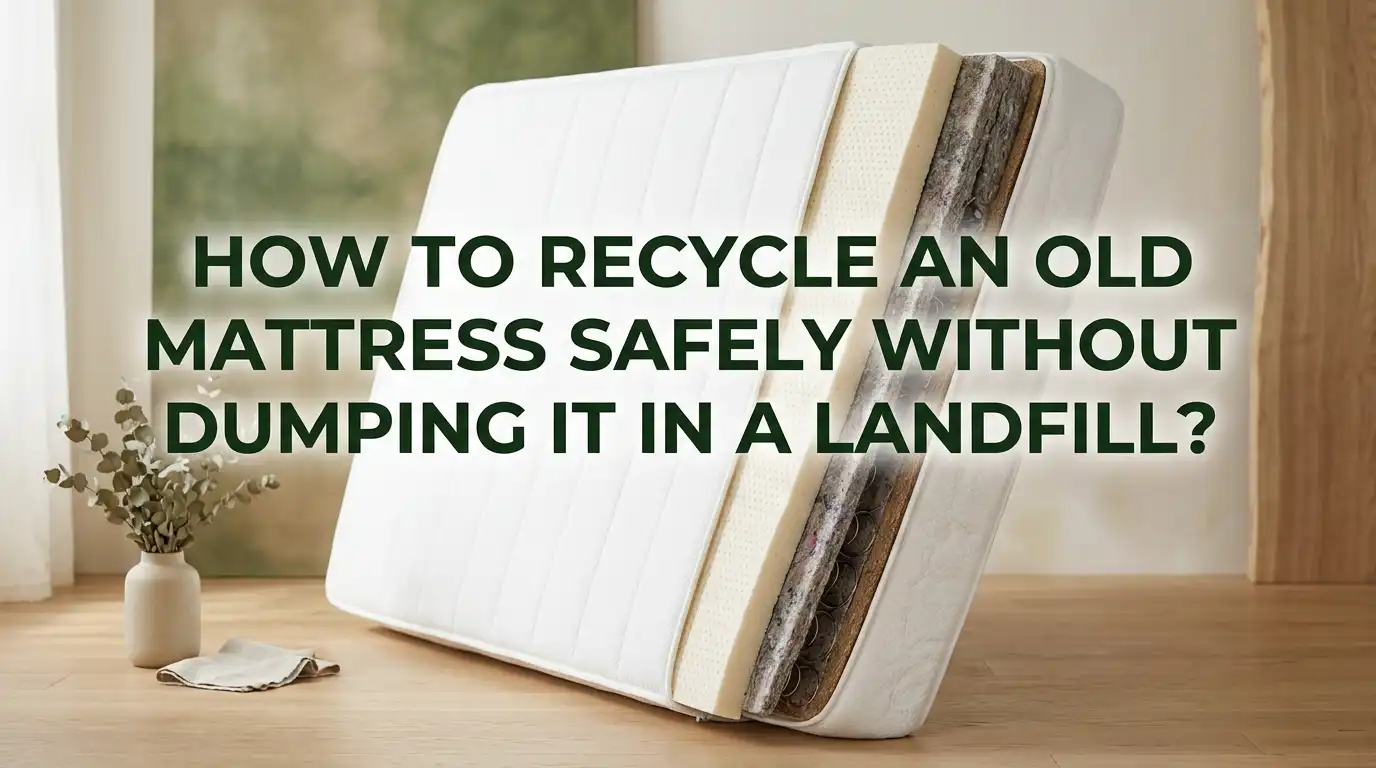
The good news is that up to 75 percent of a mattress can be recycled into useful materials. Steel coils become new metal goods. Foam turns into carpet padding. Cotton fibers find new life as industrial filters.
In a Nutshell:
- Check local rules first. Many states like California, Connecticut, Rhode Island, and Oregon run free mattress recycling programs through the Bye Bye Mattress initiative. Your city may also have curbside pickup days or drop off sites.
- Donate only if the mattress is clean. Shelters, Habitat for Humanity ReStores, and refugee aid groups accept gently used mattresses that are free from stains, bed bugs, rips, and odors. A protected mattress that is less than ten years old usually qualifies.
- Use retailer take back programs. Most mattress sellers will haul away your old bed when they deliver a new one. Some charge a small fee, while others include it for free. Always ask before you buy.
- Recycle the parts yourself if you are handy. You can strip a mattress down to its steel springs, wood frame, foam, and fabric. Scrap yards pay for the metal, and the wood can be reused for projects.
- Hire a junk removal service as a last resort. Companies like 1 800 GOT JUNK and LoadUp pick up mattresses and promise to divert them from landfills. Confirm their recycling claim in writing before you book.
- Never burn or illegally dump a mattress. It is illegal in most areas, releases toxic fumes, and carries heavy fines.
Why Landfill Disposal Hurts the Planet
Landfills already hold more waste than they can manage. A single mattress takes up about 40 cubic feet of space, which is more than a standard refrigerator. Most mattresses contain polyurethane foam, steel, polyester, and chemical flame retardants that do not break down for 80 to 120 years.
When mattresses sit in landfills, they trap methane pockets and release volatile organic compounds. The metal springs also damage compactors and slow down sorting machines at waste facilities. That is why many landfills charge extra disposal fees for mattresses or refuse them outright.
The environmental cost is huge, but the financial cost matters too. Cities spend millions each year hauling and processing illegally dumped mattresses. Choosing to recycle keeps tax money in the community and saves valuable resources for reuse.
Check Your State and City Recycling Programs
Your first step is finding out what your local government offers. Some states have made mattress recycling mandatory through stewardship laws. California, Connecticut, Rhode Island, Virginia, and Oregon all run free state programs that accept mattresses at drop off locations.
Visit the official Bye Bye Mattress website to find collection sites near you. The program is run by the Mattress Recycling Council and lists hundreds of no cost drop off centers. Many sites also offer free pickup for residents who cannot transport the mattress themselves.
If your state does not have a stewardship program, call your city sanitation department. Many municipalities run bulk waste pickup days, special textile collection events, or partner with private recyclers. Always ask whether the mattress will actually be recycled or sent to a landfill.
Pros: Free or very low cost, fully legal, guaranteed recycling outcome, easy for residents.
Cons: Not available in every state, may require transport to a drop off site, pickup wait times can be long during busy seasons.
Donate Your Mattress to a Charity or Shelter
Donation is one of the kindest ways to extend a mattress life. Homeless shelters, women refuge centers, transitional housing programs, and refugee resettlement agencies often need beds. Habitat for Humanity ReStores accept clean mattresses in many regions and resell them to fund affordable housing.
Before you donate, inspect the mattress carefully. It should have no stains, no tears, no bed bugs, and no strong odors. Most charities only accept mattresses less than ten years old that were used with a protector. Wash any covers, vacuum the surface, and take clear photos to send to the donation center first.
Call or email the charity before you load up your car. Some accept drop offs, while others schedule home pickups for free. The Salvation Army, Goodwill, and Furniture Bank network all run mattress donation programs in select cities.
Pros: Helps people in need, completely free, gives your mattress a second life, may qualify for a tax deduction.
Cons: Strict cleanliness rules, not all charities accept mattresses, may require delivery on your end.
Use the Retailer Take Back Option When Buying New
Most mattress sellers now offer a haul away service when they deliver a new bed. This is one of the easiest ways to recycle responsibly because you do not have to lift a finger after the swap. Big retailers like IKEA, Mattress Firm, Casper, Tempur Pedic, and Saatva all participate in take back programs.
Ask about this option before you finalize your purchase. Some companies include haul away for free, while others charge between 20 and 50 dollars. Confirm in writing that the mattress goes to a certified recycling facility, not a regular landfill. Reputable brands will share their recycling partner details.
This option works best if you are already shopping for a replacement. Schedule the delivery for a weekday morning when you have time to prepare the old mattress for removal.
Pros: Maximum convenience, often bundled with delivery, no transport needed, supported by major brands.
Cons: Only available when buying a new mattress, fees may apply, not every retailer truly recycles.
Find a Local Mattress Recycling Facility
Independent recycling facilities exist in most major cities. They break mattresses down by hand or with industrial shredders, then sort the materials by type. Steel coils get sold to scrap metal buyers, foam goes to carpet padding manufacturers, and cotton or wool fiber heads to industrial absorbent makers.
Search online for mattress recycling facility plus your city name. Earth911 and the Mattress Recycling Council both run search tools that show licensed centers. Call ahead to confirm hours, fees, and whether they accept your specific mattress type. Some places refuse waterbeds, futons, or heavily soiled mattresses.
Recycling fees usually run between 10 and 40 dollars per mattress. That is far cheaper than illegal dumping fines, which can reach 500 dollars or more in many states.
Pros: Guaranteed material recovery, supports green businesses, often cheaper than junk removal, transparent process.
Cons: Limited locations in rural areas, transport required, modest fees apply.
Hire a Junk Removal Service That Recycles
If you cannot transport the mattress yourself, professional junk haulers are a strong backup plan. Companies like 1 800 GOT JUNK, College Hunks Hauling Junk, and LoadUp offer mattress pickups across the country. They lift, load, and remove the mattress while you stay inside.
The catch is that not every junk removal service actually recycles. Always ask three questions before booking. First, where does my mattress go after pickup? Second, can you share the recycling partner name? Third, what percentage of mattresses do you divert from landfills?
Prices usually range from 75 to 175 dollars depending on your city and the number of items. Many companies offer same day or next day service, which is handy when you need to move quickly.
Pros: Zero physical effort, fast scheduling, handles multiple items at once, ideal for elderly or disabled customers.
Cons: Higher cost, recycling outcome depends on the company, some firms still send to landfill.
Take the Mattress Apart and Recycle the Materials Yourself
If you enjoy hands on projects, breaking down the mattress yourself can be rewarding. You will need a sharp utility knife, heavy gloves, pliers, a screwdriver, and a saw for the wood frame. Set aside two to three hours and work in a garage or driveway.
Start by cutting the fabric cover around the perimeter. Peel back the layers to reveal the foam, padding, and springs. Bag the cotton and foam separately for textile recycling. Cut the steel springs free and bundle them for the scrap yard.
Scrap metal buyers pay by weight, so a queen mattress can earn you 5 to 20 dollars. The wood frame can become garden beds, compost bin walls, or firewood. Take any leftover textiles to a fabric recycling drop box if your area has one.
Pros: Free or even profitable, full control over the outcome, satisfying weekend project, very eco friendly.
Cons: Time consuming, physical effort required, tools needed, some material disposal still tricky.
Repurpose Mattress Parts at Home
Creative repurposing keeps mattress materials out of the waste stream entirely. The foam inside makes excellent pet beds, floor cushions, kneeling pads for gardening, or insulation for a shed wall. Cut it to size and wrap it in old fabric for a clean finish.
Steel springs have become a favorite material for DIY crafters. People use them as wine racks, candle holders, garden trellises for climbing plants, or rustic photo display stands. A quick spray of clear coat keeps the metal from rusting outdoors.
The fabric cover can be cut into cleaning rags, drop cloths for painting, or stuffing for outdoor cushions. The wood frame works well for raised garden beds, compost bin walls, or firewood if untreated.
Pros: Completely free, sparks creativity, zero waste outcome, useful new household items.
Cons: Requires creativity and time, not practical for large mattresses, may not use every part.
Sell or Give Away a Gently Used Mattress
If your mattress is in great shape, someone else may happily take it off your hands. Post it on Facebook Marketplace, Craigslist, Freecycle, Nextdoor, or OfferUp. Many people search these sites daily for affordable bedroom furniture.
Be honest in the listing. Share clear photos, the brand, the age, and any flaws. Mention whether you used a mattress protector. Buyers appreciate transparency and will trust your offer more. Price it low or list it as free to move it quickly.
Some buyers will pick the mattress up the same day, saving you a delivery trip. Always inspect the mattress for bed bugs before handing it off. Reselling stained or infested mattresses can spread pests and damage your reputation in local groups.
Pros: Earns a little money, extends the mattress life, free pickup by the buyer, easy listing process.
Cons: Requires honesty and patience, no guaranteed sale, safety concerns when strangers visit.
Avoid These Unsafe Disposal Methods
Some disposal shortcuts cause real harm. Never burn a mattress in a backyard fire pit or burn pile. The foam releases cyanide gas, formaldehyde, and other toxins that damage lungs and pollute the air. Burning is illegal in nearly every state.
Illegal dumping on roadsides, vacant lots, or near dumpsters is another serious problem. Fines often start at 500 dollars and can reach several thousand for repeat offenders. Cameras and license plate readers catch dumpers more often than people expect.
Avoid leaving a mattress at the curb without scheduling a pickup. It blocks sidewalks, attracts pests, and can spread bed bugs to neighbors. Always call your sanitation office before placing any large item on the street.
Pros: None. These methods are unsafe and illegal.
Cons: Heavy fines, environmental damage, legal trouble, harm to community health.
Prepare Your Mattress Before Recycling or Donation
A little prep work makes the recycling process smoother. Vacuum both sides of the mattress to remove dust, hair, and crumbs. Wipe stains with a mild soap solution and let the mattress fully dry before moving it.
Wrap the mattress in a plastic mattress bag, available at hardware stores for about 10 dollars. This prevents bed bug transfer and keeps the materials clean during transport. Some recycling centers require bagged mattresses for health reasons.
If the mattress was used by someone with a contagious illness, mention this to the recycling center. They may have special handling procedures. For donation, include the original tags or a receipt if you have them to prove the age and brand.
Pros: Improves acceptance rates, protects workers, keeps materials clean, simple to do.
Cons: Small material cost, takes 30 to 60 minutes, requires some lifting.
Frequently Asked Questions
Is mattress recycling really worth the effort?
Yes, it makes a real difference. About 75 percent of a mattress can be recovered and turned into new products. Recycling one mattress saves roughly 65 pounds of steel, foam, and fiber from the landfill. Multiply that across millions of mattresses and the impact on land use, water quality, and air pollution is huge.
How much does it cost to recycle a mattress?
Costs vary by location and method. Drop off centers usually charge between 10 and 40 dollars. State stewardship programs in California, Connecticut, Rhode Island, Oregon, and Virginia are free for residents. Junk removal services range from 75 to 175 dollars. Doing it yourself can even earn you a small amount from scrap metal sales.
Can I recycle a mattress with bed bugs?
Most facilities will not accept mattresses with bed bugs. The pests can spread to other items and workers. Seal the mattress in a heavy plastic bag, label it clearly, and call your local pest control office. They will guide you to a facility that handles infested items, usually through incineration at a licensed plant.
What happens to the materials after recycling?
Each part has a new life. Steel coils become rebar, car parts, or appliances. Foam turns into carpet padding or moving blankets. Cotton fiber goes into industrial filters or oil absorbents. Wood frames become mulch, particleboard, or biomass fuel. Almost nothing is wasted at a proper recycling facility.
Can I put an old mattress in my regular trash bin?
No, regular trash service does not accept mattresses. Most cities require a special bulk item pickup that you schedule in advance. Leaving a mattress next to your bin can result in fines and refusal of service. Always call your sanitation department to learn the correct process for your area.

Hi, I’m Ava Day, the founder and lead writer at Cozy Bed Vault. I’m passionate about sleep wellness and dedicated to helping people find their perfect mattress. Through honest reviews, detailed comparisons, and expert buying guides, I simplify the mattress shopping experience so you can sleep soundly every night.