How To Keep A Mattress From Slipping On A Metal Platform Bed?
Does your mattress slide around every time you move at night? You are not alone.
Metal platform beds look sleek and modern. But their smooth surface makes them a slippery spot for mattresses.
This constant sliding disrupts your sleep and can even damage your mattress over time. Nobody wants to wake up at 3 AM to fix a mattress that has slid halfway off the frame.
The good news? You can fix this problem easily.
This guide covers simple and effective ways to stop mattress slipping for good. We will explore non-slip pads, grippers, and tape options that create a strong grip between your mattress and frame.
In a Nutshell
- Clean the frame first. Vacuum the metal surface to remove dust and debris. This small step helps any non-slip material grip better.
- Use non-slip pads or grippers. Place these directly on the frame before adding your mattress. They create friction and stop movement.
- Try carpet tape or velcro strips. Stick these between the mattress and the frame. Both options hold the mattress firmly in place.
- Add rubber mats for extra grip. These work well under the mattress and add a cushion layer too.
- Combine methods for best results. Using two solutions together often works better than relying on just one.
- Secure your sheets too. Elastic strips on sheet corners add another layer of anchoring. This keeps everything snug through the night.
Why Mattresses Slip on Metal Platform Beds
Metal platform beds create a smooth, hard surface that works against mattress stability. The frame and mattress have very different materials. Metal is slick and cold. Mattresses are soft and flexible. When you move during sleep, friction between these two surfaces decreases. Your mattress slides sideways or shifts position easily.
Gravity and body movement combine to make slipping worse. Every time you roll over, sit on the edge, or get out of bed, you create motion. This motion pushes your mattress in different directions. Metal frames offer no grip or texture to hold the mattress in place.
Dust and debris make slipping even more likely. Small particles act like tiny ball bearings between the mattress and frame. They reduce contact and increase sliding. This is why cleaning the frame matters before you apply any solution.
The mattress weight alone is not enough to keep it stable. Unlike wooden beds with slight texture or friction, metal surfaces stay smooth no matter how heavy your mattress is. A heavier mattress might slide slower, but it still slides.
Temperature changes affect metal frames too. Metal expands and contracts with heat and cold. This movement can loosen any grip between the mattress and frame. Humidity in your bedroom also plays a role. It can make metal slightly slippery or affect how well adhesive solutions stick.
Understanding these causes helps you pick the right solution. You now know that you need something with actual grip or adhesive properties. Simple fixes like non-slip materials work because they create friction where none existed before. They fill the gap between smooth metal and soft fabric.
Preparing Your Metal Frame Before Anti-Slip Treatment
Getting your metal frame ready is the first step to stopping mattress slipping. This preparation work makes all the difference when you add anti slip solutions later.
Start by removing your mattress completely from the frame. You need clear access to the entire metal surface underneath. Take a moment to inspect the frame for any damage or rough spots that could tear your anti slip materials.
Vacuum the metal frame thoroughly. This step matters more than you might think. Dust, debris, and small particles sit on the metal surface and reduce grip. A regular household vacuum works fine for this job. Pay special attention to corners and edges where dust collects easily.
Wipe down the frame with a dry cloth after vacuuming. This removes any remaining dust particles that the vacuum missed. A clean, dry surface helps anti slip materials stick properly and grip your mattress better.
Check that the frame is completely dry before moving forward. Moisture prevents adhesives from working correctly and reduces friction between materials. If your frame feels damp, let it air dry for several hours.
Look at the frame’s surface texture. Metal platform beds often have smooth, slick finishes that make slipping worse. Slightly rough or textured surfaces actually work better with anti slip solutions. If your frame is extremely smooth, this explains why your mattress slides so easily.
Take photos of your clean frame. This helps you remember exactly where to place anti slip materials. You will know the exact spots that need coverage before your mattress goes back down.
Now your metal frame is ready for anti slip treatment. The preparation work you just completed ensures whatever solution you choose will work effectively and last longer.
Step-by-Step Guide to Applying Non-Slip Solutions
Now that your metal frame is clean and ready, it’s time to apply the anti-slip solutions. This process is straightforward and takes just a few minutes.
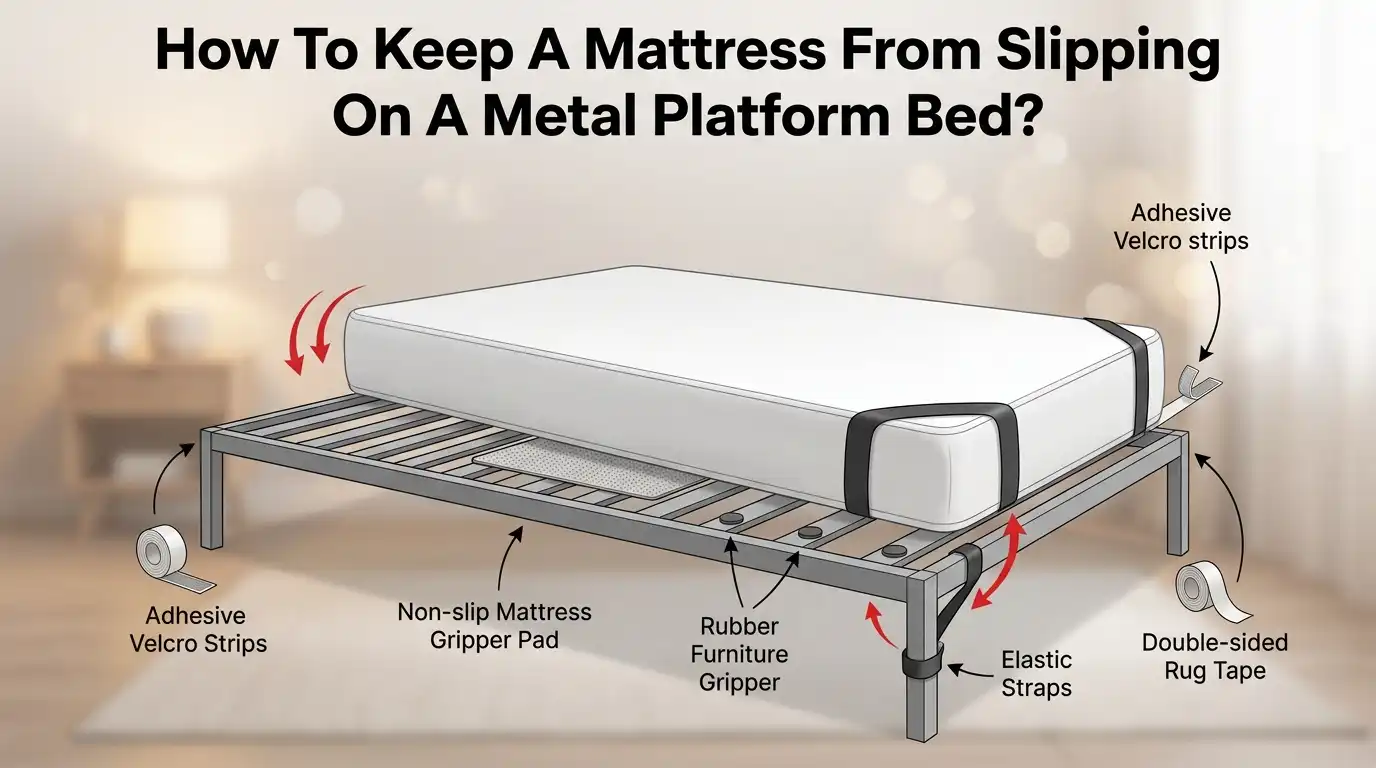
Start by selecting your non-slip material. You have several options available. Non-slip pads work well on metal surfaces. Carpet tape sticks firmly between the mattress and frame. Velcro strips offer adjustability if you need to reposition your mattress later. Rubber mats provide cushioning plus grip.
Lay your chosen material on the metal frame. Place it where your mattress will sit. If using pads or grippers, position them so they extend about 6 inches up the sides of your mattress. This height helps prevent sliding during the night when you move around.
For carpet tape or velcro, apply strips along the frame’s perimeter. Space them about 12 to 18 inches apart for even support.
Carefully position your mattress on top. Lower it slowly onto the treated frame. Make sure the mattress sits evenly across all contact points. Press down gently to help the non-slip material grip properly.
Test the stability before getting into bed. Try pushing the mattress from different angles. It should stay in place without shifting. If it still moves, you may need to add more material or try a combination approach.
Consider using two solutions together for maximum effectiveness. Many people combine non-slip pads with velcro strips. This dual method catches any movement and keeps your mattress secure throughout the night.
Using Grippers, Tapes, and Mats Effectively
Non-slip pads and grippers work by creating friction between your mattress and the metal frame. These materials grip both surfaces, preventing movement during sleep and daily use.
Non-slip pads sit directly on the metal frame before you place your mattress on top. They typically extend about 6 inches up the mattress sides, anchoring it firmly in place. The textured rubber or silicone surface grabs the mattress bottom and holds it steady.
Carpet tape offers another effective option. This double-sided adhesive tape sticks to both the metal frame and mattress bottom. Apply strips around the frame’s perimeter for reliable hold. The tape creates a strong bond that resists shifting.
Velcro tape provides a removable solution. One side adheres to the frame while the hook side grabs the mattress fabric. This method works well if you need to move your mattress frequently.
Rubber mats are thicker than pads and provide excellent grip. Place them on the frame before positioning your mattress. Their weight and texture combination prevents slipping effectively.
Combining solutions produces the best results. Use non-slip pads on the frame bottom plus velcro strips along the edges. This layered approach stops movement from multiple directions.
Installation is straightforward. Clean your frame completely first. Lay your chosen material on the metal surface. Position your mattress slowly and carefully on top. Test stability by pushing gently from different angles.
Check your setup weekly. Materials can shift over time with regular use. Reposition or replace them as needed to maintain grip strength.
These practical solutions work for all mattress types and metal frame designs.
Securing Sheets and Bedding to Reduce Movement
Securing your sheets and bedding properly creates an additional layer of stability for your mattress. This approach works alongside your non-slip materials to keep everything in place throughout the night.
Start by using fitted sheets that match your mattress size exactly. Loose or oversized sheets allow movement and shifting. A properly fitted sheet hugs your mattress corners snugly and reduces sliding.
Elastic strips attached to your sheet corners provide extra anchoring power. These strips loop under the mattress and grip the frame or non-slip materials beneath. They prevent sheets from pulling away during sleep or when you move around.
Tuck your top sheet and blankets securely at the foot of your bed. This creates tension that holds your mattress firmly in place. Avoid leaving excess fabric loose around the sides.
Consider using a mattress pad or topper on top of your mattress. These items add weight and friction, making slipping less likely. The pad’s edges should extend down the mattress sides by several inches.
Layer your bedding strategically. Heavier blankets and comforters increase downward pressure on your mattress. This weight naturally resists movement on the metal frame.
Check your bedding setup weekly to ensure everything remains tight and secure. Fitted sheets loosen over time with regular washing and use. Refit them when you notice any gaps or looseness.
Combine sheet security with your non-slip pads for best results. This two-part approach addresses mattress movement from different angles. Your mattress stays stable whether you’re sleeping, changing positions, or making your bed.
Common Mistakes That Lead to Continued Slipping
People often make simple mistakes that keep their mattress sliding on metal platform beds. Understanding these errors helps you avoid them and find lasting solutions.
Not cleaning the frame first is the biggest problem. Dust, debris, and buildup sit on metal surfaces. When you place non-slip materials over this dirt, they cannot grip properly. The particles create a barrier between your mattress and the friction solution. Always vacuum or wipe down your entire metal frame before applying any anti-slip product.
Another common error is relying on only one solution. Many people apply non-slip pads and expect complete stability immediately. This approach sometimes works, but combining multiple methods produces much better results. Friction pads work well, but adding carpet tape or velcro strips increases your success rate significantly.
Some people place materials incorrectly on the frame. Non-slip solutions need direct contact with both the metal surface and your mattress. If you position them unevenly or leave gaps, your mattress will slide through those spaces. Take time to cover the entire contact area where your mattress sits.
Ignoring weekly checks causes problems to develop over time. Your mattress naturally shifts during normal use. Materials can loosen or wear down. Checking your setup once a week catches these issues early before your mattress starts sliding again.
Forgetting about bedding security also contributes to movement. Loose sheets and blankets let your mattress shift underneath them. Tight fitted sheets and elastic strips provide additional anchoring that works with your non-slip materials.
Avoid these mistakes and your mattress will stay firmly in place on your metal platform bed.
Troubleshooting Persistent Sliding Issues
When your mattress continues to slip despite your initial efforts, you need a systematic approach to identify and fix the problem. Start by checking whether you cleaned the metal frame properly before applying any non-slip materials. Dust and debris create a slippery surface that prevents grippers and tapes from working effectively.
Next, examine how you installed your non-slip solution. Materials must make direct contact with the metal frame to create friction. If your pads or tape are bunched up or not fully pressed down, they won’t grip properly. Press everything firmly into place and smooth out any wrinkles or air pockets.
Consider whether you’re using enough coverage. Non-slip materials work best when they extend across the entire contact area between your mattress and frame. If you only placed pads in a few spots, your mattress can still shift in uncovered areas.
Test whether a single solution is sufficient for your situation. Combining two methods almost always works better than relying on one approach alone. You might use non-slip pads plus carpet tape together, or add elastic strips to your sheets as an extra layer of security.
Check your setup weekly to catch problems early. Over time, materials can shift slightly, and bedding can loosen. A quick inspection prevents sliding from returning.
If slipping persists after these steps, your frame itself might be uneven. Place a level on your metal platform to verify it sits flat. An unbalanced frame causes mattresses to drift toward the lower side. Adjust your frame feet or add shims under the frame to create a level surface.
Maintaining a Stable Mattress Setup Over Time
Your mattress stability depends on consistent care over weeks and months. Metal platform beds require regular attention to keep everything in place. The foundation you create needs maintenance just like any other part of your bedroom.
Start by checking your setup every seven days. Walk around your bed and press down on different areas. Notice if the mattress shifts or moves under your hands. This simple check catches problems before they become serious. Small movements now prevent major slipping later.
Dust and debris accumulate under your mattress over time. Particles reduce grip between your non-slip materials and the metal frame. Once monthly, lift your mattress slightly and vacuum the frame surface. Remove any lint, hair, or dust. This cleaning restores the grip your pads or tape provide.
Inspect your non-slip materials for wear and damage. Rubber pads compress with weight and use. Tape loses stickiness gradually. If you notice reduced grip, plan to replace these materials. Most people need to refresh their solutions every six to twelve months depending on usage.
Check your bedding security during your weekly inspections. Fitted sheets can loosen over time. Elastic strips may lose tension. Retuck your blankets and adjust your sheets as needed. Tight bedding works together with your non-slip system to keep everything stable.
Monitor your metal frame for changes too. Frames can shift slightly if legs aren’t fully supported. Ensure all four legs sit flat on the floor. Use a level tool if needed. An uneven frame causes uneven weight distribution on your mattress.
Keep records of when you last cleaned, checked, and replaced materials. This tracking helps you stay organized. Consistent maintenance prevents the frustration of a slipping mattress.
Final Thoughts
A slipping mattress is a fixable problem. You now have the tools to stop it for good.
Non-slip pads and grippers work best for metal platform beds. They create friction between your mattress and the frame.
Start with a clean frame. Vacuum away dust and debris before adding any grip material.
Combining solutions gives you the strongest results. Pair a non-slip pad with secure bedding for extra stability.
Rubber mats, carpet tape, and velcro strips all offer good alternatives. Choose what fits your budget and your frame type.
Remember to check your setup weekly. This simple habit catches small problems before they become big ones.
Wear and tear happens naturally over time. Replace worn grippers or tape as soon as you notice them losing grip.
Your frame condition matters too. An uneven or damaged frame can undo even the best non-slip materials.
Bedding security plays its part as well. Tucked sheets and tight blankets add another layer of protection against sliding.
Most sliding problems come down to one thing: skipping steps. Take time to clean, apply, and check your setup properly.
Quick action saves you trouble later. Fix small issues now instead of waiting for bigger problems to develop.
A stable mattress means better sleep. You will not wake up sliding toward the edge or bunched against the frame.
Keep your solution simple but consistent. Regular care beats occasional big fixes every time.
With the right non-slip materials and good habits, your mattress will stay put. Your metal platform bed will finally work the way it should.
Frequently Asked Questions
Why does my mattress slip on a metal platform bed?
Metal frames are smooth and slippery. Your mattress slides because there’s nothing gripping it to the frame. Gravity, movement during sleep, and the weight shift all cause sliding. The smooth surface of metal offers no friction to hold your mattress in place like a wooden frame would.
What’s the fastest way to stop mattress slipping?
Non-slip pads work fastest. Place them directly on your metal frame before setting your mattress down. These pads grip both the frame and the mattress bottom. You’ll see results immediately without waiting for adhesives to dry.
Can I use tape instead of non-slip pads?
Yes, tape works well. Carpet tape, velcro strips, and rubber tape all provide grip on metal surfaces. Apply tape in strips across the frame where your mattress sits. Tape is affordable and easy to remove if you need to change your setup later.
How do I prepare my frame for non-slip materials?
Clean first, then apply your solution. Dust and debris reduce grip strength. Vacuum under your mattress and wipe the metal frame with a dry cloth. A clean surface helps non-slip pads or tape stick properly and grip better.
Should I use one solution or combine multiple methods?
Combining methods works best. Use non-slip pads plus velcro strips or rubber mats for stronger stability. One solution alone might not hold during active sleep or movement. Layering your approach prevents sliding from multiple directions.

Hi, I’m Ava Day, the founder and lead writer at Cozy Bed Vault. I’m passionate about sleep wellness and dedicated to helping people find their perfect mattress. Through honest reviews, detailed comparisons, and expert buying guides, I simplify the mattress shopping experience so you can sleep soundly every night.