How to Fix Squeaky Wooden Bed Slats Temporarily?
A squeaky bed can turn a peaceful night into a frustrating one. Every time you roll over, you hear that annoying creak.
You know the sound. It wakes you up, disturbs your partner, and makes you dread bedtime. The good news? You do not need to replace your entire bed frame to solve this problem.
Wooden bed slats squeak because of friction between surfaces, loose joints, or shifts in humidity that cause wood to expand and contract. These are common issues, and they have simple fixes.
In a Nutshell
- Friction is the main cause of squeaky bed slats. Wood rubs against wood at the contact points where slats rest on the frame. Reducing or eliminating this friction stops the noise almost instantly. Simple household items like baby powder, wax, or felt pads can do the job.
- You should identify the exact source of the squeak before applying any fix. Press down on each slat individually while listening for the noise. Rock the bed gently to find loose areas. This saves you time and effort because you only treat the problem spots.
- Felt pads and fabric strips are the most popular temporary solutions. They create a soft barrier between the slat and the frame. This cushion absorbs movement and prevents wood from rubbing directly against wood.
- Wax and baby powder offer fast, mess free results. Rubbing beeswax or sprinkling baby powder on contact points reduces friction significantly. These methods work within minutes and require no disassembly.
- Tightening loose bolts and screws is often overlooked but highly effective. Many squeaks come from hardware that has loosened over time. A quick check with a wrench or screwdriver can solve half the problem before you try anything else.
- Temporary fixes can last weeks or even months. While these solutions are not permanent, many of them hold up well under daily use. Reapply as needed to maintain a quiet bed.
How to Identify the Source of the Squeak?
The first step is finding where the noise comes from. Strip your mattress off the bed and press down on each slat with your hands. Listen carefully for any creaking or popping sounds. Move slowly from one end to the other.
Rock each slat side to side. Check if it shifts or wobbles on the frame ledge. A slat that moves freely will almost certainly squeak during the night. Mark the problem slats with a small piece of tape so you remember which ones need attention.
Also check the frame itself. Sometimes the noise comes from where the side rails meet the headboard or footboard. Grab the frame and try to wiggle it. If the whole structure moves, you may need to tighten bolts in addition to fixing the slats.
How to Use Felt Pads to Stop Squeaking?
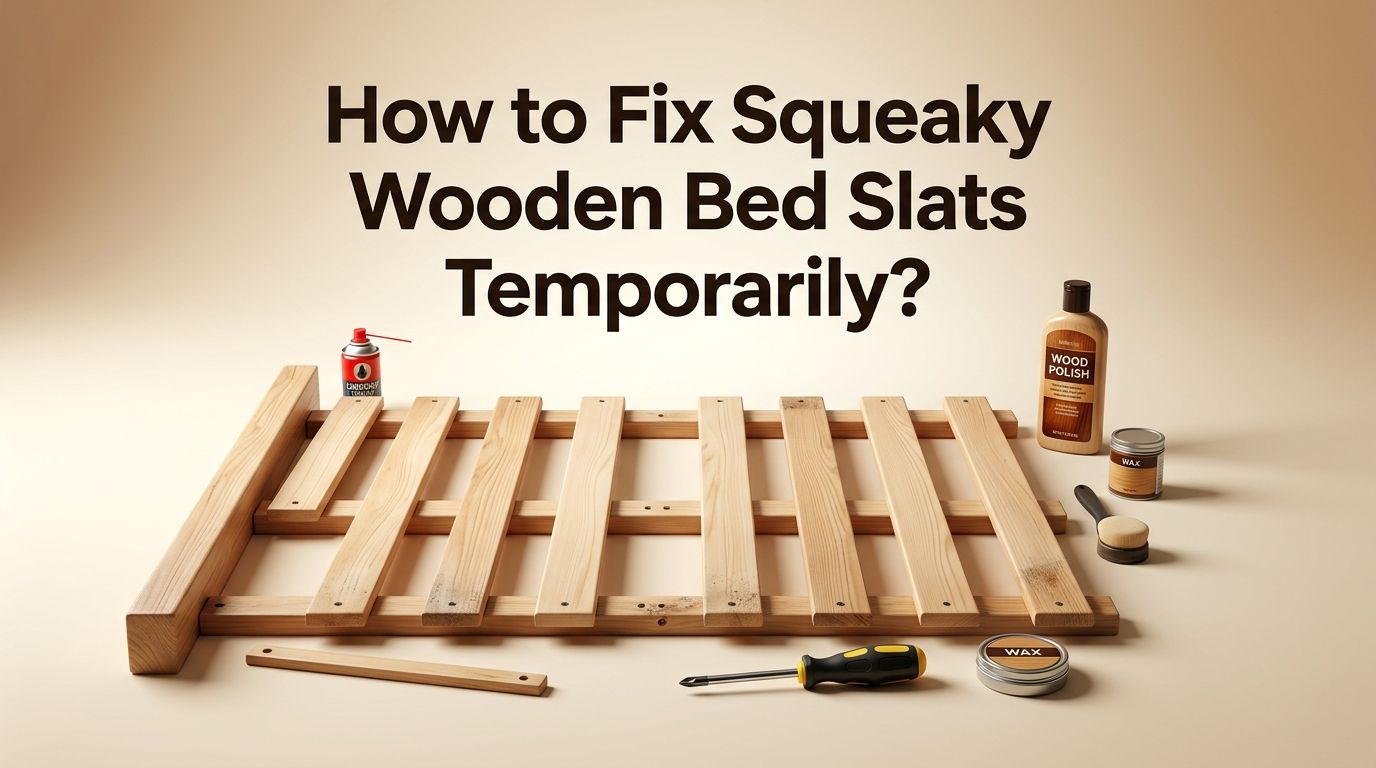
Felt pads are one of the easiest and most effective temporary fixes. You can find self adhesive felt pads at any hardware or dollar store. Cut them to size and stick them on the frame ledge where each slat rests.
The felt creates a soft cushion between the wood slat and the wood frame. This barrier absorbs micro movements and stops the friction that causes squeaking. You can also place felt strips on both sides of the slat ends for extra protection.
Pros: Extremely affordable, easy to apply, no tools needed, removable without damage.
Cons: Adhesive can wear off over time, may need replacement every few months, thicker pads can slightly raise slat height.
How to Apply Baby Powder for a Quick Fix?
Baby powder is a classic household remedy for squeaky wood. Sprinkle a generous amount of baby powder directly onto the contact points where the slats meet the frame. Lift each slat, apply the powder, and set the slat back down.
The powder fills tiny gaps between surfaces and acts as a dry lubricant. It reduces friction without leaving a sticky or oily residue. This method works best for mild to moderate squeaking.
You can also use cornstarch as an alternative. It works the same way and is safe for all wood types. Reapply the powder every few weeks, especially if the squeaking returns after heavy use.
Pros: Instant results, costs almost nothing, no tools or disassembly required.
Cons: Wears off relatively quickly, can create a dusty mess if over applied, less effective for severe squeaking.
How to Use Beeswax or Candle Wax on Slats?
Wax is a time tested solution that carpenters have used for years. Rub a block of beeswax or a plain candle directly along the ends and edges of each slat. Focus on any area where wood touches wood.
The wax coats the surface and creates a smooth, low friction layer. This stops the wood from gripping and rubbing against the frame. Beeswax is the preferred choice because it is natural and will not damage or stain wood.
You can also apply wax to the frame ledges where slats sit. This double application provides stronger protection against noise. The wax treatment can last several weeks before you need to reapply.
Pros: Long lasting compared to powder, safe for wood, no residue or staining, pleasant scent with beeswax.
Cons: Requires lifting each slat individually, may soften in very warm rooms, slightly more effort than powder.
How to Use Fabric Strips as a Buffer?
Old t shirts, cotton rags, or strips of flannel fabric make great noise buffers. Cut the fabric into strips about two inches wide and six inches long. Fold each strip and place it on the frame ledge under the slat end.
The fabric cushions the contact point and absorbs movement. This is an especially good option if you need a fix right now and do not have felt pads or wax on hand. Almost everyone has an old shirt they can cut up.
For extra grip, wrap the fabric strip around the slat end and secure it with a rubber band. This prevents the slat from shifting and eliminates the squeak at the same time.
Pros: Free if you use old clothes, very effective at absorbing noise, easy to replace.
Cons: Can look messy if visible, may slip out of position over time, fabric can compress and lose cushioning.
How to Tighten Loose Hardware on the Bed Frame?
Sometimes the squeak has nothing to do with the slats themselves. Loose bolts, screws, and connectors on the frame can create noise that sounds like it comes from the slats. Grab a wrench and a screwdriver to inspect every connection.
Go around the entire bed frame. Check where the side rails attach to the headboard and footboard. Tighten every bolt you find, even ones that seem snug. A quarter turn can make the difference between silence and squeaking.
If screws are stripped and will not tighten, remove them and wrap the threads with a thin layer of plumber’s tape (also called Teflon tape). This adds grip and fills the gap so the screw holds firmly again.
Pros: Addresses a root cause of many squeaks, takes only a few minutes, no cost if you own basic tools.
Cons: Does not fix friction based squeaking from slats, stripped screws may need replacement, requires basic tool knowledge.
How to Add Rubber Padding Under Slats?
Rubber shelf liner or thin rubber padding works extremely well as a squeak stopper. Cut the rubber material into strips and lay them along the frame ledges where slats rest. The rubber grips both surfaces and prevents movement.
This method does double duty. The rubber stops friction and holds slats in place so they do not slide. Many DIY enthusiasts consider rubber padding the best temporary fix for squeaky slats.
You can also use rubber rug pads cut to size. They are thicker and provide more cushion. Place them between each slat and the frame for a noticeably quieter bed.
Pros: Excellent grip prevents slat movement, very effective noise reduction, durable material lasts months.
Cons: Thicker rubber can raise slat height slightly, may need trimming to fit properly, not always available at home without a purchase.
How to Use Duct Tape or Electrical Tape on Slat Ends?
Tape is a fast and simple fix that many people overlook. Wrap two or three layers of electrical tape or duct tape around the ends of each squeaky slat. The tape creates a thin barrier between the slat and the frame.
Electrical tape works especially well because it is slightly stretchy and provides a snug fit. It also comes in dark colors that blend with most wood tones. Duct tape is thicker and offers more cushioning but can leave adhesive residue.
This method takes about 10 minutes for an entire bed. It is one of the fastest temporary fixes available and holds up surprisingly well under daily use.
Pros: Takes minutes to apply, tape is a common household item, provides both cushioning and grip.
Cons: Adhesive residue from duct tape can be hard to remove, tape may need replacing every few weeks, not the most attractive solution.
How to Use Velcro Strips to Secure Slats?
Velcro strips solve two problems at once. They stop squeaking and keep slats locked in place. Apply one side of the Velcro strip to the frame ledge and the other side to the bottom of the slat.
When you press the slat into position, the Velcro grips firmly. The soft material between the surfaces eliminates wood on wood contact. This method is popular among renters because it is completely removable.
Make sure the Velcro adhesive is strong enough to hold under weight. Press each piece firmly and let it set for a few hours before putting the mattress back on.
Pros: Locks slats in position, fully removable, very effective at stopping friction noise.
Cons: Quality Velcro costs more than other options, adhesive can fail on rough wood, may need replacement over time.
How to Place a Plywood Sheet Over the Slats?
If multiple slats squeak and you want one quick fix for all of them, a thin plywood sheet can help. Place a sheet of thin plywood (about 1/4 inch thick) on top of all the slats. Then put your mattress on top of the plywood.
The plywood distributes your weight evenly across all slats. This reduces the individual movement of each slat and stops them from rocking and creaking. It also adds extra support for your mattress.
Make sure the plywood fits inside the frame properly. It should not hang over the edges or press against the side rails. Cut it to size if needed.
Pros: Fixes all slat squeaks at once, adds mattress support, very simple to install.
Cons: Reduces airflow under the mattress which may trap moisture, adds weight to the bed, plywood needs to be purchased and cut to size.
How to Prevent Bed Slats From Squeaking Again?
Prevention saves you from repeating these fixes every few weeks. Check and tighten all bed frame hardware once a month. This small habit catches loose bolts before they cause noise.
Keep the room humidity stable. Wood expands in humid conditions and contracts in dry air. These changes loosen joints and create gaps where friction builds up. A simple humidifier or dehumidifier helps maintain balance.
Rotate your slats occasionally. Slats wear unevenly over time, especially under areas where you sleep most. Moving them around distributes the wear and reduces the chance of persistent squeaking in one spot.
Consider applying wax or felt pads proactively, even before squeaking starts. A few minutes of prevention can give you months of quiet sleep.
How to Know When Temporary Fixes Are Not Enough?
Temporary fixes work well for normal wear and friction. But some problems need a more serious solution. If a slat is cracked, warped, or broken, no amount of padding or wax will fix it. You will need to replace that individual slat.
Check for visible damage each time you lift the mattress. A cracked slat can snap under weight and cause injury. If the frame itself is damaged or has split joints, a temporary fix will not hold.
When squeaking persists after trying multiple methods, the bed frame may have structural issues. At that point, consider investing in a new frame or having the current one professionally repaired. Your safety and sleep quality are worth it.
Frequently Asked Questions
How to Stop Bed Slats From Squeaking Without Tools?
You can use baby powder, beeswax, candle wax, or fabric strips. None of these methods require any tools. Simply lift each slat, apply the solution to the contact points, and set the slat back down. These are the fastest and simplest ways to stop squeaking.
How to Fix Squeaky Bed Slats in a Rental?
Use removable solutions like felt pads, Velcro strips, or fabric buffers. These methods do not damage the bed frame and can be removed when you move out. Avoid gluing or screwing anything into a bed that belongs to your landlord.
How Often Do Temporary Squeaky Bed Fixes Need Reapplication?
It depends on the method. Baby powder may need reapplication every two to four weeks. Wax and felt pads typically last one to three months. Rubber padding and Velcro can hold up even longer with proper installation.
How to Tell if the Squeak Comes From the Slats or the Frame?
Remove the mattress and press down on each slat individually. If the squeak happens only when a specific slat moves, that slat is the source. If the noise continues when you rock the frame with no slats in place, the frame joints are the problem.
How to Fix a Squeaky Bed Slat That Keeps Moving?
Velcro strips or rubber padding work best for slats that slide. These materials grip both surfaces and lock the slat in position. You can also wrap the slat ends with electrical tape to add thickness and create a tighter fit in the frame ledge.

Hi, I’m Ava Day, the founder and lead writer at Cozy Bed Vault. I’m passionate about sleep wellness and dedicated to helping people find their perfect mattress. Through honest reviews, detailed comparisons, and expert buying guides, I simplify the mattress shopping experience so you can sleep soundly every night.