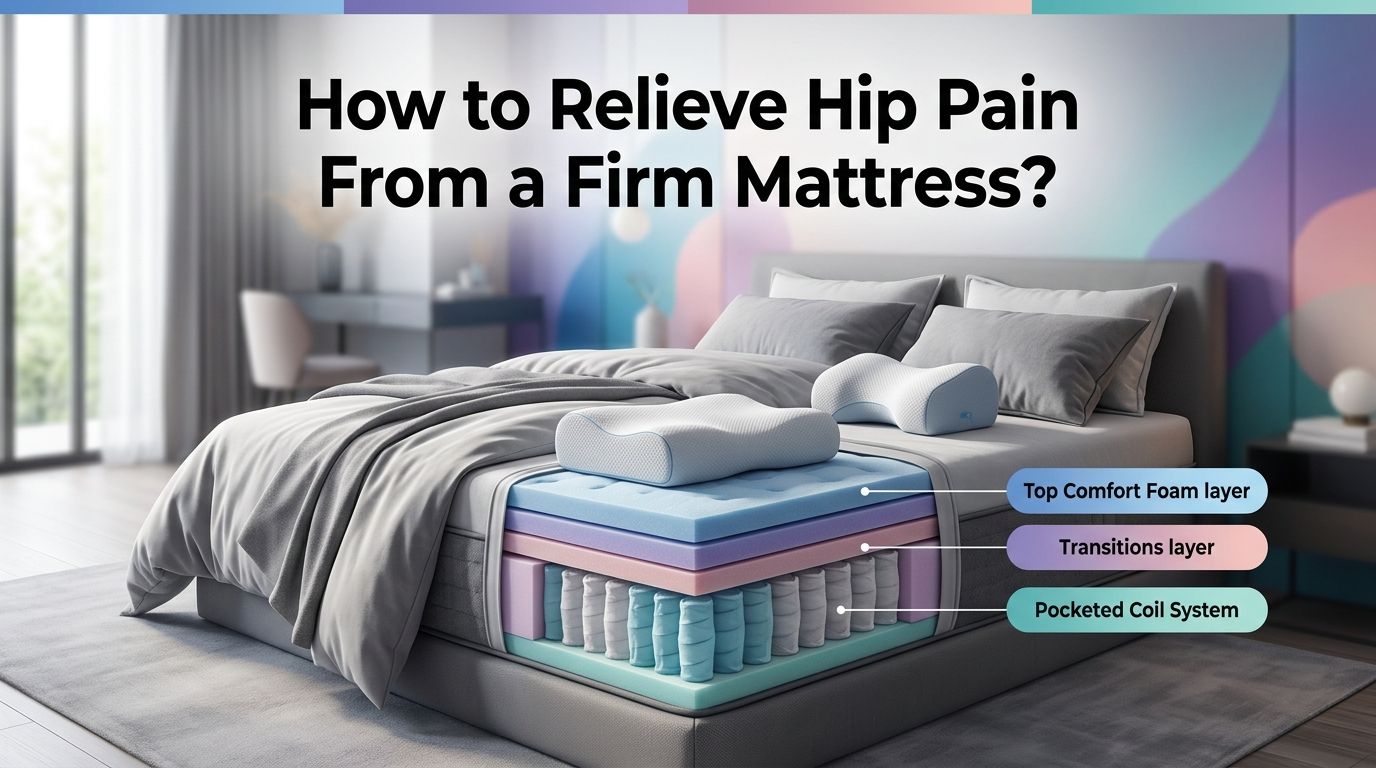
How to Relieve Hip Pain From a Firm Mattress?
Do you wake up every morning with a sore, aching hip that slowly gets better during the day? Your firm mattress might be the problem.
A mattress that is too firm creates sharp pressure points directly on your hip joints. Side sleepers are especially vulnerable because the hip bears most of the body weight in that position.
About 1 in 3 people with hip issues report pain at night. Many of them do not realize their mattress is the trigger. The good news is you do not need to buy an expensive new bed right away.
In a Nutshell
- A medium firm mattress is the gold standard. Research shows a medium firm surface offers the best balance of support and cushioning for hip pain relief. A mattress that is too firm does not allow your hip to sink slightly, which throws your spine out of alignment.
- A mattress topper can fix the problem fast. A 2 to 3 inch memory foam or latex topper placed on your firm mattress adds a cushioning layer. This distributes your body weight more evenly and reduces the pressure spike at your hip joint.
- Sleep position matters just as much as the mattress. Placing a firm pillow between your knees while side sleeping keeps your hips stacked and aligned. Back sleepers benefit from a small pillow under the knees to reduce hip joint stress.
- Stretching before bed loosens tight muscles. Gentle hip flexor stretches, glute bridges, and piriformis stretches reduce the tension that makes nighttime hip pain worse. Consistent stretching also improves flexibility over time.
- Ice, heat, and over the counter pain relief offer quick support. Applying ice for 15 to 20 minutes before bed reduces inflammation. A warm compress or bath relaxes tight muscles. Topical pain creams can target the sore area directly.
- See a doctor if pain lasts more than a week or gets worse. Persistent hip pain may signal bursitis, tendinopathy, or arthritis that needs professional treatment beyond mattress adjustments.
How Does a Firm Mattress Cause Hip Pain?
A firm mattress resists your body weight instead of conforming to your curves. This means your hip bone presses against a hard, unyielding surface for hours every night. The soft tissues around the hip joint, including bursae, tendons, and muscles, get compressed under that sustained pressure.
Side sleepers face the biggest risk. The hip is a bony prominence, and it absorbs the majority of your body weight in the side sleeping position. A firm mattress does not allow the hip to sink in slightly, which creates a concentrated pressure point rather than spreading your weight across a larger area.
Over time, this repeated compression can inflame the bursae (small fluid sacs that cushion the joint). It can also irritate the tendons and tighten the muscles around the hip. The result is morning stiffness, soreness, and pain that gradually improves once you start moving during the day.
How Can You Tell if Your Mattress Is Too Firm for Your Hips?
The clearest sign is hip pain that peaks in the morning and fades as the day goes on. If your hips feel fine by afternoon but ache again after a night in bed, the mattress is a likely suspect. Pay attention to whether the pain is on the side you sleep on most often.
Another clue is constant tossing and turning. If you cannot find a comfortable position and feel pressure on your hip bones no matter how you lie, your mattress is probably too firm for your body type. You may also notice numbness or tingling in your hip or upper thigh after waking up.
Try this simple test: lie on your side on the mattress and have someone look at your spine from behind. If your spine curves downward at the hip instead of staying straight, the mattress is not letting your hip sink in enough. Your spine should form a straight, horizontal line from your shoulders to your hips.
How Does a Mattress Topper Help Relieve Hip Pain?
A mattress topper is one of the fastest and most affordable fixes for a firm mattress. It adds a cushioning layer between your body and the hard surface below. Memory foam and latex are the most popular materials for hip pain relief because they conform to the shape of your hip.
A 2 to 3 inch thick memory foam topper works well for most people. It absorbs the pressure at the hip joint and distributes your body weight across a wider area. Latex toppers offer a similar benefit with more bounce and better airflow.
Pros of using a mattress topper: Low cost compared to a new mattress. Easy to add and remove. Available in different thicknesses and materials. Provides immediate pressure relief.
Cons of using a mattress topper: May trap heat, especially memory foam. A topper that is too thick or soft can cause your hips to sink too far, creating new alignment issues. It does not fix a mattress with broken internal support.
Choose a medium thickness topper. Avoid anything thicker than 4 inches, as this can compromise the support your mattress still provides underneath.
How Should You Adjust Your Sleep Position to Reduce Hip Pressure?
Your sleep position determines where pressure builds on your body. Small adjustments can dramatically reduce the load on your hip joint, even on a firm mattress.
If you are a side sleeper, place a firm pillow between your knees and ankles. This keeps your top leg from dropping down and pulling your hip out of alignment. Your hips should be stacked directly on top of each other. Avoid curling into a fetal position, as this flexes the hip joint and increases strain.
If you can switch to back sleeping, try it. Place a small pillow or rolled towel under your knees. This slight bend takes pressure off the hip flexors and reduces contact between your hip bones and the mattress surface.
Avoid sleeping on your stomach. This position forces your hips into extension and rotation, which strains the hip joint and lower back. Stomach sleeping on a firm mattress is especially harmful for hip health.
How Can Stretching Before Bed Ease Hip Pain?
Tight muscles around the hip joint pull on the bones and tendons, increasing pain during the night. A 5 to 10 minute stretching routine before bed can release this tension and prepare your hips for rest.
The piriformis stretch is one of the most effective. Sit in a chair, place your left ankle on your right knee, and slowly lean forward until you feel a stretch in your left buttock. Hold for 30 seconds and switch sides. This targets a small muscle that can press on the sciatic nerve and worsen hip pain.
Hip flexor stretches are also important. Kneel on one knee with the other foot flat in front of you. Shift your weight forward until you feel a gentle pull at the front of your hip. Hold for 30 seconds per side.
Pros of stretching: Free, requires no equipment, and provides immediate relief. Regular stretching also improves flexibility over time.
Cons of stretching: Results are temporary if done inconsistently. Overstretching or incorrect form can cause injury. Stretching alone may not be enough for severe hip problems.
How Do Strengthening Exercises Help Protect Your Hips?
Strong muscles around the hip joint absorb shock and reduce the pressure that reaches your bones and cartilage. Two simple exercises can make a big difference.
Glute bridges strengthen your buttock muscles and lengthen your hip flexors. Lie on your back with knees bent and feet hip width apart. Squeeze your glutes and lift your hips off the ground a few inches. Hold for 5 seconds and lower slowly. Repeat 10 to 15 times.
Clamshell exercises target the outer hip muscles that stabilize the joint. Lie on your side with knees bent at 45 degrees. Keep your feet touching and lift your top knee without rocking your hips. Hold for 2 to 3 seconds and lower. Do 10 to 15 repetitions per side.
These exercises take less than 10 minutes. Doing them three to four times per week builds a protective muscular cushion around the hip joint. This reduces your sensitivity to firm sleep surfaces over time.
How Can Ice and Heat Therapy Soothe Hip Pain at Night?
Ice and heat are simple tools that address different aspects of hip pain. Using the right one at the right time can make your nights more comfortable.
Apply an ice pack for 15 to 20 minutes before bed if your hip feels inflamed, swollen, or warm to the touch. Ice numbs the area and reduces inflammation. Wrap the ice pack in a thin towel to protect your skin.
Use a heating pad or warm compress if your hip feels stiff and tight rather than inflamed. Heat improves blood flow and relaxes muscles. A warm bath before bed offers the same benefit and can also help you fall asleep faster.
Pros of ice and heat therapy: Inexpensive, easy to do at home, and effective for quick relief. No side effects with proper use.
Cons of ice and heat therapy: Provides temporary relief only. Ice should not be applied directly to skin. Heat may worsen inflammation if used at the wrong time. Neither method addresses the root cause of the pressure from a firm mattress.
How Does Rotating Your Mattress Reduce Hip Pain?
Mattresses wear unevenly over time. The spot where your hips rest every night compresses faster than other areas. This creates a subtle dip that worsens pressure distribution and hip alignment.
Rotating your mattress 180 degrees every three to four months moves the worn area away from your hips. This simple maintenance step can extend your mattress life and temporarily restore more even support under your body.
If your mattress is flippable, flip it over as well. The underside has fresh, uncompressed foam or springs that provide better cushioning. Check your mattress manufacturer’s guidelines to see if flipping is recommended for your specific model.
Pros of rotating: Free, takes less than five minutes, and can improve comfort immediately.
Cons of rotating: Does not fix a mattress that has lost its internal support structure. The benefit decreases as the mattress ages further. Not a long term solution for a mattress that is fundamentally too firm for your body.
How Do Over the Counter Pain Relievers Help With Hip Pain?
When hip pain disrupts your sleep despite other adjustments, an over the counter NSAID like ibuprofen can help. NSAIDs reduce both pain and inflammation, which makes them effective for bursitis and tendon irritation caused by a firm mattress.
Taking an NSAID about 30 minutes before bed can reduce discomfort enough to let you fall asleep and stay asleep. Topical options like diclofenac gel (Voltaren) deliver relief directly to the hip without as much impact on your stomach or cardiovascular system.
Lidocaine patches are another option. They numb the painful area and can be worn overnight.
Pros of pain relievers: Fast acting, widely available, and effective for acute pain episodes.
Cons of pain relievers: Not safe for long term daily use. Oral NSAIDs carry risks for heart, kidney, and stomach health, especially for adults over 65. They mask pain without fixing the underlying cause. Always consult your doctor before using any pain reliever regularly.
How Do You Know When It Is Time to Replace Your Mattress?
If your firm mattress causes hip pain and none of the adjustments above provide lasting relief, it may be time for a new mattress. Most mattresses lose their optimal support after 7 to 10 years, even if they still look fine on the surface.
Replace your mattress if you notice visible sagging, lumps, or indentations where your hips rest. A mattress that no longer bounces back after you get up has lost its internal support. You should also consider a replacement if your hip pain started or worsened after buying the current mattress.
Look for a medium firm mattress rated around 5 to 7 on the 10 point firmness scale. Research consistently shows that medium firm surfaces offer the best combination of support and pressure relief for hip pain sufferers. Test any new mattress in the store by lying on your side for at least 10 minutes to check hip comfort.
How Should You Choose the Right Firmness Level for Your Body?
The ideal mattress firmness depends on your body weight, sleep position, and hip condition. There is no single firmness level that works for everyone.
Lighter individuals (under 130 pounds) generally need a softer surface because their body weight does not compress the mattress enough to reach the cushioning layers. A mattress rated 4 to 6 on the firmness scale usually works well.
Average weight individuals (130 to 230 pounds) do best with a medium firm mattress rated 5 to 7. This provides enough give for the hips to sink slightly while still supporting the lower back.
Heavier individuals (over 230 pounds) need a firmer base to prevent excessive sinking. However, they still benefit from a comfort layer on top. A mattress rated 6 to 8 with a plush pillow top or memory foam layer is often the best fit.
Side sleepers with hip pain should lean toward the softer end of their range. Back sleepers can go slightly firmer. Always test before you commit, and use trial periods offered by mattress companies to make sure the firmness is right for your body.
How Do You Know When to See a Doctor About Hip Pain?
Not all hip pain comes from your mattress. You should see a healthcare professional if your hip pain lasts more than one week despite making sleep adjustments. Pain that gets worse over time, limits your daily activities, or wakes you from sleep repeatedly deserves medical evaluation.
Watch for warning signs like swelling, redness, or warmth around the hip joint. Fever combined with hip pain may indicate infection. Pain that spreads down your leg could signal sciatica or nerve compression.
A doctor can diagnose conditions like hip bursitis, osteoarthritis, or tendinopathy that require specific treatment. Physical therapy, prescription medication, or joint injections may be necessary. Your doctor can also evaluate whether your mattress is contributing to the problem and recommend the right firmness for your specific condition.
Pros of seeing a doctor: Accurate diagnosis, access to treatments not available over the counter, and personalized guidance.
Cons of seeing a doctor: Cost of appointments and treatments, potential wait times, and the possibility that treatment takes time to show results.
Frequently Asked Questions
How do you soften a firm mattress quickly for hip pain relief?
The fastest way to soften a firm mattress is to add a 2 to 3 inch memory foam or latex topper. This creates an immediate cushioning layer that reduces pressure on your hip joints. You can also try placing a soft blanket or quilt under your fitted sheet for a mild softening effect.
How do you sleep on a firm mattress without getting hip pain?
Place a firm pillow between your knees if you sleep on your side. This keeps your hips aligned and prevents pressure buildup. If you sleep on your back, put a pillow under your knees to reduce hip joint strain. Avoid sleeping on your stomach on a firm surface.
How long does it take for hip pain from a firm mattress to go away?
Most people notice improvement within a few days to two weeks after making changes like adding a topper or adjusting their sleep position. If pain persists beyond two weeks with consistent adjustments, see a doctor to rule out underlying conditions like bursitis or arthritis.
How do you know if hip pain is from your mattress or a medical condition?
Mattress related hip pain typically appears in the morning and improves during the day. It usually affects the side you sleep on. Medical conditions like arthritis or bursitis tend to cause pain throughout the day, may involve swelling, and often worsen with specific movements. A doctor can help distinguish between the two.
How often should you replace your mattress to prevent hip pain?
Most mattresses should be replaced every 7 to 10 years. However, if you develop hip pain and your mattress shows signs of sagging or uneven support, consider replacing it sooner. Rotating your mattress every three to four months can extend its useful life and delay the need for replacement.

Hi, I’m Ava Day, the founder and lead writer at Cozy Bed Vault. I’m passionate about sleep wellness and dedicated to helping people find their perfect mattress. Through honest reviews, detailed comparisons, and expert buying guides, I simplify the mattress shopping experience so you can sleep soundly every night.