Why Are the Springs Poking Through My Mattress Cover?
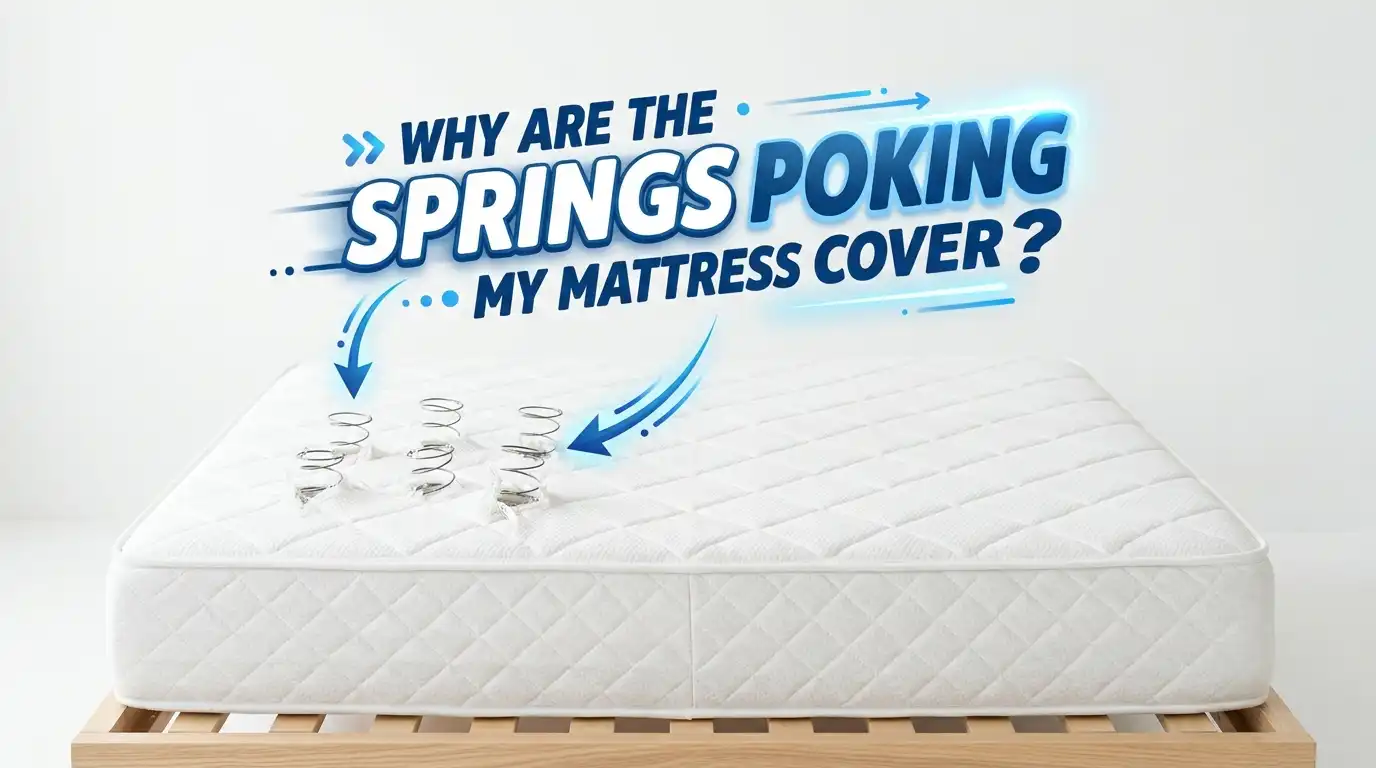
A spring poking through your mattress cover can ruin your sleep fast. It feels sharp, unsafe, and stressful. You may also wonder if the mattress can still be saved or if you need to replace it right away.
The good news is that this problem usually follows a clear pattern. Springs push through because the inside support has worn down, the top layers have become thin, or the base under the mattress is no longer doing its job.
Once you know the cause, you can choose the safest fix. In this guide, you will learn why this happens, what to do first, and how to decide whether a quick repair makes sense or if replacement is the better move.
In a Nutshell
- A spring poking through the cover usually means the mattress has internal wear. The comfort layers on top may have compressed so much that the coil now sits too close to the fabric. In some cases, the spring has bent, shifted, or broken. This is a warning sign, not a small cosmetic issue.
- Age matters a lot with spring mattresses. Traditional innerspring beds often wear out sooner than many people expect. Daily pressure, sitting on the same edge, and poor support under the mattress can all speed up damage. If your bed feels saggy, noisy, or uneven, the poking spring is often part of a bigger problem.
- Your first job is safety. Stop pressing on the sharp area with your hand. Move bedding away, check the size of the damage, and keep children and pets off the bed until you know what you are dealing with. A spring that has broken through fabric can scratch skin and tear more material.
- Some fixes are only temporary. You can sometimes bend a small spring back, pad the area, add a firm barrier, or improve the base under the mattress. These steps may buy you time. They do not rebuild a worn out support system inside the bed.
- Pros and cons matter. A quick patch costs less and helps right away, but it may fail again soon. A topper can soften the feel, but it cannot correct a broken spring. Better base support can reduce strain, but it cannot reverse major coil damage. You want the fix that matches the real cause.
- Replacement is often the safest answer if the spring is sharp, repeated, or part of wider sagging. If you also wake up sore, feel slats or lumps, or sleep better elsewhere, your mattress may be at the end of its useful life. A short term fix is fine for an emergency, but an unsafe mattress should not stay in your bedroom for long.
What a Poking Spring Usually Means
A spring poking through the mattress cover usually means the inside of the bed has started to fail. The top padding may have worn thin. The spring may have bent out of shape. The fabric cover may also be too weak now to hold back the pressure.
In many cases, this issue does not happen all at once. It builds over time. You may first notice sagging, squeaking, or one spot that feels harder than the rest. Then the spring pushes higher and higher until it reaches the cover. That sharp point is often the final stage of a longer wear pattern.
Think of it as a signal, not a surprise. The mattress is telling you that one part of its support system is no longer stable. If you ignore it, the tear can grow and the sleep surface can become more unsafe each night.
Why Springs Start Pushing Through the Cover
Springs usually push through for a few simple reasons. The first is pressure. Every night, your body weight presses the same areas again and again. Over time, the foam or fiber above the coils gets thinner. Once that cushion fades, the spring sits closer to the cover.
The second cause is shifting or damage inside the mattress. Some spring systems are connected, so movement in one part affects the rest. If one coil bends, nearby coils can pull out of line too. This can create a hard point that keeps pressing upward.
The third cause is friction and weak fabric. Older covers can lose strength. If the surface material has stretched or worn down, it cannot resist the pressure as well. The spring then has a much easier path through the top layers and the outer cover.
How Age and Daily Wear Make the Problem Worse
Age plays a big part in this problem. Many traditional innerspring mattresses have a shorter useful life than people expect. After years of use, the springs lose tension, the comfort layers flatten, and the whole bed becomes less balanced.
Daily habits can make that wear worse. Sitting on the same edge every morning puts heavy force on one narrow strip. Watching television in bed from one spot can do the same thing.
If two sleepers always lie in fixed positions, deep body impressions can form faster. The mattress then wears unevenly, and one coil can carry too much pressure.
Even a decent mattress gets tired. If the bed is older, feels lumpy, and no longer supports your back well, the poking spring is rarely the only problem. It is often one visible sign of a bed that has been under strain for a long time.
How to Check the Mattress, Edge, and Base
Before you try any fix, check where the real problem starts. Strip off the bedding and look closely at the damaged area. Press gently around it, not directly on the sharp point. See if the spring is near the middle, close to the edge, or above a slat or frame rail.
Next, inspect the full mattress surface. Look for dips, body marks, thin spots, and uneven edges. If one side sinks more than the other, the spring issue may be linked to wider internal wear. Listen for squeaks or crunching sounds as you press nearby sections.
Then check the base. Make sure slats are straight, evenly spaced, and not cracked. A weak frame can push stress back into the mattress. Pros of this inspection are low cost and clear answers. Cons are that you may still not see hidden internal damage without opening the mattress.
What to Do the Moment You Notice a Sharp Spring
Start with safety. Stop sleeping on the damaged area right away. Remove sheets, blankets, and any mattress protector so you can see the exact spot. Do not push down hard with your bare hand. Use gloves if you need to touch the area closely.
If the spring has fully broken through, cover the spot for the moment with a thick folded towel so nobody gets scratched while you inspect the bed. Then move pets and children away from it. A torn cover can widen fast if people keep sitting or rolling over that point.
After that, decide if the mattress is safe enough for a short term fix or clearly done. The pros of acting fast are injury prevention and less fabric damage. The cons of delaying are deeper tearing, more coil movement, and a higher chance that the whole surface becomes unstable.
Should You Keep Sleeping on the Mattress
In most cases, you should not keep sleeping on a mattress with a spring poking through the cover. The obvious reason is injury. The less obvious reason is support. A mattress with a broken or exposed spring often has poor pressure balance in that area, which can lead to soreness in your back, shoulder, or hips.
There are rare cases where a very small issue can be padded for a short time. Even then, it should be treated as a brief stopgap, not a real solution. If you can feel the spring clearly, if the cover is torn, or if the bed sags around it, continued use is risky.
Listen to your body here. If you wake up stiff, tired, or with new pain, the mattress is already affecting your rest. The short answer is simple. If the spring is sharp, visible, or repeated, stop using that bed as your main sleep surface.
Temporary Fix for One Small and Isolated Spring
If the damage is very small and limited to one spot, you may be able to try a careful temporary fix. Put on gloves. Gently pull back the cover only if it opens easily and safely.
If you can reach the bent spring, use pliers to bend it back into a safer position. Then place a thick fabric patch or layered cloth over the area before closing the cover again.
This method works best when the coil is bent, not fully broken. It also works better if the rest of the mattress still feels supportive.
The pros are low cost, quick relief, and no need for special tools beyond basic pliers and strong fabric. The cons are big. The spring may push up again, and the internal structure may still be weak.
Use this only as a time buying step. It is not a full repair.
How to Add a Protective Layer and Top Support
A protective layer can reduce the sharp feel of a bad spot. You can place a dense pad, folded blanket, or firm topper over the mattress to create more distance between your body and the spring. This can help if you need a short term solution while planning a replacement.
The key word is firm. A very soft topper may only sink into the damaged spot. A denser layer spreads pressure more evenly. You can also use a mattress protector after padding the area, since it helps hold the layers together and reduces friction on the cover.
Pros of this method are comfort, easy setup, and no need to open the mattress. Cons are that it only masks the symptom. It does not fix the bent spring, torn fabric, or weak support underneath. If the spring is sharp enough, even thick padding may not stay effective for long.
How to Improve the Support Under the Mattress
Sometimes the mattress is not the only problem. A weak base can let the bed sag between slats or dip in one zone. That extra bend puts more strain on the springs and top layers. If you notice frame damage, uneven slats, or wide gaps, better support underneath can help reduce pressure.
One common short term fix is to place a smooth support board over the slats and under the mattress. Another option is to repair or replace damaged slats. Make sure the frame sits level on the floor and does not wobble. This can make a real difference if the mattress issue began with bad support below.
Pros are improved stability and better weight spread. Cons are reduced airflow with some solid boards and the fact that internal spring damage may still remain. This method helps the foundation problem. It does not undo a broken coil.
Does Rotating or Flipping Help
Rotating the mattress can help in some cases. If the spring problem is tied to heavy wear in one usual sleep spot, turning the mattress from head to foot may move the damaged area away from the highest pressure zone. This can slightly improve comfort for a short period.
Flipping only helps if your mattress is made for two sided use. Many modern mattresses are one sided, so flipping them can make the bed uncomfortable or unsupported. Check the mattress design first. Do not assume every spring mattress should be flipped.
Pros of rotating are simple effort, no cost, and more even wear over time. Cons are that it will not repair a broken spring. Rotating is a prevention tool and sometimes a small relief tool. It is not a cure for a coil that has already pierced or nearly pierced the cover.
Repair, Replace, or Claim Warranty
This is the big decision. If the spring issue is tiny, isolated, and the mattress is still fairly new, a brief repair attempt may be reasonable. If the mattress is sagging, noisy, lumpy, or causing pain, replacement is often the better answer.
A warranty claim may help if the mattress is still within its coverage period and the damage fits the terms. Take clear photos of the spring, the cover, and the full bed setup. Companies often ask for proof that the mattress has been used on a proper base. That detail matters a lot.
Pros of repair are lower cost and quick action. Cons are short life and repeat failure. Pros of replacement are safety and full support. Cons are cost and shopping time. Pros of a warranty claim are savings, but the process can take patience and paperwork.
How to Prevent Springs From Poking Through Again
Prevention starts with support. Use the right base for your mattress and check it every few months. Slats should stay even, secure, and strong. If the frame starts to lean or creak, fix that early before the mattress begins to suffer.
Rotate the mattress on a regular schedule if the maker allows it. Try not to sit on the same edge for long periods every day.
Spread wear across the surface instead of pressing one spot again and again. A quality protector also helps because it reduces surface friction and keeps the cover cleaner and stronger.
The pros of prevention are simple. You get better mattress life, steadier comfort, and fewer surprise problems. The only real con is the small amount of time it takes. A few minutes of care now can save a lot of discomfort later.
FAQs
Can a mattress topper fix springs poking through?
A topper can reduce the feel of the spring for a short time, but it cannot fix the real issue. The coil is still bent, broken, or pushing too high inside the mattress. If the spring is sharp or the cover is torn, a topper is only a temporary comfort layer. It is a cushion, not a repair.
Is it dangerous to sleep on a mattress with a spring sticking out?
Yes, it can be dangerous. The spring can scratch skin, rip bedding, and create poor support under your body. That poor support can lead to aches and poor sleep. If the spring is visible or sharp, stop using that area right away.
Why did the spring start poking through all of a sudden?
It may feel sudden, but the mattress was likely wearing down for a while. The top layers may have been thinning, the coil may have been bending, or the base may have been weak. Once the fabric lost enough protection, the spring finally broke through. The visible damage is often the last step, not the first one.
Can I push the spring back in and forget about it?
You can sometimes bend it back as a very short term fix, but forgetting about it is risky. If the inside structure is weak, the spring can come back up again. It may even damage the cover more the next time. Watch the area closely and make a real plan for repair or replacement.
Will a better bed frame stop the problem?
A better frame can help if poor support under the mattress caused extra strain. Strong, even slats and a stable frame spread weight better. That said, a new frame will not heal a spring that is already broken or badly bent. It prevents added damage, but it does not reverse old damage.
How do I know it is time to replace the mattress?
Replace it if the spring is sharp, the cover is torn, the mattress sags, or you wake up sore and unrested. It is also time if quick fixes fail or if more than one area feels weak. When comfort, safety, and support are all slipping at once, replacement is usually the smartest choice.

Hi, I’m Ava Day, the founder and lead writer at Cozy Bed Vault. I’m passionate about sleep wellness and dedicated to helping people find their perfect mattress. Through honest reviews, detailed comparisons, and expert buying guides, I simplify the mattress shopping experience so you can sleep soundly every night.