How To Clean Up Fiberglass Contamination From A Cheap Mattress?
Did your cheap mattress start shedding tiny glass like fibers? You are not alone. Many budget mattresses use fiberglass as a fire barrier instead of safer materials.
This works fine until the cover rips or unzips. Once that happens, fiberglass particles escape into your room. They spread fast and stick to everything nearby.
Fiberglass contamination is more than just annoying. These tiny shards can irritate your skin, eyes, and lungs. Cleaning it up the wrong way makes the problem worse, not better.
The good news? You can handle this safely without spending a fortune. This guide walks you through every step of the cleanup process.
In a Nutshell
- Never unzip the mattress cover. This single step keeps fiberglass fibers trapped inside. Opening it makes the mess ten times worse.
- Suit up before you start. Wear an N95 mask, gloves, goggles, and long sleeves. This gear protects your skin and lungs from tiny glass fibers.
- Seal the room first. Close AC vents and open windows. This stops fibers from traveling through your home’s air system.
- Use a HEPA vacuum only. A regular vacuum spreads fiberglass instead of catching it. HEPA filtration traps fibers instead of blasting them back into the air.
- Wrap the mattress carefully. Use plastic sheeting to contain it before moving or disposing of it. This prevents fibers from scattering during transport.
- Clean every surface twice. Vacuum floors, walls, and furniture in the affected room. Fiberglass settles everywhere, so be thorough.
- Run an air purifier during cleanup. A HEPA air purifier catches floating fibers your vacuum misses.
Why Fiberglass Mattress Contamination Is So Dangerous
Fiberglass contamination from a cheap mattress poses real health risks that deserve your attention. When fiberglass fibers escape into the air, they become tiny, sharp particles that can lodge in your lungs, skin, and eyes.
Inhaling fiberglass causes immediate irritation to your respiratory system. You might experience coughing, wheezing, or shortness of breath. Some people develop persistent irritation that lingers for days after exposure ends.
Your skin reacts poorly to direct contact with fiberglass fibers. These microscopic shards embed themselves in your skin’s outer layer, causing itching, redness, and discomfort. The irritation often worsens when you sweat or move around, as friction drives fibers deeper.
Eye exposure creates particularly painful situations. Fiberglass fibers scratch the cornea and conjunctiva, leading to redness, tearing, and temporary vision problems. Even brief contact causes noticeable discomfort that can last for hours.
The real danger emerges when contamination spreads throughout your bedroom. Fiberglass particles float in the air and settle on every surface. Bedding, clothing, furniture, and curtains all become contaminated. You then transfer these fibers to other rooms when you leave your bedroom.
Long term exposure to fiberglass increases respiratory problems. People with asthma or existing lung conditions face heightened risks. Children and elderly individuals show greater vulnerability to fiberglass irritation.
The contamination spreads rapidly once the mattress cover tears or opens. A small hole quickly becomes a major problem as fibers escape constantly. This is why containment becomes your first priority during cleanup.
Understanding these dangers motivates proper cleanup procedures. You need appropriate protective equipment and systematic cleaning methods. Taking shortcuts during fiberglass removal puts your health at unnecessary risk.
Signs Your Mattress Cover Has Been Compromised
Your mattress cover acts as a barrier. When it fails, fiberglass fibers escape into your bedroom environment. Knowing the warning signs helps you catch problems early before contamination spreads.
Look for visible tears or holes in the mattress fabric. Even small punctures allow fibers to leak out gradually. Run your hands across the cover surface to feel for damage you might miss visually.
Check the seams carefully. The edges where fabric pieces connect are weak points. Seams separate from wear and tear over time. This separation creates gaps where fiberglass escapes.
Notice if the zipper no longer closes properly. A stuck or broken zipper leaves the cover partially open. Fiberglass fibers slip through any gap, no matter how small. Test your zipper by sliding it smoothly from top to bottom.
Watch for white dust on your sheets and pillows. This powder indicates fibers are actively shedding into your sleeping area. The dust accumulates more noticeably on dark colored bedding.
Pay attention to respiratory symptoms when you sleep. Coughing, throat irritation, or difficulty breathing suggest airborne fiberglass exposure. These symptoms often improve when you leave the room.
Inspect the mattress bottom where it contacts your bed frame. Friction from movement causes cover deterioration in this area. The bottom surface tears before the top does.
Feel sticky residue on the cover surface. This indicates the protective coating is breaking down. Once the coating fails, the underlying fiberglass becomes exposed.
Act immediately when you spot any of these signs. Early intervention prevents widespread contamination throughout your bedroom. Catching problems quickly keeps cleanup efforts simple and affordable.
Essential Safety Gear and Supplies You’ll Need
Protecting yourself during fiberglass cleanup requires specific gear and supplies. Your safety depends on having the right items before you start.
Respiratory protection comes first. You need an N95 or KN95 mask to filter fiberglass particles from the air you breathe. These masks trap fibers that would otherwise enter your lungs. A standard cloth mask won’t work for this job.
Hand protection matters too. Wear disposable gloves to keep fiberglass off your skin. Fiberglass fibers cause itching and irritation on contact. Double gloving gives extra protection during intensive cleaning.
Eye safety is essential. Safety goggles protect your eyes from airborne fibers. Regular glasses don’t seal around your eyes properly. Goggles create a barrier that keeps particles out.
Clothing protection prevents skin exposure. Wear long sleeves and long pants during cleanup. Cover as much skin as possible. Change into clean clothes immediately after finishing.
A HEPA vacuum is absolutely critical. Regular vacuums push fiberglass deeper into carpets and spread particles throughout the room. HEPA filtration actually traps microscopic fibers instead of releasing them back into the air.
Air purification catches what you miss. A HEPA air purifier runs during and after cleanup. It captures floating fibers that settle on surfaces later.
Containment supplies prevent spread. Heavy plastic sheeting seals off the work area. Duct tape secures the plastic around doorways and vents. Garbage bags hold contaminated materials for disposal.
Cleaning supplies complete your kit. You’ll need damp cloths for wiping surfaces. Damp cleaning traps fibers instead of stirring them into the air. Paper towels work for disposal of contaminated materials.
Gather everything before opening or moving the mattress. Proper preparation makes the cleanup process safer and more effective.
Step-by-Step Cleanup Process for Contaminated Rooms
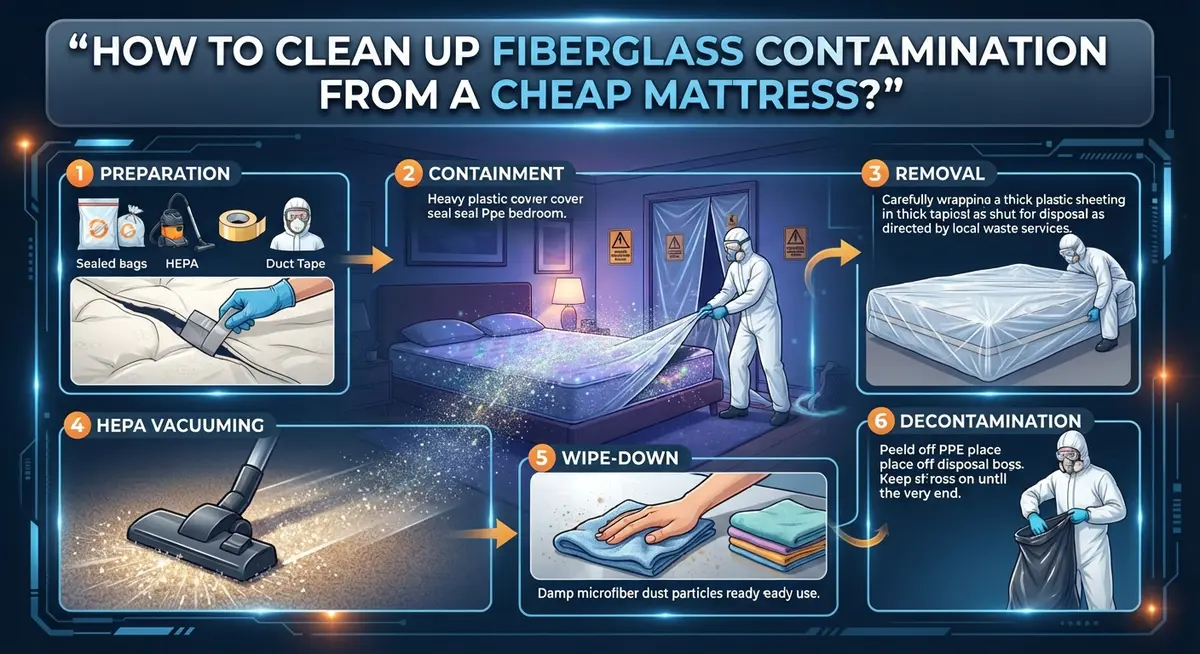
Start by preparing your room before any cleanup begins. Close all air vents to prevent fiberglass particles from spreading through your HVAC system. Open windows and doors to create natural airflow that pulls contaminated air outside rather than circulating it indoors.
Put on your protective gear before touching anything. Wear your N95 or KN95 mask, safety goggles, disposable gloves, and long sleeves. This protects your lungs, eyes, and skin from direct contact with fibers.
Never open or unzip the mattress cover. Wrap the contaminated mattress tightly with plastic sheeting or a mattress bag. Seal all edges with tape to contain any loose fibers during removal and transport.
Vacuum your entire room systematically using a HEPA filtered vacuum. Start at the farthest corner and work toward the door. Pay special attention to baseboards, window sills, and furniture surfaces where fibers settle.
Clean your bed frame thoroughly since it contacts the contaminated mattress directly. Wipe down wood or metal surfaces with a damp cloth to capture particles rather than stirring them into the air.
Remove and dispose of bedding, pillows, and any cloth items that contacted the mattress. These items likely have fiberglass embedded in the fibers.
Turn on a HEPA air purifier and let it run continuously during cleanup and for several hours afterward. This captures airborne particles you may have missed.
Vacuum again after the air purifier finishes its cycle. Repeat this process daily for three to five days to ensure thorough contamination removal.
Keep windows open for at least 24 hours after cleanup completes. This allows any remaining particles to exit your space naturally.
How To Properly Wrap and Contain the Mattress
Wrapping and containing your mattress stops fiberglass particles from spreading into your home. This step is absolutely critical because opening the cover releases thousands of tiny fibers into the air.
Start by keeping the mattress cover completely sealed. Do not unzip, cut, or remove any part of the cover under any circumstances. Even small openings allow fiberglass to escape into your bedroom and surrounding rooms.
If the cover already has holes or tears, you need to seal them before moving the mattress. Use heavy duty plastic sheeting to wrap the entire mattress tightly. Secure the plastic with strong tape, making sure there are no gaps or loose edges.
Work slowly and carefully when wrapping. Rough handling causes vibrations that shake loose fibers from inside the cover. Gentle, deliberate movements keep particles contained better than rushed wrapping.
Once wrapped, do not move the mattress around your home unnecessarily. Each time you move it, internal fibers shift and some escape through any tiny openings. Plan the most direct route to your disposal location before you start wrapping.
Seal all seams and edges completely. Tape should overlap itself by at least two inches on every seam. Pay special attention to corners and the bottom edges where the plastic naturally wants to separate.
Keep the wrapped mattress in a contained area away from your main living spaces. If possible, place it in a garage, basement, or outdoor location until disposal day. This prevents accidental disturbance and keeps your family away from the contamination zone.
Label the wrapped mattress clearly so no one accidentally opens it or handles it roughly. This simple warning prevents exposure incidents and keeps everyone safe during the removal process.
HEPA Vacuuming Technique for Maximum Fiber Removal
A HEPA vacuum is your most important tool for removing fiberglass fibers from your home. Standard vacuums actually make the problem worse because they push tiny particles deeper into carpets and release them back into the air.
Start by preparing your vacuum before you begin. Check that your HEPA filter is clean and properly installed. A clogged filter reduces suction power significantly. Replace the filter if it looks dirty or hasn’t been changed recently.
Begin vacuuming in the room where the mattress sits. Work slowly across all floor surfaces, including under furniture. Move your vacuum in overlapping passes to catch fibers you might miss on the first pass. This takes more time, but it removes more contamination.
Pay special attention to areas near the mattress. Fiberglass particles settle on baseboards, windowsills, and furniture surfaces. Vacuum these spots carefully with a slow, deliberate motion. Don’t rush through any area.
Next, vacuum your entire bedroom systematically. Start at one corner and work toward the door. This prevents you from walking over already cleaned areas. Vacuum carpets, rugs, and hard floors with equal care.
After finishing the bedroom, move to adjacent rooms. Fiberglass can travel on air currents and your clothing. Vacuum hallways and any connecting spaces thoroughly.
Empty your vacuum’s collection bag or container outside your home. Seal it in a bag before disposal. Never empty it indoors, as this releases trapped fibers back into your space.
Run your HEPA vacuum again after using a HEPA air purifier. The air purifier stirs up settled particles, and your vacuum catches them. This two step process removes significantly more contamination than vacuuming alone.
Common Mistakes That Worsen Contamination
Many people accidentally make their fiberglass situation worse by ignoring basic safety rules. The biggest mistake is opening or unzipping the mattress cover out of curiosity. This single action releases thousands of microscopic fibers into your air and home. Once released, these particles settle on every surface and become much harder to remove.
Using a standard vacuum without HEPA filtration is another critical error. Regular vacuums actually push fiberglass particles back into the air instead of capturing them. This spreads contamination throughout your entire home and makes cleanup take much longer.
Skipping proper protective equipment puts your health at serious risk. Many people think they can handle cleanup without a mask, gloves, or goggles. Fiberglass fibers irritate your lungs, skin, and eyes. Breathing these particles causes respiratory problems that can last for weeks.
Failing to seal your air conditioning vents allows contaminated air to circulate through your whole house. Fiberglass particles travel through ductwork and settle in every room. You end up contaminating spaces far from the original mattress.
Moving the contaminated mattress around your home unnecessarily spreads fibers everywhere. Each time you move it, particles escape and settle in new locations. Keep the mattress in one contained area during the entire cleanup process.
Not running a HEPA air purifier long enough leaves particles floating in your air. These fibers eventually settle on furniture, clothes, and skin. Run your purifier for several hours after vacuuming to capture remaining particles.
Finally, many people dispose of contaminated items incorrectly. Bedding and clothing that touched the mattress should go into sealed bags before disposal. This prevents fiberglass from spreading in your trash and neighborhood.
Handling Contaminated Clothing, Bedding, and Furniture
Contaminated clothing, bedding, and furniture require immediate attention when fiberglass particles spread through your home. These items act as collection points for microscopic fibers that cling to fabric surfaces.
Start by identifying what’s been exposed. Any bedding, pillows, or sheets that were on or near the contaminated mattress need evaluation. Check your bedroom furniture, curtains, and any soft furnishings in adjacent rooms. Fiberglass particles travel through air and settle on textiles quickly.
For heavily contaminated items, disposal is your safest option. Clothing worn during mattress exposure should go into sealed bags before removal from your home. Bedding that touched the mattress directly falls into this category. Place these items in heavy duty garbage bags, seal them completely, and dispose of them according to your local waste guidelines.
Lightly exposed items can be salvaged through careful washing. Use cold water and wash these separately from other laundry. Dry on low heat to prevent fibers from spreading through your dryer. Wipe down your washing machine and dryer interior with damp cloths afterward.
For furniture like nightstands, dressers, or bedroom chairs, vacuum thoroughly with your HEPA filtered vacuum. Wipe all surfaces with damp cloths to capture remaining particles. Pay special attention to crevices, under cushions, and fabric seams where fibers hide.
Consider the cost of replacement versus health risks. Inexpensive items may not be worth the cleanup effort. Your respiratory health matters more than keeping contaminated textiles.
Keep contaminated items in sealed bags until you’re certain the contamination is contained. This prevents particles from spreading to other areas of your home during the cleanup process.
Final Thoughts
Cleaning up fiberglass contamination from a cheap mattress takes patience and care. You cannot rush this process. Every step matters for your safety and your home’s air quality.
Never unzip or remove the mattress cover. This single action causes the most damage. Keep that cover sealed no matter how tempting it feels to inspect the inside.
Your protective gear stands between you and serious health problems. Masks, gloves, and goggles are not optional extras. Wear them every single time you clean.
A HEPA filtered vacuum remains your best friend throughout this ordeal. Regular vacuums simply push fibers back into your air. This makes contamination worse instead of better.
Sealing air vents and running purifiers helps trap fibers before they spread further. These small actions add up to big results over time.
Thoroughness beats speed in every fiberglass cleanup situation. Skipping steps because you feel tired only creates more work later. Take breaks but finish each task properly.
Some contaminated items simply cannot be saved. Accept this reality early in your cleanup process. Holding onto exposed belongings only prolongs your exposure risk.
Budget mattresses often lack proper fiberglass barriers. This makes contamination cleanup harder than expected. Learning from this experience helps you choose better products next time.
Your health matters more than any mattress cost. Fiberglass exposure causes skin irritation and breathing problems. Treat every cleanup session with the seriousness it deserves.
Stay consistent with your cleaning schedule until you feel confident fibers are gone. Multiple vacuum sessions over several days work better than one rushed attempt.
With careful effort and the right approach, you can reclaim your bedroom safely. Trust the process and protect yourself throughout.
Frequently Asked Questions
How long does fiberglass contamination stay in the air?
Fiberglass particles can remain suspended in your air for several hours after disturbance. Smaller fibers stay airborne longer than larger ones. This is why running a HEPA air purifier continuously during and after cleanup matters so much. Even after you finish vacuuming, particles may still float around your bedroom.
Can fiberglass contamination make you sick immediately?
Exposure effects vary by person. Some people experience itching, coughing, or skin irritation right away. Others may not notice symptoms for hours or days. Respiratory irritation and skin discomfort are most common. If you experience persistent symptoms, seek medical advice.
Should I throw away the entire mattress or try to clean it?
If the cover remains sealed and intact, you can clean the surrounding areas without discarding the mattress. However, if the cover is torn or already opened, disposal becomes the safer choice. Keeping a contaminated mattress in your home creates ongoing exposure risks, especially for budget models with poor fiberglass containment.
What’s the minimum cleanup equipment I actually need?
At minimum, invest in a HEPA filtered vacuum and proper personal protective equipment (N95 mask, gloves, goggles, long sleeves). These two items prevent the most serious contamination spread and protect your health. A HEPA air purifier helps but becomes secondary if budget is tight.
How do I know when the contamination is fully cleaned up?
Complete cleanup takes time. Vacuum all surfaces multiple times over several days. Run your HEPA purifier for at least 48 hours continuously. When you stop seeing visible dust and fibers, contamination has likely reduced significantly.

Hi, I’m Ava Day, the founder and lead writer at Cozy Bed Vault. I’m passionate about sleep wellness and dedicated to helping people find their perfect mattress. Through honest reviews, detailed comparisons, and expert buying guides, I simplify the mattress shopping experience so you can sleep soundly every night.