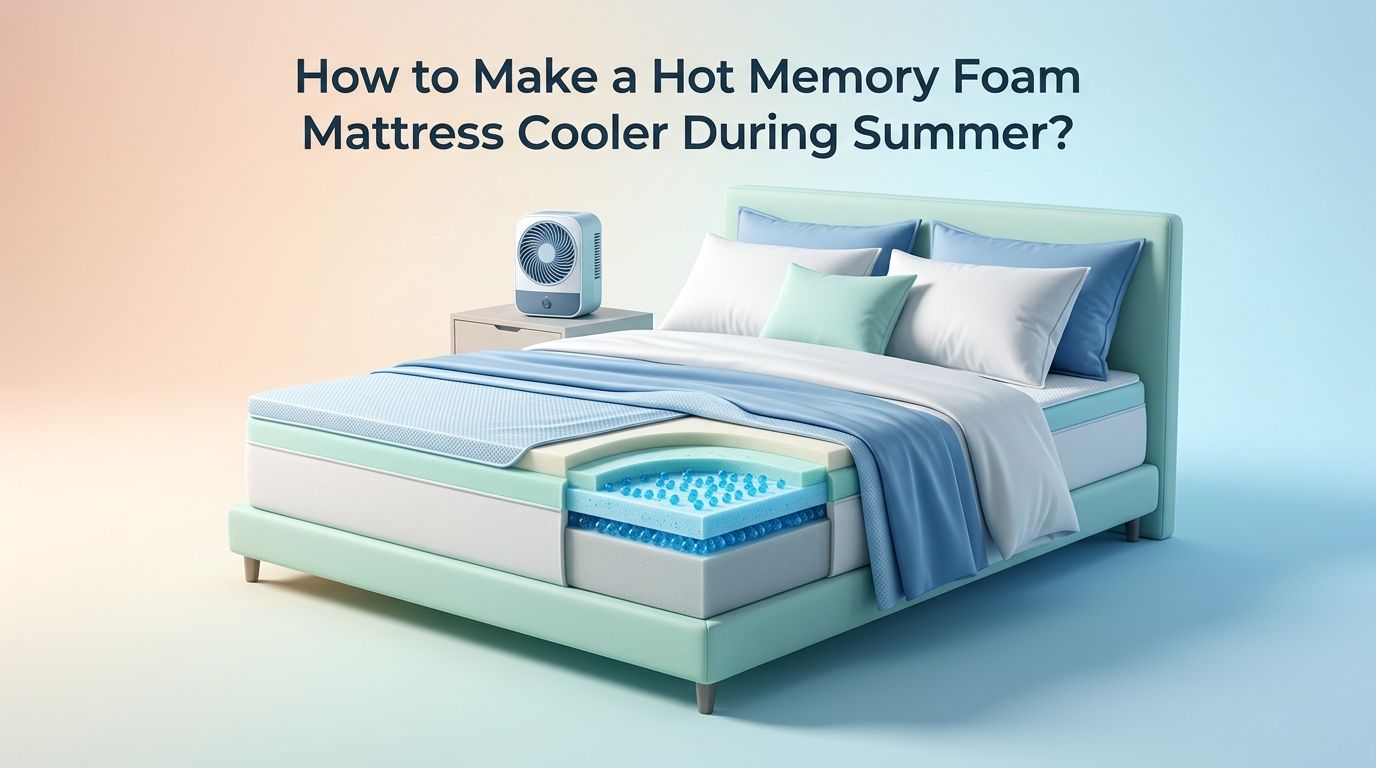
How to Make a Hot Memory Foam Mattress Cooler During Summer?
Summer heat and a memory foam mattress can feel like a bad combination. You love the comfort and support of your memory foam bed, but the moment temperatures rise, your mattress turns into a heat trap. You toss, you turn, you sweat, and you wake up tired.
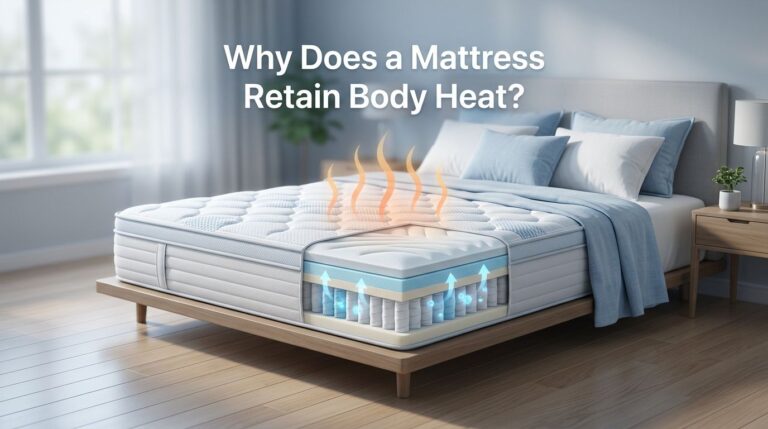
The problem is real. Memory foam absorbs your body heat and holds onto it because of its dense structure and body hugging design.
The same features that make it so comfortable also block airflow and create a warm sleeping surface. According to the National Sleep Foundation, the ideal sleep temperature falls between 60 and 67 degrees Fahrenheit. A hot mattress can push your body well past that range.
In a Nutshell
- Memory foam traps heat because of its dense, closed cell structure. The foam softens in response to your body heat and molds around you. This reaction limits air circulation and causes warmth to build up around your body throughout the night. Knowing this helps you pick the right cooling strategies.
- Cooling sheets and breathable bedding are the fastest fix. Switching to percale cotton, bamboo, or Tencel sheets creates an immediate difference. These fabrics wick moisture away from your skin and allow heat to escape through the weave.
- A cooling mattress topper acts as a barrier between you and the heat trapping foam. Gel infused, graphite, or latex toppers sit on top of your mattress and pull heat away from your body before it reaches the memory foam layer.
- Your bed frame matters more than you think. Solid platform bases trap heat underneath the mattress. A slatted bed frame with proper spacing allows air to circulate beneath the mattress, reducing heat buildup from below.
- Room temperature and bedroom environment play a major role. Keeping your room between 60 and 67 degrees, using fans for cross ventilation, and blocking sunlight during the day all contribute to a cooler sleep surface.
- Small changes in your sleep habits can help too. Wearing lightweight, moisture wicking pajamas, taking a cool shower before bed, and staying hydrated all support your body’s ability to regulate temperature at night.
Why Does Memory Foam Trap So Much Heat?
Memory foam is made from viscoelastic polyurethane, a material that softens in response to heat and pressure. Your body radiates warmth, the foam absorbs it, and then it molds around your shape. This process creates a snug, supportive feel that millions of people love.
However, the same dense structure that provides support also blocks natural airflow. Traditional memory foam has a closed cell structure. Air cannot pass through it the way it passes through innerspring coils or latex foam. Your body heat gets absorbed and stored in the foam instead of being released into the surrounding air.
The problem gets worse in summer. Higher room temperatures mean the foam starts out warmer and has less ability to dissipate the extra heat your body produces. The result is a cycle of increasing warmth that can seriously disrupt your sleep quality.
Switch to Breathable and Cooling Bed Sheets
One of the easiest and most affordable fixes is changing your sheets. Your sheets sit directly against your skin, so they have a huge impact on how hot or cool you feel at night. Heavy, synthetic fabrics like polyester or microfiber trap heat against your body.
Instead, choose sheets made from percale cotton, bamboo, linen, or Tencel. Percale cotton has a crisp, cool feel and uses a simple one thread over, one thread under weave that promotes airflow. Bamboo sheets are naturally moisture wicking and breathable. Tencel, made from eucalyptus fibers, stays cool to the touch and manages moisture extremely well.
Pros: Affordable, easy to swap out, noticeable cooling effect on the first night, widely available in all sizes.
Cons: Quality cooling sheets can still cost more than basic sets, and they may need more careful washing to maintain their properties over time.
Add a Cooling Mattress Topper
A cooling mattress topper sits between your body and the memory foam. It creates a physical barrier that absorbs and redirects heat before it sinks into the dense foam below. This is one of the most effective solutions available.
Look for toppers made with gel infused memory foam, graphite infused foam, or natural latex. Gel and graphite pull heat away from your body and spread it across a wider surface area. Natural latex has an open cell structure that promotes air circulation.
Testing has shown that graphite infused toppers can limit temperature rise by as much as 10 to 11 degrees compared to standard memory foam. Latex toppers offer consistent cooling without any chemical infusions.
Pros: Significant temperature reduction, adds comfort and support, protects your mattress from wear.
Cons: Adds height to your bed, quality options can be expensive, and some gel toppers lose cooling effectiveness over time.
Use a Slatted Bed Frame for Better Airflow
Your bed frame plays a bigger role in mattress temperature than most people realize. If your memory foam mattress sits on a solid platform or flat surface, heat has nowhere to go from the bottom. It builds up and radiates back into the foam.
A slatted bed frame allows air to circulate underneath your mattress. This constant airflow helps pull heat away from the bottom of the mattress and keeps the foam cooler overall. Experts suggest choosing slats that are sturdy and spaced no more than 3 inches apart to provide proper support.
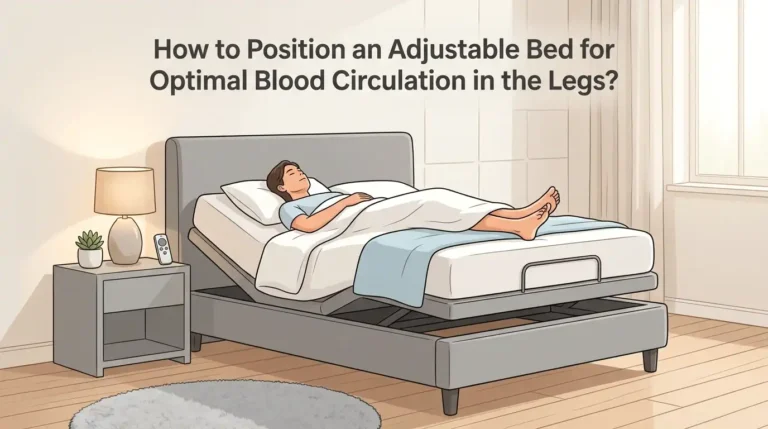
Adjustable bed frames can also help because they elevate different parts of the mattress, increasing the surface area exposed to air. Even raising your mattress slightly off a flat surface can make a noticeable difference.
Pros: Passive cooling with no electricity needed, supports mattress longevity, one time investment.
Cons: Requires replacing your current bed frame, slats spaced too far apart can damage the mattress, and the cooling effect alone may not be enough for extreme heat.
Lower Your Bedroom Temperature
This sounds obvious, but it is one of the most impactful steps. Sleep experts recommend a bedroom temperature between 60 and 67 degrees Fahrenheit for optimal sleep. Memory foam performs best in this range because the foam does not soften as much, which reduces heat absorption.
If you have air conditioning, set it to around 65 to 68 degrees before bedtime. Running the AC for even 30 minutes before you get into bed can pre cool the room and the mattress surface. A programmable thermostat makes this automatic.
If you do not have AC, use fans strategically. Place one fan near a window to pull in cooler outside air and another fan across the room to create cross ventilation. This setup moves warm air out and brings fresh air in, lowering the overall room temperature.
Pros: Directly addresses the root cause of overheating, benefits your entire sleep environment.
Cons: Higher energy bills from AC use, fans can be noisy, and very hot climates may still require additional solutions.
Try a Cooling Mattress Pad or Protector
A cooling mattress pad is different from a topper. It is thinner and sits closer to the mattress surface. Cooling pads made from bamboo, wool, or moisture wicking fabrics create a breathable layer that prevents body heat from reaching the foam.
Wool may seem counterintuitive, but it is a natural temperature regulator. It wicks moisture away from your body and releases it into the air, which creates a cooling effect. Bamboo pads work in a similar way, offering lightweight breathability and natural moisture management.
Some advanced cooling pads use water based or air based cooling technology. These active cooling systems circulate cool water or air through thin tubes embedded in the pad. They offer the most dramatic temperature reduction but come at a higher price.
Pros: Thin profile does not change the feel of your mattress, moisture wicking options are affordable, active cooling systems offer precise temperature control.
Cons: Active systems require electricity and maintenance, passive pads offer more moderate cooling, and sizing can be limited for some models.
Wear Lightweight and Breathable Sleepwear
What you wear to bed matters just as much as what you sleep on. Tight, synthetic clothing traps heat and sweat against your skin, making the warmth from your memory foam mattress feel even worse.
Switch to loose fitting sleepwear made from cotton, bamboo, or moisture wicking performance fabrics. These materials allow air to flow around your body and pull sweat away from your skin. Some sleepers find that wearing less clothing or sleeping in just underwear provides the most relief.
Your pillowcase also plays a role. A silk or bamboo pillowcase stays cooler to the touch than cotton and reduces heat buildup around your head and neck, where your body tends to radiate the most warmth.
Pros: Inexpensive, immediate effect, easy to change seasonally.
Cons: Alone, it will not solve major overheating issues. It works best in combination with other cooling strategies.
Position Your Bed Near Windows or Vents
Where your bed sits in the room affects how much airflow it receives. A bed pushed into a corner or against a wall with no ventilation will trap more heat than a bed placed near a window or air conditioning vent.
Move your bed so that cool air from a vent or window blows across the mattress surface. Even a gentle breeze across your bed can carry away excess heat and keep the foam from warming up too quickly. If your room layout allows it, position the bed so air flows over both sides.
Keeping curtains or blinds closed during the day also helps. Direct sunlight heats up your mattress and your room. Blackout curtains can reduce indoor temperatures significantly, especially in rooms with south or west facing windows.
Pros: Free to implement, reduces overall room temperature, improves air circulation.
Cons: Room layout may limit options, not effective on very still or humid nights, and window placement may not always be ideal.
Take a Cool Shower Before Bed
A cool shower 30 to 60 minutes before bed lowers your core body temperature. This signals your brain that it is time to sleep and reduces the amount of heat your body transfers to the mattress once you lie down.
You do not need an ice cold shower. Lukewarm to slightly cool water is enough to bring down your surface temperature. The evaporative cooling effect continues even after you dry off, giving you a window of comfort as you fall asleep.
This strategy works especially well with breathable sheets and lightweight pajamas. Together, these three simple changes can reduce the heat you feel from your memory foam mattress without spending any money on new products.
Pros: Completely free, relaxes your body for sleep, immediate cooling effect.
Cons: The cooling effect is temporary and may not last through the entire night if your room stays warm.
Use a Fan Directly on the Bed
A ceiling fan or oscillating floor fan can make a significant difference in how cool your memory foam mattress feels. Moving air accelerates the evaporation of moisture from your skin and sheets, which creates a natural cooling effect.
Point a floor fan so it blows across the surface of your bed, not directly at your face. This distributes cool air across the mattress and prevents the foam from absorbing and holding your body heat. A ceiling fan set to rotate counterclockwise pushes air downward, creating a breeze over the entire bed.
For an extra boost, place a shallow pan of ice in front of the fan. As the ice melts, the fan blows cooler, more humid air across your sleeping area. This DIY approach can drop the perceived temperature by several degrees.
Pros: Affordable, effective, adjustable speed and direction, works immediately.
Cons: Fan noise may bother light sleepers, ice method needs refilling, and fans alone may not be enough in extreme heat.
Stay Hydrated Throughout the Day
Dehydration affects your body’s ability to regulate its own temperature. If you go to bed dehydrated, your body will struggle to cool itself through sweating, and you will feel the heat from your memory foam mattress more intensely.
Drink water consistently throughout the day, not just right before bed. Aim for at least eight glasses of water daily during summer months, and more if you exercise or spend time outdoors. Avoid alcohol and caffeine close to bedtime, as both increase dehydration and raise body temperature.
Eating water rich foods like cucumbers, watermelon, and berries at dinner can also support hydration. A well hydrated body is far more efficient at managing heat, which means you will sleep cooler on your memory foam mattress.
Pros: Free, supports overall health, improves your body’s natural cooling system.
Cons: Drinking too much water before bed can cause nighttime bathroom trips that interrupt sleep.
Consider Gel Infused or Phase Change Pillows
Your pillow can be a hidden source of heat. Standard memory foam pillows trap warmth around your head and neck, which are two of the body’s primary heat release zones. Swapping to a cooling pillow can make a noticeable difference.
Look for pillows with gel infused foam, shredded latex, or phase change materials. Phase change materials actively absorb heat when your temperature rises and release it when you cool down. This creates a self regulating temperature cycle throughout the night.
Buckwheat hull pillows are another option. Their natural filling allows excellent airflow between the hulls, keeping the pillow surface cool. Combined with a bamboo or silk pillowcase, a cooling pillow can help reduce overall body temperature.
Pros: Targeted cooling where heat builds up most, available in many price ranges, lasts several years.
Cons: Some gel pillows lose their cooling effect after the first hour, phase change pillows can be expensive, and adjusting to a new pillow feel takes time.
Combine Multiple Cooling Strategies for Best Results
No single solution will transform a hot memory foam mattress into an ice cold sleeping surface. The most effective approach is to layer several cooling strategies together. Each method addresses a different part of the problem, and the combined effect is much greater than any one fix alone.
Start with the free or low cost solutions first. Lower your room temperature, use fans, take a cool shower, and wear breathable sleepwear. Then add mid range upgrades like cooling sheets and a breathable mattress pad. Finally, invest in a cooling topper or active cooling system if the heat is still a problem.
This layered approach lets you customize your cooling setup based on how hot your room gets and how much your body heats up during sleep. On mild nights, the basics may be enough. On the hottest summer nights, you will appreciate having every tool available.
Frequently Asked Questions
Does putting a fan under the bed help cool a memory foam mattress?
Yes, placing a fan under a slatted bed frame can help move air beneath the mattress and reduce heat buildup. The effect is modest on its own, but it works well in combination with other cooling methods like breathable sheets and a cooler room temperature. A solid base will block this airflow entirely, so slats are required for this method to work.
Can I put ice packs on my memory foam mattress to cool it down?
You can place ice packs or frozen water bottles between the sheets before bedtime to pre cool the surface. Remove them before lying down to avoid excess moisture on the foam. Direct prolonged contact with moisture can damage memory foam, so always wrap ice packs in a towel and limit exposure time.
Is gel memory foam really cooler than regular memory foam?
Gel infused memory foam does sleep slightly cooler than traditional memory foam. The gel beads absorb and distribute heat more evenly. However, the cooling effect is moderate, not dramatic. Gel foam will not feel cold to the touch. It simply reduces the intensity of heat buildup compared to standard foam.
How often should I replace cooling sheets for best results?
Quality cooling sheets made from bamboo or percale cotton typically last one to three years with regular washing. Over time, the fibers lose some of their moisture wicking ability. If your sheets start feeling less cool or are pilling, it is time for a replacement.
Will a cooling mattress topper void my mattress warranty?
In most cases, no. Adding a topper to your mattress should not void the warranty. However, always check your specific mattress warranty terms before making any modifications. Some manufacturers require the use of specific bed frames or foundations, which could affect coverage if you make changes.
What is the cheapest way to cool down a memory foam mattress?
The cheapest methods include lowering your thermostat, using fans for air circulation, wearing lightweight sleepwear, and taking a cool shower before bed. These cost nothing or very little and can provide noticeable relief. Switching to percale cotton sheets is another affordable upgrade that delivers real cooling benefits from the very first night.

Hi, I’m Ava Day, the founder and lead writer at Cozy Bed Vault. I’m passionate about sleep wellness and dedicated to helping people find their perfect mattress. Through honest reviews, detailed comparisons, and expert buying guides, I simplify the mattress shopping experience so you can sleep soundly every night.