
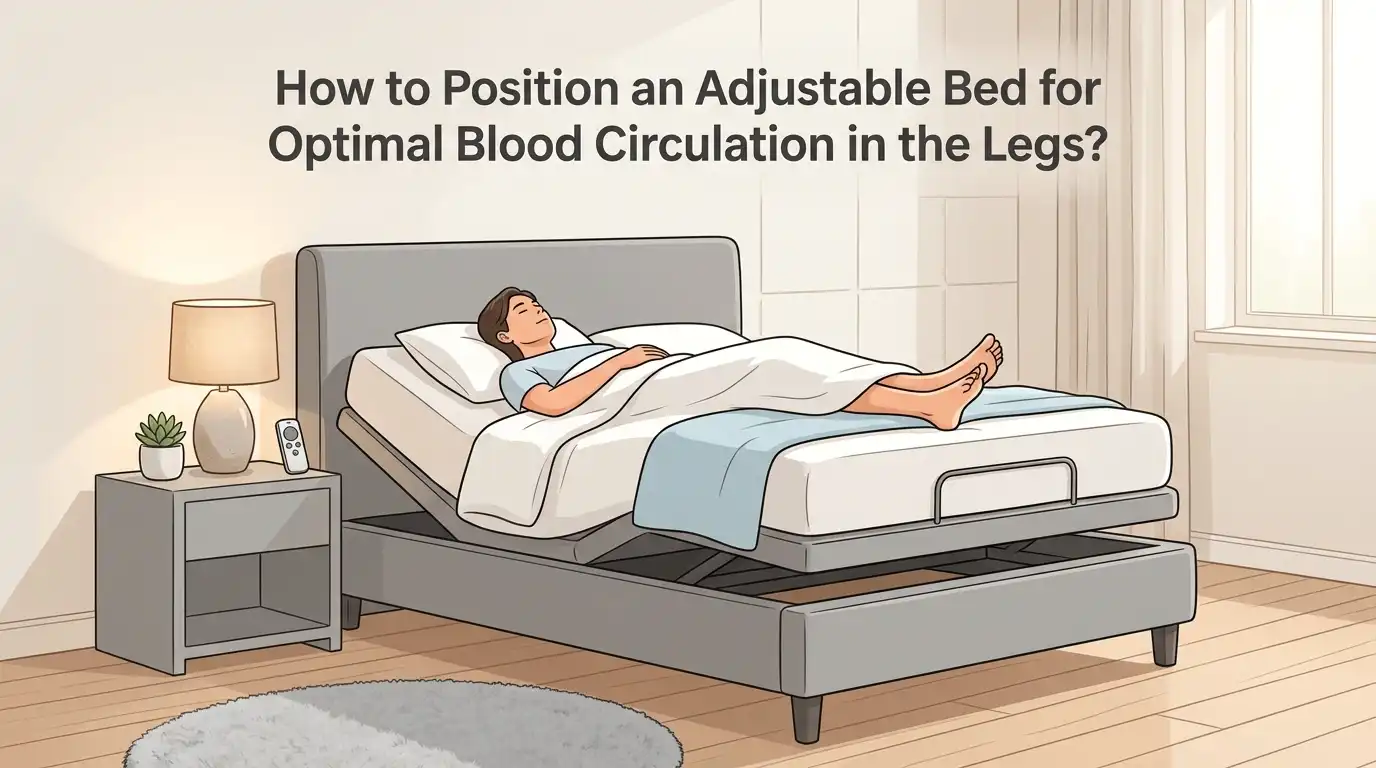
How to Position an Adjustable Bed for Optimal Blood Circulation in the Legs?
Poor blood flow in your legs can leave you feeling heavy, achy, and restless at night. Swollen ankles, throbbing calves, and cold feet are common signs that your circulation needs a boost. The good news? Your adjustable bed can help fix this problem while you sleep.
An adjustable bed lets you raise your legs above heart level. This simple change uses gravity to push blood back toward your heart.
You wake up feeling lighter, less swollen, and more refreshed. This guide shows you exactly how to position your bed for the best results.
Key Takeaways
- The zero gravity position is the gold standard. Raise your head about 8 to 15 degrees and your legs about 30 to 45 degrees. Your knees should sit slightly higher than your heart for the best blood flow.
- Start with gentle elevation, then build up. Begin with a small lift of 3 to 6 inches above heart level. Your body needs time to adjust to the new sleep position over several nights.
- Timing matters more than you think. Elevate your legs for 15 to 20 minutes in the evening before sleep, or sleep with mild elevation all night. Both methods help reduce swelling and improve venous return.
- Add light support under the knees. A small pillow or the natural bend of the adjustable bed reduces strain on your lower back. This keeps blood moving through your thighs and calves without pinching.
- Some health conditions need a doctor’s approval first. People with severe heart failure, glaucoma, or certain spinal issues should check with a physician before sleeping with elevated legs.
- Consistency creates real results. Use the same position nightly for at least two weeks before judging the results. Combine bed positioning with daytime walking and hydration for the strongest benefits.
Why Leg Circulation Suffers at Night
Your legs work hard all day fighting gravity. Blood has to travel from your feet back up to your heart against a downward pull. The veins in your legs use tiny one-way valves to push blood upward. When these valves weaken or you sit too long, blood pools in the lower legs.
At night, lying flat does help somewhat. But flat sleeping still leaves your legs at the same level as your heart. Gravity stops helping, but it does not actively assist either. This is why many people wake up with puffy ankles or numb toes.
Conditions like varicose veins, diabetes, pregnancy, and obesity make this worse. An adjustable bed solves the issue by tilting your legs upward. Gravity becomes your friend instead of your enemy. Blood drains naturally back to the heart while you rest.
Understanding the Zero Gravity Position
The zero gravity position copies the posture astronauts use during liftoff. NASA found that this shape spreads body weight evenly and reduces stress on the spine. Your head is raised slightly, your knees are bent, and your feet sit above your heart.
To set this position on most adjustable beds, raise the head section to about 120 degrees from flat. Then raise the foot section to about 30 to 40 degrees. Many modern beds have a one-touch zero gravity preset button. If yours does, that button does the math for you.
The result is a posture where your body feels weightless. Pressure points relax, your spine decompresses, and blood flow improves throughout your body. For leg circulation, this position is the most studied and recommended.
Pros: Reduces swelling, eases lower back pain, improves breathing, and supports heart health.
Cons: Some side sleepers find it uncomfortable, and it may take a week to get used to the angle.
Finding the Right Leg Elevation Angle
Not every bed needs the full zero gravity setup. Sometimes a simple foot lift works fine. The key rule is that your feet should sit higher than your heart. Even a few inches makes a big difference.
For mild swelling or tired legs, a 20 to 30 degree foot lift works well. For varicose veins, deep vein discomfort, or post surgery recovery, aim for 30 to 45 degrees. Going beyond 45 degrees rarely helps more and can strain your lower back.
Start small and build up. If you have never slept with raised legs, try 15 degrees for the first three nights. Increase by 5 degrees every few days until you feel the sweet spot.
Pros: Flexible, easy to adjust to comfort, works for most body types.
Cons: Finding your ideal angle takes trial and error over several nights.
Setting Up the Bed Step by Step
Getting the position right is simple if you follow a clear process. Start with your bed completely flat and lie down on your back. Move to the center of the mattress so your hips line up with the bend point of the bed frame.
Press the foot raise button slowly. Stop when your knees feel gently supported and your calves point upward at a comfortable angle. Then press the head raise button to lift your shoulders and neck by about 10 to 15 degrees.
Check that your lower back stays flat against the mattress. If you feel a gap, the angles are too extreme. Adjust until your spine feels neutral and supported. Place a thin pillow under your head if needed.
This setup takes only two minutes once you learn it. Save the position as a memory preset if your bed allows.
Best Position for Varicose Veins and Spider Veins
Varicose veins happen when leg vein valves weaken and allow blood to pool. Sleeping with elevated legs is one of the most recommended home treatments. Doctors often suggest raising the legs 6 to 12 inches above heart level for vein relief.
On an adjustable bed, this means a foot elevation of about 30 to 40 degrees. Pair this with a slight head raise of 10 degrees to keep your spine aligned. Sleeping on your left side with the legs raised reduces pressure on the largest vein, the inferior vena cava.
The improved drainage reduces overnight aching, throbbing, and that heavy feeling many people with varicose veins describe. Over weeks, you may notice less visible bulging and fewer leg cramps at night.
Pros: Eases vein pressure, reduces swelling, lowers cramp risk, supports long term vein health.
Cons: Will not cure existing varicose veins on its own. It works best alongside medical treatment.
Position for Edema and Leg Swelling
Edema is fluid buildup that often shows up in the ankles and feet by the end of the day. Causes include long sitting, pregnancy, heart issues, kidney problems, and certain medications. Elevating the legs at night helps move the trapped fluid back into circulation.
For edema, raise the foot of the bed so your ankles sit about 6 to 8 inches above your heart. A 30 degree lift on the foot section usually does this. Keep your head only slightly elevated, around 10 degrees, so fluid drains efficiently.
Try this position for 30 minutes before sleep with your shoes off. Many people see less puffiness by morning. If you have chronic edema, talk to your doctor before making changes.
Pros: Visible swelling reduction, less morning stiffness, fewer skin marks from socks.
Cons: May not solve edema caused by serious medical conditions without other treatments.
Position for Diabetic Circulation Problems
People with diabetes often have reduced blood flow in their legs and feet. Nerves and small blood vessels can get damaged over time. Gentle leg elevation helps but requires extra care to avoid pressure points.
Set your foot elevation to a moderate 20 to 30 degrees. Avoid steep angles that could pinch behind the knees and reduce flow. Make sure your heels do not press hard against the mattress. A soft pillow under the calves keeps the heels floating freely.
Check your feet each morning for any redness or numb spots. Diabetic skin needs careful monitoring. Combine bed elevation with daily walks and good blood sugar control for the best circulation results.
Pros: Reduces foot swelling, improves overnight comfort, supports healthier skin.
Cons: Requires careful angle choice and daily skin checks for safety.
Combining Side Sleeping with Leg Elevation
If you cannot sleep on your back, you can still use an adjustable bed for circulation. Side sleeping with raised legs works almost as well, especially on the left side. Left side sleeping helps your heart pump blood more easily.
Raise the foot section to about 25 to 30 degrees. Then roll gently onto your left side with a pillow between your knees. The pillow keeps your hips aligned and prevents the top leg from twisting. Your knees should still sit slightly higher than your heart.
This setup works well for pregnant women, side sleepers, and people with shoulder pain. The bend of the bed cradles your body while gravity still helps your veins drain.
Pros: Comfortable for habitual side sleepers, supports pregnancy needs, eases shoulder pressure.
Cons: Slightly less effective than full back sleeping for fluid drainage.
Common Mistakes to Avoid
Many people set up their adjustable bed wrong and miss the benefits. The biggest mistake is raising the legs too high too fast. Extreme angles above 45 degrees can hurt your lower back and cut off knee circulation.
Another common error is forgetting to support the knees. Straight, stiff legs at a steep angle put strain on the hamstrings and lower spine. Always allow a slight bend at the knees, either through the bed contour or with a small pillow.
Some people also skip the head elevation entirely. This causes blood to pool in the upper body and can lead to acid reflux. A gentle 10 to 15 degree head raise keeps the whole system balanced.
Finally, avoid sleeping at the foot of the bed where the bend lands at your knees instead of your hips. This single mistake ruins the whole posture.
When to Use Pillows or Wedges Instead
Sometimes an adjustable bed alone is not enough. Adding a wedge or pillow can fine tune your position. A small bolster under the knees keeps the natural curve and prevents hyperextension.
A wedge pillow is helpful if your adjustable bed has limited tilt range. Place it under the calves with the thick end near the knees. This adds an extra 4 to 6 inches of lift without changing your bed settings. Memory foam wedges hold their shape best.
Regular bed pillows work in a pinch but tend to flatten and shift overnight. They are fine for a quick afternoon rest but not for full night use.
Pros: Easy boost in elevation, low cost, portable for travel.
Cons: May slide around, less precise than the bed motor controls.
Best Times and Duration for Elevation
You do not have to sleep all night in the elevated position to get benefits. Even 15 to 30 minutes of leg elevation in the evening helps drain fluid. Many people enjoy reading or watching TV in the zero gravity position before sleep.
For chronic circulation issues, sleeping with mild elevation all night works best. Studies suggest at least 6 to 8 hours of elevated rest gives the strongest results. Start with shorter sessions if you find it strange at first.
In the morning, lower the bed slowly before getting up. Sudden changes in position can cause dizziness. Take a moment to sit on the edge of the bed before standing fully.
Consistency over weeks builds real improvement. Skip a night here or there, but try to make it your regular habit.
Health Conditions That Need Medical Approval
Leg elevation helps most people, but not everyone. Certain conditions require a doctor’s clearance before sleeping with raised legs. People with severe congestive heart failure may struggle to breathe when extra blood returns to the heart too quickly.
Glaucoma patients should avoid steep head down or strong leg up positions because they can raise eye pressure. Anyone with a recent leg or hip surgery should follow their surgeon’s exact positioning advice.
Spinal conditions like spondylolisthesis or severe disc problems may not tolerate the bent posture. Pregnant women in the third trimester should avoid lying fully flat but should also not over elevate the legs.
When in doubt, ask your doctor about your specific situation. A short phone call can save you from making the problem worse.
Pairing Bed Position with Healthy Habits
Your adjustable bed is a powerful tool, but it works best with healthy daytime habits. Walking for 30 minutes a day keeps your calf muscles pumping blood upward. The calves act as a second heart for the lower body.
Drink plenty of water to keep your blood thin and easy to move. Avoid crossing your legs for long periods while sitting. Try compression socks during the day if you stand a lot at work.
Eat foods rich in flavonoids like berries, citrus, and dark chocolate. These help strengthen vein walls. Cut back on salt to reduce water retention and swelling.
Combining these habits with your nighttime bed routine gives you the strongest possible circulation boost. Small changes add up to big results over months.
FAQs
How high should I raise my legs on an adjustable bed?
Raise your legs so your feet sit 6 to 12 inches above your heart. On most adjustable beds, this means a foot section angle of 30 to 45 degrees. Start lower and increase slowly until you find what feels comfortable.
Can I sleep all night with my legs elevated?
Yes, most healthy people can sleep all night with mild leg elevation. Start with a gentle angle and build up over a week. If you wake with back pain or numbness, lower the angle slightly.
Does the zero gravity position really help blood flow?
Yes, the zero gravity position improves blood return to the heart by using gravity in your favor. It also reduces pressure on the spine and helps with breathing. Many people report less swelling and fewer leg cramps after a few weeks.
Is leg elevation safe during pregnancy?
Mild leg elevation is usually safe and helpful during pregnancy, especially in the second and third trimesters. Sleep on your left side with the legs slightly raised. Always check with your obstetrician before changing your sleep position.
How long does it take to see results?
Most people notice less morning swelling within the first week. Bigger changes like reduced varicose vein pain or better circulation take two to four weeks of consistent use. Stay patient and keep the routine going.
Can an adjustable bed replace compression socks?
No, but it works well alongside them. Compression socks help during the day when you are upright. The adjustable bed takes over at night when you are lying down. Using both gives the best results for poor circulation.
What if I have a partner who does not want elevated legs?
Many adjustable beds come in split king or split queen options. Each side moves independently. You can elevate your legs while your partner sleeps flat. This is a popular solution for couples with different sleep needs.

Hi, I’m Ava Day, the founder and lead writer at Cozy Bed Vault. I’m passionate about sleep wellness and dedicated to helping people find their perfect mattress. Through honest reviews, detailed comparisons, and expert buying guides, I simplify the mattress shopping experience so you can sleep soundly every night.