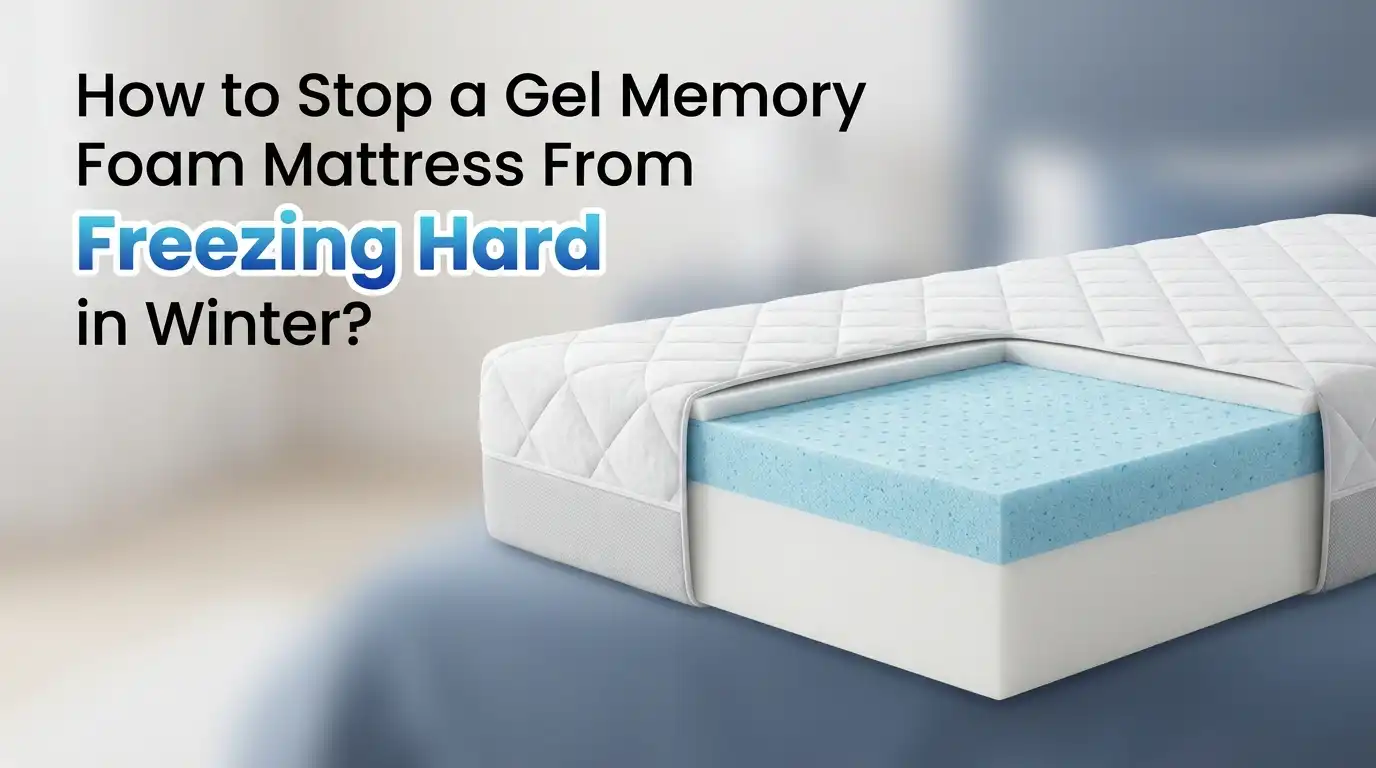
How to Stop a Gel Memory Foam Mattress From Freezing Hard in Winter?
You slide into bed on a cold January night. Instead of a soft, plush hug, your gel memory foam mattress feels like a wooden plank. You toss. You turn. You wonder if you accidentally bought a rock.
You are not alone. This is one of the most common complaints about gel memory foam mattresses in winter. The science is simple. Memory foam is made from viscoelastic polyurethane.
This material responds directly to temperature. When the room gets cold, the foam cells contract. They stiffen up. They lose their famous contouring ability.
Key Takeaways
- Gel memory foam hardens in cold weather because the viscoelastic polymers inside the foam contract and stiffen as the temperature drops. This is normal behavior and not a product defect.
- The mattress will soften again once it absorbs your body heat. The problem is only temporary, but the waiting period can feel long and uncomfortable.
- Bedroom temperature control is the single most effective solution. Keeping your room between 65 and 72 degrees Fahrenheit will stop the problem before it starts.
- Layering your bedding strategically with wool, fleece, or flannel creates a thermal barrier that traps heat and keeps the foam pliable all night long.
- A heated mattress pad used on a low setting can pre-warm the foam safely without causing damage, unlike high-heat electric blankets placed directly on the surface.
- You can insulate the mattress from below using a rubber mat, dense foam board, or a thick wool blanket placed between the mattress and the bed frame or floor.
Why Gel Memory Foam Gets Rock Hard in Cold Weather
Gel memory foam is not like a traditional spring mattress. It contains millions of tiny viscoelastic cells. These cells react to heat and pressure.
When the room is warm, the cells stay expanded and soft. The moment the temperature drops below roughly 65 degrees Fahrenheit, those cells begin to tighten and shrink. The foam becomes dense, rigid, and unresponsive.
The gel infusion in gel memory foam is designed to pull heat away from your body for a cooler sleep. This is great in summer but can make the winter hardening feel even more noticeable.
The gel beads themselves do not freeze. However, the foam base around them still stiffens in the cold. This is a physical property of the polyurethane material. It is not a flaw in your mattress.
Pros of understanding the science: You stop worrying that your mattress is broken. You can apply targeted solutions instead of guessing. Cons: Some people assume gel memory foam is immune to temperature changes, which is not true. The gel only helps with heat dissipation, not cold resistance.
Warm Up Your Bedroom Before You Go to Sleep
The easiest and most complete solution is to turn up the thermostat. Memory foam reacts to ambient air temperature. When the room is cold, the mattress is cold. It really is that simple.
Aim to keep your bedroom at a steady temperature between 65 and 72 degrees Fahrenheit. This range is warm enough to keep the foam soft and pliable without making the room stuffy or uncomfortable for sleeping.
Set a programmable thermostat to warm the bedroom about 30 to 45 minutes before your usual bedtime. This gives the foam enough time to absorb the ambient heat and relax. You do not need to heat the whole house.
A small space heater with a thermostat and auto-shutoff can work wonders in a single bedroom. Just keep it at a safe distance from the bed and any fabrics. The goal is to create a warm bubble around your mattress so that by the time you lie down, the foam already feels welcoming rather than hostile.
Pros: This method is passive and requires no extra bedding purchases. It solves the root cause directly. Cons: Running heat all night can increase your energy bill. Space heaters need careful safety monitoring.
Use a Heated Mattress Pad the Right Way
Many people reach for an electric blanket when they feel cold. However, a heated mattress pad is a much better tool for this specific problem.
A heated pad sits directly on top of the mattress under your fitted sheet. It warms the foam from the top down. This gentle, consistent warmth softens the top layers of the memory foam before you even climb into bed.
The key is to use the lowest effective heat setting. High heat can potentially damage the foam structure over time. Turn the pad on to a low or medium setting about 20 to 30 minutes before bedtime.
Once the bed feels warm, you can turn it off or set it to a very low maintenance level. Many modern heated pads have timers and automatic shutoffs.
Pros: Very effective and fast acting. Warms the mattress exactly where your body will lie. Cons: Requires an electrical outlet near the bed. Low-quality pads may have hot spots or wear out quickly. Always check the manufacturer’s guidelines for use with memory foam.
Layer Your Bedding Like a Pro for Winter Warmth
Strategic layering does more than just keep you warm. It traps heat inside the mattress layers and prevents cold air from reaching the foam. Start with a fitted sheet made from flannel or brushed cotton.
These materials hold warmth much better than standard percale cotton sheets. On top of that, add a wool blanket or a thick fleece throw spread flat across the mattress before your top sheet.
The wool or fleece layer acts as a thermal barrier. It holds your body heat and gently transfers it downward into the memory foam. Then add your top sheet and your regular comforter or duvet. A down or down alternative comforter with a high fill power will lock in body heat all night.
During the day, leave the heavier blankets on the bed. They insulate the mattress from the cold air in the room. When you peel back the covers at night, the foam underneath will be noticeably softer than if the bed was left uncovered all day.
Pros: No electricity needed. Inexpensive and uses items you may already own. Adds cozy, luxurious feel to the bed. Cons: Too many layers can make some sleepers feel hot later in the night. You may need to remove a layer midway through sleep.
Insulate the Bottom of Your Mattress
Cold does not only attack from the top. If your bed frame sits on a cold floor, especially in a basement or over an unheated garage, the cold creeps up from underneath. This chills the bottom of the mattress and keeps the foam stiff no matter how warm the room air feels. Solving this requires insulating the mattress from below.
Place a dense rubber mat or a thick sheet of rigid foam insulation board between your mattress and the bed frame or box spring. Rubber is an excellent thermal insulator. It blocks the cold transfer from the floor.
If you use a platform bed with wooden slats, consider laying a thick wool blanket or an old comforter across the slats before placing the mattress on top. This creates a warm buffer zone.
For beds that sit directly on the floor, lifting the mattress off the ground with a basic metal frame or even wooden pallets can make a dramatic difference. Air circulation underneath the bed also helps keep the bottom of the mattress warmer.
Pros: Very effective for basement bedrooms and cold floor situations. One-time setup with long-lasting results. Cons: Requires purchasing insulation materials. May slightly change the feel or height of your bed. Not visually appealing but hidden by bedding.
Choose the Best Mattress Topper for Cold Weather Relief
A mattress topper sits between your body and the memory foam. It acts as a cozy buffer zone. The right topper can keep you warm while giving the foam below enough time to soften from your body heat.
Wool toppers are the top choice for winter. Wool is a natural temperature regulator. It traps warm air in its hollow fibers and wicks away moisture so you never feel clammy.
A thick wool mattress topper creates a soft, warm surface that helps the memory foam underneath stay at a comfortable temperature. Another great option is a latex topper.
Pros: Adds immediate comfort and warmth without changing your whole mattress setup. Wool and latex are durable and long lasting. Cons: Quality wool and latex toppers can be expensive. Down toppers may trigger allergies for some people.
Pre-Warm Your Bed with Safe, Simple Methods
Sometimes you do not need any special equipment. A few low-tech tricks can pre-warm your bed and soften the memory foam in minutes.
One of the safest methods is to place a hot water bottle or a microwavable heating pad under the covers about 20 minutes before you go to bed. Place it at the spot where your hips and lower back will rest. This is the heaviest part of your body and the area that benefits most from a soft mattress surface.
Another classic trick is to run a clothes iron or a handheld garment steamer over your top sheet and blanket just before bed. The gentle warmth seeps into the mattress layers.
Pros: Uses items you already have at home. Costs nothing. Good for occasional use or power outages. Cons: Requires manual effort every night. Iron and hair dryer methods need careful attention to avoid damage. Not practical for daily long-term use.
Adjust Your Room Humidity for Better Heat Retention
Humidity plays a quiet but important role in how warm your bedroom feels. Dry air feels colder on the skin and allows heat to escape faster from your bedding. In winter, indoor humidity often drops very low, especially when heating systems run frequently. Adding moisture to the air makes the room feel warmer at the same thermostat setting.
A simple cool-mist or warm-mist humidifier in the bedroom can raise the relative humidity to a comfortable range of 40 to 50 percent. Moist air holds heat better than dry air. This means your body heat and the warmth from your bedding stay trapped around the mattress longer.
The memory foam benefits from this stable thermal environment. The foam cells relax more easily and stay soft throughout the night. The added humidity also helps your skin and sinuses, which dry out in heated winter air. This solution improves your entire sleep environment, not just the mattress.
Pros: Improves overall sleep quality. Benefits skin and respiratory health. Helps the mattress stay warm without using extra heat energy. Cons: Humidifiers require regular cleaning to prevent mold. Too much humidity can feel clammy and damage bedroom surfaces over time.
Protect Your Mattress in RVs, Campers, and Unheated Rooms
Memory foam mattresses in RVs, campers, cabins, and basements face extreme cold challenges. These spaces often have little to no insulation. The mattress can become genuinely frozen solid.
The solution requires aggressive insulation on all sides. Start by placing a thick layer of rigid foam board insulation underneath the mattress. This blocks ground cold from rising up.
Wrap the sides of the mattress with a thermal blanket or an insulated mattress cover designed for cold climates. On top, layer a heated mattress pad rated for low-wattage use with a deep-cycle battery if electricity is limited.
When the space is not in use for days or weeks, store the mattress vertically in a warm indoor area if possible. If storage is not an option, cover the mattress completely with heavy moving blankets and a waterproof tarp.
The trapped air between the layers provides significant insulation. When you return, turn on the heat source and give the mattress at least two hours to warm up before you plan to sleep.
Pros: Prevents permanent damage to the foam from repeated freezing and thawing. Makes seasonal cabins and RVs usable in colder months. Cons: Requires upfront effort and materials. Bulky insulation layers reduce living space in small RVs.
Know What Not to Do with a Cold Memory Foam Mattress
Some common attempts to fix a cold mattress can actually cause lasting damage. Never place an electric blanket set to high heat directly on exposed memory foam.
The intense, concentrated heat can break down the foam’s cellular structure. It can cause the material to lose its elasticity and develop permanent indentations. Always keep at least one fabric layer between any heating device and the foam.
Do not attempt to bend, fold, or roll a very cold memory foam mattress. In its hardened state, the foam can crack or tear internally. Wait until the mattress has warmed up to room temperature before adjusting its position.
Avoid using space heaters placed directly next to the mattress. The radiant heat can scorch the foam surface. Do not pour hot water or use steam cleaners directly on the mattress.
Pros of knowing these limits: You protect your investment. Your mattress lasts longer and performs better. Cons: None. These are simply important warnings to follow.
Long-Term Strategies to Keep Your Mattress Comfortable Year-Round
Think beyond quick fixes. A few long-term changes can make winter mattress problems a distant memory. First, invest in a high-quality mattress encasement that has a thermal layer.
These encasements zip around the entire mattress and provide year-round temperature buffering. They also protect against dust, spills, and allergens.
Second, consider upgrading your bed frame. Slatted frames with wide gaps allow cold air to circulate under the mattress. A solid platform frame or a frame with narrow, closely spaced slats reduces cold airflow.
Third, evaluate your home’s insulation. Adding weather stripping to bedroom windows and hanging thermal curtains keeps the entire room warmer. This benefits both your sleep and your energy bills.
Finally, if you live in an extremely cold climate, you may want to choose a hybrid mattress for your next purchase. Hybrids combine memory foam with pocketed coils. The coil layer is less affected by temperature and provides consistent support even in the cold.
Pros: Long-term solutions reduce daily effort. They improve your overall home comfort and mattress lifespan. Cons: Higher initial investment. Some changes require professional installation or new furniture purchases.
Quick Daily Habits That Make a Big Difference
Small changes to your nightly routine can soften your mattress without any extra cost. About 30 minutes before bed, sit on the mattress in the spot where you usually sleep.
Your body weight and warmth will begin to soften the foam directly underneath you. Read a book, scroll your phone, or meditate while sitting there. This simple habit jumpstarts the warming process.
Do a quick stretch or light exercise routine in your bedroom before bed. The rise in your body temperature will help when you lie down. Keep your bedroom door closed during the day. This traps whatever warmth exists in the room and prevents cold drafts from hallways.
Take a warm shower or bath right before bed. Your elevated body temperature will transfer into the mattress faster. These habits cost nothing. They require no special tools. They simply use your own body as the most natural and effective mattress warmer available.
Pros: Completely free. No equipment or setup needed. Builds a relaxing bedtime routine. Cons: Results are gradual. May not be enough on extremely cold nights without other methods.
Frequently Asked Questions
Is it normal for my gel memory foam mattress to feel like a rock in winter?
Yes, this is completely normal. Gel memory foam is made from viscoelastic polyurethane, a material that hardens when temperatures drop. The gel infusion helps with cooling but does not prevent the foam base from stiffening in the cold. Your mattress will return to its normal soft feel once it warms up from room heat or body contact.
At what temperature does memory foam start to harden?
Memory foam typically begins to feel noticeably firmer when the ambient temperature drops below 65 degrees Fahrenheit. Below 60 degrees, the hardening becomes very obvious. At near-freezing temperatures, the foam can feel completely rigid. This threshold varies slightly between different foam densities and brands.
Can I use an electric blanket directly on my gel memory foam mattress?
You can, but only with caution. Use the lowest heat setting. Always keep at least one fabric layer between the blanket and the foam. Never leave a high-heat electric blanket on the mattress for extended periods. High direct heat can break down the foam cells and shorten the mattress lifespan. A heated mattress pad designed for low, even heat distribution is the safer choice.
Will the cold permanently damage my memory foam mattress?
Repeated exposure to cold temperatures does not permanently damage memory foam as long as the mattress stays dry and is not physically forced to bend or fold while cold. Once the foam warms up, it returns to its original shape and softness. The real risk is cracking or tearing if you try to bend a very cold mattress.
Do I need a special mattress if I live in a very cold climate?
Not necessarily. Most memory foam mattresses work fine in cold climates if you use the warming strategies outlined in this post. However, if your bedroom consistently stays below 60 degrees and heating is not an option, a hybrid mattress with pocketed coils or a natural latex mattress may perform better because those materials are less temperature-sensitive.
How long does it take for a cold memory foam mattress to soften after I lie down?
In a room around 60 to 65 degrees Fahrenheit, the foam usually takes about 10 to 20 minutes to soften under your body heat. In colder rooms below 55 degrees, it can take 30 minutes or longer. Using a heated mattress pad or pre-warming the room will eliminate this waiting period entirely.

Hi, I’m Ava Day, the founder and lead writer at Cozy Bed Vault. I’m passionate about sleep wellness and dedicated to helping people find their perfect mattress. Through honest reviews, detailed comparisons, and expert buying guides, I simplify the mattress shopping experience so you can sleep soundly every night.