
Why Is My Mattress Causing Lower Back Pain Every Morning?
You wake up. You stretch. Then a dull ache spreads across your lower back. Sound familiar? You are not alone, and your mattress might be the hidden culprit.
Many people blame their workouts or their desk chairs. But the truth often sits right under them all night long. A bad mattress can pull your spine out of line for eight hours straight.
That stress shows up the moment you open your eyes. The good news is simple. You can fix this. This guide breaks down every reason your bed may hurt your back.
In a Nutshell:
- Your mattress age matters a lot. Most mattresses last seven to ten years. After that, support fades and your back pays the price every morning.
- Sagging is the number one enemy. A dip deeper than 1.5 inches throws your spine out of alignment and creates direct lower back strain.
- Medium firm wins for most people. Research shows a medium firm mattress gives the best mix of comfort, support, and spinal alignment for back pain.
- Your sleep position changes everything. A pillow under your knees or between your legs can ease pressure and keep your spine neutral all night.
- You can fix many problems cheaply. A plywood board, a quality topper, or simple rotation can often delay an expensive replacement.
- Pain that lasts past a fix needs a doctor. If solutions fail after a few weeks, your pain may come from a medical issue, not the bed.
How Your Mattress Connects to Lower Back Pain
Your spine has a natural curve. It needs steady support to hold that shape while you sleep. A good mattress acts like a quiet partner all night. It cradles your hips and shoulders while keeping your back in a straight line.
When the mattress fails, your spine bends in odd ways for hours. Your muscles then work overtime to fix what the bed cannot. That constant strain leaves you stiff and sore at sunrise. Picture a bridge with a weak middle.
The whole structure droops under pressure. Your back does the same on a poor surface. The pain is your body sending a clear signal. It tells you the support has broken down somewhere underneath you.
Sign 1: Your Mattress Is Too Old
Age is the first thing you should check. Most experts agree that mattresses last between seven and ten years. After that point, the materials break down inside. The foam loses its bounce.
The springs lose their tension. Your bed simply cannot hold your body the way it once did. If you cannot remember when you bought it, that is a warning sign. An old mattress slowly shapes itself to your worst sleeping habits. It traps your body in dips and grooves.
You may not notice the slow decline day by day. But your lower back feels every lost inch of support. Try this quick test. Think back to your last big purchase. If a decade has passed, age is likely your problem.
Pros of replacing an old mattress: You get instant, full body support. You also reset the clock for many pain free years.
Cons: A new mattress costs money. You also face a trial period while your body adjusts.
Sign 2: A Sagging Surface Is Wrecking Your Spine
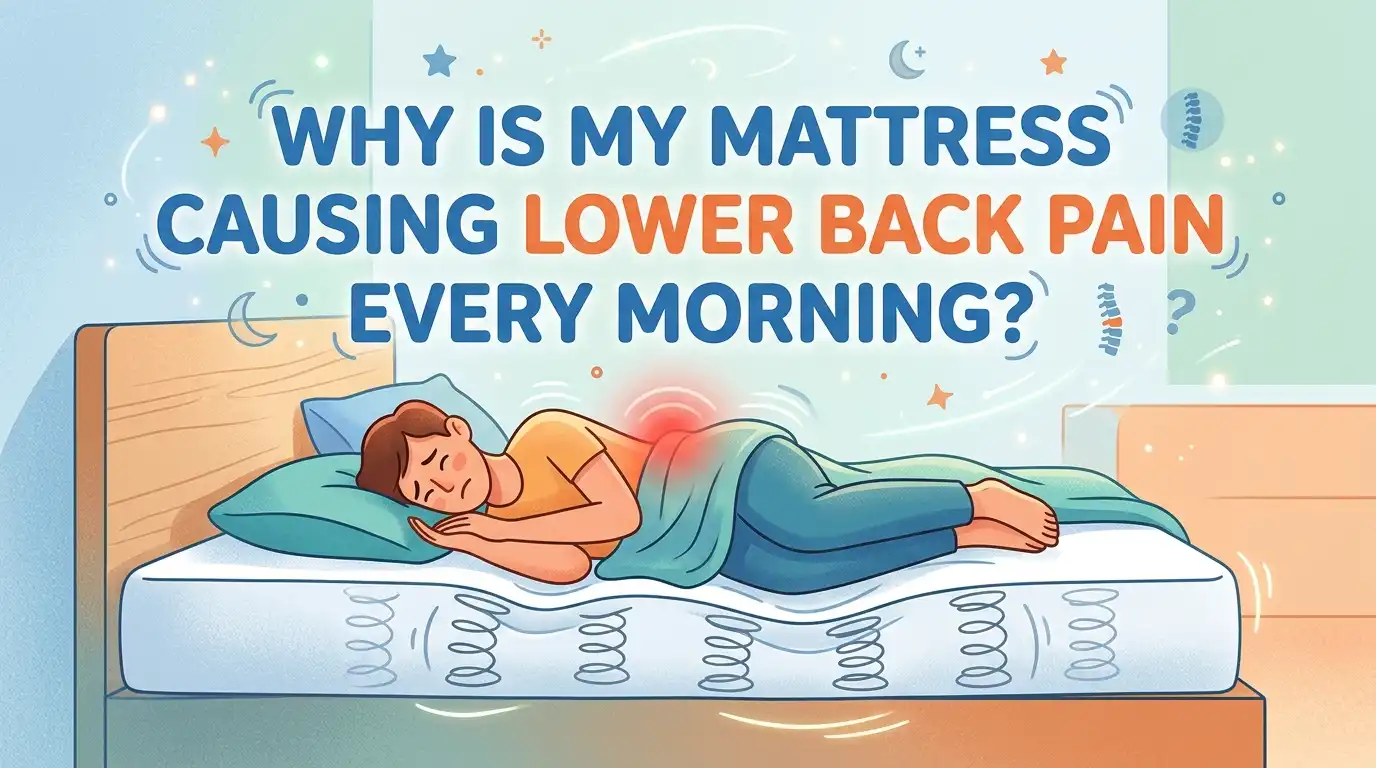
Sagging is the most common reason a mattress hurts your back. A sag lets your hips and lower belly sink lower than the rest of your body. This pulls your spine into a curve like a hammock.
Your lower back stays stretched in the wrong direction all night. Experts say a dip deeper than 1.5 inches signals real trouble. You can spot a sag with a simple test. Lay a broomstick or a long ruler flat across your bare mattress.
Look for gaps between the stick and the surface. Any visible dip means your support has failed. Sagging often starts in the middle, right where your heaviest part rests. That spot takes the most weight every single night, so it wears out first.
Sign 3: Your Mattress Is Too Soft
A soft mattress feels like a hug at first. But that comfort can betray your back. When a bed is too soft, your body sinks too deep. Your hips drop, and your spine bends downward into a C shape.
Your muscles then strain to keep you stable through the night. This is a common trap for people who chase that plush, cloud like feeling. The bed feels great for the first few minutes.
Then the lack of support shows up by morning. Side sleepers and heavier sleepers feel this fastest. A simple check helps here. If you struggle to roll over or feel stuck in a pit, the bed is too soft. Your back needs a firmer push back to stay aligned.
Sign 4: Your Mattress Is Too Firm
A mattress can also be too hard for your body. A rock solid surface creates pressure points at your hips and shoulders. Instead of cradling your curves, it pushes back too much. Your lower back loses contact with the bed entirely.
A gap forms under your spine, and your muscles tense up to fill it. You may wake with sore hips or a stiff lower back. This problem hits side sleepers the hardest. Their shoulders and hips need room to settle in. Here is an easy way to tell.
Slide your hand under your lower back while lying down. If your hand slides through with lots of space, the bed is too firm. Your spine is not getting the gentle contact it needs.
The Best Mattress Firmness for Lower Back Pain
So which firmness wins? Research points clearly to medium firm for most back pain sufferers. A well known study had people sleep on medium firm beds for ninety days. That group reported the least back discomfort of all.
Medium firm gives you the best of both worlds. It cushions your shoulders and hips just enough. At the same time, it pushes back to keep your spine straight. Your body weight matters too.
Lighter people may prefer a touch softer. Heavier people often need a bit firmer to avoid sinking. There is no single perfect number for everyone. But medium firm is the safest starting point. It supports a neutral spine for the widest range of sleepers and body types.
Pros of medium firm: It balances comfort and support. It also suits most sleep positions and body types.
Cons: Firmness ratings vary by brand. One company’s medium firm may feel different from another’s.
Fix It Fast: How to Stop the Pain Tonight
You do not always need a new bed right away. Some quick changes can ease your pain by morning. Start with your pillow setup, since it is free and instant. Place a pillow under your knees if you sleep on your back.
This relaxes your lower back muscles and protects your natural curve. If you sleep on your side, put a firm pillow between your knees. This keeps your hips level and your spine straight.
Next, try rotating your mattress 180 degrees. This moves worn spots away from your hips. You can also test sleeping in a different spot on the bed. Move to a firmer edge if the middle sags. These small steps cost nothing but can bring real relief.
Solution: Add a Mattress Topper
A topper is a thick pad you lay on top of your mattress. It can change the feel of your bed without the full cost of a new one. If your bed is too firm, a soft foam topper adds cushion.
If your bed sags slightly, a dense topper can smooth the surface. The best toppers for back pain spread your weight evenly and keep your spine aligned. Latex and memory foam are the most popular choices.
Pick a topper that matches your problem. Add softness to a hard bed, or add firm support to a soft one. A topper is a smart middle step before buying a whole new mattress.
Pros: Toppers cost far less than a new mattress. They also bring quick comfort changes within days.
Cons: Some foam toppers trap heat and sleep warm. They cannot fix a deeply sagging or broken mattress underneath.
Solution: Support the Mattress From Below
Sometimes the problem is not the mattress at all. Your bed frame or foundation may be the real cause. Slats that sit too far apart let your mattress bow in the middle. Even a brand new bed can sag over weak support.
Check the base under your mattress first. Look for broken slats, wide gaps, or a worn box spring. A simple fix is to add a sheet of plywood.
Place it between the mattress and the frame for a firm, flat base. A bunkie board does the same job in a cleaner package. This trick is cheap and works well for sagging in the center. It restores even support and stops your spine from dipping.
Pros: Plywood is very cheap and easy to install. It creates a firm, flat surface fast.
Cons: It can make a soft bed feel too hard. It also blocks airflow, which may trap heat.
Adjust Your Sleeping Position for Spinal Alignment
Your sleep position works with your mattress as a team. Even a good bed cannot save a bad posture. Back sleeping is often the kindest position for your spine. Add a pillow under your knees to lock in your natural curve.
Side sleeping is the next best choice for back pain. Pull your knees up slightly and place a pillow between them. This keeps your top leg from twisting your spine. Stomach sleeping is the hardest on your lower back.
It flattens your natural curve and strains your neck. If you must sleep on your stomach, slide a thin pillow under your hips. This small move reduces the strain on your lower spine and eases morning stiffness.
Daily Habits That Protect Your Back and Mattress
Good habits make your fixes last longer. Rotate your mattress every three to six months. This spreads the wear evenly and slows down sagging. Do not let one spot carry your weight forever. Keep a clean, supportive base under the bed at all times.
A strong foundation protects your investment for years. Move your body during the day too. A gentle morning stretch wakes up your back muscles. Short walks keep your spine flexible and strong.
Avoid sitting in one position for hours. Stay near a healthy weight when you can. Less pressure on the bed means less sagging over time. These daily steps work together. They protect both your spine and your mattress from early breakdown.
When Your Pain Is Not the Mattress
Sometimes the bed is innocent. If you fix your mattress and the pain stays, look deeper. Morning back pain can come from health issues, not your sleep surface. Conditions like arthritis can cause stiffness that fades as you move.
Poor core strength can also leave your back unsupported all day. Stress and muscle tension build up over time too. Watch for these warning signs. See a doctor if your pain lasts more than a few weeks.
Get help fast if pain spreads down your leg or comes with numbness. Sudden, sharp pain also needs a professional check. Your mattress is a common cause, but it is not the only one. A doctor can rule out problems that no new bed will fix.
How to Test if a New Mattress Is Worth It
Before you spend big money, run a few tests. Sleep somewhere else for a few nights, like a guest room or hotel. If your back feels better there, your mattress is the likely cause. This simple test gives you real proof.
Next, do the broomstick check for sagging again. Add up the signs you have found so far. Count the age, the sags, and the soreness together. If your bed is old, sagging, and waking you in pain, replacement makes sense.
Try the cheaper fixes first if money is tight. A topper or plywood may buy you time. But do not pour money into a dead mattress. At some point, a fresh, supportive bed becomes the smartest choice for your back.
Frequently Asked Questions
How long does it take for a new mattress to help my back?
Give a new mattress at least two to four weeks. Your body needs time to adjust to fresh support. Some soreness is normal at first as your spine settles into the new alignment. If your pain still lingers after a month, the firmness may be wrong for you.
Can a mattress topper really fix my lower back pain?
A topper can help, but it depends on your problem. It works well when your bed is too firm or only slightly worn. It adds cushion or smooths a minor surface dip. A topper cannot fix a deeply sagging or broken mattress underneath.
Is a firm mattress always better for back pain?
No, firmer is not always better. A bed that is too firm creates pressure points and gaps under your spine. Research shows medium firm works best for most people. It supports your back while still cushioning your hips and shoulders.
Why does my back only hurt in the morning and not at night?
Morning pain often points straight to your sleep surface. Your spine stays misaligned for hours while you sleep. That long strain shows up the moment you wake. The pain usually fades as you move and stretch through the day.
How often should I replace my mattress for back health?
Plan to replace your mattress every seven to ten years. After that, the materials break down and lose support. Watch for sagging, lumps, and morning soreness as your main signals. If you see those signs early, replace it sooner.
Can my sleeping position cause back pain even with a good mattress?
Yes, your position matters a great deal. Stomach sleeping flattens your natural curve and strains your lower back. A great mattress cannot fully fix poor posture. Use pillows under your knees or between your legs to keep your spine neutral.

Hi, I’m Ava Day, the founder and lead writer at Cozy Bed Vault. I’m passionate about sleep wellness and dedicated to helping people find their perfect mattress. Through honest reviews, detailed comparisons, and expert buying guides, I simplify the mattress shopping experience so you can sleep soundly every night.