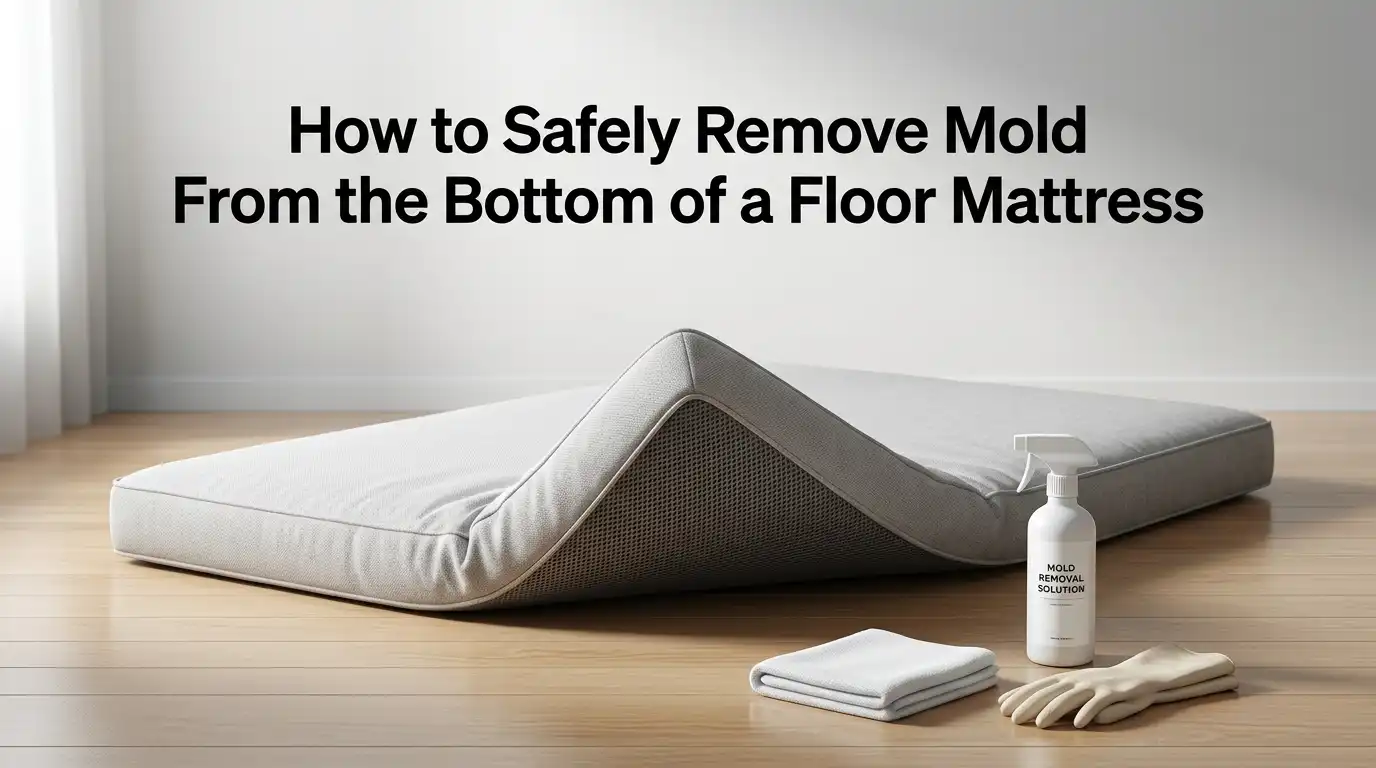
How to Safely Remove Mold From the Bottom of a Floor Mattress?
A floor mattress can feel simple and cozy. But the bottom side can trap heat, sweat, and damp air. That hidden moisture can turn into mold before you notice it.
You may lift the mattress one day and find dark spots, a musty smell, or damp fabric. That can feel stressful, but you still have clear next steps.
This guide shows you how to clean light mold safely, how to decide if the mattress is still worth saving, and how to stop the problem from coming back.
In a Nutshell
- Act fast and check the damage first. If you see a few small spots on the bottom fabric, you may be able to clean them. If the mattress smells strong, feels wet deep inside, or has large spread out patches, replacement is often the safer choice. Surface mold is one thing. Deep mold inside foam or padding is another.
- Protect yourself before you clean. Wear gloves, eye protection, and a mask if you have one. Open windows. Move the mattress into fresh air or near strong airflow. Do not clean mold in a closed room. Mold spores can spread while you work.
- Start dry, then clean lightly. Vacuum loose debris first if your vacuum has a filter. Then use a small amount of mild soap solution or white vinegar on the affected area. Do not soak the mattress. Too much liquid can push moisture deeper inside and make the problem worse.
- Drying is the most important step. A mattress must dry all the way through before you use it again. Use sunlight, fans, and a dry room if possible. If it still feels cool, damp, or smells musty, it is not ready.
- Clean the floor as well. Mold under a mattress often means the floor had moisture too. Clean the floor, wall edge, and baseboards. Let every surface dry fully. If you skip this, mold can return to the mattress fast.
- Prevention matters as much as cleaning. Lift the mattress often, increase airflow, control room humidity, and avoid placing the mattress flat on a damp floor for long periods. A little airflow under the mattress can save you a lot of trouble later.
Why Mold Forms Under a Floor Mattress
Mold grows where moisture stays trapped. A floor mattress creates a perfect spot for that. Your body gives off heat and sweat during sleep. The floor under the mattress stays cooler. That temperature difference can create dampness under the bed. Dust and fabric fibers also give mold something to feed on.
This problem gets worse in humid rooms, poorly ventilated bedrooms, and homes with concrete, tile, or cold floors. If the mattress never gets lifted, the bottom stays dark and still. That gives damp air time to sit there for days. Even a clean bedroom can have this issue if airflow is poor.
The main cause is usually trapped moisture, not dirt alone. Pros of finding the cause early: you can stop repeat growth and save the mattress. Cons of ignoring the cause: the mold can spread, odors can sink in, and cleanup gets harder with time.
How to Tell If the Mattress Is Safe to Save
Before you clean, decide if the mattress is worth cleaning at all. Look at the size of the moldy area. Small surface spots on the bottom cover may be manageable. Large patches, deep stains, or a smell that seems locked inside the mattress are bigger warning signs. Press the area gently. If it feels wet inside, the inner material may already be affected.
Pay attention to your health too. If you have asthma, allergies, or breathing issues, be extra careful. A cheap fix is not worth a health problem. Check for crumbling foam, yellow brown water marks, or mold growth along seams and zippers. Those signs can mean the problem goes deeper than the surface.
Pros of cleaning a small area: lower cost and less waste. Cons: success depends on full drying and close follow up. Pros of replacing a badly affected mattress: safer and simpler. Cons: it costs more and takes more effort right away.
Get Ready Before You Start Cleaning
A safe setup makes cleanup easier. First, open windows and doors if the weather allows it. Bring in a fan to keep air moving. Put on gloves and eye protection. A mask helps if you are sensitive to dust or mold. Wear old clothes that you can wash right away after cleanup.
Next, gather simple supplies. You need a vacuum with a good filter if you have one, clean cloths, mild dish soap, white vinegar or hydrogen peroxide, a spray bottle, and dry towels. Keep your cleaner choice simple. Do not combine products. Never mix bleach with ammonia or with other cleaners. For a mattress, strong bleach is usually a poor choice because it can damage fabric and leave harsh fumes.
Pros of a simple setup: safer cleanup and less chance of mistakes. Cons: it takes a little prep time. That prep is still worth it because it lowers risk and helps you clean with control.
Move the Mattress and Dry the Area First
Take all bedding off the mattress at once. Wash the sheets, protector, and cover in warm or hot water if the care label allows it. Then move the mattress to a place with better airflow. A balcony, porch, sunny room, or clean garage with open doors can work. Stand the mattress on its side if you can do it safely. That helps the damp bottom release moisture faster.
Before you start scrubbing, let the mattress air out for a while. This first drying step can reduce active dampness and make the next steps more effective. Also inspect the floor under it right away. If the floor feels cold, wet, or sticky, you may have a room moisture issue, not just a mattress issue.
Pros of moving the mattress first: easier drying and better visibility. Cons: heavy mattresses are awkward to handle. Ask for help if the mattress is large or floppy. Good airflow at this stage can make the rest of the cleanup much easier.
Start With Dry Cleaning and Vacuuming
Do a dry pass before you use any liquid. Use a vacuum with an upholstery attachment if possible. Go over the moldy area gently. This helps remove loose dust, dry spores, and crumbs that may hold moisture. Do not press hard into the fabric. Keep your strokes light and slow.
If you do not have a vacuum with a good filter, brush the area very lightly with a dry cloth outdoors. Be careful. Rough brushing can throw particles into the air. Dry cleaning first helps you avoid rubbing dirt deeper into the cover once liquid touches the fabric. This step also helps you see the true size of the mold stain.
Pros of vacuuming first: cleaner surface and better control during washing. Cons: a weak vacuum can blow air around or miss fine particles. If you use one, empty it outside right after and wash your hands. This is a small step, but it helps prepare the mattress for safer cleaning.
Wash Light Surface Mold With Mild Soap
If the mold looks light and limited to the outer fabric, start with mild soap and water. Mix a small amount of dish soap into warm water. Dampen a clean cloth. Do not soak it. Wipe the moldy area with small, gentle motions. Then use another cloth with plain water to remove soap residue. Blot with a dry towel right away.
This method works best for fresh, shallow marks on the fabric cover. It is the gentlest option for many mattress surfaces. It also lowers the risk of strong fumes in your room. Still, soap alone may not remove stubborn staining or odor. That does not always mean the mold is active, but it does mean you need to inspect the area again after drying.
Pros: gentle, simple, low cost, and easy to control. Cons: weaker on deeper stains and musty odor. If the spot spreads, darkens, or still smells bad after full drying, move to a stronger spot treatment or consider replacement.
Use Vinegar or Hydrogen Peroxide for Stubborn Spots
If mild soap is not enough, try a focused treatment with white vinegar or hydrogen peroxide. Pick one. Do not use both at the same time. Lightly spray a cloth, not the mattress, then dab the stained area. Let it sit briefly, then blot and wipe. Keep moisture low. The goal is to treat the surface without pushing liquid deep into the padding.
White vinegar is popular because it is simple and leaves less residue. Hydrogen peroxide can help with visible staining on light fabrics, but it may fade some covers. Test a hidden spot first. Less liquid is better than more. A soaked mattress often turns into a larger problem than the original stain.
Vinegar pros: simple, low cost, and useful for odor control. Vinegar cons: the smell can linger for a while. Hydrogen peroxide pros: helpful on some stains. Hydrogen peroxide cons: possible fading and fabric change. For a mattress, spot treatment works better than heavy spraying.
Dry the Mattress All the Way Through
This is the step that decides whether your cleanup works. After cleaning, blot the area with dry towels. Stand the mattress upright or lean it so both sides can breathe. Aim fans at it from more than one angle. If you have sunlight, use it for a limited time and rotate the mattress so one spot does not overheat.
Do not remake the bed too soon. A mattress can feel dry on the surface and still be damp inside. Check again after several hours. Press the cleaned area with a dry towel. Smell it closely. If it feels cool, damp, or musty, keep drying. Patience here saves you from doing the whole job again next week.
Pros of slow, full drying: better chance of success and less risk of return growth. Cons: it can take most of a day or longer in humid weather. If your room is damp, a dehumidifier can help a lot during this stage.
Clean the Floor and Nearby Surfaces Too
A moldy mattress bottom usually means the floor area needs attention as well. Clean the floor where the mattress sat. Wipe the baseboards, wall edge, and any nearby hard surface with mild soap and water or another suitable cleaner for that floor type. Dry the area fully after wiping. If the floor is wood, use minimal moisture. If it is concrete or tile, check for cold spots or condensation.
Look for deeper causes too. Check windows, outside walls, plumbing lines, and any area where damp air may collect. If the room stays humid, the mattress will keep losing the fight. The mattress is often the warning sign, not the full problem.
Pros of cleaning the room too: lower risk of repeat mold and better air quality. Cons: it adds time and may reveal a bigger moisture issue. That extra effort still matters because mold often returns to the same damp corner if nothing changes around it.
Stop Smell and Check for Return Growth
After the mattress dries, do a smell test and a visual test. A light cleaning smell is normal at first. A musty smell is the bigger warning sign. If the odor stays strong after full drying, mold may still be deeper inside. You can sprinkle a light layer of baking soda on the dry surface, leave it for a few hours, then vacuum it off. This helps with leftover odor, but it does not fix active mold inside the mattress.
Check the mattress again over the next few days. Lift it and inspect the bottom in bright light. If dark spots return fast, that means the moisture source is still active or the mold was too deep to remove. A clean looking surface is good, but a clean smelling and fully dry mattress is better.
Pros of monitoring: you catch repeat growth early. Cons: it takes patience and may confirm that replacement is the safer choice after all.
Prevent Mold From Coming Back
Prevention starts with airflow. Do not leave the mattress flat on the floor without giving it breathing room. If possible, use slats, a low platform, or a breathable mat under it. If you must keep it on the floor, lift it up often and let the bottom air out. Sweep and dry the floor often too.
Keep room humidity in a healthy range. Use fans after showers if the bedroom is near a bathroom. Open windows when the air is dry outside. A dehumidifier can help in damp climates or basement rooms. Aim for a dry, moving, stable room. Still air and trapped moisture are mold friends.
Pros of floor sleeping: low cost and simple setup. Cons: less airflow, more dust, and more moisture risk. A small change under the mattress can make a big difference. Prevention usually costs less time and money than a second cleanup.
Know When to Replace the Mattress or Call a Pro
Sometimes the best fix is to stop cleaning and let the mattress go. Replace it if mold covers a large area, keeps returning, has spread into foam or padding, or leaves a strong odor after full cleaning and drying. You should also replace it if the mattress stayed wet for a long time or if the fabric is breaking down.
Call a professional if the mold problem is large, the room has water damage, or you suspect a leak inside the wall or floor. Get help sooner if anyone in the home has asthma, severe allergies, or a weak immune system. Your goal is a safe sleeping surface, not a perfect looking stain fix. If you cannot trust the mattress, do not keep sleeping on it.
Pros of replacement: peace of mind, cleaner sleep space, and less repeat work. Cons: higher cost now. Still, a mattress that holds mold deep inside can keep causing problems long after the surface looks better.
FAQs
Can I sleep on the mattress the same night after cleaning?
No. Wait until the mattress is fully dry and free of musty odor. A surface can feel dry while the inside still holds moisture. If you sleep on it too soon, you can trap more heat and moisture inside and restart the problem.
Is bleach a good choice for a moldy mattress?
Usually no. Bleach is harsh and can damage mattress fabric. It can also leave strong fumes and does not solve deep moisture inside padding. Mild soap, careful spot treatment, and full drying are safer first steps for light surface mold.
Does sunlight kill mold on a mattress?
Sunlight can help dry the mattress and reduce dampness. That is useful. But drying matters more than sunlight alone. You still need to clean the surface and make sure the inside is dry. Sunlight helps, but it is not a full fix by itself.
Why does mold keep coming back under my floor mattress?
The usual cause is trapped moisture. The room may be humid, the floor may stay cold, or the mattress may not get enough airflow. Clean the floor, improve ventilation, and raise the mattress slightly if possible. If the inside is already affected, the mattress may need replacement.
How often should I lift and air out a floor mattress?
In a dry room, once a week is a good habit. In a humid room, do it more often. If you notice condensation, a musty smell, or a cool damp feel under the mattress, air it out right away and check the room moisture level.

Hi, I’m Ava Day, the founder and lead writer at Cozy Bed Vault. I’m passionate about sleep wellness and dedicated to helping people find their perfect mattress. Through honest reviews, detailed comparisons, and expert buying guides, I simplify the mattress shopping experience so you can sleep soundly every night.