How To Stop Mattress Motion Transfer So My Partner Does Not Wake Me Up?
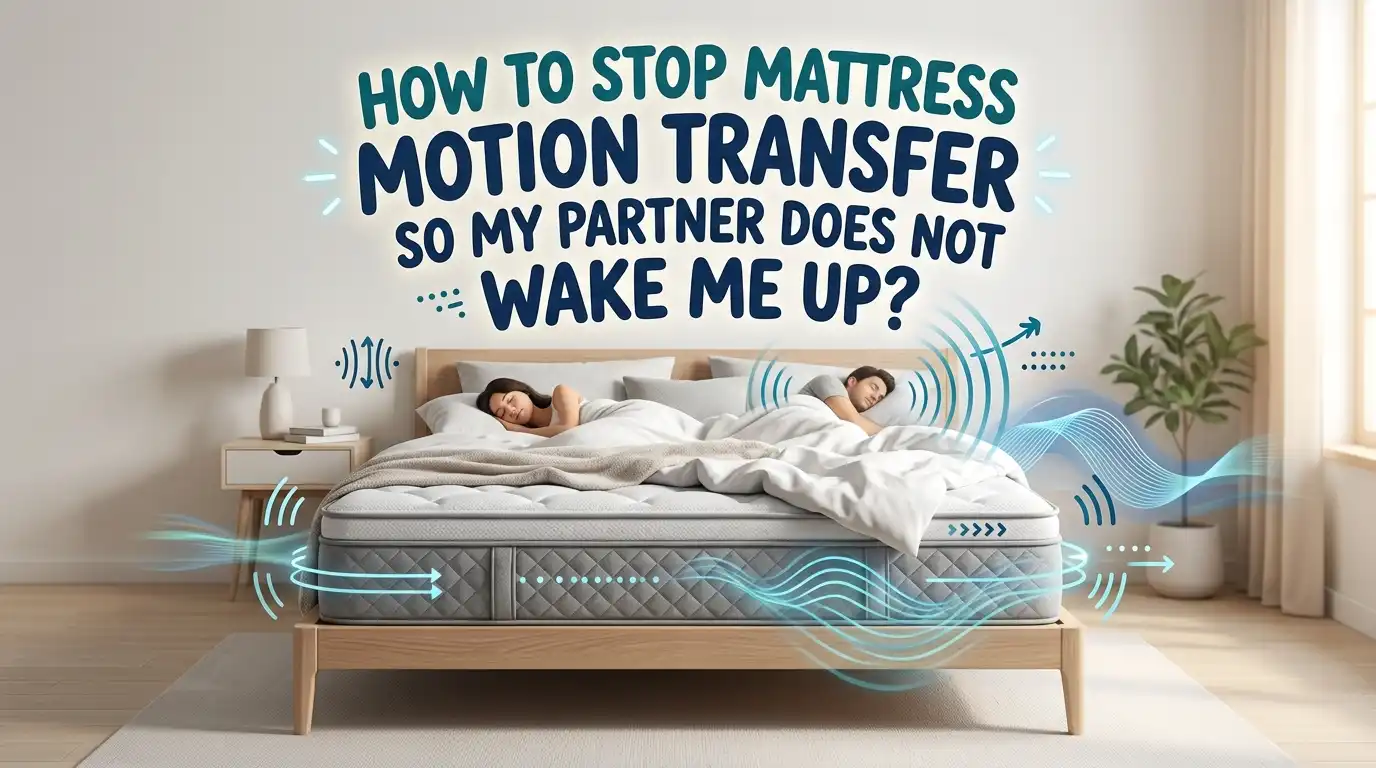
Do you wake up every time your partner rolls over? You are not alone. Millions of couples lose sleep because of mattress motion transfer. One person shifts, and the whole bed moves. The ripple travels across the surface and pulls you out of deep sleep.
This problem feels small, but it adds up fast. Poor sleep affects your mood, your focus, and even your health. The good news is simple. You can fix mattress motion transfer with the right changes. Some fixes cost almost nothing. Others need a small investment.
In this guide, you will learn 13 practical solutions that actually work. We will cover mattress types, toppers, bed frames, and clever sleep tricks.
In a Nutshell:
- Memory foam absorbs movement best. Foam mattresses soak up motion and stop it from spreading. They are the top choice for light sleepers who share a bed.
- Pocket coils beat connected coils. If you want a spring mattress, choose individually wrapped coils. Each coil moves on its own, so motion stays in one spot.
- A bigger bed gives you space. Upgrading to a king or split king puts more distance between you and your partner. More space means fewer disturbances.
- A platform base is quieter than a box spring. Solid or slatted platforms reduce squeaks and bounce. Old box springs spread movement and make noise.
- Small habits make a big difference. Separate blankets, a mattress topper, and better bedroom rules can lower disturbances without spending much money.
- Check your mattress age. A sagging or worn mattress transfers more motion. If yours is over eight years old, it may be the real cause of your bad sleep.
What Is Mattress Motion Transfer And Why It Matters
Motion transfer is the movement that travels across your mattress when someone moves. Your partner rolls over, and you feel the bed shake. That shake is motion transfer in action.
Some mattresses spread movement across the whole surface. Others trap it in one area. The difference comes down to materials and build. Foam absorbs energy. Connected springs pass it along.
This matters because light sleepers wake easily. Even a small bounce can interrupt your sleep cycle. Over time, broken sleep harms your body and mind. You feel tired, cranky, and unfocused during the day.
Couples with different schedules suffer the most. One person comes to bed late. The other gets up early. Each movement risks waking the other. Understanding the cause is the first step. Once you know why it happens, you can choose the right fix for your situation.
Switch To A Memory Foam Mattress For Maximum Motion Absorption
Memory foam is the best material for stopping motion transfer. The foam molds to your body and absorbs energy. When your partner moves, the foam soaks up the motion. It does not pass it across the bed.
Sleep experts rate memory foam highest for motion isolation. The dense material compresses under weight and stays still. You can barely feel a person moving on the other side.
How to do it: Look for a mattress with a thick comfort layer of memory foam. A density of at least four pounds per cubic foot works well. Test it in store if you can.
Pros: Excellent motion isolation. Great pressure relief for joints. Quiet with no squeaks.
Cons: Foam can trap heat and sleep warm. Some people dislike the sinking feeling. It can feel hard to move on. Hot sleepers may need a cooling foam version to stay comfortable.
Choose Pocket Coil Springs Instead Of Connected Coils
Not everyone loves foam. If you prefer a springy feel, choose pocket coils. These are individually wrapped springs. Each coil sits in its own fabric pocket and moves alone.
Connected coils are different. They link together with wire. When one coil moves, the others move too. This spreads motion across the whole bed. You feel every shift your partner makes.
Pocket coils stop this problem. The motion stays where it starts. Movement does not travel to your side.
How to do it: Ask the seller if the mattress uses pocketed coils. Most quality hybrids now use this design. Avoid old style continuous or Bonnell coils.
Pros: Good motion isolation with a bouncy feel. Better airflow keeps you cool. Strong edge support.
Cons: Less motion control than full memory foam. Higher coil counts cost more. Cheaper spring beds may still transfer some movement.
Upgrade To A Bigger Bed For More Personal Space
Sometimes the fix is simple. You just need more room. A bigger bed puts space between you and your partner. More distance means you feel less movement.
Many couples sleep on a queen. That gives each person about 30 inches of width. A king gives you much more. Each person gets a wider zone to spread out.
When you have space, a small movement on the far side feels weaker by the time it reaches you. The gap acts like a buffer.
How to do it: Measure your bedroom first. Make sure a king or California king fits with room to walk. Then upgrade your frame and bedding to match.
Pros: More personal space. Less direct contact. Better comfort for restless sleepers.
Cons: A bigger bed costs more. It needs a larger room. New sheets and frames add to the price. Moving a king mattress is harder too.
Try A Split King Setup For Independent Comfort
A split king uses two separate twin XL mattresses pushed together. Each person sleeps on their own mattress. This setup is great for couples with different needs.
Because the mattresses are separate, movement on one side stays on that side. Your partner can toss and turn freely. You feel almost nothing on your mattress.
Split kings also let each person pick their own firmness. One can sleep soft. The other can sleep firm. You both get your ideal feel.
How to do it: Buy two twin XL mattresses. Place them on a king frame. Use a special split king sheet set or a foam connector to close the gap.
Pros: Best motion isolation for couples. Custom firmness for each person. Works with adjustable bases.
Cons: A visible gap can form in the middle. Bedding is trickier to find. Two mattresses can cost more than one. The center seam may feel odd at first.
Add A Memory Foam Or Latex Topper To Your Current Bed
You do not always need a new mattress. A good topper can fix motion transfer on your current bed. This is one of the cheapest fixes available.
A memory foam topper adds a motion absorbing layer on top. It catches movement before it reaches you. Latex toppers work too, with a bouncier feel.
This works best if your mattress is still in good shape. A topper improves a decent bed. It cannot save a sagging or broken one.
How to do it: Choose a topper that is at least two inches thick. Memory foam absorbs motion best. Place it under your fitted sheet for a snug fit.
Pros: Affordable and easy to add. No need to replace your mattress. Adds comfort and pressure relief.
Cons: Foam toppers can sleep warm. They may shift or bunch up. A topper cannot fully fix a worn out mattress. Results vary by quality.
Replace Your Box Spring With A Solid Platform Base
Your bed frame matters more than you think. An old box spring can make motion transfer worse. The coils inside flex and bounce with every move.
A platform bed is better. It uses a solid or slatted surface. This firm base does not bounce. It keeps your mattress stable and still.
Platform beds also reduce squeaks and creaks. Box springs and metal frames often make noise. A quiet base means fewer wake ups.
How to do it: Switch to a platform frame with close slats. Slats should sit no more than three inches apart. This supports foam mattresses well.
Pros: Stable, quiet, and supportive. Works great with foam mattresses. Often cheaper than a frame plus box spring.
Cons: Some platforms feel firmer overall. Wide slat gaps can sag a mattress. Heavy platform beds are hard to move. You may need to buy a new frame.
Tighten Or Upgrade A Squeaky Bed Frame
A noisy frame is its own problem. Even if your mattress isolates motion well, a squeaky frame can wake you. The sound comes from loose joints and metal parts.
Every time your partner moves, the frame creaks. That noise pulls you out of sleep just like a bounce would. Fixing the frame can solve half your problem.
Loose bolts are the usual cause. Wood rubbing on wood also creaks. A few tools can silence most frames.
How to do it: Tighten all bolts and screws. Add felt pads or candle wax to spots where wood rubs. Place rubber washers on metal joints to stop rattling.
Pros: Cheap and quick to fix. No new purchase needed. Often solves noise instantly.
Cons: A badly worn frame may need replacing. DIY fixes do not last forever. Some squeaks come back over time. Cheap frames keep failing.
Use Separate Blankets With The Scandinavian Sleep Method
Sharing one blanket causes a hidden problem. When your partner pulls or moves the covers, you feel the tug. This small disturbance can wake light sleepers.
The Scandinavian sleep method solves this. You and your partner each use your own blanket or duvet. You share the bed but not the covers.
This trick is simple and cheap. It removes blanket tug completely. Each person controls their own warmth too.
How to do it: Buy two smaller duvets instead of one large one. Each person gets their own. Skip the top sheet if you like the clean Scandinavian look.
Pros: No more cover stealing. Each person sets their own temperature. Very affordable to try.
Cons: The bed can look less neat. Two duvets need more washing. Some couples miss sharing one blanket. It takes time to adjust.
Position Yourself Away From Your Partner’s Movement Zone
Where you lie on the bed matters. Small position changes can reduce how much movement you feel. The further you sleep from your partner, the calmer your side stays.
If you sleep in the middle, you feel everything. Move closer to your edge instead. Use the full width of your side. This puts distance between you both.
You can also face away from your partner. Facing the edge keeps you settled and less aware of their movements.
How to do it: Sleep near your edge, not the center. Keep a pillow or body pillow between you if needed. This barrier softens any movement that reaches you.
Pros: Free and instant to try. No purchase needed. Works with any bed.
Cons: Some couples like to cuddle close. Edge sleeping can feel less cozy. A narrow bed limits how far you can move. Results are modest alone.
Check The Age And Condition Of Your Mattress
An old mattress may be the real cause of your problem. Over time, materials break down. Foam softens. Springs lose their tension. Sagging spots spread motion further.
Most mattresses last seven to eight years. After that, motion isolation drops fast. A worn bed cannot absorb movement like it did when new.
If you wake more than you used to, check the age. A sagging dip in the middle is a clear warning sign.
How to do it: Press on different spots and look for dips. Note any creaks or soft areas. If your mattress is over eight years old and sagging, plan to replace it.
Pros: Identifies the true root cause. A new bed fixes many issues at once. Improves comfort overall.
Cons: Replacing a mattress costs money. Shopping takes time and research. You may not know the best type right away. Disposal can be a hassle.
Adjust Your Bedroom Habits To Sleep Through Disturbances
Sometimes the fix is about you, not the bed. Strong sleep habits help you stay asleep through small movements. A deeper sleeper notices less motion.
Light sleepers wake at the smallest shift. But better sleep hygiene builds deeper rest. When you sleep deeply, your body ignores minor bounces and sounds.
Caffeine, screens, and stress all make sleep lighter. Cutting these helps you sleep through your partner’s movements.
How to do it: Keep a steady bedtime. Avoid caffeine late in the day. Use a white noise machine to mask sounds. Try earplugs or a sleep mask if needed.
Pros: Improves overall sleep quality. Cheap and natural. Helps with many sleep issues, not just motion.
Cons: Habits take weeks to form. White noise does not stop physical bounce. Some people dislike earplugs. Results build slowly over time.
Combine Multiple Fixes For The Best Results
No single fix works for everyone. The best results come from combining several solutions. Stacking small changes adds up to big improvements.
For example, pair a memory foam mattress with a platform base. Add separate blankets and a white noise machine. Each layer reduces disturbance further.
Start with the cheap fixes first. Try separate blankets and habit changes. If you still wake up, move to bigger changes like a new mattress or split king.
How to do it: List your problems first. Is it bounce, noise, or covers? Match each fix to each problem. Add solutions one at a time and track your sleep.
Pros: Targets every cause at once. Flexible for any budget. Best long term outcome.
Cons: Takes planning and patience. Some fixes cost more together. You may need to test several before finding your mix. It requires effort upfront.
Frequently Asked Questions
Which mattress type is best for stopping motion transfer?
Memory foam is the best choice for motion isolation. The foam absorbs movement and traps it in one spot. Hybrid mattresses with pocket coils are a strong second option if you want more bounce and cooling.
Can a mattress topper really reduce motion transfer?
Yes, a topper can help a lot. A memory foam or latex topper adds a motion absorbing layer on top of your bed. It works best on a mattress that is still firm and in good shape. It cannot fully fix a sagging mattress.
Why does my partner wake me up even with a foam mattress?
The cause may not be your mattress. A squeaky frame, shared blankets, or an old box spring can still disturb you. Check your bed frame and bedding before blaming the mattress. Worn foam over eight years old also loses its motion control.
Is a split king worth it for couples?
A split king offers the best motion isolation for couples. Each person sleeps on a separate mattress, so movement stays on one side. You can also pick different firmness levels. The main downsides are a center gap and special bedding needs.
How can I stop motion transfer without buying anything new?
Start with free fixes. Use separate blankets, sleep near your edge, and tighten your bed frame bolts. Improve your sleep habits with a steady bedtime and less caffeine. These small changes can reduce disturbances at no cost.
Are platform beds better than box springs for motion transfer?
Yes, platform beds are better. They use a solid or slatted base that does not bounce. Box springs use coils that flex and spread movement. A platform base also makes far less noise, which helps light sleepers stay asleep.

Hi, I’m Ava Day, the founder and lead writer at Cozy Bed Vault. I’m passionate about sleep wellness and dedicated to helping people find their perfect mattress. Through honest reviews, detailed comparisons, and expert buying guides, I simplify the mattress shopping experience so you can sleep soundly every night.