Leesa Sapira Chill Hybrid Mattress Review 2026: Truly Cool?
Hot sleepers hear the word “Chill” and get hopeful. Leesa put that word right in the name of its flagship pillow top hybrid, which sets a high bar. The Sapira Chill Hybrid promises hotel style comfort, zoned springs, and a cover that pulls heat away from your body all night.
So does it deliver, or is the name just clever marketing? I dug through lab data, tester notes, owner complaints, and the actual material specs to find out.
This review covers the unboxing, the feel, the cooling numbers, the sinkage, and the parts Leesa does not advertise. You will also see who should skip this bed entirely. Let us get into it.
In a Nutshell:
- Cooling is genuinely strong, but not magic. The quilted cover feels cool to the touch, and independent temperature tests recorded only a small surface rise. One lab measured a larger jump of roughly 10 degrees after nine minutes, so the cover does more work than the foam does.
- Three firmness options exist: Plush, Medium Firm, and Firm. Testers rate the Medium Firm version a 6 out of 10, which is slightly softer than the industry standard medium firm. Several owners say it feels plusher than expected.
- Pressure relief is the standout feature. Side sleepers of nearly every body weight reported excellent hip and shoulder relief, with pressure readings well under problem thresholds.
- Sinkage runs deep. One lab measured 3.02 inches of sinkage, which is far above average. That depth hugs side sleepers but pulls stomach sleepers out of alignment.
- Motion isolation is only average. A water glass wobbled during position changes, and a blindfolded partner felt movement clearly.
- Price sits above average. A queen typically runs between $1,499 and $1,799 during sales, with a list price near $2,399.
Leesa Sapira Chill Hybrid Mattress

Last update on 2026-10-17 / Affiliate links / Images from Amazon Product Advertising API
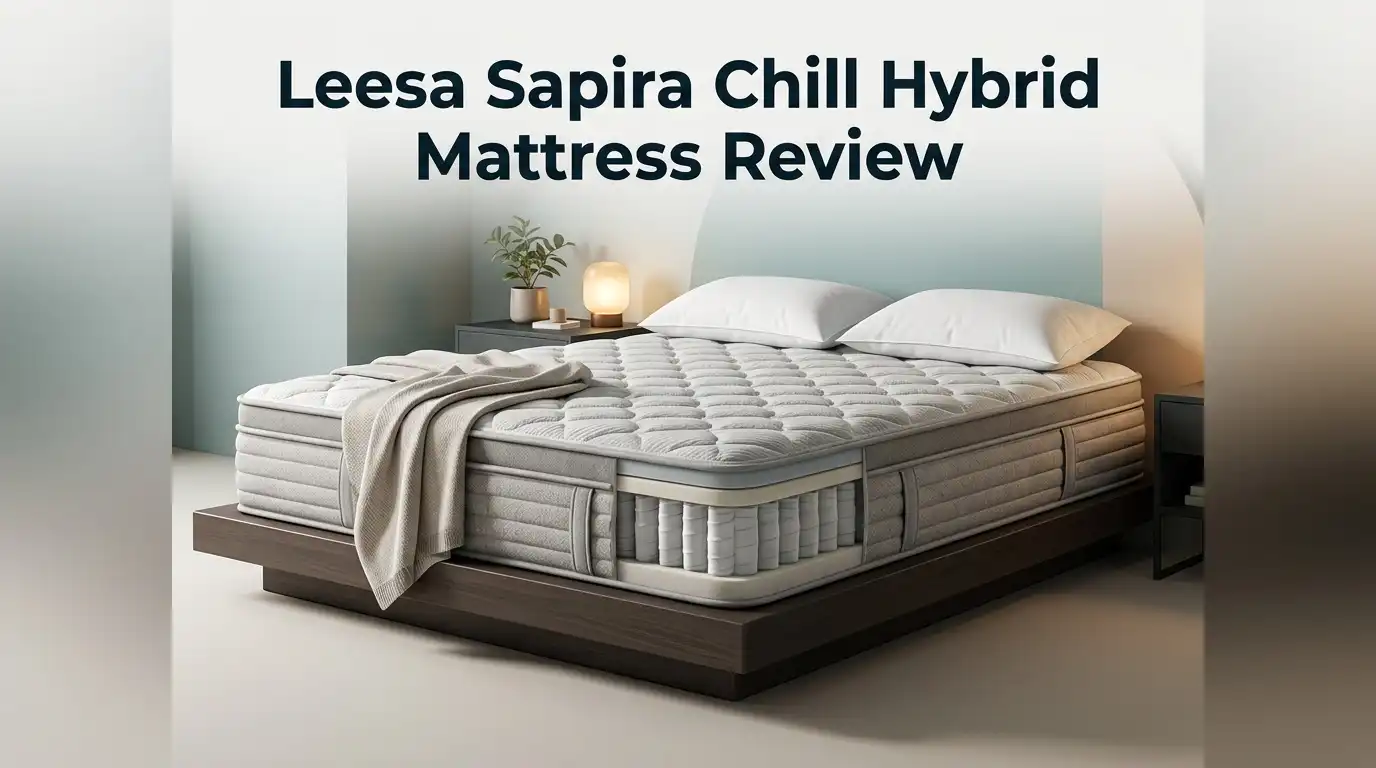
The Sapira Chill Hybrid is Leesa’s cooling upgrade of its long running Sapira line. It stands 13.5 to 14 inches tall depending on the model year and combines four foam layers with a zoned pocketed coil unit. The brand markets it as a luxury hotel bed for your own bedroom, and the quilted pillow top supports that claim.
Leesa sells it in Twin, Twin XL, Full, Queen, King, and California King. All sizes ship compressed in a box with free delivery. The cover uses cooling fibers woven into the fabric, and the foams are CertiPUR US certified with no fiberglass inside.
The short version: this is a premium cooling hybrid aimed at side sleepers, back sleepers, and anyone who wakes up sweaty. It is not a budget pick, and it is not built for stomach sleepers who need a flat, firm surface.
Unboxing the Sapira Chill: What to Expect
The box arrives heavy. A queen weighs roughly 103 pounds, so plan on two people for the stairs. Leesa prints handles into the carton, which helps, but the weight still surprises most buyers.
Cutting the plastic is the fun part. The mattress expands fast at first, then keeps filling out for several hours. Most owners report a usable surface within four to six hours and full loft within 48 hours. The pillow top looks noticeably puffy right out of the wrap.
Here is the honest downside. Off gassing is strong at first. One lab rated the initial smell as strong and tracked it for seven days before it fully faded. That is actually slightly better than average, but it is still a week of airing out the room. Open a window and run a fan on day one.
Inside the Layers: What You Are Actually Buying
The build quality holds up under inspection. A 1.25 inch quilted pillow top sits on the surface, woven with cooling fibers. Beneath that comes a 1.5 inch layer of GreenFlex foam, a newer plant based poly foam Leesa introduced for 2026.
Two more poly foam layers follow, each one inch thick, adding transition and contour. Together these create a comfort section of about 4.75 inches, which is thicker than most hybrids on the market.
The support core uses 8 inches of pocketed coils arranged in three zones, with firmer wire through the midsection and two reinforced rows around the perimeter. A thin support foam base finishes the stack.
Foam density measured between 2.57 and 2.81 pounds per cubic foot in the main comfort layers. That sits in the excellent tier and suggests the bed should resist sagging for years.
How Firm Does the Sapira Chill Actually Feel?
Leesa offers Plush, Medium Firm, and Firm. Most reviewers test the Medium Firm version, and most land on a 6 out of 10 rating where 10 is hardest. The industry standard for medium firm sits closer to 6.5, so this bed reads slightly soft.
That gap matters. Several buyers ordered Medium Firm expecting a supportive hotel feel and described the arriving mattress as surprisingly plush. The thick pillow top is the reason. You sit into the surface rather than on top of it.
The Plush version lands near 4 out of 10 and suits lighter side sleepers who want deep contour. The Firm version lands near 8 out of 10 and makes more sense for stomach sleepers and heavier back sleepers.
My advice is simple. If you normally like a firm hotel bed, size up one firmness level from what you think you need.
Top 3 Alternative for Leesa Sapira Chill Hybrid

Last update on 2026-10-16 / Affiliate links / Images from Amazon Product Advertising API
Helix Midnight Luxe Mattress


Last update on 2026-10-16 / Affiliate links / Images from Amazon Product Advertising API
DreamCloud Classic Hybrid Mattress

Last update on 2026-10-16 / Affiliate links / Images from Amazon Product Advertising API
Leesa Original Hybrid Mattress
Cooling Performance: Does the Name Hold Up?
This is the headline feature, so it deserves scrutiny. The cover is the star. Cooling fibers give it a genuine cool to the touch feel the moment you lie down, and that sensation lasts longer than it does on most quilted covers.
One lab recorded a maximum surface temperature of 89.9 degrees, slightly below the average across hundreds of tested beds, and awarded a perfect cooling score. Another lab measured a 10.8 degree rise over nine minutes, which is higher than their average, yet their tester still said the bed never felt warm while she was on it.
So the data disagrees a little. What both agree on is the subjective result: no trapped heat around the body. The perforated top foam and the open coil layer move air well.
Realistic expectation: this bed sleeps cooler than most foam beds, but it is not refrigerated.
Pressure Relief and Spinal Support
Pressure relief is where the Sapira Chill earns its best marks. One lab gave it a perfect 10 and measured a maximum pressure reading of just 0.68 PSI, comfortably under the one PSI threshold that signals trouble.
A heavier tester at 235 pounds rated both side and back sleeping a perfect score, noting strong shoulder relief and good spinal alignment. An average weight tester called out hip relief specifically, which is her usual problem area.
A physical therapist who tested the bed recommended it for shoulder pain and lateral hip pain, pointing to how evenly the pillow top distributes weight around the joint.
The caveat is real though. She also flagged it as possibly too soft for back pain sufferers, because deep sinkage can let the lumbar spine drop out of line. Lighter testers felt slight lower back pressure while back sleeping.
Motion Isolation: Can Couples Share It?
Results here are mixed, and this is the weakest category in most testing. One lab measured an acceleration range of 7.31 meters per second, roughly 17 percent better than average, and scored motion transfer at 9 out of 10.
Hands on testing told a different story. A water glass placed on the tufted surface wobbled when the tester got in and out, and nearly tipped during a position change. A blindfolded partner clearly felt movement from the other side of the bed.
The pillow top absorbs some energy, but the springy coil core sends the rest across. Position changes transmit the most, especially rolling from back to side.
Bottom line: average couples who sleep soundly will be fine. Light sleepers who wake at every movement should look at an all foam bed or a memory foam hybrid instead.
Edge Support and Getting In and Out
Two rows of reinforced coils run along the left and right sides of the mattress, and you can feel them. One tester described the edge pushing back against her as she sat, almost like a second frame holding her up.
Measured sitting sinkage came in at 3.5 inches, which beats the average of 3.84 inches. Lying directly on the edge felt just as secure as lying in the center, which is rare.
Weighted plate testing was less flattering. Heavy loads sank about 6.5 inches, earning a lower score and suggesting very heavy sleepers will notice more compression near the perimeter.
One practical note worth repeating. There are no reinforced coils at the head and foot of the bed, so those edges feel softer. Also, at 14 inches tall, climbing in is more of a step up than most beds.
Bounce, Response, and Ease of Movement
The two major labs split on this one, which tells you something. One measured low bounce at 7.76 inches and a slightly slow full recovery of 1.0 seconds. The other dropped a medicine ball and recorded a high 20.5 inch bounce.
What testers consistently describe is more useful than the numbers. The pillow top grabs you slightly during transitions. One tester said she felt like she was dragging her hip across the surface when rolling from side to back.
The quilted contours create small valleys that act like gentle speed bumps when you shift. Combination sleepers who change position often will notice this.
Response is adequate, not quick. You will not feel stuck, but you will not glide either. Sex scores land near average for the same reason: comfortable and quiet, yet requiring a bit more effort than a springier bed.
Best Sleeping Positions and Body Types
Side sleepers get the most from this mattress. The deep contour lets hips and shoulders settle in while the zoned coils keep the waist supported. Testers across light, average, and heavy weight categories all rated side sleeping highly.
Back sleepers do well too, though lighter sleepers reported mild lumbar pressure because hips sink more than shoulders. The Firm version solves this for most people.
Stomach sleepers are the clear mismatch on the Medium Firm model. Deep sinkage drops the hips and arches the lower back. One lab flatly recommended against stomach sleeping on both the Plush and Medium Firm builds.
If you sleep on your stomach and still want this bed, order the Firm version or choose something else entirely. Heavier stomach sleepers above 230 pounds reported the experience as genuinely unpleasant on the medium model.
What the Sapira Chill Does Not Do Well
Authentic reviews name the flaws, so here they are. First, motion isolation is average at best. Couples with mismatched schedules will feel each other move.
Second, the bed does not bend well on an adjustable base. At 14 inches thick, it stays fairly flat under a single sleeper’s weight, which defeats the purpose of buying an adjustable frame.
Third, the firmness labels run soft. Medium Firm reads closer to true medium, and a number of buyers were startled by how plush it felt out of the box.
Fourth, off gassing is strong for about a week. Fifth, stomach sleepers get poor alignment unless they choose the Firm build. Sixth, the price sits roughly 10 percent above the hybrid average.
None of these are deal breakers for the right sleeper. They are deal breakers for the wrong one.
Pros and Cons of the Leesa Sapira Chill Hybrid
Pros
- The quilted cover feels genuinely cool to the touch and holds that feel longer than most covers.
- Pressure relief earned top marks from every tester weight class, especially for side sleepers with hip or shoulder pain.
- Three firmness options mean most sleeping styles can find a match without switching brands.
- Reinforced side coils deliver strong edge support for sitting and for sleeping near the perimeter.
- Foam density and coil gauge measurements both land in high quality ranges, which points to solid durability.
- The bed runs very quiet, with no coil squeak during movement testing.
Cons
- Motion isolation is only average, which disappoints light sleepers who share a bed.
- Sinkage is much deeper than average, so stomach sleepers lose spinal alignment.
- The Medium Firm model feels softer than its name suggests.
- Strong off gassing smell lasts about seven days.
- At 14 inches tall and over 100 pounds, setup and sheet fitting both take effort.
- Pricing sits above the hybrid average even during sales.
Price, Sizes, and Value
List pricing runs from roughly $1,499 for a Twin to $2,399 for larger sizes. Leesa discounts aggressively and often, so most shoppers pay well below list.
Recent sale pricing put a Twin near $1,119, a Full near $1,419, a Queen between $1,679 and $1,799, and a King near $1,879. Compared to the hybrid average of about $1,526 for a queen, this bed runs roughly 10 percent higher.
Is that worth it? The material specs justify the premium. Denser foams, thicker comfort layers, zoned coils, and reinforced edges all cost money to build.
That said, value shoppers have options. Beds like the Brooklyn Bedding Signature Hybrid and DreamCloud Classic deliver strong performance for hundreds less. You are paying extra here for the cooling cover and the pillow top feel.
Trial Period, Warranty, and Returns
Leesa ships free and accepts returns free, which removes most of the risk from buying a mattress online. The brand asks that you sleep on it for at least 30 days before requesting a return, since the foams need time to break in.
Trial length has shifted recently. Amazon listings advertise a 120 night trial, while Leesa’s own site has promoted a longer 365 night trial during certain campaigns. Confirm the trial length on your specific order page before you buy.
Warranty coverage shows similar inconsistency across sources, with some listing a lifetime warranty and others citing 10 years. The lifetime figure appears on Leesa’s direct materials.
Compared to the industry average trial of roughly 195 nights, a 120 night window is on the short side. Still, four months is enough time to know.
Sapira Chill vs Other Leesa Models
Leesa’s Chill collection launched as a cooling upgrade across the whole lineup. The Sapira Chill sits in the middle to upper tier, above the Studio and below the Legend Chill.
Compared to the standard Sapira Hybrid, the Chill adds the cooling fiber cover and a thicker build. The original Sapira stands 11 inches tall with a single medium firm option.
Compared to the Leesa Original Hybrid, the Sapira Chill offers more contour, better edge support, and stronger cooling at a higher price. The Original is thinner and works far better on adjustable bases.
The 2026 Sapira Chill also improved on the 2023 version. Motion transfer scores jumped significantly, and off gassing dropped from ten days to seven. Sinkage got deeper and bounce dropped, which changed the feel noticeably.
Final Verdict: Who Should Buy This Mattress?
Buy the Sapira Chill Hybrid if you sleep hot, sleep on your side, and want a plush hotel feel without losing support. That combination is exactly what this bed was engineered to deliver, and it executes it well.
Buy it also if you need strong edge support, whether for mobility reasons or because you like sprawling to the far side of the bed.
Skip it if you are a dedicated stomach sleeper, unless you commit to the Firm model. Skip it if you share a bed with someone restless and you wake easily. Skip it if an adjustable base is central to your setup.
Overall, independent testing placed this mattress in the top few percent of all beds measured. That ranking is earned, with clear limits attached. Match your sleeping style to its strengths and you will likely love it.
Frequently Asked Questions
Is the Leesa Sapira Chill good for hot sleepers?
Yes, for most people. The cover uses cooling fibers that feel cool on contact, and the perforated top foam plus coil layer keep air moving. Testers consistently reported no trapped body heat. It will not feel refrigerated, but it beats standard memory foam by a wide margin.
Which firmness should I order?
Medium Firm suits the widest range of sleepers and reads as a true medium at 6 out of 10. Choose Plush only if you strongly prefer a soft, deeply contoured surface. Choose Firm if you sleep on your stomach, weigh over 230 pounds, or want more pushback under your lower back.
How long does the smell last?
About seven days. The initial odor is strong on day one. Unbox the mattress in a ventilated room, run a fan, and let it breathe before putting sheets on it.
Does it work on an adjustable base?
Technically yes, but it performs poorly. At 14 inches thick, it resists bending and stays fairly flat with one person on it. A thinner model like the Leesa Original is a better match for adjustable frames.
Will I feel my partner moving?
Probably somewhat. Motion isolation tested as average. The pillow top absorbs some movement, but position changes still transmit across the surface. Deep sleepers will not care. Light sleepers should consider a memory foam alternative.
How long should this mattress last?
Material testing suggests good durability. Comfort foams measured between 2.57 and 2.81 pounds per cubic foot, and coil gauges ranged from 13.5 to 15.5. Both figures sit in quality ranges that resist sagging. Expect eight to ten years of solid performance with proper support underneath.

Hi, I’m Ava Day, the founder and lead writer at Cozy Bed Vault. I’m passionate about sleep wellness and dedicated to helping people find their perfect mattress. Through honest reviews, detailed comparisons, and expert buying guides, I simplify the mattress shopping experience so you can sleep soundly every night.