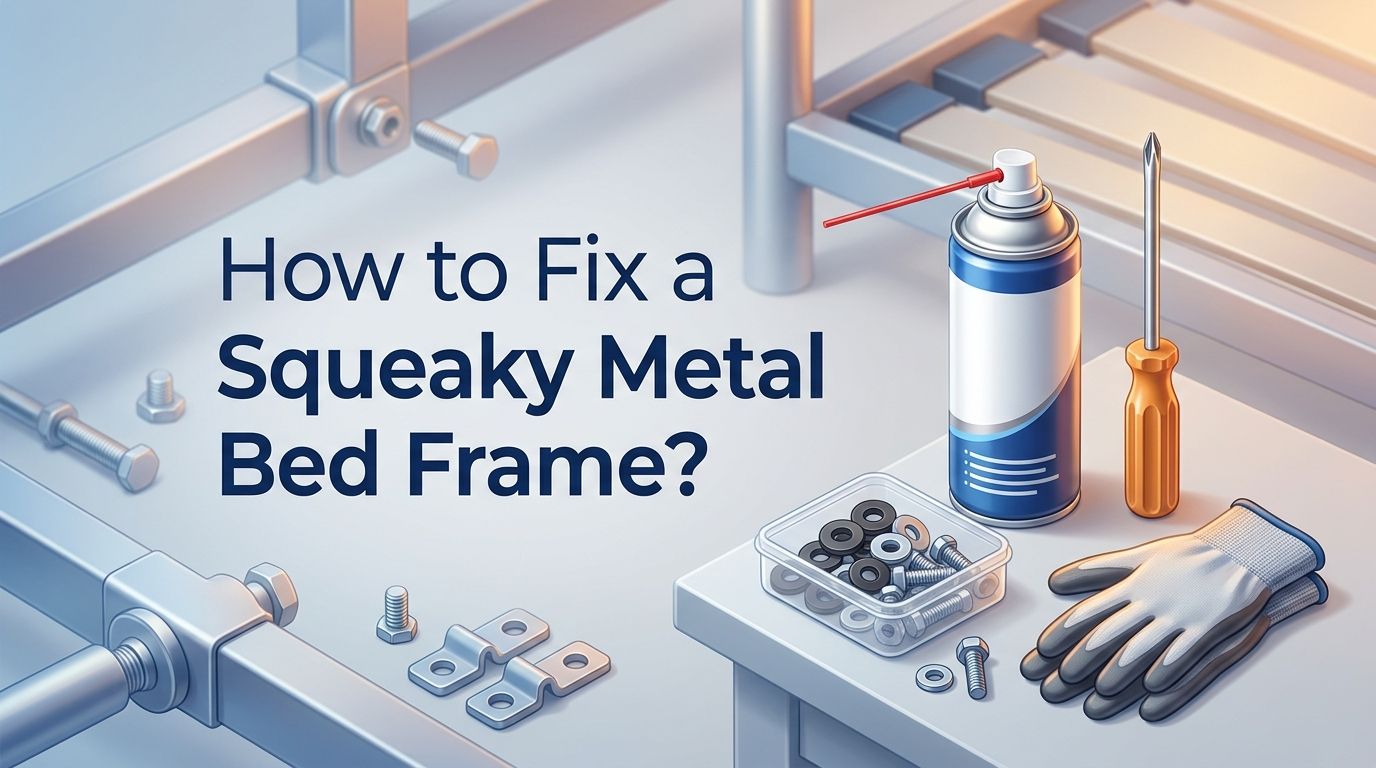
How to Fix a Squeaky Metal Bed Frame? Your Ultimate Guide
A squeaky metal bed frame can turn every night into a frustrating experience. You shift your weight, and the entire room fills with an annoying creak. You roll over, and there it goes again. That constant noise can ruin your sleep quality and even disturb others in your home.
The good news? You do not need to replace your bed frame. Most squeaks come from simple issues like loose bolts, metal friction, or uneven surfaces. These problems have easy, affordable fixes you can do yourself in under an hour.
This guide walks you through every practical solution to silence your noisy metal bed frame. You will learn how to find the exact source of the squeak, which tools you need, and step by step methods to fix the problem for good.
In a Nutshell
- Identify the noise source first. Remove the mattress and press on different parts of the bare frame. This simple test tells you exactly where the squeak starts, so you do not waste time fixing the wrong area. The most common spots are joints, bolts, slats, and contact points between metal parts.
- Tighten all bolts and screws. Loose hardware is the number one cause of squeaky metal bed frames. A quick pass with a wrench or screwdriver can solve the problem in minutes. Check every single connection point, even the ones that look tight.
- Use lubricant on metal joints. A silicone spray or even basic candle wax reduces friction between metal surfaces. This stops the grinding and creaking sounds that happen when two metal parts rub together under pressure.
- Add rubber washers or felt pads between metal parts. These small buffers absorb vibrations and prevent direct metal contact. They are cheap, easy to install, and can make a huge difference in noise reduction.
- Check your floor for unevenness. Sometimes the squeak is not from the frame itself. An uneven floor causes the frame to rock slightly, which creates noise at every joint. Furniture pads or a small shim under the short leg can fix this fast.
- Inspect for worn or damaged parts. Bent crossbars, stripped screw holes, or cracked welds may need replacement parts or a more involved repair. Catching these issues early prevents bigger problems down the road.
How to Find the Exact Source of the Squeak on Your Metal Bed Frame
Before you grab any tools, you need to pinpoint where the noise is coming from. Many people skip this step and end up tightening bolts that were never the problem.
Start by removing the mattress and any bedding from the frame. Place the mattress on the floor temporarily. Now press down on different sections of the bare frame with your hands. Apply pressure to each corner, the center, the headboard connection, and the footboard connection.
Listen carefully as you push on each spot. The squeak will reveal itself at a specific location. Pay extra attention to joints where two metal pieces connect. Also rock the frame gently side to side to check for wobble.
If the frame is silent but the mattress squeaks on its own, your frame may not be the issue at all. Test each component separately to avoid unnecessary work.
Pros: Saves time by directing your repair efforts to the right spot.
Cons: Requires patience and may need a second person to help press and listen.
How to Tighten Loose Bolts and Screws on a Squeaky Metal Bed Frame
Loose hardware causes most squeaks in metal bed frames. Over time, the constant pressure from your body weight loosens bolts and screws at every joint. This creates tiny gaps where metal parts shift and rub together.
Grab a socket wrench, adjustable wrench, or screwdriver depending on your frame’s hardware. Go through every single bolt, nut, and screw on the frame. Tighten each one until it feels snug. Do not overtighten, as this can strip the threads or bend the metal.
Check the connections at the headboard and footboard first. These areas carry the most stress. Then move to the side rails and any center support bars.
If a bolt spins freely and will not tighten, the hole may be stripped. You can fix this with a slightly larger bolt or by adding a metal washer to fill the gap.
Pros: This is the fastest and most effective fix for the majority of squeaky frames.
Cons: Stripped threads require extra parts, and bolts may loosen again over time without thread locker.
How to Use Lubricant to Stop Metal Bed Frame Joints From Squeaking
Friction between metal surfaces creates that high pitched squeak you hear every time you move. Lubricating these contact points reduces friction and silences the noise.
Silicone spray works best for metal bed frames. It goes on clean, does not attract dust, and lasts a long time. Spray it directly onto every joint, bolt hole, and area where two metal pieces meet.
You can also use candle wax, beeswax, or paraffin wax as an alternative. Rub the wax directly onto the metal surfaces before reassembling the joint. This creates a smooth barrier that prevents metal on metal grinding.
Avoid using cooking oils or petroleum jelly. These attract dust and grime over time, which can make the problem worse. WD 40 works as a short term fix but dries out quickly. A dedicated silicone lubricant gives you longer lasting results.
For the best outcome, disassemble each squeaky joint, apply lubricant to both surfaces, and then reassemble the connection tightly.
Pros: Very effective, affordable, and easy to apply.
Cons: WD 40 dries out fast; some lubricants may stain bedding if applied too generously.
How to Add Rubber Washers and Felt Pads to Silence a Metal Bed Frame
Rubber washers and felt pads act as shock absorbers between metal components. They prevent direct contact and absorb the tiny vibrations that cause squeaking sounds.
Place a rubber washer on each bolt before you tighten it. The washer sits between the bolt head and the metal frame surface. This eliminates the tiny movements that create noise at the connection point.
For areas where metal slats rest on the frame, cut small pieces of felt pad or rubber sheeting and place them along the contact points. This creates a soft buffer that stops the slats from grinding against the frame.
Cork pads also work well as an alternative material. They compress slightly under weight and absorb vibrations effectively.
You can find rubber washers at any hardware store. Felt pads with adhesive backing are also widely available and easy to apply. Measure the bolt size before you shop so you get the right washer diameter.
Pros: Long lasting solution that addresses the root cause of friction.
Cons: Adhesive pads may lose their grip over time and need replacement.
How to Fix a Squeaky Metal Bed Frame Caused by Uneven Floors
Your bed frame might be perfectly fine. The real problem could be your floor. An uneven surface causes the frame to wobble, and that rocking motion creates noise at every joint and connection.
Check if all four legs sit flat on the ground. Place your hand on the bed frame and gently rock it. If you feel any wobble, one or more legs are not making solid contact with the floor.
Furniture pads or rubber feet placed under the shorter leg can level out the frame. You can also use a thin piece of cardboard or cork as a shim. The goal is to make all four legs rest firmly on the floor with zero wobble.
If your floor is hardwood or tile, the legs may also slide slightly when you move on the bed. Rubber furniture cups or grip pads under each leg prevent this sliding and reduce vibration transfer to the floor.
Pros: Quick and cheap fix that requires no tools.
Cons: Shims can shift out of place over time and may need readjustment.
How to Fix Squeaky Metal Bed Frame Slats That Rub Against the Frame
Metal slats are a common source of noise. They sit inside brackets or rest on ledges, and every time you shift your weight, they move slightly against the frame.
Remove each slat and inspect the contact points. Look for scratches or shiny spots on the metal surface. These marks show you exactly where friction occurs.
Wrap each end of the slat with a thin layer of cloth tape, electrical tape, or rubber tubing. This creates a cushion between the slat and the frame. Reinsert the slat and test for noise.
Another approach is to apply a strip of adhesive felt along the ledge where the slat sits. This soft layer absorbs movement and prevents metal on metal contact.
If the slats are loose in their brackets, you can add small rubber shims to create a tighter fit. A snug slat does not move, and a slat that does not move does not squeak.
Pros: Targets a very common squeak source with simple materials.
Cons: Tape may wear out over time and need periodic replacement.
How to Fix a Metal Bed Frame That Squeaks Where It Meets the Headboard
The connection between the frame and headboard takes a lot of stress. Every time you sit up, lean back, or adjust your pillows, force transfers through this joint. Over time, the bolts loosen and the metal parts begin to squeak.
Remove the headboard bolts completely. Clean both the bolt and the hole with a dry cloth. Apply silicone lubricant or rub candle wax on the bolt threads and the metal contact surfaces.
Insert rubber washers on the bolts before you reattach the headboard. Tighten each bolt firmly but do not force it past snug. The rubber washers will absorb micro movements and stop the squeak.
If the bolt holes in the headboard brackets are slightly enlarged from wear, wrap the bolt shaft with a single layer of plumber’s tape (PTFE tape). This fills the tiny gap and creates a tighter, quieter fit.
Pros: Addresses a high stress area that frequently causes noise.
Cons: May require removing heavy headboard panels, which can be awkward without help.
How to Fix a Squeaky Metal Bed Frame by Reassembling It Properly
Sometimes the best fix is a complete disassembly and reassembly. Small alignment issues from the original setup can cause persistent squeaks that no amount of tightening will fix.
Take apart the entire frame. Lay out all the parts and hardware in order so you can put everything back correctly. Clean every metal surface, bolt, and connection point with a dry cloth.
Apply silicone lubricant or wax to every contact point before you rebuild. Place rubber washers on all bolts. Follow the manufacturer’s assembly instructions carefully and tighten everything in the correct sequence.
Align each piece properly before tightening. A joint that is slightly crooked puts uneven stress on the hardware and creates noise. Hold parts in position and hand tighten first, then go back with a wrench to secure everything.
This method takes more time but addresses every possible squeak source at once. It also gives you a chance to inspect for damaged parts that need replacement.
Pros: The most thorough fix that addresses all squeak sources in one session.
Cons: Time consuming and requires keeping track of all hardware and parts.
How to Use Thread Locker to Keep Metal Bed Frame Bolts From Loosening
You tightened every bolt, but the squeaking comes back after a few weeks. This happens because regular vibrations from daily use gradually loosen the hardware again.
Thread locker is a liquid adhesive you apply to bolt threads before tightening. It holds the bolt in place and prevents it from backing out over time. Use a medium strength (blue) thread locker for bed frames. This strength holds firmly but still allows you to remove the bolt later with a wrench.
Apply a small drop to the bolt threads and then tighten the bolt into place. The thread locker cures within a few hours and creates a strong bond that resists vibration loosening.
Do not use high strength (red) thread locker on bed frame bolts. That grade requires heat to remove and is meant for permanent applications.
Pros: Prevents bolts from loosening again, giving you a long term quiet frame.
Cons: Adds a small cost, and you must wait for the adhesive to cure before using the bed.
How to Fix a Squeaky Metal Bed Frame That Touches the Wall
Sometimes the squeak is not inside the frame at all. The frame or headboard rubbing against the wall during movement creates a distinct squeaking or thumping noise.
Pull the bed away from the wall by half an inch to one inch. This small gap prevents contact and eliminates the noise immediately. If you prefer the bed against the wall, attach adhesive felt pads or rubber bumpers to the headboard or frame where it touches the wall.
Old socks or pieces of foam placed between the headboard and wall also work as a quick temporary fix. They cushion the impact and absorb sound.
For a cleaner look, use clear rubber bumper pads that stick to the back of the headboard. These are nearly invisible and last for months.
Check that the bed frame does not shift during use. If it slides on a hard floor, add rubber grip pads under the legs to keep it in place.
Pros: Extremely easy fix that takes less than five minutes.
Cons: Moving the bed away from the wall leaves a visible gap; adhesive pads may mark the wall paint.
How to Know if Your Squeaky Metal Bed Frame Needs to Be Replaced
Not every squeak can be fixed. Some metal bed frames develop structural problems that go beyond loose bolts and friction.
Look for cracks at weld points. If the metal is split or cracked where two pieces join, no amount of tightening or lubricating will fix the noise. Bent side rails or crossbars also create permanent misalignment that causes ongoing squeaking.
Check if bolt holes are severely stripped or enlarged. A bolt that spins freely without gripping has lost its connection. While a larger bolt or thread repair kit can sometimes help, extensive stripping across multiple joints signals a frame at the end of its life.
If you have tried every fix in this guide and the squeak persists, the frame may have a structural weakness that will only worsen over time. A replacement frame is the safest and most practical choice in that situation.
Pros: Knowing when to replace saves you from wasting effort on a failing frame.
Cons: A new bed frame costs money, but a solid frame provides years of quiet sleep.
How to Prevent Your Metal Bed Frame From Squeaking in the Future
Prevention takes less effort than repair. A few simple habits will keep your metal bed frame quiet for years.
Tighten all bolts and screws every six months. This quick maintenance task takes five minutes and catches loose hardware before it becomes noisy. Mark your calendar so you do not forget.
Keep rubber washers and felt pads in place. Replace them once a year or whenever they show signs of wear. Fresh pads maintain their cushioning effect and keep metal parts from direct contact.
Avoid jumping on the bed or placing excessive stress on the frame. Distribute weight evenly by positioning the mattress centered on the frame. An off center mattress puts extra strain on one side and loosens hardware faster.
Place the bed on a level surface. If you move the bed to a new room or home, check the floor for unevenness and adjust with pads or shims right away.
Pros: Preventive care extends the life of your frame and saves you from future repairs.
Cons: Requires remembering to do regular maintenance checks.
Frequently Asked Questions
How Do You Stop a Metal Bed Frame From Squeaking Without Taking It Apart?
You can spray silicone lubricant directly into the joints and connection points without disassembly. Also tighten every visible bolt and screw with a wrench. Place felt pads or rubber bumpers between any metal parts you can reach. These quick fixes often solve the problem without a full teardown.
How Often Should You Tighten the Bolts on a Metal Bed Frame?
Check and tighten your bed frame bolts every six months. Regular use, body weight, and vibrations naturally loosen hardware over time. A quick inspection twice a year prevents squeaks from developing and keeps the frame stable and safe.
Can You Use WD 40 to Fix a Squeaky Metal Bed Frame?
WD 40 works as a short term solution. It reduces friction and silences squeaks quickly. However, it dries out faster than silicone based lubricants and can attract dust. For a longer lasting result, use a dedicated silicone spray or paraffin wax on your metal bed frame joints.
Why Does My Metal Bed Frame Only Squeak at Night?
Your bed frame likely squeaks all the time, but you notice it more at night because your home is quieter. Ambient noise during the day masks the sound. The squeaking may also worsen at night because temperature changes cause metal to expand and contract slightly, which affects joint tightness.
Is a Squeaky Metal Bed Frame Dangerous?
A squeak itself is not dangerous. However, it signals that parts are loose or shifting. Ignoring the problem can lead to further loosening, structural weakness, or even frame failure over time. Fix squeaks promptly to keep your bed frame safe and stable.
How Much Does It Cost to Fix a Squeaky Metal Bed Frame?
Most fixes cost very little. A can of silicone spray, a pack of rubber washers, and some felt pads together cost less than ten dollars at most hardware stores. Thread locker and basic tools add a small amount more. The total cost for a complete fix is usually under twenty dollars.

Hi, I’m Ava Day, the founder and lead writer at Cozy Bed Vault. I’m passionate about sleep wellness and dedicated to helping people find their perfect mattress. Through honest reviews, detailed comparisons, and expert buying guides, I simplify the mattress shopping experience so you can sleep soundly every night.