
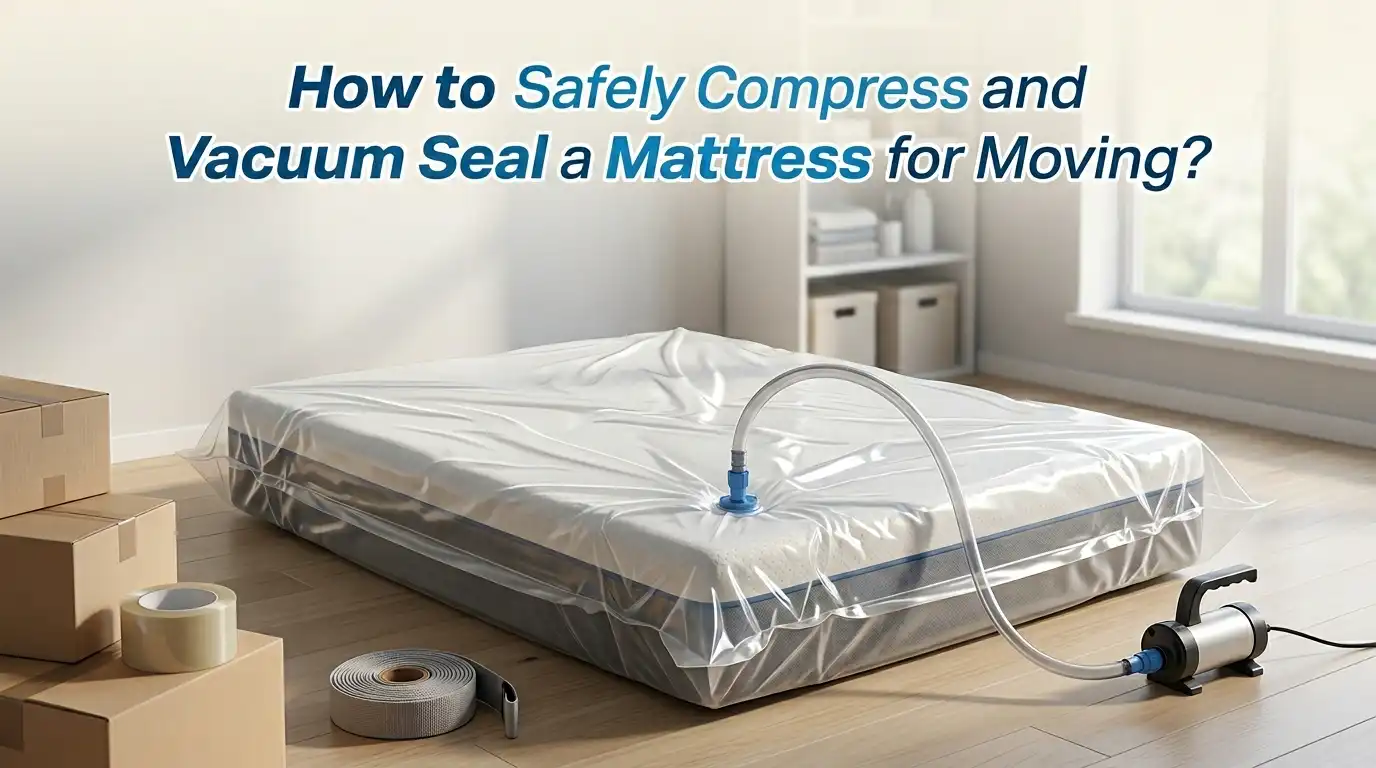
How to Safely Compress and Vacuum Seal a Mattress for Moving?
Moving a full size mattress through narrow hallways, tight staircases, and into a packed moving truck is one of the most frustrating parts of any move. The good news?
You can compress and vacuum seal most mattresses to a fraction of their original size. This makes transport easier, saves valuable truck space, and protects your mattress from dirt, moisture, and damage along the way.
But here is the catch. Not every mattress can handle compression, and doing it wrong can permanently ruin your bed. You need the right tools, the right technique, and a clear understanding of which mattress types are safe to compress.
Key Takeaways
- Vacuum sealing works best on memory foam and latex mattresses. These materials compress well and bounce back to their original shape after decompression. Innerspring mattresses are not good candidates because the metal coils can bend, break, or lose their shape under compression.
- You need a mattress sized vacuum bag with a built in valve, a vacuum cleaner with a hose attachment, ratchet straps, and strong tape. Having all your supplies ready before you start will save you time and frustration.
- The entire process takes about 30 to 60 minutes for most people. This includes cleaning the mattress, placing it in the bag, removing the air, rolling it up, and securing it with straps and tape.
- Do not leave your mattress compressed for more than two months. Extended compression can permanently change the structure and comfort level of your mattress. For short distance moves, this is rarely an issue, but keep it in mind for long term storage.
- Always make sure the mattress is completely dry before sealing it. Any trapped moisture inside the vacuum bag can lead to mold and mildew growth, which will ruin your mattress and create health risks.
- Allow the mattress several hours to fully expand after you unseal it at your new home. Most mattresses regain their full shape within 4 to 8 hours, though some may take up to 24 hours.
Why Vacuum Sealing a Mattress Makes Moving Easier
A standard queen size mattress measures roughly 60 by 80 inches and weighs between 60 and 100 pounds. That is a bulky, awkward item to carry through doorways and load into a vehicle. Vacuum sealing compresses a mattress to roughly 20% of its original volume, turning it into a manageable, rolled up package.
This smaller size means you can fit the mattress into a car trunk, SUV, or a smaller section of a moving truck. You also reduce the risk of scraping walls, bumping furniture, and straining your back. The sealed plastic bag adds a layer of protection against rain, dust, and stains during transit.
For people doing a DIY move without professional movers, this technique is a genuine game changer. It eliminates the need for a second trip or a larger truck just to accommodate one oversized item.
Which Mattress Types Can You Safely Compress
Not all mattresses respond the same way to vacuum compression. The type of material inside your mattress determines whether this method is safe to use.
Memory foam mattresses are the best candidates. The foam is flexible and resilient. It compresses evenly and returns to its original shape after decompression. All foam mattresses fall into this category as well.
Latex mattresses also handle compression well, though natural latex can be slightly stiffer than memory foam. Give a latex mattress a bit more time to expand after unsealing.
Hybrid mattresses contain both foam layers and a spring support core. You can vacuum seal some hybrids, but you need to be careful not to over compress them. The springs inside can bend under excessive pressure.
Innerspring mattresses are the worst candidates for vacuum sealing. The metal coil system can sustain permanent damage during compression. Springs can pop out of alignment, lose tension, or break entirely. Avoid vacuum sealing a traditional innerspring mattress.
Tools and Supplies You Will Need
Gathering your supplies before you start is essential. Stopping mid process to find a missing item can let air back into the bag and waste your effort. Here is everything you need.
You will need a mattress sized vacuum storage bag with a built in valve. These bags come in standard mattress sizes including twin, full, queen, and king. Make sure you buy the correct size for your mattress. The valve on the bag should match the diameter of your vacuum cleaner hose.
You will also need a vacuum cleaner with a hose attachment or a shop vac. A shop vac provides stronger suction and works faster, but a standard household vacuum with a hose works fine for foam mattresses.
Ratchet straps are critical for keeping the mattress rolled tightly after compression. Two or three straps will do the job. Finally, grab some strong packing tape or duct tape to seal the valve area and secure any loose sections of the bag.
How to Prepare Your Mattress Before Compression
Preparation matters more than most people realize. A clean, dry mattress compresses better and stays safe inside the sealed bag.
Strip all bedding, sheets, pillows, and mattress toppers off the bed. Remove any mattress protector or cover as well. You want the bare mattress with nothing attached.
Vacuum both sides of the mattress thoroughly with an upholstery attachment. This removes dust, hair, dead skin cells, and debris that you do not want sealed inside the bag. If your mattress has any stains, spot clean them and allow the area to dry completely. Moisture is your biggest enemy during this process. Any dampness sealed inside the bag creates the perfect environment for mold and mildew.
If possible, let the mattress air out for a few hours in a well ventilated room before sealing. This helps release any trapped odors and ensures the surface is fully dry.
Step by Step Guide to Vacuum Sealing Your Mattress
Now that your mattress is clean and your supplies are ready, follow these steps carefully.
Step 1: Lay the vacuum bag flat on the floor and unzip it completely. Place the mattress on top of the bag, then fold the bag up and around the mattress. Alternatively, stand the mattress on its side against a wall and slide the bag over it from the top.
Step 2: Zip the bag shut completely. Run your fingers along the entire zipper line to make sure there are no gaps. Some bags have a double zipper seal. Close both zippers for a tight seal.
Step 3: Locate the valve on the bag and attach your vacuum hose to it. If the fit is not snug, wrap tape around the connection point to prevent air leaks.
Step 4: Turn on the vacuum. Watch as the mattress begins to flatten and compress. This process typically takes 5 to 15 minutes depending on the mattress size and your vacuum’s power. Keep the vacuum running until the mattress is fully compressed.
Step 5: While the vacuum is still on, begin rolling the mattress from one end. Roll tightly and evenly. Have a helper hold the rolled portion while you continue rolling.
Step 6: Secure the rolled mattress with ratchet straps. Place one strap near each end and one in the middle.
Step 7: Turn off the vacuum, detach the hose, and immediately seal the valve with tape. Cover it completely to prevent any air from seeping back in.
How to Roll and Strap the Mattress Properly
Rolling technique makes a real difference in how compact and stable the final package is. Start rolling from the foot of the mattress and work upward. This approach pushes remaining air pockets toward the valve end of the bag, where the vacuum can catch them.
Roll slowly and press down firmly as you go. If you rush this step, you will create uneven folds and air pockets that make the bundle larger than it needs to be. A tight, even roll is what you are aiming for.
Once rolled, immediately wrap the ratchet straps around the bundle. Tighten each strap until it is snug but not so tight that it tears the plastic bag. Position the straps evenly so the mattress holds its shape during transport.
You can add a layer of packing tape around the outside of the bag for extra security. This prevents the bag from shifting or loosening during the move.
Pros and Cons of Vacuum Sealing a Mattress for Moving
Understanding the advantages and disadvantages helps you decide if this method is right for your situation.
Pros: Vacuum sealing dramatically reduces the size and bulk of your mattress, making it far easier to transport. It protects the mattress from water, dirt, dust, and pests during the move. The process is affordable since a vacuum bag and straps cost much less than hiring movers or renting a bigger truck. You can fit a sealed mattress into a car or small SUV, which eliminates the need for a separate trip.
Cons: The process does carry some risk of altering the mattress structure, especially with extended compression. Firm mattresses may lose some firmness, and softer mattresses may become uneven. You cannot safely compress innerspring or some heavy hybrid mattresses. There is also a risk of mold growth if any moisture gets trapped inside the bag. Finally, you need a helper for the rolling and strapping steps since doing it alone is very difficult.
Alternative Methods for Moving a Mattress Without Vacuum Sealing
If vacuum sealing is not right for your mattress type, you still have solid options.
A mattress bag without vacuum sealing is the simplest alternative. Slide your mattress into a heavy duty plastic mattress bag and tape it shut. This protects the mattress from dirt and moisture without any compression. You will need a vehicle large enough to fit the full size mattress.
Ratchet straps and blankets work well for short moves. Wrap the mattress in moving blankets, strap it to a hand truck or dolly, and load it into the truck on its side. This method avoids any compression risk entirely.
Professional moving companies have experience handling large mattresses. They use padding, straps, and proper lifting techniques to move mattresses safely. This is the best option for expensive or specialty mattresses that you cannot afford to risk damaging.
Each method has trade offs in cost, convenience, and protection level. Choose based on your mattress type, budget, and the distance of your move.
How Long Can a Mattress Stay Compressed Safely
Time is a critical factor. Most mattress manufacturers recommend keeping a mattress compressed for no longer than two to four weeks. Some sources extend this window to eight weeks for high quality foam mattresses, but shorter is always better.
The longer a mattress stays compressed, the harder it becomes for the foam to recover its original shape and firmness. Memory foam that has been compressed for several months may develop permanent flat spots or lose its supportive feel. The internal cell structure of the foam can break down under prolonged pressure.
For a standard move that takes a few days to a couple of weeks, you have nothing to worry about. The risk increases significantly after the 30 day mark. If your move involves long term storage, consider keeping the mattress uncompressed in a climate controlled storage unit instead of leaving it vacuum sealed.
Common Mistakes to Avoid During the Process
People make several predictable errors that can damage their mattress or waste their time. Here are the most important ones to watch for.
Using the wrong size bag is a frequent mistake. A bag that is too small will not close properly. A bag that is too large will have excess plastic that folds unevenly and creates air pockets. Always match the bag size to your exact mattress size.
Sealing a damp mattress is the single most damaging mistake you can make. Even a small amount of moisture will create mold inside the sealed environment. Check both sides of the mattress and wait until it is bone dry before proceeding.
Compressing an innerspring mattress will almost certainly cause permanent damage to the coils. Do not attempt this regardless of how careful you plan to be.
Leaving the mattress compressed for too long degrades the foam structure. Set a reminder to decompress your mattress as soon as you arrive at your new home.
Failing to secure the valve with tape after detaching the vacuum hose lets air slowly seep back in, which defeats the purpose.
How to Decompress Your Mattress After the Move
Once you reach your new home, proper decompression ensures your mattress returns to its full comfort level.
Cut the straps and tape carefully. Use scissors rather than a knife to avoid puncturing or slicing the mattress itself. Remove the ratchet straps first, then carefully cut open the bag. Work slowly to avoid accidentally cutting into the mattress fabric.
Unroll the mattress on a flat surface in the room where you plan to use it. Remove the plastic bag completely. The mattress will immediately begin expanding as air fills the foam cells again.
Give the mattress at least 4 to 8 hours to expand before sleeping on it. Some mattresses, especially thicker memory foam models, may need up to 24 hours to reach their full shape. You can speed up the process slightly by placing the mattress in a warm room since heat helps foam expand faster.
Walk around the mattress and check for any uneven spots. Gently press on different areas to help trapped air distribute evenly. In most cases, the mattress will look and feel normal again within a day.
Tips for Protecting Your Mattress During Transport
Even after vacuum sealing, your mattress needs careful handling during the actual move.
Keep the sealed mattress away from sharp objects in the truck or car. A punctured bag means air will rush back in and the mattress will begin expanding in transit. Avoid stacking heavy boxes on top of the compressed mattress.
Lay the sealed mattress flat if possible. Standing it on its side is fine for short trips, but a flat position distributes weight more evenly and prevents the roll from bending.
If you are moving in rainy or snowy weather, the vacuum sealed bag already provides water protection. However, adding a second layer of plastic wrap or a tarp gives you extra insurance against tears or punctures in the outer bag.
Secure the mattress inside the vehicle so it does not slide around during turns or sudden stops. A few bungee cords or additional straps anchored to tie down points in the truck bed will keep it in place.
Frequently Asked Questions
Can I vacuum seal a mattress with a regular household vacuum?
Yes, a standard household vacuum with a hose attachment works for most foam and latex mattresses. The process may take a bit longer compared to using a shop vac, which provides stronger suction. Make sure the hose fits snugly into the valve on the vacuum bag. If the fit is loose, use tape to create a tight seal around the connection point.
Will vacuum sealing damage my memory foam mattress?
Memory foam mattresses are the safest type to vacuum seal. The foam compresses evenly and returns to its original shape after decompression. Keep the mattress compressed for less than 30 days to minimize any risk. Most people notice no difference in comfort or support after a short compression period.
Can I vacuum seal a mattress by myself without help?
You can manage the vacuuming and sealing steps alone. However, rolling and strapping the compressed mattress is very difficult for one person. The mattress tends to unroll if no one holds it in place while you secure the straps. Having at least one helper for the rolling step is strongly recommended.
How much does a mattress vacuum bag cost?
Mattress vacuum bags typically cost between $15 and $40 depending on the size and quality. Ratchet straps and tape add another $10 to $20. The total investment is usually under $60, which is significantly less than renting a larger moving truck or hiring professional movers.
Can I reuse a mattress vacuum bag for future moves?
Many mattress vacuum bags are reusable as long as the zipper, valve, and plastic remain intact. After each use, inspect the bag for holes, tears, or a weakened valve. If the seal still holds air, you can use it again. Store the bag folded in a dry place between uses to keep it in good condition.
What should I do if my mattress does not fully expand after unsealing?
Give it a full 24 to 48 hours in a warm room. If the mattress still has flat spots or feels uneven after that time, try gently walking on the affected areas to break up compressed foam cells. In rare cases where the mattress was compressed for too long, some permanent loss of shape or firmness may occur. This is why keeping compression time to a minimum is so important.

Hi, I’m Ava Day, the founder and lead writer at Cozy Bed Vault. I’m passionate about sleep wellness and dedicated to helping people find their perfect mattress. Through honest reviews, detailed comparisons, and expert buying guides, I simplify the mattress shopping experience so you can sleep soundly every night.