How to Flatten a Mattress That Arrived Rolled With a Crease in the Middle?
Your new mattress finally arrived. You cut open the box, watch it expand, and then you spot it. A stubborn crease running right down the middle.
Don’t panic. This is actually a common issue with mail order mattresses.
When a mattress gets vacuum packed and rolled for shipping, that tight compression often leaves a temporary line in the center. It looks worrying, but it’s usually not a sign of damage.
The good news is that this crease is fixable. In this guide, we will walk you through simple methods to smooth it out quickly.
In a Nutshell
- Give it time first. Most creases fade on their own within a few days as the mattress fully expands.
- Use gentle heat. A hair dryer or steamer on low settings can soften the fibers in the crease. Always keep the tool moving to avoid damage.
- Massage the area. Press and knead the crease with your hands to help the material spring back into shape.
- Avoid re-rolling or re-compressing. This is not something you should try at home. It can harm the mattress structure.
- Rotate and walk on it. Light pressure across the surface, including gentle walking, can speed up the flattening process.
- Watch the timeline. Small creases should disappear within one to two weeks. If sinking persists after two years, that likely points to a structural issue, not a shipping crease.
Why Rolled Mattresses Develop Center Creases
When a mattress gets vacuum packed for shipping, the compression process squeezes all the air out. This creates intense pressure on the materials inside. The center crease forms because that’s where the mattress gets folded or rolled most tightly during packaging.
The materials need time to recover. Foam, springs, and fabric fibers all get compressed into an unnatural position. Once you remove the mattress from its packaging, those materials start expanding again. However, they don’t always pop back into their original shape immediately. The center crease stays visible because that area was under the most stress.
This is completely different from a mattress that’s been permanently damaged. A shipping crease is temporary. The fibers and foam haven’t lost their ability to spring back. They just need help getting there.
Heat plays a key role in speeding up the process. When you apply warmth to compressed fibers, they become more flexible. This flexibility helps them relax back into their normal position. The heat doesn’t permanently change the material. It just makes the fibers more willing to move.
Moisture also helps. Slightly damp air can soften the compressed areas. This is why steaming works better than dry heat in many cases. The combination of warmth and moisture loosens the fibers’ grip on that creased position.
Regular use matters too. Every time you lie on the mattress or walk across it, you apply gentle pressure. This pressure encourages the compressed materials to expand outward instead of staying folded inward. The more you use your mattress normally, the faster this process happens.
Most center creases disappear within one to two weeks with proper care. Some fade in just a few days. The timeline depends on how tightly the mattress was compressed and what materials it contains.
What to Do Immediately After Unboxing
When you first open your rolled mattress, the crease down the middle looks alarming. Don’t worry. This is a normal part of the shipping process, and you can fix it with a few simple steps.
Start by giving your mattress space to breathe. Unbox it completely and lay it flat on your bed frame or foundation. Remove all plastic wrapping. The mattress needs air circulation to expand properly, so open windows if possible and let fresh air flow around it.
Let the mattress sit undisturbed for at least 24 hours. Many creases begin flattening on their own during this time as the foam and fibers naturally spring back to their original shape. Patience is your first tool here.
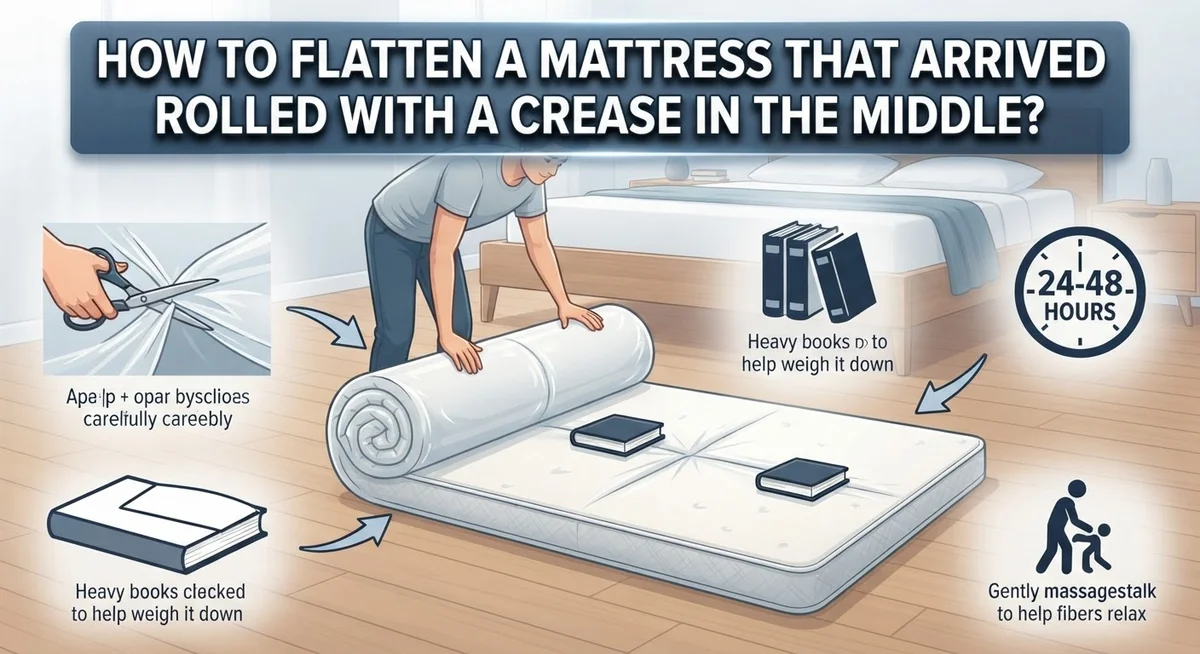
After the initial waiting period, you can speed up the process. Apply gentle heat to the creased area. Use a hair dryer on low or medium settings, moving it slowly across the crease for 5 to 10 minutes. Keep the heat source 6 inches away from the surface. Heat softens the compressed fibers and helps them relax back into place.
Next, massage the crease with your hands. Press firmly and knead the area like you’re working dough. This physical pressure helps the materials spring back. Spend several minutes working along the entire length of the crease.
Walking gently on the mattress also helps. Your body weight provides light, consistent pressure that encourages the fibers to expand. Walk back and forth across the crease a few times each day.
Monitor your progress over the next one to two weeks. Small creases typically disappear completely during this timeframe. If the crease remains after two weeks, continue the heat and massage routine. Most mattresses respond well to this combination of time, heat, and gentle pressure.
Step-by-Step: Flattening the Crease With Heat and Manual Pressure
Heat and manual pressure work together to flatten stubborn creases in your new mattress. The combination speeds up fiber recovery and helps the material return to its original shape faster than waiting alone.
Start by applying gentle heat directly to the creased area. A hair dryer on low or medium setting works well for this task. Hold it about 6 inches away from the mattress surface and move it slowly back and forth across the crease. Keep the dryer moving to avoid concentrating too much heat in one spot. Spend 5 to 10 minutes on this step, then let the area cool slightly.
Manual massage comes next. Use your hands to press and knead the warmed fibers along the crease line. Work from one end of the mattress to the other, applying firm but gentle pressure. You can use your palms, fingers, or even your knuckles depending on what feels comfortable. This hand pressure helps push the compressed material back into its proper position.
Combine heat and massage for best results. Apply warmth for a few minutes, then massage immediately while the fibers are still soft and pliable. Repeat this cycle 2 to 3 times during each treatment session.
Walk on the mattress gently after you finish the heat and massage work. Your body weight adds additional pressure that helps flatten the area. Move slowly across the surface, focusing on the creased section.
Perform this heat and pressure routine once or twice daily for the first week. Most creases respond well to this approach and flatten significantly within 3 to 7 days. Be patient if your crease is particularly deep. Some stubborn creases may need 1 to 2 weeks of consistent treatment before they disappear completely.
How Long It Takes for a Mattress to Fully Expand
Your mattress needs time to recover from compression. The expansion process is not instant, even though it looks dramatic in the first few hours.
Most rolled mattresses expand significantly within the first 24 to 48 hours after unboxing. You’ll notice the mattress puffing up and gaining thickness during this initial period. The center crease begins to lift as air fills the compressed foam and fibers.
Full expansion typically takes one to two weeks. This is the realistic timeline for your mattress to reach its final shape and firmness. Don’t expect perfection on day one. The materials inside need this extended period to fully recover their original structure.
Temperature affects how quickly expansion happens. Warmer environments speed up the process because heat helps fibers relax and expand more freely. Cold rooms slow everything down. If your bedroom is chilly, the expansion takes longer than average.
The crease itself may persist even after the mattress reaches full height. This is normal and separate from the overall expansion process. A visible crease can remain for one to two weeks even as the mattress becomes thicker and firmer underneath.
Your daily use accelerates flattening. Sleeping on the mattress, walking on it, and applying manual pressure all help speed up crease removal. A mattress that sits completely unused takes longer to flatten than one you actively use.
Monitor your mattress daily during the first week. Take photos to track progress. You should see noticeable improvement every few days. If the crease remains deeply visible after two weeks of proper care and regular use, you may need to apply additional flattening methods like heat treatment.
Patience is your biggest tool here. Most creases disappear completely without any intervention beyond time and normal use. Give your mattress the full two week window before deciding whether additional steps are necessary.
Mistakes That Can Delay or Worsen the Crease
Trying to re compress your mattress at home is one of the biggest mistakes you can make. The factory uses industrial equipment to vacuum seal mattresses. Your home tools cannot replicate that process safely. Attempting to do so may damage the foam layers or fabric permanently.
Never attempt to fold or bend your mattress back into its original rolled shape. This creates new creases and structural damage. The mattress was designed to expand once, not compress multiple times. Forcing it back down breaks internal support systems.
Placing heavy objects on the creased area too early stops natural expansion. Let your mattress expand fully before adding significant weight to that spot. Sitting or lying directly on the crease during the first few days can actually deepen it rather than flatten it.
Applying excessive heat without monitoring can harm foam materials. Some people use high temperature settings that scorch or melt the surface. Use low to medium heat only, and keep the heat source moving constantly.
Ignoring humidity levels slows the flattening process significantly. Very dry environments make foam materials stiffer and less responsive to treatment. If your home is extremely dry, adding a humidifier nearby helps the mattress fibers relax more easily.
Skipping the initial waiting period is another common error. Some people start aggressive flattening techniques within hours of unboxing. This works against the natural expansion process. Give your mattress at least 24 hours of complete rest first.
Inconsistency ruins your progress. Flattening works best when you apply methods regularly throughout each day. Doing heat and massage once then abandoning the routine allows the crease to reset. Stay committed to your chosen technique for the full one to two week period.
Troubleshooting: When the Crease Won’t Go Away
Sometimes a crease just won’t budge no matter what you try. This happens more often than you’d think with rolled mattresses. The good news is that stubborn creases rarely mean your mattress has a defect.
Persistent creases usually stem from material memory. Foam and other mattress materials can “remember” their compressed shape for longer than expected. The longer your mattress stayed rolled in the box, the stronger this memory becomes. Some materials need extra time to fully release this compression pattern.
If the crease remains after two full weeks of active flattening efforts, it’s time to reassess. Check whether you’re applying heat consistently enough. Many people use a hair dryer for just a few minutes and expect immediate results. You actually need sustained, gentle heat over multiple sessions throughout each day.
Another reason creases persist is insufficient weight distribution. Walking on the mattress helps, but you need more contact time than most people realize. Try sleeping on different areas of the mattress rather than the same spot every night. This spreads your body weight across the entire surface more evenly.
Environmental factors also play a role here. Low humidity levels slow down the natural flattening process significantly. Your mattress fibers need moisture in the air to relax properly. Consider using a humidifier in your bedroom if you live in a dry climate.
The timeline matters too. Some high density foam materials take up to four weeks to fully release their compression creases. This is completely normal and doesn’t indicate a problem with your mattress.
If a deep center sinking develops after two or more years of use, that’s different from the initial crease issue. Sinking suggests structural failure rather than a compression memory problem. But a crease that lingers for a few weeks is just your mattress still adjusting to its new life outside the box.
Crease vs. Sagging: How to Tell the Difference Over Time
A crease and sagging are two different problems. Understanding which one you have matters because the solutions differ significantly.
A crease is a fold line that runs across your mattress, usually down the center. This happens because the mattress was compressed and rolled for shipping. The crease appears as a visible line or depression. It’s a surface level issue related to how the material was packed, not a problem with the mattress structure itself.
Sagging is actual sinking that develops over time from normal use. With sagging, the entire mattress surface feels softer or lower in certain areas. This typically happens under where you sleep most. Sagging develops gradually as the foam loses its ability to bounce back.
Here’s how to tell them apart. A fresh crease appears immediately after unboxing. It stays in roughly the same place. The rest of your mattress feels firm and supportive. Sagging, by contrast, worsens slowly over months or years. It spreads across the sleeping surface. The mattress feels less supportive overall.
Watch your mattress over the first two weeks. If the line gradually fades and the area feels firmer, you have a normal crease. If the area keeps sinking deeper and spreads wider, that’s sagging.
Timing is your biggest clue. A crease from compression should improve within days or weeks. Sagging develops after two or more years of regular use. If deep center sinking appears after years of sleeping on your mattress, that’s a structural issue, not a shipping crease.
The good news is that normal creases respond well to time and gentle flattening methods. Sagging requires different solutions and may indicate your mattress has reached the end of its life. Knowing which problem you face helps you choose the right fix.
Final Thoughts
A rolled mattress with a center crease is not a reason to worry. This is a normal part of the unboxing process. Your mattress simply needs time and a little help to flatten out fully.
Steaming, gentle heat from a hair dryer, and manual massaging all work well together. Use these methods in combination for the best results. Give your mattress full attention during the first two weeks.
Remember that patience matters more than force. Foam materials need time to release their compression memory. Rushing this process often causes more problems than it solves.
Avoid the common mistakes we covered. Never try to re-fold or re-compress your mattress at home. This can damage the internal structure permanently.
Check your mattress daily during the initial period. Look for steady improvement in the creased area. Most creases resolve within one to two weeks with proper care.
Some mattresses take longer, especially those with high density foam. Give these materials up to four weeks before you worry. This extended timeline is still completely normal.
Keep the crease issue separate from sagging concerns. A crease is temporary and related to shipping compression. Sagging develops slowly over years of regular use.
If your mattress still shows a stubborn crease after a month of consistent effort, review your approach. Check that you applied heat safely and gave adequate rest time. Sometimes a fresh attempt with better technique makes all the difference.
Trust the process and stay consistent. Your mattress was designed to recover from shipping compression. With the right combination of time, gentle heat, and steady pressure, that center crease will disappear.
Soon you will have a smooth, comfortable sleeping surface ready for years of good rest.
Frequently Asked Questions
How long does it take for a rolled mattress crease to disappear on its own?
Most creases from compression flatten within 24 to 72 hours after you unbox your mattress. Your mattress needs space to expand fully. Just remove it from the box and let it sit on your bed frame undisturbed.
High density foam materials may take longer. Some need up to four weeks to fully release their compression memory. Check your mattress daily during the first two weeks to track improvement.
Can I speed up the crease removal process?
Yes. Gentle heat works well to help your mattress recover faster. A hair dryer on low heat or steaming the creased area encourages the foam to relax and expand.
Manual massaging also helps. Use your hands to gently work the crease area, pushing it flat against the bed. Combine these methods for better results. Apply heat, then massage, then allow rest time.
Is a center crease a sign that my mattress is defective?
No. Center creases are completely normal for rolled mattresses. They arrive compressed in a box, so a fold line down the middle is expected.
A crease differs from sagging. A crease is a temporary fold. Sagging is actual sinking that develops from normal use over time. If your mattress flattens within a few weeks, the crease was just from shipping compression.
What should I avoid when trying to flatten a mattress crease?
Never try to re compress your mattress at home like the factory did. This can damage the internal structure.
Don’t use excessive force or heat. Gentle methods work best. Also avoid folding or bending your mattress intentionally. These actions can cause permanent damage that differs from simple shipping creases.

Hi, I’m Ava Day, the founder and lead writer at Cozy Bed Vault. I’m passionate about sleep wellness and dedicated to helping people find their perfect mattress. Through honest reviews, detailed comparisons, and expert buying guides, I simplify the mattress shopping experience so you can sleep soundly every night.