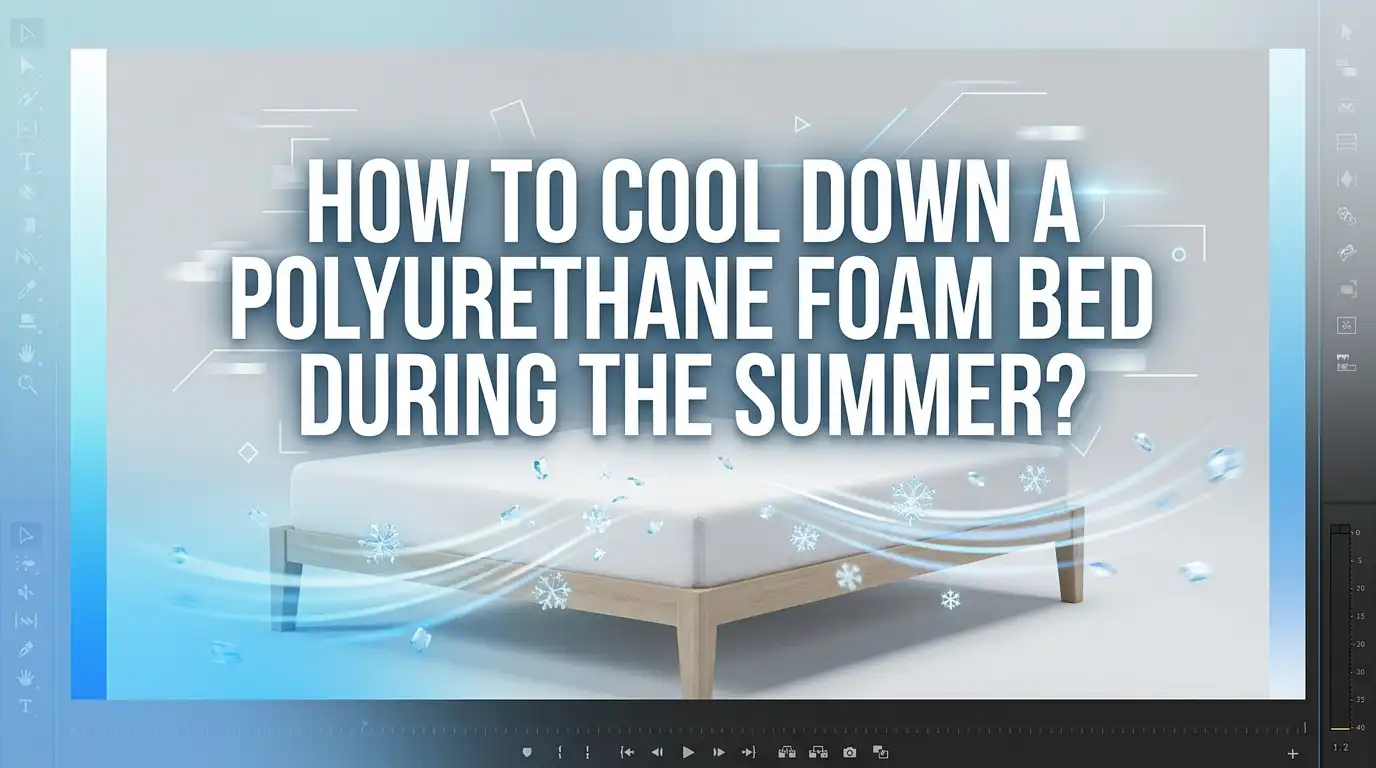
How To Cool Down A Polyurethane Foam Bed During The Summer?
Summer nights can turn your comfy foam bed into a warm trap. Polyurethane foam, the base of most memory foam mattresses, hugs your body and holds onto your heat.
That feels cozy in winter. In July, it feels like sleeping on a warm sponge. You toss, you turn, and you wake up sweaty at 3 a.m. The good news is simple. You do not need a new mattress to fix this.
You need the right mix of small changes. This guide walks you through 14 practical ways to cool down your foam bed, from quick free fixes to smart upgrades. Each method comes with clear steps, plus honest pros and cons. Let us help you sleep cool again.
In a Nutshell:
- Foam traps heat because it is dense. Polyurethane foam molds to your body and blocks airflow. More body contact means more warmth. Your goal is to add airflow and pull heat away.
- Room temperature matters most. Experts say the best sleep range is 60 to 67°F (15 to 19°C). A cooler room keeps your foam from soaking up extra heat in the first place.
- Breathable bedding beats fancy bedding. Natural fibers like cotton, bamboo, and linen let air pass and wick sweat. Synthetic sheets often trap heat and moisture against your skin.
- Toppers and pads are your fastest upgrade. A cooling topper or a wool pad sits between you and the foam. This blocks the heat transfer without the cost of a new bed.
- Combine methods for the best result. No single trick fixes everything. Stack two or three fixes together, like a fan plus cotton sheets plus a cool room, for real comfort.
- Free fixes work surprisingly well. Fans, blackout curtains, and cooler showers cost little and help fast.
Why Does Polyurethane Foam Sleep So Hot?
Let us start with the cause. Polyurethane foam is dense and closed in structure. When you lie down, the foam wraps around your body. This is the hugging feeling people love. But that same hug blocks air from moving. Heat from your body has nowhere to go, so it builds up under you.
Foam is also reactive to heat. The more parts of your body touch the foam, the warmer you sleep. Memory foam softens as it warms, which makes you sink deeper. Deeper sinking means even more contact, and even more trapped heat.
The foam acts almost like a blanket from below. Understanding this helps you pick the right fix. Most cooling tricks work by adding airflow or creating a barrier between you and the warm foam surface.
Lower Your Bedroom Temperature First
The single biggest cooling move happens before you even touch your bed. Cool the room, and the foam stays cooler too. Sleep experts recommend a bedroom between 60 and 67°F (15 to 19°C) for the best rest.
Here is a simple step to follow. Set your thermostat or air conditioner about an hour before bed. This gives the room and the mattress time to cool down. A warm room heats the foam all evening, so a head start really helps.
Pros: It works for the whole room, not just the bed. It helps every sleeper in the home.
Cons: Air conditioning raises your power bill. Not everyone owns an AC unit. Running it all night can also dry out the air, so you may want a small humidifier nearby.
Use Fans To Boost Airflow Around The Bed
Fans are cheap, easy, and effective. Moving air pulls heat and sweat away from your skin and your mattress. You do not need to drop the room temperature by much. Even gentle airflow makes a real difference.
Try this setup. Place a fan so it blows air across the surface of your bed, not just at the ceiling. A standing fan aimed at the mattress edge works well. For stronger cooling, set a fan in an open doorway or window to pull cooler outside air in.
Pros: Fans cost little to buy and run. They are quiet and portable.
Cons: Fans only move air. They do not lower the actual room temperature on very hot nights. Some people find the breeze drying or noisy, so a low setting may suit you better.
Add A Cooling Mattress Topper
A topper sits on top of your foam bed and changes how it feels. The right one creates a barrier between you and the heat trapping polyurethane. This is one of the fastest upgrades you can make.
Look for toppers made from breathable materials with open structures. Latex toppers, gel infused options, and ventilated designs all help. Place the topper directly on the mattress, then put your fitted sheet over it. That is the whole job.
Pros: A topper is far cheaper than a new mattress. It also adds comfort and protects the foam below.
Cons: Some gel toppers feel cool at first but warm up once they absorb your heat. Quality ranges widely. A poor topper can even trap more heat, so choose a breathable build over a dense one.
Try A Wool Or Cotton Mattress Pad
Natural fiber pads are a classic cooling trick for good reason. Wool may sound warm, but it is a smart year round material. Wool wicks moisture and balances temperature, keeping you cool in summer and warm in winter.
A quilted cotton pad stuffed with wool sits between your sheet and the foam. It pulls sweat away from your body and lets it evaporate. This keeps the surface dry and comfortable. To use one, simply lay it over the mattress and tuck it in like a fitted sheet.
Pros: Natural fibers breathe well and manage moisture. Wool resists odor and lasts a long time.
Cons: Good wool pads cost more than basic synthetic ones. Some need careful washing, and a few people find wool slightly itchy without a sheet on top.
Switch To Breathable Cotton Or Bamboo Sheets
Your sheets touch your skin all night, so they matter a lot. Many people sleep on synthetic sheets that trap heat and hold sweat. Switching fabrics is a small change with a big payoff.
Choose natural breathable fibers like cotton, bamboo, or linen. Cotton lets air pass and feels cool. Bamboo wicks moisture well. Linen has an open weave that stays airy. Be a little careful with very high thread count cotton, since tight weaves can block airflow.
Pros: Natural sheets breathe, wick sweat, and feel fresh. They are widely available and easy to wash.
Cons: Quality natural sheets can cost more than synthetic ones. Linen wrinkles easily and feels rough at first, though it softens over time with washing.
Keep Curtains And Blinds Closed During The Day
Sunlight pouring through your window heats the room for hours. By bedtime, your foam has already soaked up that warmth. Stopping heat before it enters is easier than removing it later.
The fix is simple. Close your curtains and blinds during the hottest part of the day, usually late morning through afternoon. Blackout curtains work best because they block both light and heat. If your window faces the sun directly, this single habit can lower your room temperature by several degrees.
Pros: This costs nothing if you already own curtains. It works passively all day with no effort.
Cons: A dark room during the day feels gloomy to some people. Blackout curtains cost money upfront. You also lose natural daylight, which some people use to stay alert.
Take A Cool Shower Before Bed
Your body temperature shapes how hot the foam feels. If you climb into bed warm, you heat the foam faster. A cool shower lowers your core temperature before sleep. You start the night cooler, so the foam takes longer to warm up.
Here is the routine. Take a lukewarm or cool shower about 30 minutes before bed. Surprisingly, a slightly warm shower also works, because it sends blood to your skin and helps you shed heat afterward. Either way, you cool down before you lie on the foam.
Pros: It is free, relaxing, and helps you fall asleep faster. It also rinses off sweat and oils.
Cons: The cooling effect is short. On a very hot night, you may warm up again quickly once you settle into the foam. It is best paired with other fixes.
Use Cooling Gel Pads Or Phase Change Materials
Gel pads and phase change materials, often called PCM, absorb body heat and feel cool to the touch. They work well, but they have a limit you should understand. They cool you only until they reach your body temperature.
To get the most from them, place the gel pad under your hips and shoulders, the warmest contact points. Some people chill the pad briefly before bed for an extra boost. Once the material absorbs enough heat, the cooling fades until it cools again.
Pros: They feel instantly cool and target hot spots. They are thin and easy to add to any bed.
Cons: The cooling does not last all night. Once the gel matches your body heat, it stops helping. Cheaper pads can feel stiff or crinkly under a sheet.
Improve Bedroom Ventilation At Night
Stale, trapped air keeps your whole room warm, foam included. Fresh moving air does the opposite. The trick is timing. Outdoor air is coolest in the late evening and early morning.
Try this. Open windows on opposite sides of the room to create a cross breeze once the outside temperature drops below the inside temperature. A fan in one window pushing air out, with another window open, speeds this up. This flushes warm air out and pulls cool air in across your bed.
Pros: Fresh air costs nothing and improves air quality too. Cross breezes cool a room fast in dry climates.
Cons: This only works when outside air is cooler. In humid areas, open windows add moisture and can make sleep feel sticky. Open windows may also bring noise, pollen, or bugs.
Choose Lightweight And Breathable Pajamas
What you wear changes how the foam feels against you. Heavy or synthetic sleepwear traps heat and sweat right where your body meets the bed. Light clothing lets heat escape instead of building up.
Pick loose, light pajamas made from cotton or bamboo. Loose cuts allow air to move around your body. Some people sleep in very little during heat waves, which works too. The key is choosing fabrics that breathe and wick moisture rather than hold it.
Pros: It is an easy and cheap change. Breathable sleepwear keeps your skin dry and comfortable.
Cons: Very light clothing offers little warmth if the AC kicks on overnight. Some synthetic moisture wicking pajamas still trap heat, so always check the fabric label before buying.
Flip And Rotate Your Mattress Regularly
Heat builds up in the spots where you sleep every night. The same area absorbs your warmth, and the foam there stays warm longer. Moving your sleep position around the mattress spreads this out.
If your foam bed is one sided, you cannot flip it, but you can rotate it. Turn the mattress 180 degrees every few months so the head becomes the foot. This evens out wear and lets heat soaked areas rest and cool. A double sided foam mattress can be fully flipped for the same benefit.
Pros: It is free and extends the life of your mattress. It keeps support even across the surface.
Cons: Foam mattresses are heavy and awkward to move alone. Rotating does not actively cool the foam, it only spreads heat exposure over time. You may need help to lift it.
Stay Hydrated And Cool Your Body Naturally
Sometimes the heat problem is your body, not just the bed. A dehydrated body struggles to regulate temperature and sweats less efficiently. Staying hydrated helps your body cool itself naturally.
Drink water through the day, not just at night. Keep a glass of water by your bed for quick sips. You can also place a cool damp cloth on your neck, wrists, or forehead before sleep. These pulse points cool your blood and lower how hot the foam feels.
Pros: Hydration helps your whole body, not just your sleep. The damp cloth trick is free and fast.
Cons: Drinking too much before bed means waking up for the bathroom. A damp cloth warms up quickly, so the effect is short. These help most when combined with room cooling.
Consider A Mattress With Better Airflow Over Time
If you have tried everything and still sleep hot, your foam itself may be the issue. Dense polyurethane simply traps heat by design. Over the long term, a more breathable mattress may solve the root problem.
When the time comes, look for gel infused foam, ventilated foam with air channels, latex, or hybrid designs. Hybrids mix foam with coil springs, and the coils allow air to flow underneath you. Gel and air channels help, though results vary between brands and people.
Pros: A breathable mattress fixes the heat issue at its source. Hybrids and latex sleep noticeably cooler for many people.
Cons: A new mattress is a big expense. Gel infused foam often cools only at first before warming up. Performance differs widely, so read reviews and test before you commit.
Frequently Asked Questions
Why does my memory foam bed feel hotter than other mattresses?
Memory foam is dense and molds tightly to your body. This contact blocks airflow and traps your body heat underneath you. The more your body sinks in, the warmer it feels. Other mattresses, like innerspring or hybrid models, have coils that let air move freely, so they release heat faster and sleep cooler.
Do cooling gel toppers really keep you cool all night?
Gel toppers cool you, but only up to a point. They absorb your body heat and feel cool at first. Once the gel reaches your body temperature, the cooling effect fades. They work best alongside other methods like fans, cool sheets, and a cool room. Do not expect a gel topper alone to fix a hot foam bed completely.
What is the best room temperature for cooling down a foam bed?
Sleep experts recommend keeping your bedroom between 60 and 67°F (15 to 19°C). A cooler room stops the foam from absorbing extra heat all evening. Set your thermostat about an hour before bed so the room and mattress have time to cool. This single step often makes the biggest difference for hot sleepers.
Can I cool down my foam bed without spending money?
Yes, several free fixes work well. Use a fan to move air across the bed, close curtains during the day, and open windows at night for a cross breeze. A cool shower before bed and a damp cloth on your pulse points also help. Combine two or three of these free tricks for the best cooling effect.
Are natural sheets better than synthetic ones for hot sleepers?
Natural fibers like cotton, bamboo, and linen usually sleep cooler. They breathe well and wick sweat away from your skin. Synthetic sheets often trap heat and moisture against your body, which makes a foam bed feel even hotter. If you sleep hot, switch to breathable natural sheets and avoid very tight, high thread count weaves.
Will a fan alone fix my hot foam mattress?
A fan helps a lot, but it rarely fixes the problem by itself. Fans move air and pull heat away, yet they do not lower the actual room temperature. On very hot nights, a fan works best when paired with cool sheets, a breathable topper, and good ventilation. Stacking methods together gives you the coolest, most comfortable sleep.

Hi, I’m Ava Day, the founder and lead writer at Cozy Bed Vault. I’m passionate about sleep wellness and dedicated to helping people find their perfect mattress. Through honest reviews, detailed comparisons, and expert buying guides, I simplify the mattress shopping experience so you can sleep soundly every night.