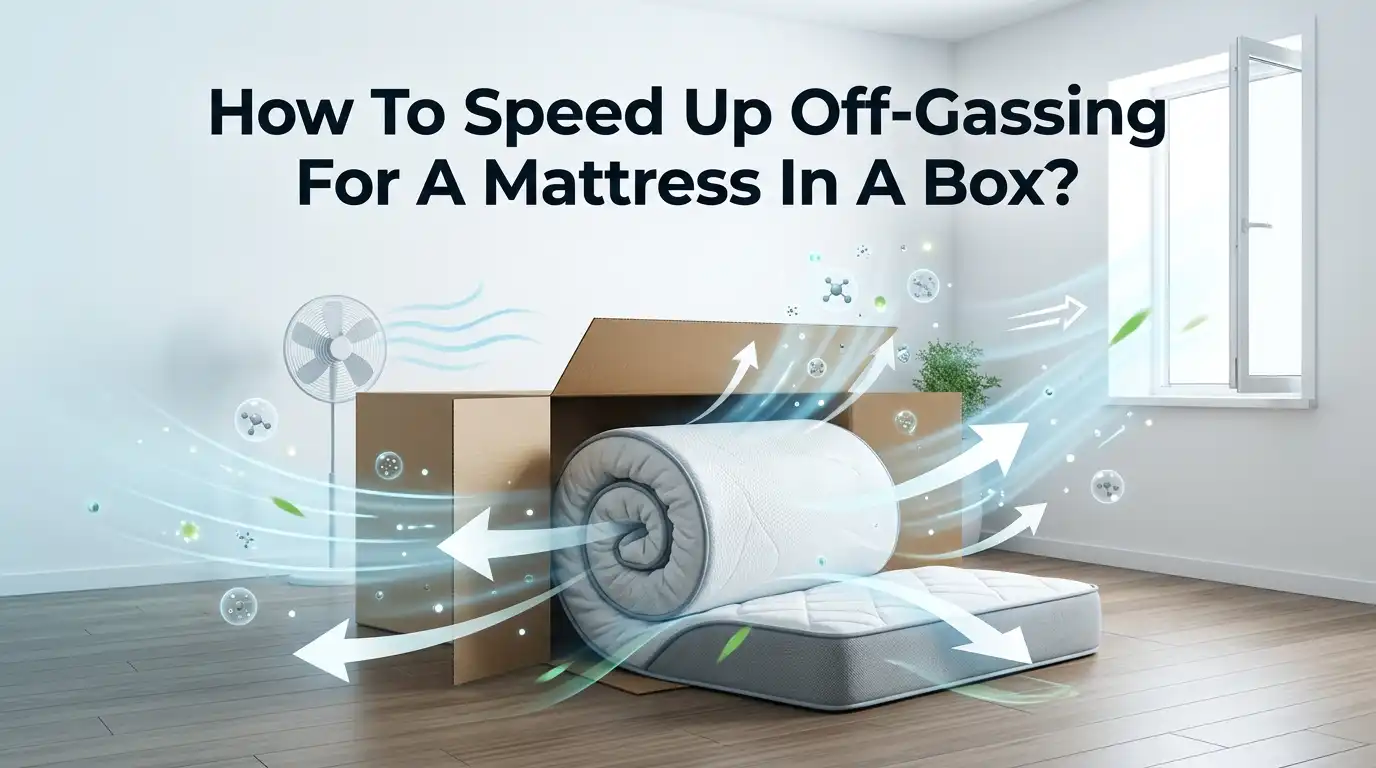
How To Speed Up Off-Gassing For A Mattress In A Box?
You just opened your new mattress in a box. It puffed up nicely. But then you noticed a strange chemical smell filling your bedroom. That smell is called off-gassing, and it is completely normal. Still, nobody wants to sleep on a bed that smells like a fresh coat of paint or a new car interior.
The good news is simple. You can speed up off-gassing with a few easy steps. Most of these methods use items you already own.
Some take a few hours. Others work overnight. This guide gives you clear, step-by-step solutions to clear that odor fast and get back to comfortable sleep.
Key Takeaways
- Off-gassing is the release of VOCs (volatile organic compounds) from foam, adhesives, and flame barriers. It creates that new mattress smell you notice right after unboxing.
- The smell is usually harmless for most people. Most odors fade within a few hours to a few days. Stronger smells can take up to two weeks in a closed room.
- Fresh air is your best tool. Open windows, run fans, and keep the room ventilated. Air circulation removes VOCs faster than any other single method.
- Baking soda and activated charcoal absorb odors. Sprinkle, wait, then vacuum. These natural items pull trapped smells out of the foam surface.
- Gentle warmth helps, but extreme heat hurts. A warm, airy room speeds the process. Direct sunlight for long hours or a space heater pointed at foam can damage your mattress.
- Choose certified low VOC mattresses next time. Look for trusted foam certifications to reduce odor from the start.
What Is Mattress Off-Gassing And Why Does It Happen?
Off-gassing is the process where your new mattress releases gases into the air. These gases come from volatile organic compounds, often shortened to VOCs. Manufacturers use these chemicals in foam, glue, and flame barriers during production.
When the mattress sits compressed inside a tight plastic roll, the gases stay trapped. The moment you unbox it, those gases escape. That is the sharp chemical smell you notice in the first hours.
Memory foam and polyurethane foam off-gas the most because they are dense and full of synthetic material. The denser the foam, the more it holds and the longer it releases. Latex and innerspring beds usually smell less.
Understanding this helps you stay calm. The smell is a normal sign of a fresh foam mattress, not a defect.
How Long Does Off-Gassing Normally Last?
Most people want a clear timeline. The honest answer is that it varies by mattress type and room conditions. The strongest part of the smell usually fades within a few hours to three days.
For many foam beds, the noticeable odor clears in three to seven days with good airflow. Some dense memory foam models hold the smell longer. In a closed room with poor ventilation, faint traces can linger for up to two weeks.
Several factors change the timeline. A warm, breezy room clears odors quicker. A cold, sealed room slows everything down. The age of the foam matters too. A mattress packed and shipped recently off-gasses more than one that sat in a warehouse for months.
Patience plus airflow equals the fastest result. The methods below cut this time down significantly.
Is Off-Gassing Harmful To Your Health?
This is the question that worries most new buyers. The reassuring answer is that off-gassing is generally low risk for healthy adults. The VOC levels from a certified mattress are usually small and temporary.
That said, some people are more sensitive. High concentrations of VOCs in a closed room can cause headaches, watery eyes, a scratchy throat, or mild nausea. These symptoms usually fade once the smell clears and the air freshens up.
People with asthma, allergies, or chemical sensitivity should take extra care. Air the mattress in a spare room before sleeping on it if you are sensitive. Children, pregnant people, and those with breathing conditions benefit from extra ventilation too.
The simple fix is airflow. Open windows and run fans to keep VOC levels low. If a smell ever feels overpowering or makes you feel sick, give it more time before use.
Air Out Your Mattress In A Well Ventilated Room
This is the single most effective method, and it costs nothing. Fresh air pulls VOCs out of the foam and carries them away. The more air that moves across the surface, the faster the smell leaves.
Start by unboxing the mattress in a room with windows. Open every window you can. Cross ventilation works best, so open windows on opposite walls to create a gentle draft through the space.
If you have a spare bedroom or a garage, use it. Airing the mattress away from where you sleep lets you rest comfortably while the bed clears out. Leave the sheets off so the whole top surface breathes.
Pros: Free, easy, and very effective. No products needed. Cons: Slow on its own in cold or humid weather. You may need a spare room, which not everyone has.
Use Fans To Boost Air Circulation
Open windows help, but moving air helps more. A fan pushes VOCs off the mattress surface and out of the room much faster. This pairs perfectly with the airing method above.
Place a standard box fan or oscillating fan near the mattress. Point it across the surface, not straight down into it. Angle the airflow so it sweeps over the foam and pushes the smell toward an open window.
For the best result, set one fan blowing fresh air in and position the mattress so stale air gets pushed out another opening. This creates a steady flow that never lets the gases settle.
Run the fan for several hours, or overnight if possible. Flip the mattress once so both sides get airflow. Pros: Cheap, fast, and uses common household items. Cons: Uses some electricity, and a noisy fan can be distracting in a small home.
Sprinkle Baking Soda To Absorb Odors
Baking soda is a classic odor fighter, and it works well on mattresses. It neutralizes trapped smells rather than just covering them up. This method is natural, safe, and very affordable.
Start with bare foam and no sheets. Sprinkle a generous, even layer of baking soda across the entire top surface. Use your hand or a sieve to spread it smoothly so it reaches the whole area.
Let it sit for several hours. For strong smells, leave it overnight or up to twenty four hours. The baking soda slowly draws out moisture and odor from the surface layer of the foam.
When the time is up, vacuum it all off with an upholstery attachment. Pros: Cheap, natural, and chemical free. Also removes dust. Cons: Only treats surface odor, not deep VOCs. Fine powder can clog some vacuums if you rush.
Try Activated Charcoal Or Air Purifying Bags
Activated charcoal is a quiet workhorse for odor removal. It traps VOC molecules inside its tiny pores and pulls them out of the air. This makes it a strong helper for stubborn mattress smells.
Place bamboo charcoal bags or bowls of activated charcoal near and around the mattress. Set a few bags directly on top of the bed and a couple underneath the frame for full coverage.
Charcoal works slowly but steadily. Leave the bags in place for a day or two while the mattress airs out. The charcoal keeps absorbing odors the whole time without any effort from you.
Many charcoal bags can be reused. Set them in sunlight for a few hours to refresh them. Pros: Reusable, fragrance free, and works without electricity. Cons: Slower than fans, and you need to buy the bags first.
Run An Air Purifier To Clear VOCs
An air purifier cleans the whole room while your mattress off-gasses. A model with an activated carbon filter is best because carbon captures VOCs and gas molecules. Standard HEPA only filters help with particles, so look for carbon too.
Place the purifier in the same room as the mattress. Set it to a higher fan speed during the first day to move and clean as much air as possible. Keep it running while you air the bed out.
This method works great alongside open windows and fans. The purifier catches gases that linger in the room air after they leave the foam. It also reduces dust and allergens at the same time.
Pros: Cleans the entire room, not just the bed. Helpful for sensitive people. Cons: A good carbon purifier costs money, and filters need replacing over time.
Use Gentle Warmth To Speed Things Up
Heat makes VOCs evaporate faster, so a warm room speeds off-gassing. The key word is gentle, because too much heat can damage foam. Aim for comfortable warmth, not a sauna.
A naturally warm room around normal living temperature works well. Combine moderate warmth with strong airflow for the best effect. The warmth loosens the gases and the airflow carries them away.
You can briefly raise the room temperature with central heating during the day. Keep windows cracked so the released gases still have somewhere to escape. Never trap heat in a sealed room, since that just concentrates the smell.
Avoid pointing a space heater directly at the mattress. Pros: Speeds evaporation and works with airflow. Cons: Risky if overdone. Direct, intense heat can warp foam and may even be a fire concern.
Place It In Sunlight (But Be Careful)
Sunlight and fresh outdoor air can refresh a new mattress. Sun provides warmth and natural UV that help reduce odors and surface bacteria. A breezy, sunny day is ideal for a quick airing.
Carry the mattress outside to a clean, dry patio or balcony if you can. Lean it upright or lay it flat on a clean sheet so both sides catch air. A few hours of morning or late afternoon sun works nicely.
Here is the important warning. Do not leave foam in strong, direct sun for many hours. Intense heat and UV over a long time can yellow, dry out, or weaken foam materials.
Bring it back inside before the hottest part of the day. Pros: Free, natural, and adds a fresh outdoor scent. Cons: Weather dependent, hard to move heavy mattresses alone, and risky for foam if left too long.
Vacuum The Mattress Regularly
Vacuuming removes more than dust. It pulls loose particles and surface residue out of the foam, which helps the smell clear. It also follows up perfectly after a baking soda treatment.
Use the upholstery or brush attachment on your vacuum. Move slowly across the entire surface so the suction has time to lift material from the top layer. Cover the sides and edges too, not just the top.
Repeat the vacuuming over the first few days while the bed airs out. Each pass removes a little more trapped material and refreshes the surface. Pair it with open windows for the strongest result.
This is a simple habit that also keeps your new mattress cleaner long term. Pros: Easy, free if you own a vacuum, and great for general hygiene. Cons: Only reaches the surface layer, and it will not remove deep VOCs on its own.
Try A Light Vinegar Or Lemon Solution
A mild natural spray can freshen the surface and cut lingering odor. White vinegar neutralizes smells, and its own sharp scent fades quickly as it dries. Lemon adds a clean, fresh note.
Mix equal parts white vinegar and water in a spray bottle. Mist the surface very lightly, never soaking it, because foam holds water and dries slowly. A light, even spritz is all you need.
Let the mattress air dry fully with a fan running before you put any sheets on. You can add a few drops of lemon juice or a mild citrus essential oil for a pleasant finish.
Always test a small hidden spot first to make sure the fabric reacts well. Pros: Natural, cheap, and leaves a fresh smell. Cons: Risk of dampness if you overspray. Foam must dry completely to avoid mold.
Smart Buying Tips To Reduce Off-Gassing Next Time
Prevention beats treatment. Choosing the right mattress from the start means far less off-gassing later. A few smart checks at purchase time save you trouble.
Look for trusted foam certifications that confirm low VOC content. Certifications like CertiPUR-US signal foam made without certain harmful chemicals and tested for lower emissions. Natural latex and organic options also tend to smell less.
Read reviews and ask the seller how strong the off-gassing is. Some brands ship beds that air out within a day. Unbox your new mattress as soon as it arrives, since fresh unrolling lets gases escape sooner.
Plan ahead by opening it in a ventilated room a day or two before you need it. Pros: Less odor, healthier air, and peace of mind. Cons: Certified and natural mattresses can cost more upfront.
Frequently Asked Questions
How long should I wait before sleeping on my new mattress?
Most makers suggest waiting at least a few hours for the mattress to expand and start clearing. For comfort, give it twenty four to seventy two hours with good airflow. Sensitive people should wait longer and air it in a spare room first.
Is the new mattress smell dangerous for babies or pets?
The odor is usually low risk, but babies and pets are more sensitive to VOCs. Air the mattress fully in a separate room before use, and keep ventilation strong. Wait until the smell is gone before letting a baby or pet near it.
Can I speed up off-gassing in winter with windows closed?
Yes, but it takes more effort. Run fans, use an air purifier with a carbon filter, and add charcoal bags. Crack a window for short periods even in cold weather to let gases escape and refresh the room air.
Does off-gassing mean my mattress is low quality?
No, off-gassing happens with many quality foam mattresses. It is a normal result of how synthetic foam is made and packaged. A strong smell relates to fresh foam and tight packing, not poor quality on its own.
Will baking soda damage my memory foam mattress?
Baking soda is safe for memory foam when used correctly. Sprinkle it on the surface, let it sit, then vacuum it all off completely. Avoid getting the foam wet, and make sure no powder stays trapped deep inside.
What if the smell never fully goes away?
Most odors clear within two weeks. If a strong chemical smell lasts much longer despite airing, contact the seller. A persistent, overpowering odor could point to a defect, and many brands offer returns or exchanges.

Hi, I’m Ava Day, the founder and lead writer at Cozy Bed Vault. I’m passionate about sleep wellness and dedicated to helping people find their perfect mattress. Through honest reviews, detailed comparisons, and expert buying guides, I simplify the mattress shopping experience so you can sleep soundly every night.