Why Does My New Memory Foam Mattress Smell Like Chemicals?
You unboxed your new memory foam mattress with excitement. Then a sharp, chemical smell hit your nose. It filled the whole bedroom in minutes. You might feel confused, worried, or even a little disappointed.
Take a deep breath. This smell is normal, and it is almost always harmless. Memory foam releases trapped gases when you open it for the first time. This process has a name. It is called off gassing. Most of the smell fades fast.
In this guide, you will learn why your mattress smells this way. You will get clear, step by step solutions to clear the air. You will also learn when the smell signals a real problem. Let us fix this together.
Key Takeaways
- The chemical smell is off gassing. Memory foam traps tiny gas particles called VOCs during manufacturing. These escape into the air when you open the mattress. This release creates that strong “new mattress” odor.
- The smell is usually safe. Most experts agree the risk is very low for healthy people. The chemicals appear in small amounts. About 2 percent of users report feeling bothered by the smell.
- Most odors fade within days. The strongest smell often clears in a few hours. Lighter traces can linger for a few days up to two weeks. Density and foam type affect the timeline.
- Fresh air is your best tool. Good ventilation speeds up the process more than anything else. Open windows, run fans, and give the room airflow. Baking soda and activated charcoal help absorb stubborn smells.
- Certification matters. Look for the CertiPUR-US label. Certified foams meet strict limits on harmful chemicals and emissions. They smell less and clear faster.
- Know the warning signs. A musty or moldy smell is different from off gassing. That smell may point to moisture or a defect. Contact the seller if it does not go away.
What Is Off Gassing in a Memory Foam Mattress?
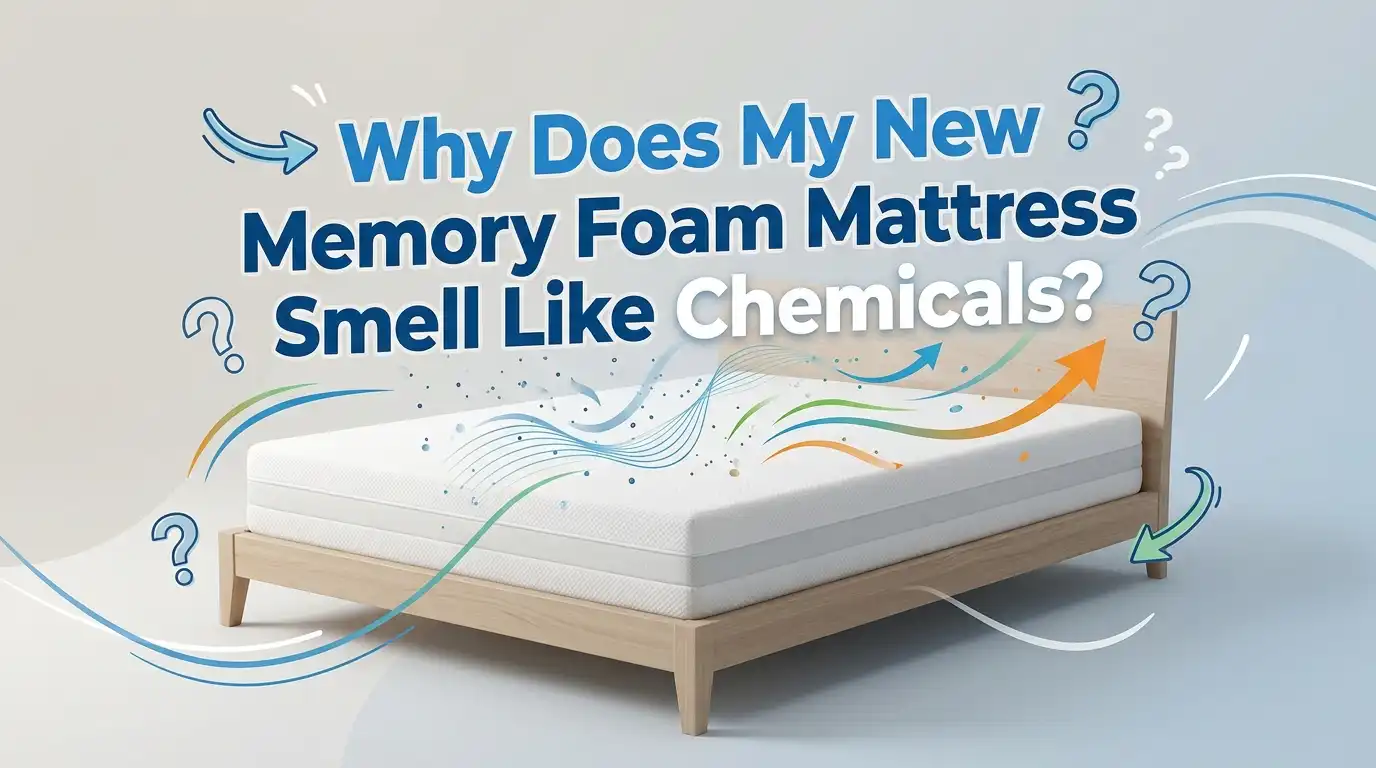
Off gassing is the release of gas from your mattress materials. The gases are called volatile organic compounds, or VOCs. These compounds turn into gas at room temperature. That is why you smell them so quickly.
Memory foam is made from polyurethane and other chemicals. During production, tiny bits of these chemicals stay trapped inside the foam. The mattress also sits compressed in plastic for shipping. This traps the gases even more.
When you cut open the plastic, the foam expands. The trapped gases rush out all at once. This creates the strong chemical smell. Think of it like opening a fresh can of paint. The odor is sharp but temporary. The foam needs to breathe. Once the gases escape, the smell drops fast.
Why Does My New Mattress Smell So Strong?
Some mattresses smell much stronger than others. Several factors decide how intense that first whiff feels. Understanding them helps you set the right expectations.
Foam density plays a big role. Higher density foam holds more material. More material means more trapped gas. So a thick, dense mattress often smells stronger than a thin one.
The packaging matters too. Most memory foam ships rolled and vacuum sealed. The longer it stays compressed, the more gas builds up inside. When you finally open it, all that gas escapes together.
Cheaper foams can smell worse. Lower quality materials and adhesives release more VOCs. Budget mattresses without certification often have stronger odors. Room conditions also count. A warm, closed room traps the smell. A cool, airy room clears it faster. Each of these factors stacks together.
Is the Chemical Smell Dangerous to My Health?
This question worries most new owners. The short answer is reassuring. For most healthy adults, the smell poses very little risk. The chemicals appear in low concentrations.
Still, some people feel mild effects. VOCs can cause headaches, dizziness, nausea, or eye and throat irritation in sensitive people. These effects usually fade as the smell clears. They rarely last long.
Certain groups should take extra care. People with asthma, allergies, or chemical sensitivities may react more. Pregnant women and small children also deserve caution. If you feel unwell, leave the room and add more ventilation.
The good news is clear. Modern certified foams must meet strict emission limits. These limits keep harmful chemicals very low. The risk for the average sleeper stays minimal. When in doubt, air the mattress out before you sleep on it.
How Long Does the Mattress Smell Last?
You want a clear timeline. The honest answer depends on your mattress and your room. Most smells follow a predictable pattern.
The strongest odor often fades within a few hours. This is the peak burst of gas right after you unbox it. After that first rush, the smell drops sharply each day.
For many people, the worst is over in three to seven days. Lighter traces can hang around longer. Some mattresses take up to two weeks to fully clear. Dense foam takes more time than thin foam.
Your room speeds things up or slows them down. Good airflow can cut the timeline in half. A sealed, humid room makes it last longer. If you smell strong chemicals after three or four weeks, something may be wrong. We will cover that warning sign later in this guide.
Step by Step: Air Out Your Mattress the Right Way
Ventilation is the single best fix. Fresh air pulls the gases out and carries them away. Follow these steps to do it right.
First, unbox the mattress as soon as it arrives. Do not let it sit wrapped for days. The plastic traps gas and makes the smell worse.
Next, place it in a well ventilated room. Open every window you can. Let fresh air flow across the surface. Cross ventilation works best, so open windows on two sides if possible.
Then, give it time to expand and breathe. Leave it bare with no sheets for at least 24 hours. A few days is even better.
Pros: This method is free, simple, and very effective. It needs no products.
Cons: It takes time. You may need a spare room while you wait. Cold or rainy weather makes open windows harder.
Use a Fan to Speed Up the Process
A fan turns slow ventilation into fast ventilation. Moving air pushes the gases away from the foam much quicker. This simple trick makes a real difference.
Point an electric fan directly at the mattress. Set it to a medium or high speed. Let it run for several hours. The constant airflow stops gases from settling back into the room.
For best results, combine the fan with open windows. The fan pushes stale air out and pulls fresh air in. This creates a steady current across the foam. You can also place a second fan in the window to vent air outside.
Pros: Fans work fast and cost little to run. Most homes already have one. The setup takes seconds.
Cons: Running a fan uses some electricity. The noise can bother you if you need the room. A fan alone works less well without open windows.
Sprinkle Baking Soda to Absorb Odors
Baking soda is a natural deodorizer. It does not mask smells. It actually absorbs them from the foam surface. This makes it a favorite trick for stubborn odors.
Remove all sheets and covers first. Then sprinkle a generous, even layer of baking soda across the whole mattress. Cover the entire top surface, not just one spot.
Let it sit for several hours. Many people leave it overnight or for a full 24 hours. The longer it sits, the more odor it pulls out. After waiting, vacuum it all up with an upholstery attachment.
Pros: Baking soda is cheap, safe, and easy to find. It is non toxic and works on many smells.
Cons: You must vacuum carefully to remove every bit. It needs hours to work. Very deep odors may need a second round.
Try Activated Charcoal to Trap Chemicals
Activated charcoal is a powerful odor trap. It has millions of tiny pores. These pores grab gas particles and hold them tight. This makes it great for clearing chemical smells from the air.
Place activated charcoal bags around your mattress. Set them on the surface and nearby on the floor. Leave them in place for a day or two. The charcoal slowly pulls VOCs out of the surrounding air.
You can buy bamboo charcoal bags made for this purpose. They are reusable. Just place them in sunlight now and then to refresh them.
Pros: Charcoal works quietly with no power needed. It is reusable and lasts for months. It targets the air, not just the surface.
Cons: It works slower than a fan. You may need several bags for a full mattress. Buying enough bags adds a small cost upfront.
Use Sunlight and Fresh Outdoor Air
The sun is a natural cleaner. Fresh outdoor air and gentle warmth help gases escape faster. If you have the space, this method works well.
Move the mattress to a clean, dry outdoor area. A garage, balcony, or covered patio works fine. Let it sit for a few hours during a warm, dry day. The warmth helps the foam release trapped gas.
Be careful with direct, harsh sunlight. Too much heat or strong UV can damage memory foam over time. A shaded, breezy spot is safer than blazing midday sun. Bring it back inside before evening dew sets in.
Pros: This method is completely free. Warm air speeds up off gassing naturally. It works without any products.
Cons: You need outdoor space and good weather. Moving a heavy mattress is hard work. Direct sun and moisture can harm the foam if you are careless.
Control Room Temperature and Humidity
Your room conditions shape how fast the smell clears. Warm air helps VOCs disperse faster. Cool, damp air slows the whole process down. A few adjustments help a lot.
Keep the room comfortably warm during off gassing. Gentle heat encourages the foam to release its gases. Do not aim a space heater directly at the mattress, though. Extreme heat can damage the foam.
Watch the humidity too. High moisture in the air can trap odors and even invite mold. Use a dehumidifier if your room feels damp. Dry air helps the smell fade and keeps the foam healthy.
Pros: Small changes need little effort. A dehumidifier also protects against mold. Warmth speeds up natural off gassing.
Cons: Heating and dehumidifiers use power. You must avoid overheating the foam. Climate control may be hard in very humid regions.
Wash Your Bedding and Use a Mattress Protector
Your sheets and covers can hold smells too. Fresh bedding makes a big difference in how your bed feels. This step finishes the job.
Wash all your sheets, pillowcases, and covers before use. Clean fabric will not add its own packaging odor to the mix. Use your normal detergent and dry them fully.
A breathable mattress protector adds another layer of help. Choose one made from cotton or another natural, breathable fabric. It guards against spills and sweat without trapping odors.
Wait until the worst smell clears before you cover the mattress. A protector too early can lock gases in.
Pros: Fresh bedding feels clean and pleasant. A protector extends the life of your mattress. It guards against future stains and moisture.
Cons: Washing takes time and energy. A protector adds a small cost. The wrong, non breathable cover can trap smells instead.
Choose Certified Low VOC Foam to Avoid the Problem
The best fix is prevention. Certified foam smells less from the start. If you are still shopping, this matters most. Look for trusted certification labels.
The CertiPUR-US label is a strong sign of quality. Certified foams are made without certain harmful chemicals. They meet strict limits on VOC emissions for indoor air. They contain no formaldehyde and no certain flame retardants.
Other labels like OEKO TEX also show low chemical content. These certified mattresses clear faster and smell weaker. They give peace of mind for sensitive sleepers and families with children.
Pros: Certified foam means fewer chemicals and a lighter smell. It clears quickly and feels safer. It protects sensitive people best.
Cons: Certified mattresses can cost more. The label does not promise zero smell. Some off gassing still happens, just less of it.
When the Smell Is Not Normal: Spotting a Real Problem
Most smells are harmless off gassing. But some smells signal a true problem. You need to know the difference. Trust your nose here.
Normal off gassing smells sharp and chemical, like paint or plastic. It fades each day. A musty, damp, or moldy smell is different. That smell points to moisture inside the foam, not off gassing.
A moldy smell may mean the mattress got wet during shipping or storage. Mold smell does not fade with airflow. It gets worse over time. You may also notice dark spots or stains.
If the chemical smell stays strong after three to four weeks, that is also a red flag. Contact the seller right away. Ask about their return or warranty policy. A healthy mattress should never keep a strong odor for over a month.
Frequently Asked Questions
How long should I wait before sleeping on my new memory foam mattress?
Wait at least 24 hours after unboxing. This lets the foam expand fully and release its first burst of gas. A few days is even better if you can manage it. If the smell still feels strong, give it more time and add ventilation.
Can off gassing make me sick?
For most healthy people, no. Some sensitive people feel mild headaches, nausea, or throat irritation. These effects usually fade as the smell clears. If you feel unwell, leave the room and add more airflow. People with asthma or allergies should take extra care.
Does the chemical smell mean my mattress is toxic?
Not usually. The smell comes from low levels of VOCs, which are normal in new foam. Certified foams keep these chemicals well within safe limits. The smell is unpleasant but rarely dangerous. A musty smell is the one to worry about, since it may mean mold.
Will the smell ever go away completely?
Yes, in almost all cases. The strongest odor fades within hours to a few days. Lighter traces clear within one to two weeks. Good ventilation speeds this up. If a strong smell lasts beyond a month, contact your seller.
What is the fastest way to remove the smell?
Combine methods for the best speed. Open windows, run a fan, and sprinkle baking soda all at once. Add activated charcoal bags nearby. Keep the room warm and dry. This combination clears the smell much faster than any single step.
Is it safe for my baby or child to sleep on a new memory foam mattress?
Air it out fully first. Choose a certified low VOC mattress for children whenever possible. Let it off gas for several days in a ventilated room before use. If you smell strong chemicals, wait longer. When in doubt, ask your pediatrician for guidance.

Hi, I’m Ava Day, the founder and lead writer at Cozy Bed Vault. I’m passionate about sleep wellness and dedicated to helping people find their perfect mattress. Through honest reviews, detailed comparisons, and expert buying guides, I simplify the mattress shopping experience so you can sleep soundly every night.