How To Fix A Memory Foam Mattress That Traps Body Heat?
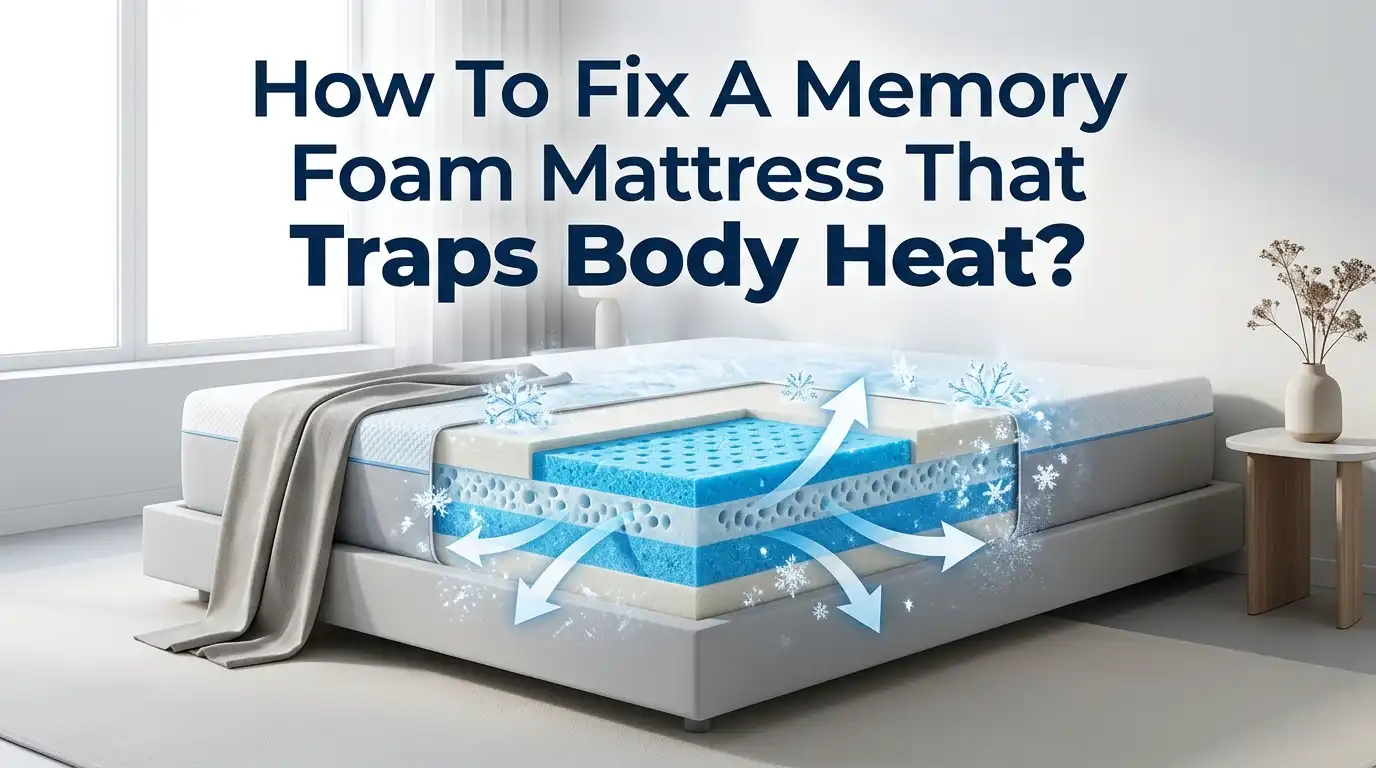
Do you wake up sweaty and frustrated on your memory foam mattress? You are not alone. Memory foam feels amazing when you lie down, but it has one big flaw. It holds onto your body heat.
The foam softens around your shape, and that close hug blocks airflow. Soon, your bed feels like a warm oven. The good news is simple.
You can fix this problem without buying a brand new mattress. This guide gives you clear, practical steps to cool down your memory foam bed tonight.
In a Nutshell:
- Airflow is your best friend. Memory foam traps heat because it has a dense, closed cell structure. Improving air circulation around and under your mattress makes the biggest difference for most sleepers.
- A cooling topper changes everything. Adding a gel infused, latex, or phase change material topper sits between you and the hot foam. This creates an instant cooler surface without major cost.
- Your bedding matters more than you think. Swapping thick synthetic sheets for breathable cotton, bamboo, or linen helps sweat evaporate and heat escape from your body all night.
- The room sets the stage. Keeping your bedroom between 60 and 67 degrees Fahrenheit with a fan or air conditioner gives the foam less heat to trap in the first place.
- The base under your mattress counts. A slatted bed frame lets air move below the foam. A solid platform traps heat and moisture, which makes hot sleeping worse.
- Tech tools offer the deepest cooling. Water cooling systems and active cooling pads pull heat away directly. They cost more, but they work for serious hot sleepers.
Why Does Memory Foam Trap Body Heat In The First Place?
You need to understand the problem before you fix it. Memory foam reacts to heat. That is how it works by design. When you lie down, your body warmth softens the foam, and it molds to your shape.
This close contact feels cozy, but it also blocks air from moving around your body. Traditional memory foam has a closed cell structure. This means tiny air pockets stay sealed, so heat cannot escape easily. The foam also has high density, which slows airflow even more.
As a result, your body heat builds up between you and the mattress. Studies show around 60 percent of memory foam owners report sleeping hot. Knowing this helps you target the right fixes, which all focus on either blocking heat or moving air.
Add A Cooling Mattress Topper For Instant Relief
A cooling topper is the fastest and most affordable fix. You place it directly on top of your hot foam mattress. It puts a cooler layer between your body and the heat trapping foam.
Look for gel infused foam, latex, or wool toppers. Latex has natural holes called pinholes that let air pass through freely. Gel toppers contain beads that pull heat away from your skin. Phase change material toppers absorb extra heat and feel cool to the touch.
Pros: This fix is cheap, quick, and needs no tools. You feel the difference the first night.
Cons: Some foam toppers add their own heat over time. Latex toppers cost more and feel heavier. A topper also slightly changes how soft your bed feels, which not everyone enjoys.
Switch To Breathable Sheets And Bedding
Your sheets sit closest to your skin, so they shape your comfort fast. Thick polyester or microfiber sheets trap sweat and heat against your body. Swap them for breathable, natural fibers instead. Cotton percale stays crisp and lets air flow well.
Bamboo viscose feels up to three degrees cooler and wicks moisture away from your skin. Linen has a loose weave that breathes beautifully in warm rooms. These fabrics help your sweat evaporate, which cools you down naturally through the night.
Pros: Breathable sheets are easy to find and simple to wash. They improve comfort without touching the mattress at all.
Cons: Quality natural sheets can cost more than synthetic ones. Linen wrinkles easily and feels rough until you wash it a few times. Bamboo sheets need gentle care to last.
Improve Airflow Under Your Mattress With A Slatted Base
The base under your mattress controls how air moves. A solid platform or box blocks airflow completely, so heat and moisture stay trapped below the foam. A slatted bed frame fixes this problem. The gaps between slats let air circulate underneath the mattress.
This carries heat away from the foam and keeps it drier. Aim for slats spaced no more than three inches apart so your mattress stays supported. If you already own a solid base, you can add a slatted foundation or a wire mesh support on top.
Pros: Better airflow cools the whole mattress, not just the surface. It also prevents mold and extends mattress life.
Cons: You may need to buy a new frame, which costs money. Slats spaced too far apart can sag the foam and reduce support over time.
Lower Your Bedroom Temperature Before Bed
Your room temperature decides how much heat the foam has to deal with. A warm room means more heat for the foam to trap. Cool the room first, and the mattress stays cooler too. Sleep experts recommend a bedroom temperature between 60 and 67 degrees Fahrenheit for the best rest.
Set your thermostat lower about an hour before bedtime. Run your air conditioner or open a window if the night air feels cool. This simple habit gives your body and your mattress a cooler starting point.
Pros: This fix works instantly and helps your whole body sleep better. Cooler rooms improve deep sleep for everyone, not just hot sleepers.
Cons: Running air conditioning raises your energy bill. Some people share a room with a partner who prefers warmth, which makes one setting hard to agree on.
Use A Fan To Create Constant Air Movement
A fan is one of the cheapest cooling tools you own. Moving air pulls heat and sweat away from your skin. This makes you feel cooler even when the room stays the same temperature.
Place a fan near your bed and aim it across the mattress surface. A ceiling fan works well for steady, gentle airflow all night. For stronger relief, point a tower fan or box fan toward your body. You can even pair a fan with an open window to push warm air out and pull cool air in.
Pros: Fans cost little to buy and run. They give immediate cooling and help sweat dry faster.
Cons: Fans make noise, which can disturb light sleepers. Dry air from a fan may bother your throat or eyes. A fan cools your body but does little for the foam itself.
Try A Cooling Mattress Protector
A mattress protector does more than guard against spills. The right one adds a cool, breathable layer over your foam. Look for protectors made with cooling fabric, such as cool to the touch fibers or moisture wicking weaves.
GlacioTex and similar cooling fabrics feel cold when you first touch them. These protectors pull heat and sweat away from your skin. Avoid thick vinyl or plastic protectors, since they trap heat and make the problem worse. A thin, breathable protector keeps your mattress clean and your body cool at the same time.
Pros: Protectors are affordable and protect your mattress investment. Cooling versions add comfort without changing the feel of your bed much.
Cons: Some waterproof protectors trap heat despite cooling claims. The cool to the touch feeling fades once your body warms the fabric during the night.
Rotate Your Mattress Regularly
Heat often builds in the spots where you lie every night. The foam in those areas compresses and traps more warmth over time. Rotating your mattress spreads the wear evenly. Turn it 180 degrees so the head becomes the foot.
This gives the most used areas a chance to recover and breathe. Do this every three to six months. Remember, most memory foam mattresses should not be flipped, only rotated, since they have a single comfort layer on top. Flipping a one sided foam mattress puts the support base against your body.
Pros: Rotation costs nothing and takes only a few minutes. It also extends the life of your mattress and keeps the surface even.
Cons: Rotation alone gives mild cooling, not a dramatic change. Heavy mattresses are hard to move without help from another person.
Choose A Water Cooling System For Deep Cooling
Water cooling systems give the strongest results for serious hot sleepers. These pads circulate chilled water through tiny tubes under your body. A control unit heats or cools the water to your exact setting. You lay the pad on top of your mattress, under your sheet.
The water pulls heat away from your body all night long. Many systems let you set temperatures as low as the mid 50s Fahrenheit. Couples can often control each side of the bed separately, which solves temperature disagreements.
Pros: This method offers powerful, adjustable cooling that fans and toppers cannot match. It targets your body heat directly and works in any climate.
Cons: Water cooling systems cost a lot more than other fixes. The control unit makes a low humming sound, and the tubes need regular cleaning to prevent buildup.
Wear Lightweight Sleepwear And Sleep Smart
What you wear to bed shapes how hot you feel. Heavy or synthetic pajamas trap heat against your skin. Choose loose, lightweight sleepwear made from cotton or bamboo. These fabrics breathe well and let sweat evaporate.
Some hot sleepers prefer to sleep with minimal clothing for maximum airflow. You can also cool your core body temperature before bed. A warm shower an hour before sleep helps your body release heat afterward. Drinking cool water and avoiding heavy meals late at night also keeps your internal temperature down.
Pros: This fix costs almost nothing and helps right away. Smart sleep habits improve comfort beyond just the mattress heat.
Cons: Sleepwear changes give modest cooling on their own. Sleeping with little clothing may feel uncomfortable if you share a home or live in a cold climate.
Place A Cooling Pad Or Gel Pad On Top
Cooling gel pads offer a quick, low cost upgrade. You lay them on the mattress surface where your body rests. These pads contain a cooling gel that absorbs heat and feels cool against your skin. Some use phase change material that pulls warmth away as your body heats up.
They work well for spot cooling, such as under your back or hips where heat builds most. You can move the pad easily and store it when the weather cools down.
Pros: Gel pads are cheap, simple, and need no setup. They give a refreshing cool feeling the moment you lie down.
Cons: The cooling effect often fades after an hour as the gel warms up. Some pads feel firm or plasticky, which changes the soft feel of your foam. They cool a small area, not the whole bed.
Let A New Mattress Breathe And Off Gas
A new memory foam mattress can sleep hotter at first. Fresh foam is dense and needs time to fully expand and breathe. When you unbox a new bed, let it air out in a well ventilated room for a few days. This helps the foam release trapped chemicals and open up its structure.
Some new foam also gives off a smell called off gassing, which fades with airflow. Open windows and run a fan to speed up the process. Over the first few weeks, the foam settles and often sleeps a little cooler than it did on night one.
Pros: This fix is free and only takes patience. Proper airing improves both temperature and air quality in your bedroom.
Cons: This only helps with new mattresses, not older ones. Off gassing smells bother sensitive people, and the cooling gain stays small.
Consider Upgrading To Gel Or Open Cell Foam
Sometimes the foam itself is the root problem. If nothing else works, upgrading the foam may be your answer. Gel memory foam mixes cooling gel beads into the material. These beads draw heat away from your body and keep the surface cooler.
Open cell foam has a looser structure that lets air move through it freely, unlike traditional closed cell foam. You can replace just the top comfort layer if your mattress allows it, or buy a new gel foam bed. This is the most thorough fix for chronic overheating.
Pros: Gel and open cell foam solve the heat problem at its source. They keep the pressure relief you love while sleeping cooler.
Cons: Replacing foam or buying a new mattress costs the most. Gel foam can still warm up under heavy or very hot sleepers, so it is not a perfect cure.
Combine Several Methods For The Best Results
No single fix works perfectly for everyone. The smartest approach combines a few methods that suit your needs. For example, pair breathable bamboo sheets with a slatted base and a bedroom fan. Or add a latex topper, drop your room temperature, and wear light cotton sleepwear.
Layering these solutions attacks heat from every angle at once. Start with the cheap fixes first, like sheets, airflow, and room temperature. If you still sleep hot, add a cooling topper or a water cooling system. This step by step approach saves money and helps you find the exact mix that keeps you cool.
Pros: Combining methods gives the strongest, most reliable cooling. You can adjust your setup as the seasons change.
Cons: Trying several fixes takes time and some cost. Too many layers can change the feel of your bed, so balance comfort with cooling.
Frequently Asked Questions
Why does my memory foam mattress get so hot at night?
Memory foam reacts to your body heat to soften and mold around you. Its dense, closed cell structure blocks airflow, so heat builds up between you and the mattress. This trapped warmth makes the surface feel hot through the night.
What is the cheapest way to cool a hot memory foam mattress?
Start with free or low cost fixes first. Lower your room temperature, run a fan, and switch to breathable cotton or bamboo sheets. These simple changes cool you down fast without buying expensive cooling gear.
Do cooling mattress toppers really work?
Yes, most do help. A gel, latex, or phase change topper puts a cooler layer between you and the hot foam. Latex and phase change materials work best because they move air or absorb heat instead of holding it.
Can I flip my memory foam mattress to cool it down?
No, you should not flip most memory foam mattresses. They have one comfort layer on top and a firm support base underneath. Instead, rotate the mattress 180 degrees every few months to spread wear and reduce trapped heat.
Does a slatted bed frame help with heat?
Yes, a slatted base improves airflow under your mattress. Air moves through the gaps and carries heat away from the foam. Keep the slats no more than three inches apart so your mattress stays well supported.
Is gel memory foam cooler than regular memory foam?
Gel memory foam usually sleeps cooler. The gel beads pull heat away from your body and slow down the warm up. It still may feel warm for very hot sleepers, but it beats traditional closed cell foam.
How cold should my bedroom be for the best sleep?
Sleep experts recommend keeping your bedroom between 60 and 67 degrees Fahrenheit. This range helps your body cool down naturally and gives your mattress less heat to trap during the night.

Hi, I’m Ava Day, the founder and lead writer at Cozy Bed Vault. I’m passionate about sleep wellness and dedicated to helping people find their perfect mattress. Through honest reviews, detailed comparisons, and expert buying guides, I simplify the mattress shopping experience so you can sleep soundly every night.